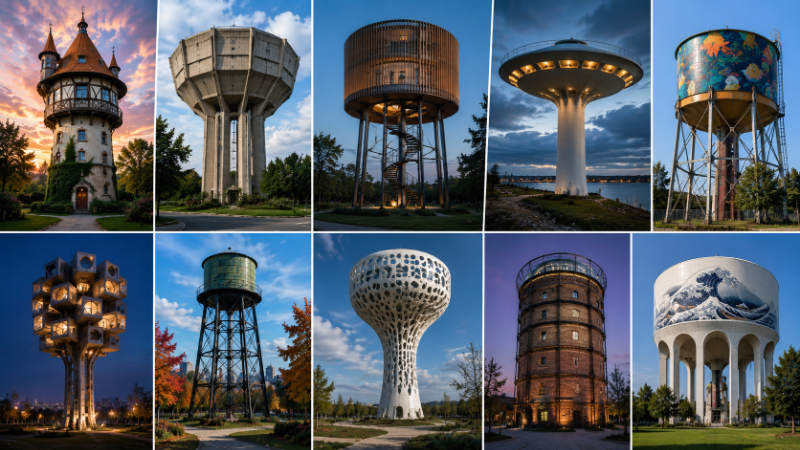
Water towers have evolved from purely functional infrastructure into architectural landmarks that define city skylines across the globe. These structures, once considered mere utility buildings, now showcase innovative design, engineering excellence, and cultural significance. From historic monuments to contemporary marvels, the world's most impressive water towers demonstrate how practical necessity can inspire extraordinary architecture.
The Evolution of Water Tower Architecture
Water towers represent a fascinating intersection of engineering and design. Originally built in the late 19th century to maintain water pressure in urban distribution systems, they have transformed into iconic structures that tell stories of their cities. The tallest water towers can reach heights of over 200 meters, while some of the most architecturally significant examples blend local cultural elements with modern design principles.
In India, water infrastructure has become increasingly important as cities expand and demand for reliable water supply grows. Architects and engineers are now designing water towers that serve dual purposes—functionality combined with aesthetic appeal. Whether you're planning a water management project or seeking inspiration for infrastructure development, understanding global best practices through platforms like AECORD can provide valuable insights into modern water tower design.
Build cost · Bengaluru, May 2026
Iconic Water Towers Across Europe
The Watertower in Amsterdam, Netherlands
Amsterdam's water tower stands as a testament to Dutch engineering and design philosophy. Built in the early 20th century, this structure combines functionality with elegant proportions. The tower's cylindrical design maximizes storage capacity while maintaining visual harmony with surrounding architecture. Its distinctive features include decorative brickwork and a carefully proportioned silhouette that has made it a beloved landmark in the city's industrial heritage.
Barcelona's Water Tower Innovation
Barcelona's water infrastructure showcases Spanish modernist influence. The city's water towers feature curved lines and ornamental details typical of the early 20th-century architectural movement. These structures demonstrate how practical infrastructure can incorporate artistic elements, with decorative tiles and sculptural details adorning their exteriors. The integration of these towers into the urban landscape shows how functional buildings can enhance rather than detract from city aesthetics.
Frequently asked
The Historic Water Tower in Berlin, Germany
Berlin's Prenzlauer Berg water tower, constructed in 1877, represents one of Europe's oldest surviving examples. Standing approximately 55 meters tall, this red-brick structure features Romanesque Revival architectural elements. Its robust construction has allowed it to survive centuries of urban development, and today it serves as a cultural monument and museum space, proving that water towers can have extended lifespans and evolving purposes.
North American Water Tower Masterpieces
Chicago's Iconic Water Tower
The Chicago Water Tower, built in 1869, survived the Great Chicago Fire of 1871 and became a symbol of the city's resilience. Standing 138 feet tall, this Gothic Revival structure features limestone construction with ornate detailing. Its distinctive castellated crown and massive stone walls represent Victorian-era engineering at its finest. The tower remains one of the oldest water towers in North America still in operation.
New York's Rooftop Water Tanks
New York City's rooftop water tanks present a different architectural approach. These wooden structures, typically painted black, have become iconic symbols of the city's skyline. Thousands of these tanks dot Manhattan's rooftops, serving individual buildings. Their distinctive appearance has inspired artists and photographers, making them unexpected architectural features that define the urban landscape.
San Francisco's Sutro Tower Water Infrastructure
While primarily a communication tower, San Francisco's Sutro Tower includes water storage facilities that demonstrate how modern towers integrate multiple functions. The structure's lattice design and prominent placement on Twin Peaks make it visible from throughout the city, showing how infrastructure can become a defining landmark.
Asian Water Tower Innovations
Japan's Modern Water Tower Design
Japanese water towers exemplify minimalist design principles combined with advanced engineering. Many Japanese towers feature sleek, cylindrical designs with clean lines and minimal ornamentation. The integration of earthquake-resistant technology into these structures demonstrates how architectural design must adapt to regional environmental conditions. Japanese engineers have pioneered techniques for building water towers that can withstand seismic activity while maintaining structural integrity.
Singapore's Integrated Water Management Towers
Singapore's approach to water infrastructure reflects the city-state's commitment to sustainability and innovation. Modern water towers in Singapore incorporate smart technology for monitoring water quality and distribution. These structures often feature sustainable design elements, including solar panels and rainwater harvesting systems, demonstrating how contemporary water towers can contribute to environmental conservation.
Water Tower Infrastructure in India
India's rapidly growing cities face significant water management challenges, making efficient water tower design crucial for urban development. Cities like Mumbai, Delhi, Bangalore, and Hyderabad have implemented various water tower designs to meet increasing demand. Indian architects and engineers are increasingly focusing on creating water towers that are both functional and visually integrated into urban landscapes.
Modern Indian Water Tower Projects
Contemporary Indian water tower projects emphasize durability, efficiency, and aesthetic integration. Many new installations in major Indian cities incorporate:
Reinforced concrete construction designed for India's climate conditions
Elevated designs that maximize water pressure for multi-story buildings
Integration with smart metering systems for water conservation
Architectural designs that complement local building styles
Capacity planning based on population growth projections
The cost of constructing a water tower in India varies significantly based on location, capacity, and design complexity. A typical elevated water tower in Indian cities ranges from ₹50 lakhs to ₹5 crores, depending on specifications. Consulting with experienced professionals through AECORD can help project managers understand cost factors and design options specific to their location.
Regulatory Compliance for Indian Water Infrastructure
Water tower construction in India must comply with several regulatory frameworks, including:
Indian Standards (IS) codes for water tank design and construction
State-specific water authority guidelines
Building bylaws of municipal corporations
Environmental impact assessment requirements
Seismic design standards for earthquake-prone regions
Understanding these regulations is essential for any water infrastructure project. Professionals specializing in water tower design and construction can be found on AECORD, offering expertise in navigating these complex requirements.
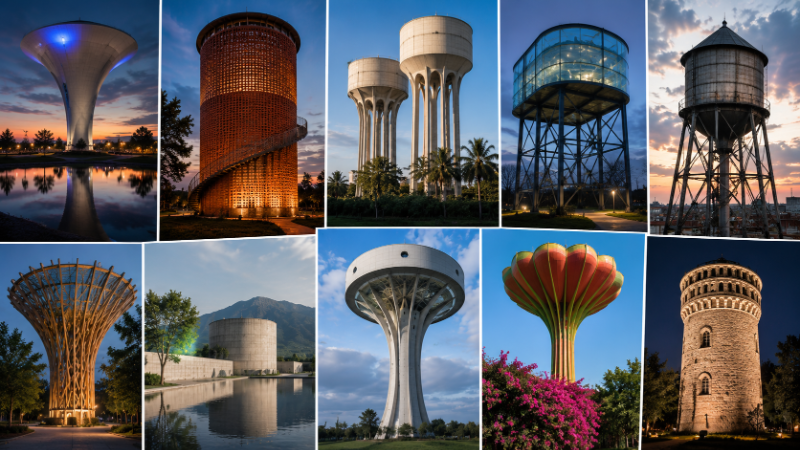
Contemporary Architectural Features in Modern Water Towers
Sustainable Design Integration
Modern water towers increasingly incorporate sustainable design principles. Green roofs, solar panels, and rainwater harvesting systems are becoming standard features in new constructions. These additions reduce operational costs and environmental impact while improving building performance. Contemporary towers often feature:
Photovoltaic systems for pumping operations
Thermal insulation to reduce evaporation
Permeable landscaping around tower bases
Water-efficient distribution systems
Smart monitoring technology for leak detection
Aesthetic Design Considerations
Today's water towers are designed with visual impact in mind. Architects consider how towers integrate with surrounding architecture, using:
Complementary color schemes that blend with local aesthetics
Textured surfaces that create visual interest
Sculptural forms that serve as public art
Lighting design that enhances nighttime visibility
Landscape integration with surrounding public spaces
Structural Engineering Innovations
Modern water towers employ advanced engineering techniques:
Seismic damping systems for earthquake resistance
Advanced materials including high-performance concrete
Computer modeling for structural optimization
Modular construction for faster installation
Flexible piping systems that accommodate movement
The Dual Purpose of Water Towers
Beyond water storage, modern towers serve multiple functions. Many include observation decks, museums, restaurants, or cultural spaces. This mixed-use approach maximizes land utilization and generates revenue to offset maintenance costs. Some towers have been converted into residential spaces, offices, or event venues, demonstrating the adaptability of these structures.
Water Tower Design Considerations for Indian Cities
Climate Adaptation
Indian water towers must withstand diverse climate conditions. In monsoon-prone regions like Kerala and coastal areas, structures must resist high winds and heavy rainfall. In arid regions like Rajasthan, towers must minimize water loss through evaporation. Design modifications include:
Enhanced drainage systems for monsoon areas
Insulated tanks in high-temperature regions
Wind-resistant structural designs
Corrosion-resistant materials for coastal installations
Population Density Considerations
Indian cities with high population density require larger water storage capacity. Cities like Mumbai and Delhi need towers capable of storing millions of liters daily. Design considerations include:
Capacity calculations based on per-capita consumption (150-200 liters per person daily)
Peak demand projections for growing populations
Multiple smaller towers versus single large towers
Distribution network optimization
Space Optimization in Urban Areas
Land scarcity in Indian cities demands efficient space utilization. Vertical water towers maximize storage in limited footprints, while underground or semi-underground designs preserve surface space for other uses. Some innovative Indian projects have integrated water towers with mixed-use developments, combining storage with commercial or residential spaces.
Notable Examples of Water Tower Architecture Worldwide
Beyond the major examples mentioned, numerous other water towers deserve recognition:
Copenhagen's Water Tower (Denmark) - Features distinctive architectural styling with observation platforms
Stockholm's Water Tower (Sweden) - Combines modernist design with functional efficiency
Toronto's Water Tower (Canada) - Historic Victorian structure now serving cultural purposes
Melbourne's Water Towers (Australia) - Contemporary designs reflecting modern Australian architecture
Dubai's Water Towers (UAE) - Ultra-modern structures serving massive urban development
Planning Your Water Tower Project
Whether you're involved in municipal water management or private infrastructure development, successful water tower projects require:
Comprehensive site assessment and feasibility studies
Structural engineering analysis and design
Environmental impact evaluation
Cost estimation and budget planning
Timeline development and project scheduling
Regulatory compliance documentation
Maintenance planning for long-term operations
Finding Water Tower Experts in India
For architects, engineers, and construction professionals involved in water infrastructure projects, accessing specialized expertise is crucial. AECORD connects you with experienced water tower designers, structural engineers, and construction specialists across India. Whether you need consultation on design optimization, regulatory compliance, or construction management, AECORD's network of professionals can support your project from conception through completion.
The Future of Water Tower Design
Water tower architecture continues evolving with technological advancement. Future trends include:
Integration of IoT sensors for real-time monitoring
Modular designs allowing easy expansion
Enhanced sustainability features and renewable energy integration
Aesthetic designs that serve as architectural landmarks
Advanced materials offering improved durability
Smart systems optimizing water distribution and reducing waste
As cities worldwide grapple with water scarcity and infrastructure demands, water towers will remain essential components of urban development. Their design evolution reflects broader trends in sustainable architecture, technological innovation, and aesthetic integration within urban environments.
Conclusion
Water towers represent far more than utilitarian structures—they are monuments to human ingenuity, combining engineering excellence with architectural vision. From historic landmarks in European cities to cutting-edge installations in modern Asian metropolises, these structures demonstrate how infrastructure can inspire and enhance urban landscapes. In India, as cities continue expanding and water demands increase, thoughtfully designed water towers will play crucial roles in sustainable urban development.
If you're planning a water infrastructure project in India, connecting with qualified professionals is essential for success. Visit AECORD today to find experienced architects, engineers, and construction specialists who can bring your water tower vision to life. Whether you need design consultation, regulatory guidance, or construction management, AECORD's comprehensive network of AECO professionals is ready to support your project's success.
Frequently Asked Questions
What is the purpose of water towers in modern cities?
Water towers maintain water pressure in urban distribution systems and serve as storage infrastructure for reliable water supply. Modern water towers now combine this functional purpose with aesthetic appeal, often becoming architectural landmarks that enhance city skylines.
How tall can water towers reach?
The tallest water towers can exceed 200 meters in height, though historical examples like Chicago's Water Tower stand around 138 feet tall. Height varies based on the city's water pressure requirements and architectural design preferences.
What architectural styles are used in water tower design?
Water towers incorporate diverse architectural styles including Gothic Revival, Romanesque Revival, modernist, and contemporary designs. Many feature decorative elements like ornamental brickwork, sculptural details, and curved lines that blend functionality with artistic expression.
Are old water towers still in use today?
Yes, many historic water towers remain operational while serving additional purposes as cultural monuments and museums. Berlin's Prenzlauer Berg tower (built 1877) and Chicago's Water Tower (built 1869) are examples of century-old structures still functioning today.
How do water towers contribute to urban infrastructure planning?
Water towers are essential for maintaining consistent water pressure in distribution systems and managing water supply for growing cities. Understanding global best practices in water tower design helps architects and engineers create dual-purpose structures that serve both practical needs and enhance urban aesthetics.