

Understanding Architect Fees in India: A Comprehensive Guide
When planning a construction project in India, one of the most critical decisions is understanding how much you'll pay for architectural services. Architect fees can significantly impact your project budget, yet many clients remain unclear about how these fees are structured, what factors influence them, and how to ensure you're getting fair value for your investment.
Whether you're building a residential home in Bangalore, designing a commercial complex in Mumbai, or planning an industrial facility in Delhi, understanding architect fees is essential for effective project planning. This comprehensive guide will help you navigate the complexities of architectural pricing in the Indian market.
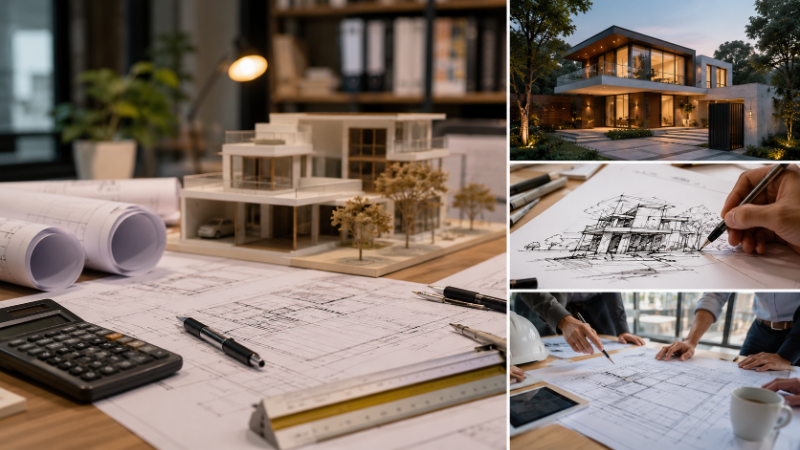
Build cost · Bengaluru, May 2026
How Architect Fees Are Typically Structured in India
Percentage-Based Fees
The most common method for calculating architect fees in India is a percentage of the total construction cost. This approach is favoured by many architectural firms and clients alike because it aligns the architect's compensation with the project's scope and complexity.
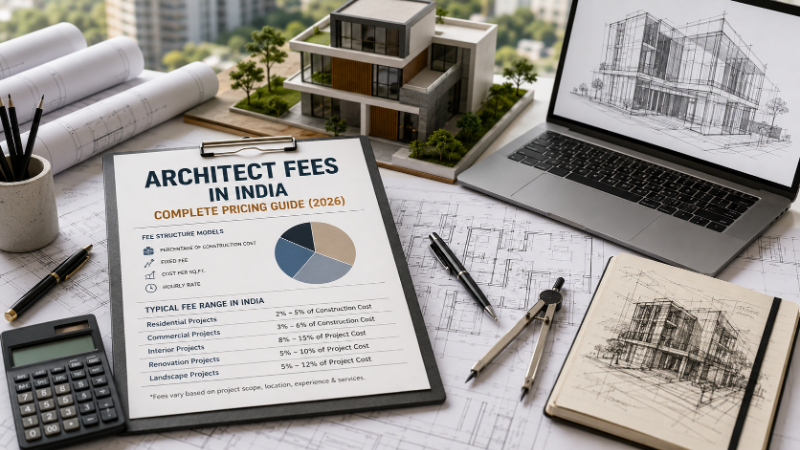
Typically, architect fees in India range from 3% to 8% of the total construction cost, depending on various factors. For a residential project costing ₹50 lakhs, this would translate to ₹1.5 lakhs to ₹4 lakhs in architectural fees. For larger commercial projects, the percentage might be lower (around 3-5%) due to economies of scale, while smaller or more specialised projects might command higher percentages (6-8%). /blog/how-much-does-an-architect-charge-in-india-2026-r1o6
The percentage-based model works well because it automatically scales with project complexity and budget, ensuring architects are compensated proportionally to the work involved.
Fixed Fee Structure
Some architects, particularly those handling smaller projects or those working with specific clients, may charge a fixed fee for their services. This approach provides clarity and predictability for clients who know exactly what they'll pay upfront.
Fixed fees might range from ₹50,000 for a small residential design to several lakhs for comprehensive architectural services on larger projects. The advantage here is budget certainty, though it requires detailed scope definition before engagement.
Frequently asked
Hourly Rate Model
Less common but still used in India, some architects charge hourly rates typically ranging from ₹1,500 to ₹5,000 per hour, depending on their experience and location. This model is often used for consultancy, revisions, or additional services beyond the main contract.
Hybrid Approaches
Many modern architectural practices combine these methods. For instance, they might charge a base fee plus a percentage of construction costs, or a fixed fee for design phases with additional charges for site supervision. These hybrid models often provide the most flexibility and fairness for both parties.
Factors Influencing Architect Fees in India
Project Type and Complexity
The nature of your project significantly impacts architectural fees. A straightforward residential villa in a planned community will cost less in architectural fees than a mixed-use development with commercial, residential, and retail components.
Complex projects requiring specialized design expertise—such as healthcare facilities, educational institutions, or industrial complexes—typically command higher fees. A hospital project in Hyderabad might require 6-8% fees due to regulatory compliance, specialized MEP coordination, and infection control design considerations.
Project Location
Location plays a crucial role in determining architect fees. Metropolitan areas like Mumbai, Delhi, Bangalore, and Pune typically have higher architectural fees than tier-2 cities like Pune, Ahmedabad, or Jaipur. This reflects the higher cost of living, greater competition for quality architects, and more complex regulatory environments in major metros.
For instance, architectural fees in Mumbai might average 6-7% of construction cost, while the same project in a smaller city might be 4-5%. Additionally, properties in premium locations or with heritage considerations may attract higher fees.
Architect's Experience and Reputation
Established architects with portfolios of successful projects, awards, or specialized expertise will typically charge premium fees. A renowned architect in Delhi with international recognition might charge 8-10% or higher, while emerging architects might charge 3-4%.
However, higher fees don't always guarantee better results. Many talented mid-level architects offer excellent value, and you can find quality professionals through platforms like AECORD, which connects you with verified architects across India.
Scope of Architectural Services
The extent of services included significantly affects fees. Basic services typically include:
Conceptual design and preliminary drawings
Detailed design and working drawings
Specifications and tender documents
Basic site supervision during construction
Extended services might add:
3D renderings and visualization
BIM (Building Information Modeling) coordination
Comprehensive site supervision and project management
Interior design and space planning
Sustainability and green building certification support
Regulatory approvals and liaison with municipal authorities
Each additional service typically increases fees by 1-2%. A project requiring full BIM coordination and comprehensive sustainability consulting might add 3-5% to the base architectural fee.
Project Size
Interestingly, larger projects often have lower percentage fees due to economies of scale. A ₹10 crore residential complex might attract 4-5% fees, while a ₹50 lakh individual villa might command 6-7%. The per-square-meter work is less intensive on larger projects.
Typical Architect Fee Ranges for Different Project Types in India
Residential Projects
Individual Villas/Homes: 5-8% of construction cost. For a ₹30 lakh construction budget, expect ₹1.5 to ₹2.4 lakhs in architect fees.
Apartment Complexes: 3-6% of construction cost. A ₹50 crore residential complex would typically incur ₹1.5 to ₹3 crore in architectural fees.
Low-Cost Housing: 2-4% due to standardized designs and simpler requirements.
Commercial Projects
Office Buildings: 3-5% of construction cost. These projects benefit from standardized floor plates and simpler MEP coordination.
Retail Spaces: 4-6% due to specialized requirements for customer flow, lighting, and brand integration.
Hotels and Hospitality: 5-7% reflecting the complexity of guest rooms, public spaces, and specialized MEP systems.
Industrial and Specialized Projects
Manufacturing Facilities: 4-6% including specialized MEP design and process integration.
Healthcare Facilities: 6-8% due to strict regulatory requirements, infection control protocols, and complex MEP systems.
Educational Institutions: 5-7% reflecting diverse space requirements and specialized facilities.
Breaking Down What You Get for Architect Fees
Pre-Construction Phase (20-30% of fees)
This includes site analysis, conceptual design development, client consultations, and preliminary drawings. The architect studies the site conditions, local regulations, and client requirements to develop initial design concepts.
Design Development Phase (30-40% of fees)
Detailed architectural drawings, specifications, and coordination with structural and MEP engineers. This phase transforms concepts into buildable designs with complete technical documentation.
Tender and Approval Phase (10-15% of fees)
Preparation of tender documents, bills of quantities, and liaison with municipal authorities for approvals. In Indian cities, this can be time-intensive, particularly in metros like Bangalore and Chennai where regulations are strict.
Construction Phase/Site Supervision (20-40% of fees)
Regular site visits, quality monitoring, and coordination with contractors and engineers. The frequency and intensity of supervision affect this portion significantly.
Tips for Negotiating Architect Fees in India
Get Multiple Quotes
Always request fee proposals from 3-5 different architects. This gives you a market understanding and provides leverage for negotiation. Use platforms like AECORD to easily connect with multiple qualified professionals andto connect with multiple qualified professionals and compare their proposals easily compare their proposals.
Clarify the Scope Upfront
Ensure the fee quote includes all services you expect. Ambiguity leads to disputes and additional charges later. Request a detailed scope document listing exactly what's included and what's additional.
Negotiate Based on Project Specifics
If your project is relatively straightforward or uses standard designs, you have more negotiating power. Conversely, highly complex projects with tight timelines may command premium fees, and negotiating them down might compromise quality.
Consider Value, Not Just Cost
The cheapest architect isn't always the best choice. An architect charging ₹2 lakhs but delivering poor designs might cost you more in construction inefficiencies and rework. Balance cost with experience and portfolio quality.
Explore Package Deals
Some architects offer package deals combining design with interior design or project management. These can sometimes provide better value than hiring separate professionals.
Discuss Payment Terms
Negotiate a payment schedule aligned with project milestones. Typical structures include 20% upon engagement, 30% at design completion, 30% at tender stage, and 20% upon project completion.
Hidden Costs and Additional Charges to Watch For
Beyond the quoted architectural fees, be aware of potential additional costs:
3D Renderings and Visualizations: Often charged separately at ₹10,000 to ₹50,000 per image
BIM Services: Additional 1-2% of project cost for comprehensive BIM coordination
Sustainability Certifications: LEED or IGBC certification consulting adds ₹2-5 lakhs depending on complexity
Municipal Liaison: Some architects charge separately for NOC processing and approvals
Revisions Beyond Agreed Scope: Excessive design changes may incur additional charges
Extended Supervision: If construction extends beyond planned timeline, supervision fees may increase

Ensuring You Get Quality Architectural Services
Rather than focusing solely on minimizing architect fees, consider these factors to ensure quality:
Review Portfolio and References
Request to see completed projects similar to yours. Contact previous clients to understand their experience. Quality architects are typically happy to provide references.
Check Credentials and Registrations
Verify that the architect is registered with the Council of Architecture (CoA). This ensures they meet professional standards and are bound by a code of conduct.
Evaluate Communication and Responsiveness
Your architect will be your primary point of contact throughout the project. Ensure they communicate clearly, respond promptly, and understand your vision.
Assess Technical Expertise
For specialized projects, confirm the architect has relevant experience. An architect experienced in healthcare facility design will deliver better results than a generalist for a hospital project.
Using AECORD to Find the Right Architect
AECORD simplifies the process of finding qualified architects in India. The platform allows you to:
Browse detailed profiles of architects with portfolios and credentials
Compare fees and services across multiple professionals
Read verified reviews from previous clients
Connect directly with architects and request custom proposals
Access specialists for specific project types
Whether you're in Pune, Hyderabad, Chennai, or any other Indian city, AECORD helps you find professionals who match your budget and requirements.

Regional Variations in Architect Fees
Architect fees vary significantly across Indian regions:
Tier-1 Cities (Mumbai, Delhi, Bangalore, Pune): 5-8% for residential, 4-6% for commercial
Tier-2 Cities (Ahmedabad, Jaipur, Lucknow, Chandigarh): 4-6% for residential, 3-5% for commercial
Tier-3 Cities and Towns: 3-5% for residential, 2-4% for commercial
These variations reflect local market conditions, competition levels, and cost of living differences.
Conclusion
Architect fees in India are structured to reflect the complexity, scope, and location of your project. While the typical range is 3-8% of construction cost, understanding the factors influencing these fees empowers you to make informed decisions.
The key is balancing cost with quality. Investing in a competent architect often saves money through efficient design, reduced construction issues, and better long-term functionality. Rather than seeking the cheapest option, focus on finding the right professional for your specific project needs.
When you're ready to find the perfect architect for your project, explore AECORD's network of verified professionals across India. Whether you need a residential designer, commercial architect, or specialized consultant, you'll find qualified professionals ready to discuss your project and provide competitive quotes tailored to your requirements.
Frequently Asked Questions
What is the typical percentage for architect fees in India?
Architect fees in India typically range from 3% to 8% of the total construction cost, depending on project complexity and location. Larger commercial projects may be charged at 3-5% due to economies of scale, while smaller or specialized projects may command 6-8%.
How much do architects charge per hour in India?
Architects in India typically charge hourly rates ranging from ₹1,500 to ₹5,000 per hour, depending on their experience level and geographic location. This model is commonly used for consultancy, revisions, or additional services beyond the main contract.
What factors affect architect fees in India?
Key factors influencing architect fees include project type and complexity, project location, architect's experience, and local market rates. Complex projects like hospitals or mixed-use developments command higher fees, while metropolitan areas like Mumbai and Delhi have higher fees than tier-2 cities.
What is a fixed fee structure for architects in India?
Fixed fee structures provide upfront cost certainty, ranging from ₹50,000 for small residential designs to several lakhs for comprehensive services on larger projects. This model requires detailed scope definition before engagement but eliminates budget uncertainty.
Do architects in India use hybrid fee models?
Yes, many modern architectural practices in India use hybrid fee models that combine base fees with percentage-based charges or fixed fees for design phases with additional site supervision costs. These flexible approaches often provide fairness for both architects and clients.