

India's Semiconductor Revolution: Reshaping the Digital Power Landscape
India stands at a critical juncture in its technological evolution. The convergence of semiconductor manufacturing, software expertise, and digital infrastructure represents a fundamental shift in how the country positions itself in global power structures. This transformation extends far beyond mere technological advancement—it fundamentally alters India's geopolitical standing, economic resilience, and capacity for self-determination in an increasingly digital world.
The phrase "chips, code, and command" encapsulates three pillars that are reshaping India's future. Chips represent physical manufacturing capability, code symbolizes software prowess and digital innovation, while command denotes the strategic autonomy to make independent decisions without technological dependence. Together, these elements form the architecture of a new India—one that is not merely consuming technology but actively shaping its future.
Build cost · Bengaluru, May 2026
The Semiconductor Manufacturing Imperative
Why Chips Matter for India's Independence
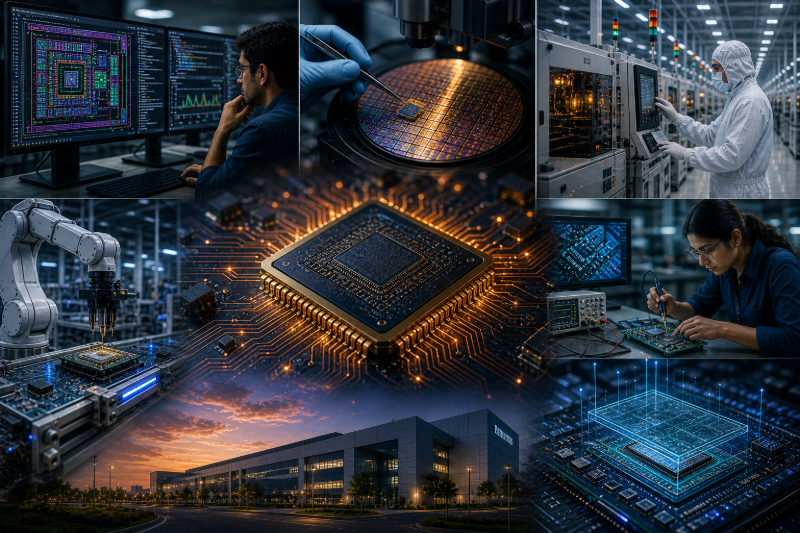
Semiconductors are the backbone of modern civilization. From smartphones to defense systems, renewable energy infrastructure to artificial intelligence applications, every critical technology depends on chips. India's historical dependence on imported semiconductors has been a strategic vulnerability. With global supply chain disruptions becoming increasingly common, manufacturing capability at home is no longer a luxury—it's a necessity.
The Indian government's Production-Linked Incentive (PLI) scheme launched in 2021 represents a watershed moment. By offering substantial financial incentives to semiconductor manufacturers, India has attracted global players like Micron Technology, which committed to establishing a semiconductor assembly and testing facility in Gujarat. This ₹7,600 crore investment marks a significant step toward building domestic capacity.
The potential economic impact is staggering. If India can capture even 5% of the global semiconductor market by 2030, it would generate approximately ₹2 lakh crore in revenue and create hundreds of thousands of skilled jobs. Beyond economics, domestic chip manufacturing ensures that critical technologies—from defense systems to space exploration—remain under Indian control.
Infrastructure Requirements for Semiconductor Hubs
Establishing semiconductor manufacturing requires more than just factories. It demands sophisticated ecosystem development. Cities like Bangalore, Hyderabad, and Pune are emerging as semiconductor hubs, but they need robust supporting infrastructure. This includes:
Power infrastructure: Semiconductor fabs require 24/7 uninterrupted power supply. States like Gujarat and Tamil Nadu have invested in dedicated power corridors for industrial zones.
Water management: Chip manufacturing is water-intensive. Sustainable water recycling systems are essential.
Logistics networks: High-value chips require secure, efficient transportation networks.
Skilled workforce: Training institutes and engineering colleges must align curricula with industry needs.
For professionals in architecture and construction planning industrial facilities, understanding these specialized requirements is crucial. AECORD connects builders, architects, and engineers who specialize in industrial infrastructure with clients planning semiconductor facilities across India. The platform has become invaluable for sourcing professionals experienced in designing clean rooms, managing thermal systems, and building resilient industrial spaces.
Frequently asked
Code: India's Enduring Software Strength
From IT Services to AI Leadership
India's software industry has been a global success story for three decades. Indian IT companies have built the digital infrastructure for enterprises worldwide. However, the industry is at an inflection point—transitioning from service delivery to innovation leadership.
Artificial intelligence and machine learning represent the next frontier. India has the talent pool, entrepreneurial ecosystem, and data access to become a global AI powerhouse. Companies like Infosys, TCS, and Wipro are investing heavily in AI capabilities, while startups in Bangalore, Pune, and Delhi-NCR are building cutting-edge AI solutions for global markets.
The challenge is not talent—India produces over 1.5 million engineering graduates annually. The challenge is creating an ecosystem where this talent can build world-class products rather than just providing services. This requires venture capital, mentorship, and infrastructure. Cities across India are establishing innovation hubs and startup accelerators to facilitate this transition.
Digital Infrastructure as Strategic Asset
India's digital infrastructure—encompassing 5G networks, cloud computing capacity, and data centers—is evolving rapidly. The government's National Supercomputing Mission aims to establish world-class computational facilities across Indian institutions. This infrastructure is essential for advancing AI research, climate modeling, and scientific discovery.
Data center development is particularly critical. As companies increasingly rely on cloud services, having robust data center infrastructure within India ensures data sovereignty and reduces latency. Cities like Mumbai, Delhi, and Bangalore are seeing significant investments in data center construction. This creates opportunities for construction professionals specializing in hyperscale infrastructure—a growing category of expertise available through platforms like AECORD.
Command: Strategic Autonomy in Technology
The Geopolitical Dimension
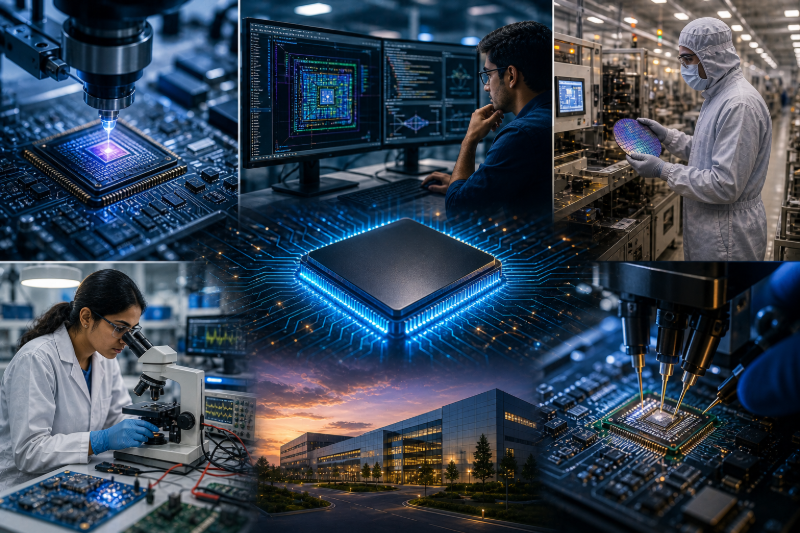
Technological autonomy is geopolitical autonomy. Nations that depend entirely on foreign technology for critical functions cede strategic control to other powers. This reality has become starkly apparent in recent years through semiconductor shortages, supply chain disruptions, and technology export restrictions.
India's push toward "Atmanirbhar Bharat" (self-reliant India) in technology reflects this understanding. The goal is not complete isolation but strategic independence—the ability to function effectively even when global supply chains are disrupted. This requires developing capabilities across the entire technology stack: from chip design to software development to system integration.
Defense and space applications exemplify this imperative. India's defense systems, space missions, and critical infrastructure must not depend on foreign technology that can be restricted or withdrawn. The successful development of indigenous missile systems, satellite launch capabilities, and defense electronics demonstrates that India can achieve technological sovereignty in critical domains.
Regulatory Framework and Standards
Strategic command also requires establishing standards and regulatory frameworks that reflect Indian interests. The Personal Data Protection Bill, data localization requirements, and standards for emerging technologies like 5G represent India's effort to shape the rules of the digital economy rather than merely following rules set by others.
This has implications for every sector. Whether in healthcare, finance, manufacturing, or construction, organizations must navigate India-specific regulatory requirements. For construction and AECO professionals, this means understanding building standards, safety regulations, and environmental compliance frameworks that are increasingly technology-enabled. AECORD helps professionals stay current with evolving regulatory requirements by connecting them with peers and experts who understand India's specific compliance landscape.
The Convergence: Integrated Digital Economy
Smart Cities and Digital Infrastructure
The real power emerges when chips, code, and command converge. Smart cities represent this convergence—leveraging semiconductors for sensors and IoT devices, software for analytics and decision-making, and autonomous governance frameworks to manage complex urban systems.
Indian cities like Pune, Surat, and Indore are implementing smart city solutions. These initiatives require:
IoT sensor networks for traffic, pollution, and utility management
Real-time data analytics platforms
Integrated command centers for city operations
Cybersecurity frameworks to protect critical infrastructure
For architects and urban planners, this represents a paradigm shift. Cities are no longer static physical spaces but dynamic systems where digital and physical infrastructure are inseparable. Professionals designing buildings, transportation systems, and public spaces must now consider digital integration from the outset. This specialization is increasingly sought after, and finding professionals with expertise in smart building design and digital infrastructure integration has become easier through platforms like AECORD.
Manufacturing 4.0 and Industry Transformation
India's manufacturing sector is undergoing digital transformation. Factories are adopting IoT sensors, AI-powered quality control, and automated supply chain management. This "Industry 4.0" revolution requires both semiconductor components and sophisticated software systems.
For construction and operations professionals, this means designing factories that are inherently digital. Industrial facilities must accommodate complex electrical infrastructure for IoT systems, provide secure spaces for server rooms and data centers, and be designed for future technological upgrades. The intersection of physical construction and digital capability is where modern industrial architecture lives.
Challenges and Opportunities Ahead
Skills Gap and Education
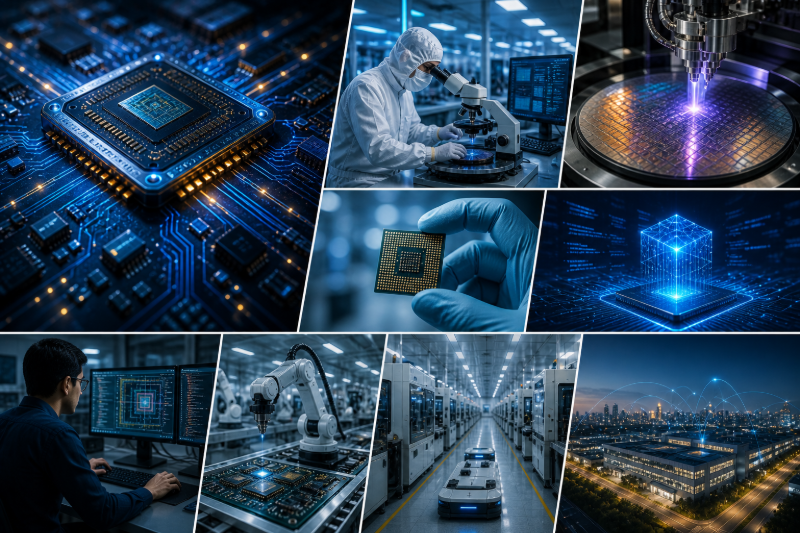
India's greatest asset—its young population—is only valuable if properly educated. The country needs millions of engineers, technicians, and specialists in semiconductor manufacturing, AI, cybersecurity, and digital infrastructure. Current educational institutions are struggling to keep pace with industry needs.
This creates opportunities for private sector involvement in skill development. Companies are establishing training programs, and educational institutions are partnering with industry. For construction professionals, this means designing specialized training facilities, research laboratories, and innovation centers—a growing segment of construction activity in Indian cities.
Capital Requirements
Building semiconductor fabs, data centers, and advanced manufacturing facilities requires enormous capital. While government incentives help, attracting private investment remains challenging. The PLI scheme has been successful, but scaling up requires sustained policy commitment and financial support.
For professionals in the AECO sector, this capital intensity translates into significant project opportunities. Semiconductor facilities, data centers, and advanced manufacturing plants represent some of the most complex and high-value construction projects. Expertise in managing such projects is in high demand, and professionals with relevant experience can find opportunities through specialized platforms.
Global Competition
India is not alone in pursuing semiconductor and AI leadership. China has invested heavily in chip manufacturing, while the United States continues to dominate high-end chip design. India must compete on cost, talent, and innovation simultaneously—a challenging proposition.
However, India has advantages. The cost of skilled labor remains lower than in developed nations, the talent pool is vast, and the domestic market is enormous. For companies serving Indian clients, understanding this competitive landscape is essential.
The Path Forward: Strategic Priorities
Accelerating Chip Manufacturing Capacity
India must move beyond the first semiconductor fab. The goal should be establishing a robust ecosystem of chip manufacturers, design companies, and specialized suppliers. This requires continued government support through the PLI scheme, favorable regulatory treatment, and investment in supporting infrastructure.
Building World-Class Software and AI Capabilities
India's software industry must transition from service delivery to product innovation. This requires venture capital support, intellectual property protections, and an ecosystem that rewards innovation. The government's focus on AI research through initiatives like the National AI Mission is a step in the right direction.
Developing Critical Infrastructure
Semiconductors and software require supporting infrastructure—power, water, connectivity, and transportation. Indian cities must invest in resilient, scalable infrastructure that can support technology-intensive industries. This is where construction and infrastructure professionals play a critical role.
Ensuring Cybersecurity and Data Sovereignty
As India builds technological capability, it must simultaneously build robust cybersecurity frameworks. Critical infrastructure, government systems, and citizen data must be protected from cyber threats. This requires both technical solutions and regulatory frameworks.
Conclusion: A New India Taking Shape
India's emergence as a technological power is not predetermined. It requires sustained effort across multiple fronts—manufacturing, software development, infrastructure investment, and institutional building. The convergence of chips, code, and command represents a new architecture of power—one where India controls its technological destiny rather than depending on others.
This transformation creates enormous opportunities for professionals across sectors. Whether in semiconductor manufacturing, software development, or the construction of facilities that house these industries, demand for specialized expertise is surging. For architects, engineers, and construction professionals, this is a pivotal moment. Understanding how digital infrastructure integrates with physical spaces, how to design facilities that support advanced manufacturing, and how to implement smart building technologies are becoming essential competencies.
If you're an AECO professional looking to specialize in technology infrastructure, or a company seeking experts in designing semiconductor facilities, data centers, or smart industrial spaces, AECORD is your platform. Connect with India's most experienced architects, engineers, and construction professionals who understand the unique requirements of technology-intensive projects. Whether you're planning a semiconductor fab in Gujarat, a data center in Bangalore, or a smart manufacturing facility in Pune, find the right professionals on AECORD and be part of building the infrastructure for India's technological future.
Frequently Asked Questions
What is India's Production-Linked Incentive (PLI) scheme for semiconductors?
The PLI scheme, launched in 2021, offers substantial financial incentives to semiconductor manufacturers to establish domestic manufacturing capacity in India. It has successfully attracted global players like Micron Technology, which committed a ₹7,600 crore investment in Gujarat for semiconductor assembly and testing facilities.
Why is semiconductor manufacturing important for India's independence?
Semiconductors are critical for all modern technologies from defense systems to AI applications. India's historical dependence on imported chips creates strategic vulnerability, making domestic manufacturing essential for technological self-determination and protection against global supply chain disruptions.
What infrastructure is needed for semiconductor manufacturing facilities in India?
Semiconductor fabs require 24/7 uninterrupted power supply, water-intensive recycling systems, secure logistics networks, and a skilled workforce. States like Gujarat and Tamil Nadu have invested in dedicated power corridors and supporting infrastructure to support these specialized facilities.
What is the economic potential of India's semiconductor industry by 2030?
If India captures even 5% of the global semiconductor market by 2030, it could generate approximately ₹2 lakh crore in revenue and create hundreds of thousands of skilled jobs, significantly boosting the country's economic growth.
Which Indian cities are emerging as semiconductor hubs?
Bangalore, Hyderabad, and Pune are emerging as major semiconductor hubs in India, supported by government initiatives, existing tech infrastructure, and investment in specialized industrial facilities and skilled workforce development.