Construction projects in India, whether residential, commercial, or industrial, require meticulous planning and budgeting. One of the most critical aspects of this planning is accurately estimating costs. A construction cost calculator has become an indispensable tool for architects, contractors, project managers, and homeowners alike. This comprehensive guide will walk you through everything you need to know about construction cost calculators and how to use them effectively for your Indian construction projects.
Understanding Construction Cost Calculators
A construction cost calculator is a digital tool designed to estimate the total cost of a construction project by analyzing various components such as materials, labor, equipment, and overhead expenses. In the Indian context, these calculators are particularly valuable because construction costs vary significantly across regions, from metropolitan areas like Mumbai and Delhi to tier-2 cities like Pune and Bangalore. /blog/tiles-cost-per-sq-ft-in-india-pricing-guide-2026
The primary purpose of a construction cost calculator is to provide project stakeholders with a realistic budget estimate before breaking ground. This helps in securing financing, managing client expectations, and identifying potential cost overruns early in the project lifecycle. For professionals using platforms like AECORD, these calculators can be integrated into project planning workflows to ensure all team members are working with consistent cost assumptions.
Build cost · Bengaluru, May 2026
Key Components Included in Construction Cost Calculators
Material Costs
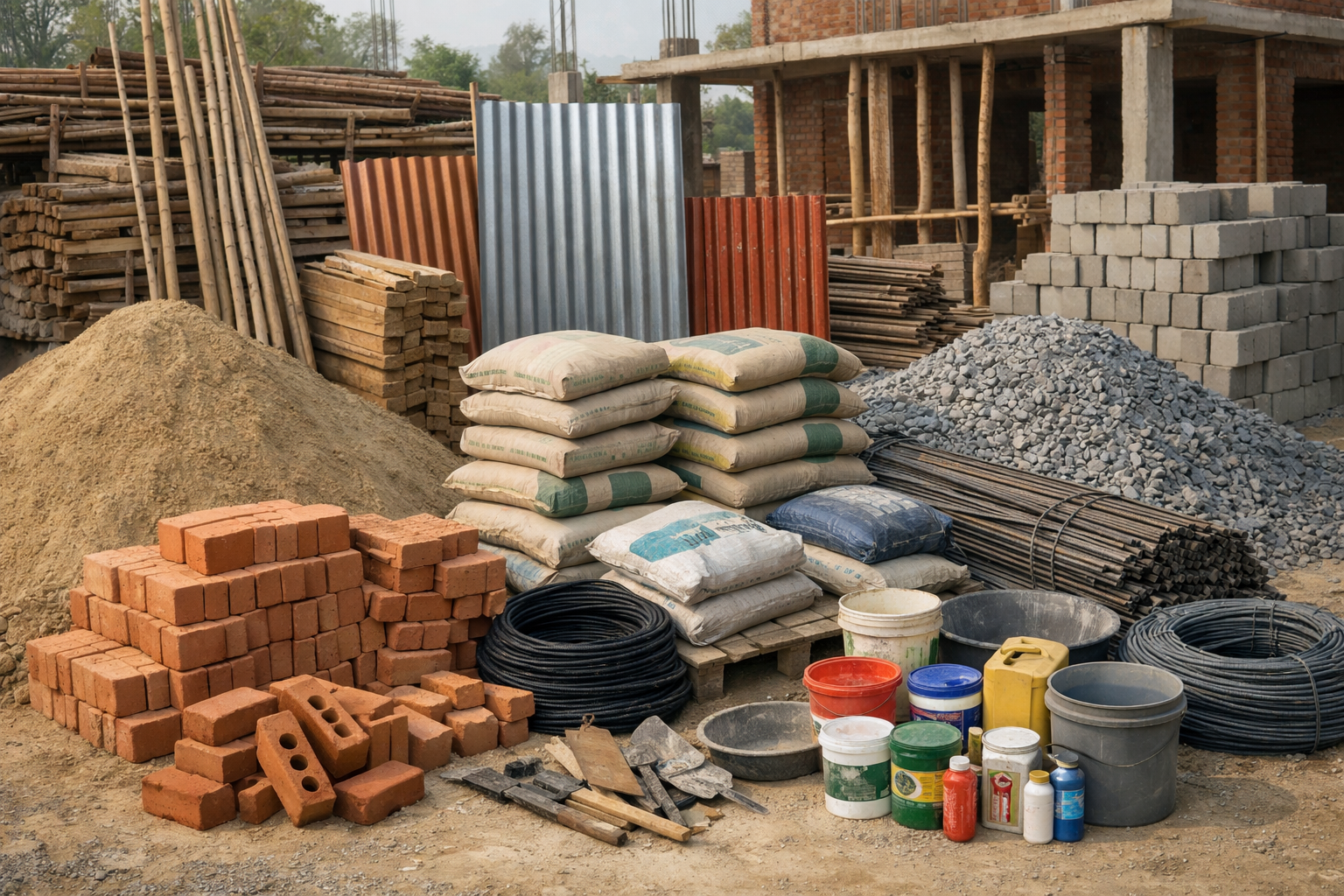
Material costs typically constitute 40-50% of the total construction budget in India. A comprehensive construction cost calculator must account for:
Cement and concrete: Prices fluctuate based on market conditions. As of 2024, cement costs range from ₹400-600 per bag depending on the region and brand.
Steel and reinforcement: Steel prices in India are volatile, currently ranging from ₹55,000-70,000 per metric ton.
Bricks and blocks: Costs vary from ₹5-15 per brick depending on quality and location.
Sand and aggregates: Essential for concrete, with prices ranging from ₹40-100 per cubic meter.
Finishing materials: Paint, tiles, flooring, and fixtures add significant costs, varying widely based on quality grades.
Electrical and plumbing materials: Cables, pipes, fittings, and fixtures constitute a substantial portion of project costs.
Labor Costs
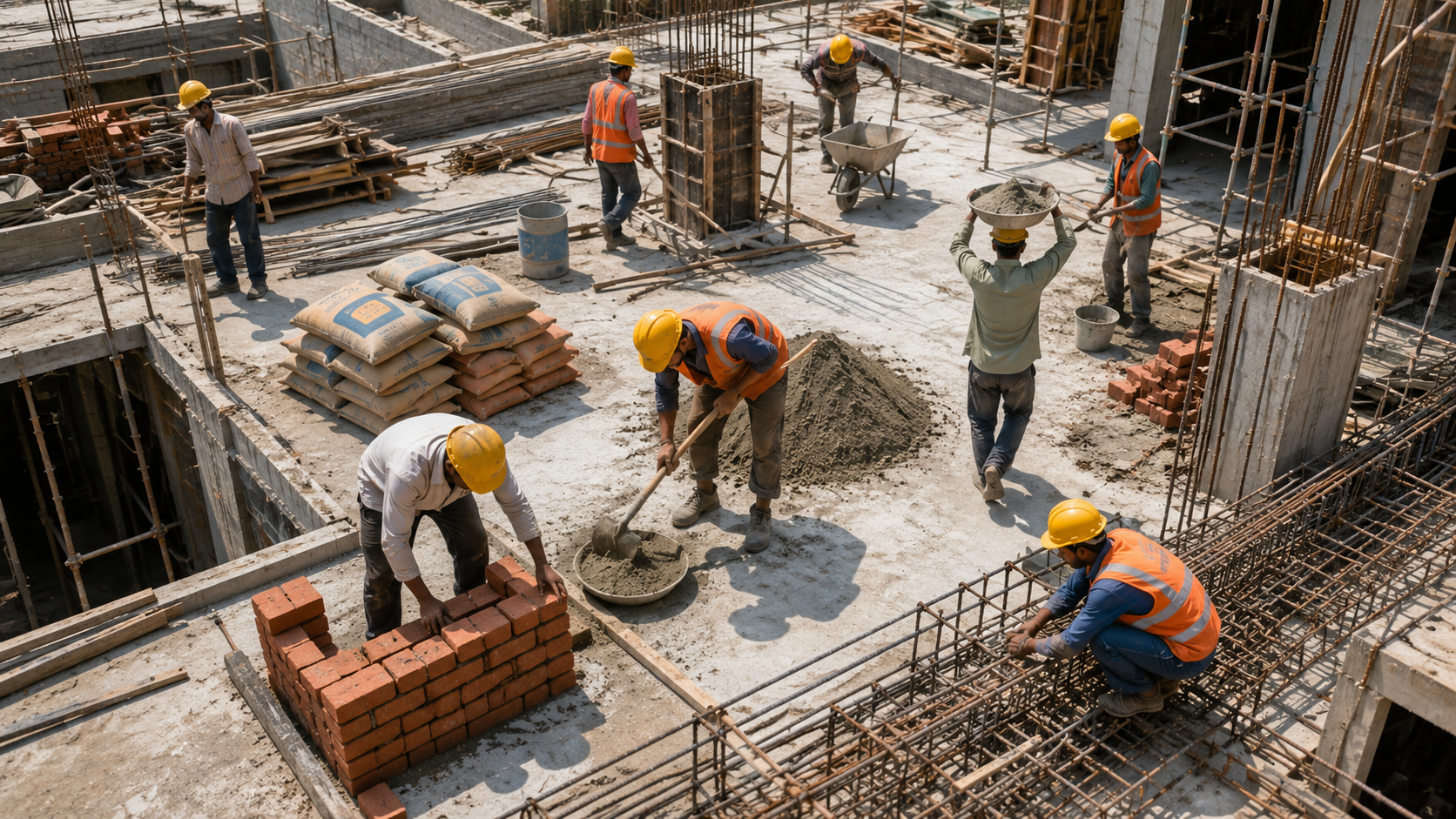
Labor typically accounts for 30-35% of construction costs in India. A good construction cost calculator should include:
Skilled labor: Masons, electricians, and plumbers command higher wages, typically ₹500-1,500 per day depending on expertise and location.
Semi-skilled labor: General construction workers earning ₹300-700 per day.
Unskilled labor: Basic laborers at ₹200-400 per day.
Supervision charges: Site engineers and supervisors typically charge 2-5% of project cost.
Frequently asked
Equipment and Machinery Costs
Depending on project scale, equipment costs can range from 5-15% of total budget:
Crane rentals and lifting equipment
Concrete mixers and pumps
Scaffolding and formwork
Power tools and machinery
Safety equipment
Overhead and Contingency
Professional construction cost calculators include allowances for:
Site overhead: Temporary structures, utilities, and site management (5-10% of project cost)
Contingency buffer: Typically 5-15% to account for unforeseen expenses
Profit margin: Contractor profit, usually 10-20% depending on project type

How to Use a Construction Cost Calculator Effectively
Step 1: Gather Detailed Project Information
Before using any construction cost calculator, compile comprehensive project details:
Total built-up area in square meters
Number of stories and floor heights
Type of construction (residential, commercial, industrial)
Quality grade (basic, standard, premium)
Location and city (as costs vary significantly across India)
Special requirements (parking, landscaping, special finishes)
Step 2: Select the Appropriate Calculator Type
Different projects require different calculators:
Residential calculators: Optimized for apartments, villas, and houses
Commercial calculators: Account for office spaces, retail, and mixed-use developments
Industrial calculators: Include specialized requirements and machinery installation
Infrastructure calculators: For roads, bridges, and utility projects
Step 3: Input Location-Specific Data
Construction costs in India vary dramatically by location. For example, construction in Mumbai or Bangalore costs significantly more than in tier-2 cities like Nagpur or Indore. A quality construction cost calculator should allow you to:
Select your specific city or region
Adjust for local material availability
Account for regional labor rates
Factor in local regulatory requirements and compliance costs
Step 4: Customize Material and Labor Inputs
Rather than accepting default values, personalize your calculator inputs:
Specify concrete grade and reinforcement details
Choose finishing material qualities
Input actual labor quotes from local contractors
Include specialized requirements unique to your project
Step 5: Review and Validate Results
Once the calculator generates estimates, validate them against:
Recent projects in your area with similar specifications
Quotes from multiple contractors and suppliers
Industry benchmarks for your project type
Professional advice from architects or engineers
Regional Cost Variations in India
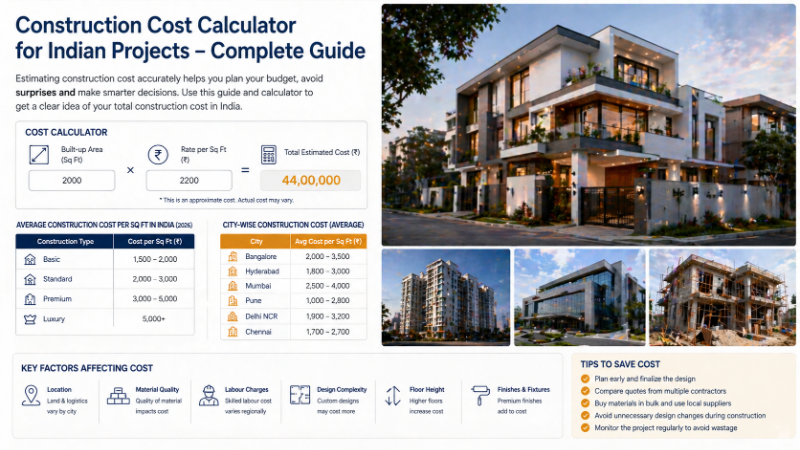
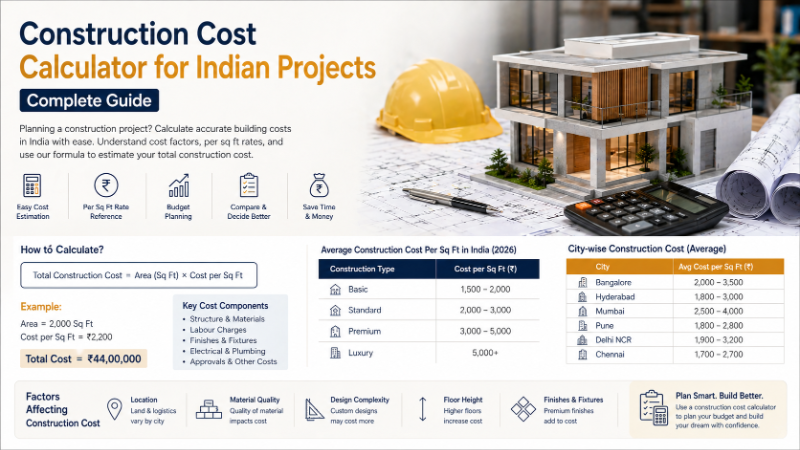
Understanding regional variations is crucial for accurate budgeting. Here's how construction costs typically vary across major Indian cities (per square meter for standard residential construction):
Tier-1 Metropolitan Areas: Mumbai (₹3,000-5,000/sqm), Delhi (₹2,500-4,500/sqm), Bangalore (₹2,000-4,000/sqm)
Tier-2 Cities: Pune (₹1,800-3,500/sqm), Hyderabad (₹1,500-3,000/sqm), Chennai (₹1,600-3,200/sqm)
Tier-3 Cities: Nagpur (₹1,000-2,500/sqm), Lucknow (₹900-2,200/sqm), Indore (₹1,100-2,400/sqm)
These variations reflect differences in land costs, labor availability, material transportation, and local regulatory requirements. Professional architects and contractors on AECORD can provide location-specific insights to refine calculator estimates.
Factors That Affect Construction Costs
Quality Standards and Specifications
The quality grade significantly impacts costs. Premium finishes, high-end materials, and advanced building systems can increase costs by 30-50% compared to basic construction. Your calculator should allow selection of quality grades from basic to premium.
Regulatory and Compliance Costs
Indian construction projects must comply with various regulations:
Building bylaws: Vary by municipal corporation
Environmental clearances: Required for larger projects
Fire safety standards: Increasing costs for commercial and multi-story buildings
Accessibility requirements: For persons with disabilities
Green building certifications: LEED or IGBC certification adds 5-15% to costs
Site Conditions and Accessibility
Site-specific factors significantly impact costs:
Soil conditions and foundation requirements
Site access and transportation challenges
Weather and seasonal considerations
Proximity to material suppliers and labor availability
Existing structures requiring demolition
Project Timeline
Compressed timelines typically increase costs due to:
Overtime labor charges
Premium rates for expedited material delivery
Need for additional equipment and resources
Higher supervision and management costs
Advanced Features of Modern Construction Cost Calculators
Real-Time Material Price Updates
The best construction cost calculators integrate with market data to reflect current material prices. This is particularly important in India where material costs fluctuate frequently due to market conditions, import duties, and logistics costs. /blog/structural-engineering-fees-india-residential
Comparative Analysis Tools
Advanced calculators allow you to compare costs across different material options, construction methods, and design alternatives. This helps identify cost-optimization opportunities without compromising quality.
Detailed Breakdowns and Reports
Professional calculators generate comprehensive reports showing:
Cost breakdown by category (materials, labor, equipment)
Cost per square meter
Timeline-based cost projections
Cash flow forecasts
Contingency analysis
Integration with Project Management Tools
Modern calculators integrate with project management platforms, allowing seamless transfer of cost data to scheduling and resource planning tools.
Common Mistakes When Using Construction Cost Calculators
Underestimating Contingency
Many project managers allocate insufficient contingency buffers. Given the complexity of Indian construction with regulatory variations and supply chain uncertainties, a 10-15% contingency is prudent.
Ignoring Location-Specific Factors
Using generic calculators without adjusting for local conditions leads to inaccurate estimates. Always customize inputs for your specific city and site conditions.
Overlooking Hidden Costs
Often-forgotten expenses include:
Temporary utilities and site facilities
Insurance and permits
Site restoration and waste management
Professional fees for architects and engineers
Quality testing and inspections
Using Outdated Information
Construction costs change rapidly. Ensure your calculator uses current material prices and labor rates. What was accurate six months ago may be significantly different today.
Failing to Account for Project Complexity
Complex projects with specialized requirements (high-rise buildings, industrial facilities, heritage conservation) require more detailed analysis than standard calculators provide. Consult with experienced professionals on AECORD for such projects.
Validating Calculator Results
After using a construction cost calculator, validate results through multiple methods:
Benchmarking Against Similar Projects
Compare your estimate with recently completed projects of similar scope in your region. Industry databases and professional networks can provide this information.
Getting Multiple Contractor Quotes
Obtain detailed quotes from at least three experienced contractors. Their estimates should align reasonably with calculator results. Significant deviations warrant investigation.
Consulting with Design Professionals
Architects and structural engineers can review calculator estimates and provide professional validation. Many professionals on AECORD offer this consultation service.
Reviewing Line-Item Breakdowns
Examine the calculator's detailed breakdown. Does each line item seem reasonable? Are quantities correctly calculated? Are unit rates competitive for your region?
Optimizing Costs Without Compromising Quality
A construction cost calculator can help identify optimization opportunities:
Material Selection Alternatives
Compare costs of different materials with similar performance characteristics. For instance, evaluate concrete block vs. brick masonry, or different flooring options.
Efficient Design Strategies
Work with architects to develop designs that minimize material waste and labor inefficiency while meeting functional requirements.
Phased Construction Approach
For large projects, phasing construction can improve cash flow and reduce carrying costs. Calculators can help evaluate phasing scenarios.
Value Engineering
Systematically review each component to identify where quality can be maintained while reducing costs. This requires professional expertise and detailed cost analysis.
Conclusion
A construction cost calculator is an invaluable tool for anyone involved in construction projects in India. By providing accurate, detailed cost estimates, these calculators enable better decision-making, improved budgeting, and more successful project outcomes. However, calculators are tools to support professional judgment, not replace it.
For the most accurate and reliable estimates, combine calculator results with professional expertise. Whether you're a homeowner planning a residential project, a developer undertaking commercial construction, or a contractor bidding on public works, taking time to properly use a construction cost calculator will pay dividends.
To connect with experienced architects, engineers, contractors, and cost consultants who can help refine your estimates and guide your project to success, explore the professional network on AECORD. Our platform connects you with vetted AECO professionals across India who understand regional variations and can provide expert guidance tailored to your specific project needs.
Start your project planning today by using a construction cost calculator, then connect with the right professionals on AECORD to bring your vision to reality within budget and on schedule.