

Septic Tank Construction Cost in India: A Complete Guide for 2024
Building a septic tank is one of the most critical infrastructure investments for properties in India that lack access to municipal sewage systems. Whether you're constructing a residential home in suburban Bangalore, a farmhouse near Delhi, or a commercial establishment in Pune, understanding septic tank construction costs is essential for effective budget planning. This comprehensive guide breaks down all the factors that influence pricing and helps you make informed decisions./blog/septic-tank-construction-cost-in-india-2026-size-materials-labour-design-guide
Build cost · Bengaluru, May 2026
Understanding Septic Tank Systems in India
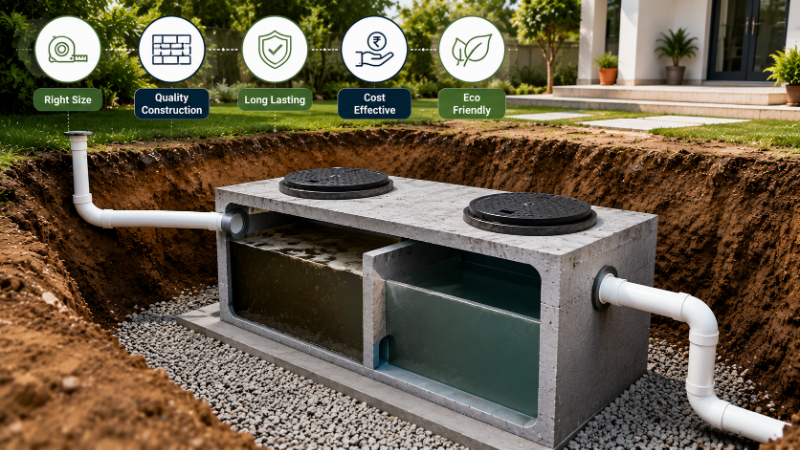
A septic tank is an underground wastewater treatment system that collects, treats, and disposes of domestic sewage. In India, where municipal sewage infrastructure doesn't reach many areas, septic tanks remain the primary solution for waste management in residential and commercial properties. The system typically consists of the septic tank itself, a drainage field, and connecting pipes.
The cost of constructing a septic tank varies significantly based on several factors including tank capacity, soil conditions, location, labor costs, and local regulations. On average, homeowners in India can expect to spend between ₹35,000 to ₹2,50,000 for a complete septic system installation, depending on the complexity and scale of the project.

Key Factors Affecting Septic Tank Construction Cost
1. Tank Capacity and Size
The primary cost driver for septic tank construction is the tank's capacity, measured in liters or cubic meters. Tank size depends on the number of occupants and water usage patterns:
Small tanks (500-1000 liters): For 2-3 person households, costing ₹25,000-₹50,000
Medium tanks (1000-2000 liters): For 4-6 person households, costing ₹50,000-₹1,00,000
Large tanks (2000-5000 liters): For 7-15 person households or small commercial establishments, costing ₹1,00,000-₹2,50,000
Extra-large tanks (5000+ liters): For large commercial properties, costing ₹2,50,000 and above
As a general rule, septic tank capacity should be 1000 liters per person per day. A family of five would require a minimum 5000-liter tank for adequate treatment and storage.
Frequently asked
2. Material Selection
The material you choose for your septic tank significantly impacts both cost and longevity:
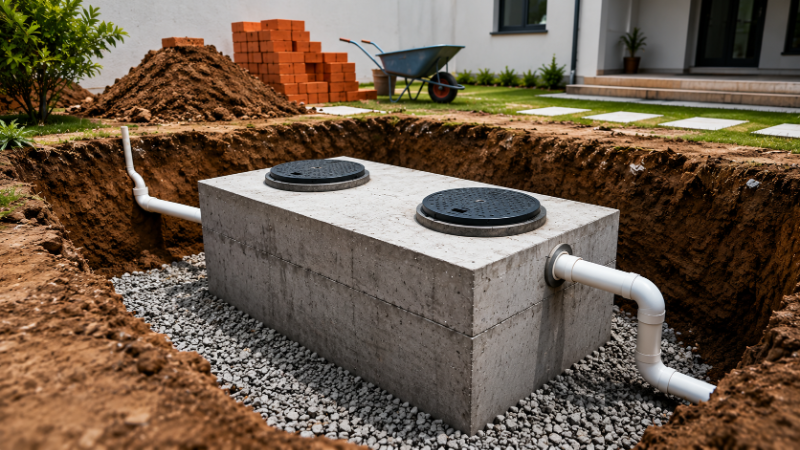
Reinforced Cement Concrete (RCC): The most common choice in India, RCC tanks cost ₹35,000-₹1,50,000 depending on size. They're durable, lasting 25-30 years, and can be customized to fit your space. However, they require skilled labor and proper curing.
Fiberglass Tanks: More expensive at ₹60,000-₹2,00,000, but lightweight, corrosion-resistant, and easier to install. They last 40+ years but are less commonly available in smaller Indian towns.
Brick and Mortar: The most economical option at ₹20,000-₹60,000, but less durable (15-20 years) and prone to leakage. Increasingly being phased out in favor of RCC tanks.
Plastic Tanks: Budget-friendly at ₹15,000-₹50,000, but less durable and may degrade under UV exposure if not properly buried.
For most Indian homeowners, RCC tanks offer the best balance of cost, durability, and availability, making them the industry standard recommended by municipal corporations across major cities like Mumbai, Chennai, Hyderabad, and Kolkata.
3. Labor Costs
Labor comprises 30-40% of total septic tank construction costs. In metropolitan areas like Bangalore and Hyderabad, skilled plumbers and septic tank specialists charge ₹500-₹1,500 per day, while in tier-2 cities like Indore or Nagpur, rates are ₹300-₹800 per day. A typical installation takes 5-10 days, resulting in labor costs of ₹3,000-₹15,000.
4. Soil Conditions and Site Preparation
Your property's soil composition directly affects construction complexity and cost. Sandy or loamy soil is ideal and requires minimal excavation (₹10,000-₹30,000). Rocky or clayey soil necessitates additional equipment rental and expert handling, increasing costs by 30-50%. Waterlogged areas require specialized drainage solutions, potentially adding ₹20,000-₹50,000 to your budget.
5. Location and Local Regulations
Different Indian states and municipalities have specific septic tank regulations. The Karnataka State Pollution Control Board, Maharashtra Pollution Control Board, and Tamil Nadu regulations all have distinct requirements affecting construction methods and costs.
In Tier-1 cities (Delhi, Mumbai, Bangalore, Hyderabad), stricter environmental standards may require:
Additional treatment chambers (₹15,000-₹40,000)
Soil percolation tests (₹5,000-₹10,000)
Municipal approvals and permits (₹2,000-₹10,000)
Advanced filtration systems (₹20,000-₹60,000)
In smaller towns and rural areas, requirements are typically less stringent, reducing overall costs by 15-25%.
6. Drainage Field Installation
The drainage or leach field, where treated water percolates into the soil, is essential for system functionality. Installation costs vary:
Standard trenches: ₹15,000-₹40,000
Raised bed systems: ₹30,000-₹70,000 (for high water table areas)
Constructed wetlands: ₹50,000-₹1,50,000 (eco-friendly, space-intensive)
Sand filters: ₹40,000-₹1,00,000 (for compact properties)
Septic Tank Construction Cost Breakdown
Here's a typical cost breakdown for a 2000-liter RCC septic tank installation in an urban area like Pune or Ahmedabad:
Materials (RCC, sand, gravel, pipes): ₹35,000-₹50,000 (45%)
Labor (excavation, construction, installation): ₹20,000-₹30,000 (25%)
Drainage field setup: ₹15,000-₹25,000 (20%)
Permits and testing: ₹5,000-₹10,000 (7%)
Contingency (10%): ₹7,500-₹10,000 (10%)
Total estimated cost: ₹82,500-₹1,25,000
Regional Cost Variations Across India
North India (Delhi, Noida, Gurgaon): ₹1,00,000-₹2,50,000 for medium systems due to higher labor costs and stricter regulations
South India (Bangalore, Chennai, Hyderabad): ₹80,000-₹2,00,000, with Bangalore on the higher end due to urbanization
West India (Mumbai, Pune, Ahmedabad): ₹90,000-₹2,20,000, influenced by high real estate costs
East India (Kolkata, Bhubaneswar): ₹70,000-₹1,50,000, relatively more affordable
Tier-2 and Tier-3 cities: ₹40,000-₹1,00,000, significantly lower than metropolitan areas
Cost-Saving Strategies for Septic Tank Construction
Plan Ahead and Get Multiple Quotes
Contact at least 3-4 contractors and compare detailed quotations. Prices can vary by 20-30% based on contractor expertise and overhead costs. Professional platforms like AECORD can connect you with verified septic tank specialists who provide competitive quotes.
Optimize Tank Size
Avoid oversizing your tank. A family of four needs approximately 4000 liters, not 5000-6000 liters. Accurate sizing reduces material costs by ₹10,000-₹20,000 without compromising functionality.
Choose Appropriate Materials
While RCC is standard, brick and mortar tanks can work in areas with stable groundwater and lower environmental regulations, saving ₹15,000-₹30,000. However, ensure the contractor has proper experience with these materials.
Combine with Other Construction
If building a new home, coordinate septic tank installation with foundation work. Shared equipment rental and continuous labor engagement can reduce costs by 10-15%.
DIY What You Can
If you have construction knowledge, handle site preparation, backfilling, and landscaping yourself, saving ₹5,000-₹10,000 on labor.
Maintenance and Long-Term Costs
While construction is a one-time expense, budget for ongoing maintenance:
Annual inspection: ₹1,000-₹2,000
Desludging every 2-3 years: ₹3,000-₹8,000
Repairs and replacements: ₹5,000-₹20,000 (as needed)
Proper maintenance extends your system's life from 25-30 years to 35-40 years, making it a worthwhile investment.
Common Mistakes That Increase Costs
Inadequate site investigation: Skipping soil percolation tests leads to system failures and costly corrections (₹30,000-₹1,00,000).
Poor contractor selection: Hiring inexperienced contractors results in substandard work, leaks, and premature system failure.
Ignoring local regulations: Non-compliance with municipal requirements can result in fines (₹10,000-₹50,000) and forced reconstruction.
Undersizing the system: A tank too small for your household causes frequent overflows and environmental contamination, necessitating expensive upgrades.
Finding the Right Septic Tank Professional
Selecting a qualified professional is crucial for cost-effective construction. Look for:
Certifications from relevant municipal corporations or environmental boards
Minimum 5 years of experience in septic system installation
References from completed projects in your area
Comprehensive warranty on workmanship (minimum 1-2 years)
Understanding of local regulations and soil conditions
On AECORD, you can find verified septic tank specialists, civil engineers, and contractors across major Indian cities. These professionals can provide accurate site assessments, detailed cost estimates, and quality construction ensuring your system functions optimally for decades.
Conclusion
Septic tank construction cost in India ranges from ₹35,000 to ₹2,50,000 depending on tank capacity, materials, location, and local regulations. While this represents a significant investment, a properly constructed and maintained septic system provides reliable wastewater treatment for 25-40 years, protecting both your property value and the environment.
The key to managing costs effectively is thorough planning, accurate assessment of your needs, and engaging qualified professionals. Whether you're in Bangalore, Delhi, Mumbai, or any other Indian city, investing time in understanding these cost factors will help you make informed decisions and avoid expensive mistakes.
Ready to start your septic tank project? Connect with experienced septic system specialists on AECORD today. Browse verified professionals in your area, compare quotes, and get expert guidance tailored to your specific requirements and budget. Your ideal septic system solution is just a few clicks away.
Frequently Asked Questions
How much does a septic tank cost in India in 2024?
The cost of septic tank construction in India ranges from ₹35,000 to ₹2,50,000 for a complete installation, depending on tank capacity, material, location, and soil conditions. Small residential tanks (500-1000 liters) cost ₹25,000-₹50,000, while larger systems for commercial properties can exceed ₹2,50,000.
What size septic tank do I need for my household?
Septic tank capacity should be calculated at 1000 liters per person per day. A family of five would require a minimum 5000-liter tank, while a 2-3 person household needs 500-1000 liters, and a 4-6 person household needs 1000-2000 liters for adequate treatment.
Which material is best for septic tank construction?
RCC (Reinforced Cement Concrete) tanks are the industry standard in India, offering the best balance of cost (₹35,000-₹1,50,000), durability (25-30 years), and availability. They're recommended by municipal corporations across major cities, though fiberglass tanks last longer (40+ years) at higher cost.
How much does labor cost for septic tank installation?
Labor comprises 30-40% of total septic tank costs. Skilled plumbers charge ₹500-₹1,500 per day in metropolitan areas and ₹300-₹800 per day in tier-2 cities. A typical installation takes 5-10 days, resulting in labor costs of ₹3,000-₹15,000.
How long does a septic tank last?
The lifespan depends on material: RCC tanks last 25-30 years, fiberglass tanks last 40+ years, brick and mortar tanks last 15-20 years, and plastic tanks are the least durable. Proper maintenance and regular pumping can extend the life of any septic system.