

RCC Wall Cost Per Sq Ft in India: A Comprehensive Guide for 2026
Reinforced Cement Concrete (RCC) walls have become the backbone of modern construction in India. Whether you're planning a residential apartment, commercial building, or industrial facility, understanding the cost of RCC walls is crucial for accurate budget planning. The cost of RCC walls per square foot varies significantly based on multiple factors, and this guide will help you navigate through all the important considerations.
Build cost · Bengaluru, May 2026
Understanding RCC Walls and Their Importance
RCC walls, also known as reinforced concrete walls, are structural elements made from concrete reinforced with steel bars (rebar). These walls provide superior strength, durability, and load-bearing capacity compared to traditional brick masonry. In India's diverse climate and seismic zones, RCC walls offer better protection against earthquakes, heavy rains, and temperature fluctuations.
The adoption of RCC walls has increased significantly in metropolitan areas like Mumbai, Bangalore, Delhi, and Hyderabad, where building codes mandate their use for multi-story structures. Even in smaller cities and towns, developers prefer RCC construction for its long-term cost-effectiveness and structural reliability.
Current RCC Wall Cost Per Sq Ft in India
Price Range Overview
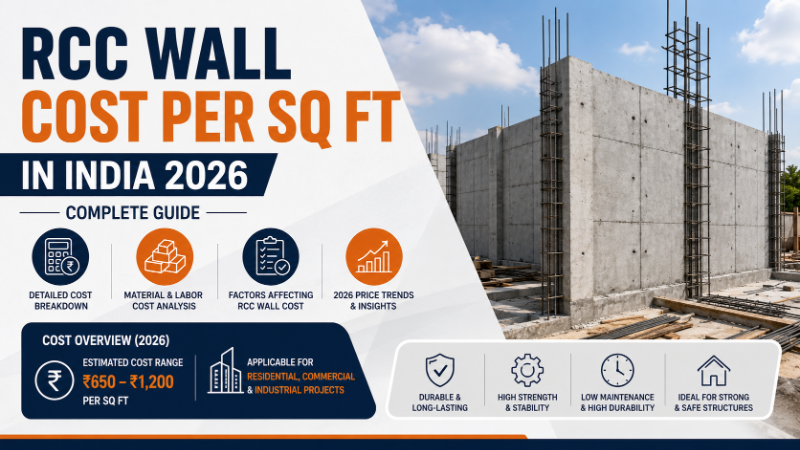
As of 2024, the cost of RCC walls in India typically ranges from ₹450 to ₹800 per square foot, depending on various factors. However, this is a broad estimate, and actual costs can vary significantly:
Budget construction: ₹450-₹550 per sq ft
Standard construction: ₹550-₹700 per sq ft
Premium construction: ₹700-₹800+ per sq ft
These costs typically include labor, materials (cement, sand, aggregate, steel), and basic finishing. However, they may not include specialized treatments, waterproofing, or architectural finishes that add to the final expense.
Frequently asked
Regional Variations
RCC wall costs vary considerably across Indian cities due to differences in labor rates, material availability, and transportation costs:
Metropolitan areas (Mumbai, Delhi, Bangalore): ₹650-₹850 per sq ft
Tier-2 cities (Pune, Ahmedabad, Jaipur): ₹500-₹700 per sq ft
Tier-3 cities and towns: ₹400-₹550 per sq ft
Remote or hilly areas: ₹550-₹750 per sq ft (due to transportation challenges)
Key Factors Affecting RCC Wall Costs
1. Material Costs
Material expenses constitute approximately 60-70% of the total RCC wall cost. The primary materials include:
Cement: Current prices range from ₹400-₹500 per 50kg bag, with variations based on brand and location
Steel (Rebar): Priced at approximately ₹50,000-₹65,000 per ton, fluctuating based on global commodity prices
Sand: Costs vary from ₹30-₹80 per cubic meter depending on availability and quality
Aggregate: Ranges from ₹40-₹100 per cubic meter
The concrete mix design significantly impacts costs. A standard M25 grade concrete (commonly used for RCC walls) requires specific proportions of cement, sand, and aggregate, with costs varying based on local availability.
2. Labor Costs
Labor expenses typically account for 20-30% of the total cost. Skilled workers command higher wages:
Skilled labor (masons, reinforcement workers): ₹600-₹1,200 per day
Semi-skilled workers: ₹400-₹700 per day
Unskilled labor: ₹300-₹500 per day
In metropolitan areas like Bangalore and Mumbai, labor costs are 30-40% higher than in smaller cities. The complexity of the project and wall thickness also influence labor requirements and costs.
3. Wall Thickness and Design
RCC wall thickness directly impacts material and labor costs:
100mm walls: Commonly used for partition walls, lower cost per sq ft
150mm walls: Standard for exterior walls and load-bearing structures
200mm+ walls: Used for basement walls, high-rise structures, and seismic zones
Thicker walls require more concrete and steel reinforcement, increasing costs proportionally. A 200mm wall can cost 30-40% more than a 150mm wall of similar specifications.
4. Concrete Grade and Mix Design
Different concrete grades serve different purposes and have varying costs:
M15 (Lean concrete): ₹4,500-₹5,500 per cubic meter
M20 (Standard): ₹5,000-₹6,000 per cubic meter
M25 (Common for walls): ₹5,500-₹6,500 per cubic meter
M30 and above (High-strength): ₹6,500-₹8,000+ per cubic meter
High-rise buildings and structures in seismic zones require higher-grade concrete, increasing overall wall costs significantly.
5. Reinforcement Requirements
Steel reinforcement quantity depends on:
Wall height and number of stories
Seismic zone classification (India has zones II-V)
Building codes and structural design requirements
Load-bearing capacity needed
Typical reinforcement ranges from 0.5-1.5% of concrete volume. For a 150mm thick wall, this translates to approximately 8-12 kg of steel per square meter, affecting costs significantly.
6. Location and Accessibility
Construction site accessibility impacts costs substantially:
Urban congested areas require specialized equipment and careful logistics
Remote or hilly terrain increases transportation costs by 20-50%
Proximity to material suppliers reduces costs by 10-15%
Ground conditions and soil quality may require additional foundation work
7. Formwork and Shuttering
The cost of temporary structures to hold concrete during curing includes:
Traditional wooden shuttering: ₹150-₹250 per sq ft of wall area
Steel or aluminum formwork: ₹200-₹350 per sq ft
Reusable formwork systems: Higher initial cost but economical for large projects
Formwork costs are sometimes included in labor charges but should be clarified separately in quotes.
Cost Breakdown for a Typical RCC Wall
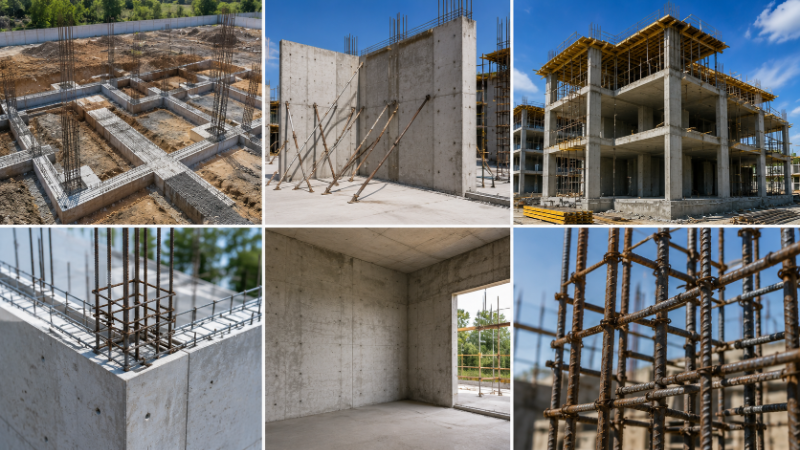
For a standard 150mm thick RCC wall (M25 grade) in a Tier-2 city, here's a typical cost breakdown:
Concrete (0.15 cubic meters per sq meter): ₹825-₹975
Steel reinforcement (10 kg per sq meter): ₹400-₹500
Formwork and shuttering: ₹200-₹300
Labor (skilled and unskilled): ₹300-₹400
Miscellaneous (water, tools, waste): ₹75-₹125
Total per sq ft: ₹550-₹700
This breakdown helps you understand where your money goes and identify areas where costs can be optimized.
Additional Costs to Consider
Waterproofing and Dampproofing
Essential for exterior walls, especially in monsoon-prone areas like Mumbai and Bangalore:
Bituminous coating: ₹50-₹100 per sq ft
Polyurethane membrane: ₹100-₹200 per sq ft
Cementitious waterproofing: ₹40-₹80 per sq ft
Plastering and Finishing
While sometimes considered separate, finishing costs should be factored in:
Basic cement plaster (12mm): ₹100-₹150 per sq ft
Gypsum plaster: ₹150-₹200 per sq ft
Putty and paint: Additional ₹50-₹150 per sq ft
Specialized Treatments
Certain projects require additional expenses:
Fire-resistant coatings: ₹100-₹200 per sq ft
Thermal insulation: ₹150-₹300 per sq ft
Acoustic treatment: ₹200-₹400 per sq ft
Tips to Optimize RCC Wall Costs
1. Efficient Design Planning
Work with experienced architects and structural engineers who understand cost-optimization techniques. On platforms like AECORD, you can connect with professionals who have expertise in designing cost-effective structures without compromising on safety.
2. Bulk Material Purchasing
Negotiate with suppliers for bulk orders of cement, steel, and aggregates. Large projects can achieve 5-10% savings through direct supplier partnerships.
3. Choose Appropriate Concrete Grade
Don't over-specify concrete grades. M25 is sufficient for most residential and commercial applications. Using M30 unnecessarily increases costs without proportional benefits.
4. Optimize Reinforcement Design
Structural engineers should calculate exact reinforcement requirements rather than using thumb rules. This can reduce steel consumption by 10-15% without compromising safety.
5. Timing and Seasonal Considerations
Material prices fluctuate seasonally. Cement prices are typically lower during monsoon months. Planning construction during these periods can yield savings.
6. Local Material Sourcing
Use locally available aggregates and sand. Transportation costs significantly impact final expenses, especially in tier-2 and tier-3 cities.
7. Skilled Labor Management
Hire experienced contractors who can complete work efficiently. Poor workmanship leads to rework and cost overruns. AECORD can help you find verified contractors in your area.
Comparing RCC Walls with Alternative Construction Methods
RCC vs. Brick Masonry
While brick masonry costs ₹350-₹450 per sq ft, RCC walls are preferred for:
Better earthquake resistance (critical in seismic zones)
Faster construction (30-40% quicker)
Superior durability and lower maintenance
Better load-bearing capacity for multi-story buildings
RCC vs. Precast Concrete Panels
Precast options cost ₹600-₹900 per sq ft but offer:
Faster construction timelines
Better quality control in factory conditions
Reduced on-site labor requirements
Higher initial investment but faster project completion
Current Market Trends (2026)
Several factors are influencing RCC wall costs in 2024:
Steel prices: Global market volatility continues to impact rebar costs
Cement prices: Stabilizing after previous increases, with slight downward pressure
Labor availability: Post-pandemic normalization has stabilized wage rates
Sustainability focus: Green concrete alternatives are emerging but at premium costs
Automation: Increased use of concrete pumps and modern equipment reducing labor dependency
How to Get Accurate Quotes for Your Project
When soliciting quotes for RCC wall construction, ensure clarity on:
Concrete grade and mix design specifications
Wall thickness and reinforcement details
Formwork type and removal schedule
Curing methodology
Inclusion or exclusion of waterproofing and finishing
Timeline and payment schedule
Warranty and quality guarantees
On AECORD, you can post your project requirements and connect with multiple verified contractors who can provide detailed quotes tailored to your specifications. This transparency helps you make informed decisions and avoid cost overruns.
Conclusion
RCC wall costs per square foot in India range from ₹450 to ₹800, with significant variations based on location, materials, labor, and design specifications. Understanding these cost drivers helps you plan budgets more accurately and identify optimization opportunities without compromising structural integrity.
Whether you're a property developer, architect, or individual homeowner, working with experienced professionals is crucial for managing costs effectively. Connect with qualified contractors, structural engineers, and project managers through AECORD to get competitive quotes, expert advice, and quality execution for your RCC wall construction projects. AECORD's platform makes it easy to compare options and find the right professionals for your specific needs and budget.
Remember that the cheapest option isn't always the best. Invest in quality materials and skilled labor to ensure your RCC walls stand the test of time and protect your investment for decades to come.
Frequently Asked Questions
What is the cost of RCC walls per square foot in India in 2024?
As of 2024, RCC wall costs in India range from ₹450 to ₹800 per square foot, with budget construction at ₹450-₹550, standard construction at ₹550-₹700, and premium construction at ₹700-₹800+ per sq ft. Costs vary based on location, materials, labor, and construction complexity.
Why are RCC walls more expensive than brick masonry walls?
RCC walls cost more due to their superior strength, durability, and load-bearing capacity, plus the added expense of steel reinforcement and skilled labor required for proper installation. They provide better protection against earthquakes, heavy rains, and temperature fluctuations, making them more cost-effective long-term.
How do RCC wall costs differ between cities in India?
Metropolitan areas like Mumbai and Delhi cost ₹650-₹850 per sq ft, Tier-2 cities like Pune cost ₹500-₹700 per sq ft, and Tier-3 cities cost ₹400-₹550 per sq ft. Remote and hilly areas cost ₹550-₹750 per sq ft due to transportation challenges and varying labor rates.
What materials make up the cost of RCC walls?
Materials account for 60-70% of RCC wall costs and include cement (₹400-₹500 per bag), steel rebar (₹50,000-₹65,000 per ton), sand (₹30-₹80 per cubic meter), and aggregate (₹40-₹100 per cubic meter). The specific concrete mix design affects final material costs.
What percentage of RCC wall cost is labor?
Labor typically accounts for 20-30% of total RCC wall costs, with skilled masons earning ₹600-₹1,200 per day, semi-skilled workers ₹400-₹700 per day, and unskilled labor ₹300-₹500 per day. Metropolitan areas have 30-40% higher labor costs than smaller cities.