Understanding Wall Construction Cost in India: A Comprehensive Guide
Wall construction is one of the most fundamental aspects of any building project, whether residential, commercial, or industrial. In India, the cost of wall construction varies significantly based on multiple factors including location, materials, construction method, and labor availability. Understanding these costs is crucial for architects, engineers, contractors, and property owners who need to budget accurately for their projects./blog/boundary-wall-construction-cost-india-2026
The wall construction cost in India typically ranges from ₹300 to ₹1,500 per square foot, depending on the type of wall, materials used, and regional variations. This comprehensive guide will help you understand the various factors affecting wall construction costs and how to plan your budget effectively.
Build cost · Bengaluru, May 2026
Factors Affecting Wall Construction Costs
1. Type of Wall Construction
Different wall construction methods have different cost implications. The most common types include:
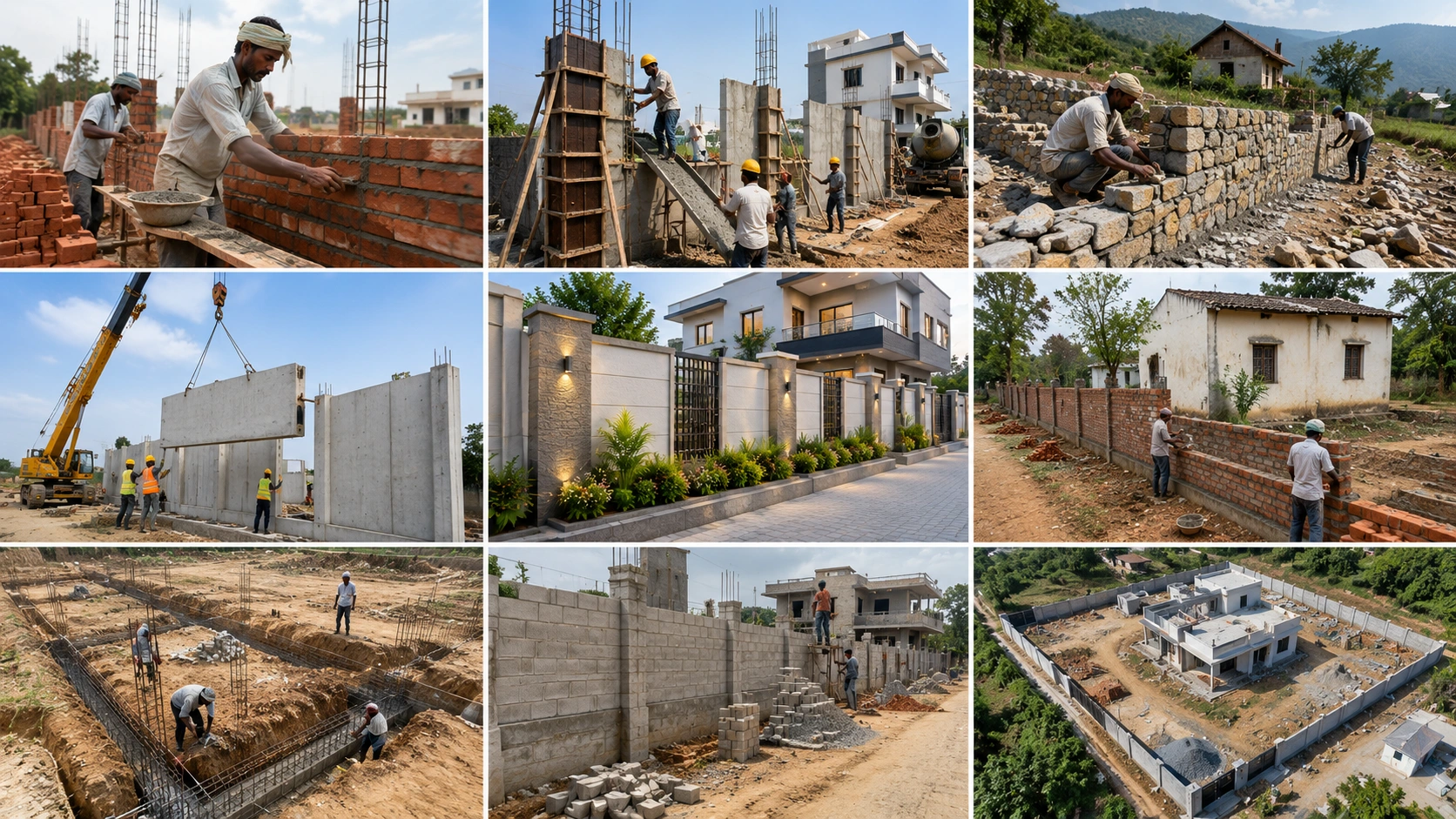
Brick Masonry Walls: The most traditional and widely used method in India, costing approximately ₹400-₹700 per square foot. This includes the cost of bricks, cement, sand, and labor.
Concrete Block Walls: More economical than brick masonry, ranging from ₹300-₹500 per square foot. These are faster to construct and provide better structural integrity.
Reinforced Cement Concrete (RCC) Walls: Used for load-bearing structures, costing ₹800-₹1,200 per square foot. These are more expensive but offer superior strength and durability.
Hollow Block Walls: An economical option at ₹250-₹400 per square foot, popular in residential construction for partition walls.
Stone Masonry Walls: Traditional in certain regions, costing ₹600-₹1,000 per square foot, depending on stone availability and quality.
2. Material Costs
Material costs constitute 40-50% of the total wall construction expense. Here's a breakdown of common materials:
Bricks: Standard burnt clay bricks cost ₹5-₹12 per piece in most Indian cities. A square foot of brick wall requires approximately 8-10 bricks, translating to ₹40-₹120 per square foot just for bricks.
Cement: Portland Pozzolana Cement (PPC) or Ordinary Portland Cement (OPC) costs ₹350-₹450 per 50kg bag. A square foot of masonry requires approximately 0.05 bags of cement.
Sand: River sand costs ₹30-₹60 per cubic foot, while manufactured sand is ₹20-₹40 per cubic foot. Sand is essential for mortar preparation.
Concrete: Ready-mix concrete costs ₹5,000-₹8,000 per cubic meter in metropolitan areas like Delhi, Mumbai, and Bangalore, while in tier-2 cities it may be ₹4,000-₹6,000 per cubic meter.
Steel Reinforcement: TMT bars cost ₹50-₹65 per kilogram, essential for RCC walls and structural stability.
Frequently asked
3. Labor Costs
Labor is a significant component, typically accounting for 30-40% of wall construction costs. In India, skilled masons charge ₹400-₹800 per day, while unskilled laborers earn ₹250-₹400 per day. A mason can typically construct 8-12 square feet of brick wall per day, meaning labor cost per square foot ranges from ₹33-₹100.
Labor costs vary considerably across regions. Metropolitan areas like Mumbai, Delhi, and Bangalore have higher labor costs compared to tier-2 and tier-3 cities. For instance, labor costs in Delhi might be 20-30% higher than in cities like Lucknow or Indore.
4. Geographic Location
Wall construction costs differ significantly across India:
Metropolitan Cities (Delhi, Mumbai, Bangalore, Hyderabad): ₹600-₹1,500 per square foot due to higher material and labor costs.
Tier-1 Cities (Pune, Kolkata, Chennai): ₹450-₹900 per square foot.
Tier-2 Cities (Lucknow, Indore, Nagpur): ₹350-₹700 per square foot.
Tier-3 Cities and Rural Areas: ₹300-₹500 per square foot.
Material availability also affects costs. Regions with local brick manufacturing units and sand quarries typically have lower material costs, while remote areas may face supply chain challenges and higher prices.
5. Wall Thickness and Height
Wall thickness directly impacts material and labor requirements. Standard wall thicknesses in India include:
4-inch (100mm) walls: Used for partition walls, most economical option.
8-inch (200mm) walls: Standard for external walls and load-bearing structures.
12-inch (300mm) walls: Used for basements and high-load bearing areas.
Doubling the wall thickness approximately doubles the material and labor cost. Height also matters—constructing walls beyond 12 feet requires additional scaffolding and safety measures, increasing labor costs by 15-25%.
Detailed Cost Breakdown for Common Wall Types
Brick Masonry Wall Construction Cost
For an 8-inch brick masonry wall in a metropolitan city:
Bricks (10 bricks per sq.ft.): ₹100-₹120
Cement and sand mortar: ₹80-₹120
Labor: ₹80-₹120
Scaffolding and miscellaneous: ₹40-₹60
Total: ₹300-₹420 per square foot
This cost may increase to ₹500-₹700 per square foot in premium locations or when using higher-quality bricks.
RCC Wall Construction Cost
For a reinforced concrete wall (8-inch thick):
Concrete (0.67 cubic feet per sq.ft.): ₹350-₹550
Steel reinforcement (3-4 kg per sq.ft.): ₹150-₹260
Formwork and shuttering: ₹150-₹250
Labor: ₹150-₹250
Total: ₹800-₹1,310 per square foot
Concrete Block Wall Construction Cost
For a 6-inch concrete block wall:
Concrete blocks (2-3 blocks per sq.ft.): ₹100-₹180
Mortar and adhesive: ₹40-₹60
Labor: ₹60-₹100
Miscellaneous: ₹20-₹40
Total: ₹220-₹380 per square foot
Regional Cost Variations and Examples
Delhi NCR Region
In Delhi and surrounding areas, brick masonry wall construction costs approximately ₹500-₹750 per square foot. The higher costs are due to strict building codes, expensive materials, and premium labor rates. RCC walls in Delhi can cost ₹1,000-₹1,400 per square foot.
Mumbai and Western Region
Mumbai's construction costs are among the highest in India, with brick walls costing ₹600-₹900 per square foot. The region's high real estate prices and stringent building regulations contribute to these costs. Concrete block walls are increasingly popular here as a cost-saving alternative.
Bangalore and Southern Region
Bangalore offers moderate costs at ₹450-₹700 per square foot for brick masonry. The availability of manufactured sand and local concrete suppliers helps keep costs competitive. Concrete block construction is particularly popular in this region at ₹300-₹500 per square foot.
Tier-2 Cities
Cities like Lucknow, Indore, and Nagpur offer the best value for wall construction. Brick masonry walls cost ₹350-₹550 per square foot, while concrete blocks are available at ₹200-₹350 per square foot. These cities are ideal for budget-conscious projects.
Additional Costs to Consider
Finishing and Plastering
Wall plastering, essential for weatherproofing and aesthetics, adds ₹50-₹150 per square foot depending on the finish quality. Cement plaster costs ₹50-₹80, while gypsum plaster ranges from ₹80-₹150 per square foot.
Waterproofing
Waterproofing treatments, especially for external walls and basements, cost ₹30-₹100 per square foot. This is crucial in high-rainfall areas across India.
Painting
Wall painting adds ₹30-₹80 per square foot depending on paint quality and number of coats.
Scaffolding and Safety
Temporary scaffolding costs ₹20-₹50 per square foot and is essential for worker safety on multi-story buildings.
Cost-Saving Strategies for Wall Construction
Choose Appropriate Wall Types
Evaluate whether all walls need to be load-bearing. Partition walls can use hollow blocks or concrete blocks instead of expensive brick masonry, saving 30-40% on material costs.
Optimize Material Sourcing
Source materials locally when possible. Buying bricks directly from manufacturers and sand from nearby quarries can reduce costs by 15-25%. Consider bulk purchasing for better rates.
Plan Efficient Construction Sequencing
Proper planning reduces labor time and scaffolding requirements. Coordinating with other trades minimizes delays and rework.
Use Technology and Innovation
Prefabricated wall panels and AAC (Autoclaved Aerated Concrete) blocks can reduce construction time by 20-30%, lowering labor costs despite higher material costs. AAC blocks cost ₹45-₹80 per block but provide better insulation and faster construction.
Quality Control
Investing in proper quality control prevents costly rework. Defective brickwork or poor mortar mixing leads to structural issues and additional expenses later.
Regulatory Considerations Affecting Costs
Building codes and regulations vary across Indian states and municipalities. Compliance with these regulations may increase costs:
Seismic Zones: High-seismic areas require reinforced walls and additional structural measures, increasing costs by 15-25%.
Fire Safety: Fire-resistant walls in commercial buildings require special materials and construction techniques.
Environmental Standards: Some states restrict certain materials or require sustainable construction practices.
How AECORD Can Help with Your Wall Construction Project
Planning a wall construction project and need expert guidance? AECORD connects you with verified architects, structural engineers, and contractors across India who can provide accurate cost estimates and quality execution. Whether you're in Delhi, Mumbai, Bangalore, or any other city, AECORD's network of professionals can help you understand local costs, select appropriate materials, and ensure compliance with regional building codes.
Finding the right professionals for your wall construction is crucial for budget management and quality assurance. AECORD makes it easy to compare quotes, review professional credentials, and connect with experienced teams who understand regional variations in wall construction costs.
Conclusion
Wall construction costs in India vary significantly based on location, materials, construction method, and labor availability. While brick masonry remains the most common method, concrete blocks and RCC walls offer cost-effective alternatives for specific applications. Understanding these costs and factors helps in accurate budgeting and project planning.
For your next wall construction project, whether it's a residential building in Bangalore, a commercial complex in Mumbai, or an industrial structure in Delhi, careful consideration of material costs, labor rates, and regional variations is essential. Get in touch with experienced professionals on AECORD today to discuss your wall construction requirements and receive detailed cost estimates tailored to your specific project needs and location.
Frequently Asked Questions
What is the average cost of wall construction per square foot in India?
Wall construction costs in India typically range from ₹300 to ₹1,500 per square foot, depending on factors like wall type, materials used, location, and labor availability. Brick masonry walls generally cost ₹400-₹700 per square foot, while concrete block walls are more economical at ₹300-₹500 per square foot.
Which type of wall construction is most cost-effective in India?
Hollow block walls are the most economical option at ₹250-₹400 per square foot, followed by concrete block walls at ₹300-₹500 per square foot. These options are popular for partition walls and residential construction where cost efficiency is prioritized without compromising structural integrity.
How much do materials contribute to total wall construction costs?
Materials typically account for 40-50% of total wall construction costs. Bricks alone cost ₹40-₹120 per square foot, while cement, sand, concrete, and steel reinforcement add to the material expenses depending on the wall type and construction method used.
What is the labor cost for wall construction in India?
Skilled masons in India charge ₹400-₹800 per day, while unskilled laborers earn ₹250-₹400 per day. Labor costs typically represent 30-40% of total wall construction expenses and vary by region, with metropolitan areas like Delhi and Mumbai being 20-30% more expensive than tier-2 and tier-3 cities.
How do wall construction costs differ between Indian cities?
Metropolitan cities like Delhi, Mumbai, Bangalore, and Hyderabad have significantly higher costs at ₹600-₹1,500 per square foot due to elevated material and labor expenses, while tier-2 and tier-3 cities offer more economical rates. Geographic location is a major factor affecting overall wall construction budgets.