Boundary Wall Construction Cost in India 2026: Complete Guide
Boundary walls are one of the most essential components of property development in India, serving both functional and aesthetic purposes. Whether you're constructing a residential complex, commercial property, or industrial facility, understanding the current cost structure for boundary wall construction is crucial for accurate budgeting and project planning.
In 2026, boundary wall construction costs have evolved significantly due to inflation, material price fluctuations, labor availability, and regional variations. This comprehensive guide breaks down everything you need to know about boundary wall construction expenses across India.
For a closer look, see our guide on Bathroom Renovation Cost India 2026: Complete.
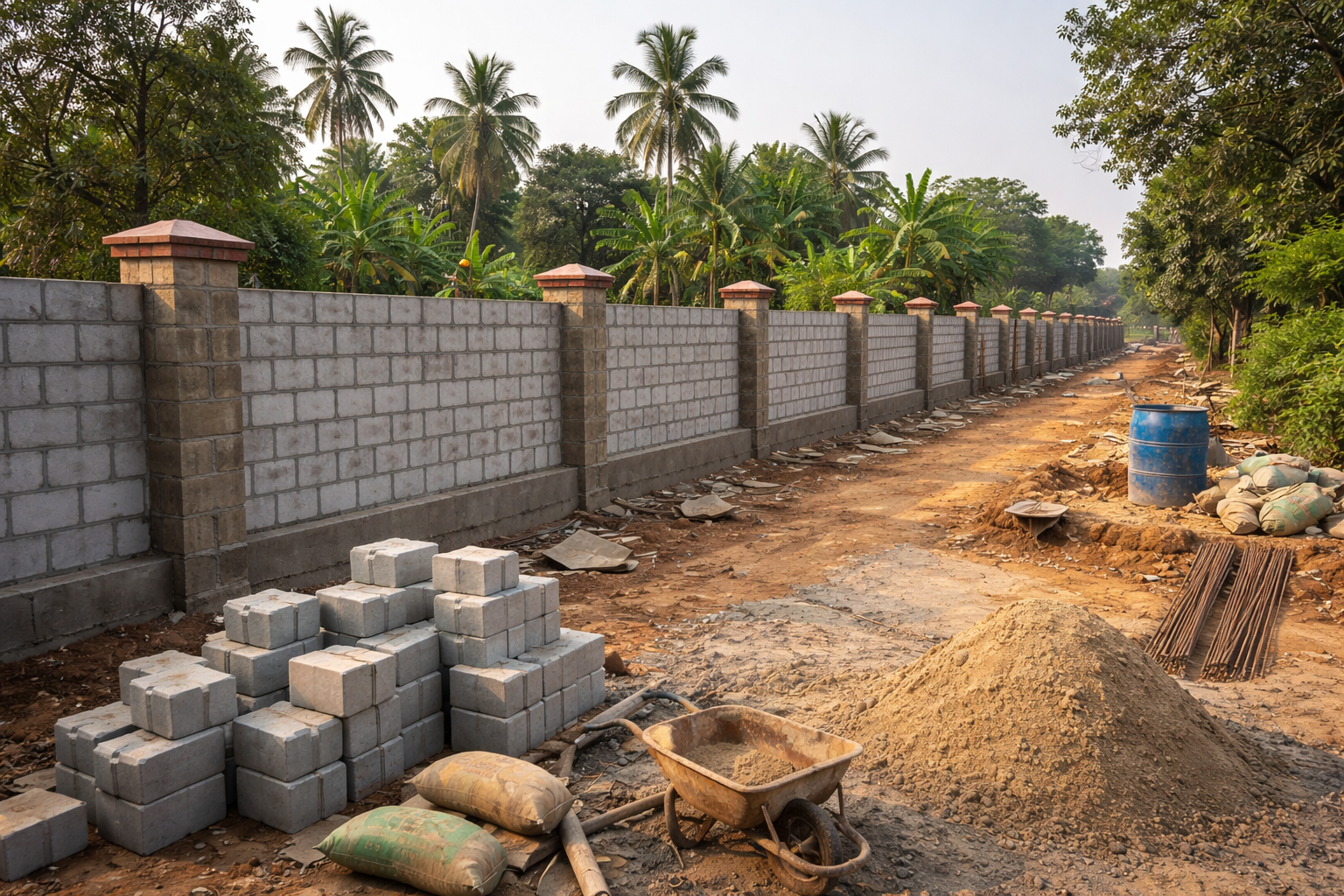
Build cost · Bengaluru, May 2026
Current Boundary Wall Construction Costs in India 2026
Average Cost Per Running Meter
As of 2026, the average cost of boundary wall construction in India ranges from ₹800 to ₹2,500 per running meter, depending on multiple factors. Here's a breakdown by wall type:
Simple Brick Masonry Wall (4-6 inches): ₹800 to ₹1,200 per running meter
Reinforced Brick Masonry Wall (9 inches): ₹1,200 to ₹1,800 per running meter
Concrete Block Wall (6-8 inches): ₹1,000 to ₹1,500 per running meter
RCC (Reinforced Concrete) Wall: ₹1,500 to ₹2,500 per running meter
Stone Masonry Wall: ₹1,400 to ₹2,200 per running meter
Metal Fence/Compound Fencing: ₹600 to ₹1,500 per running meter
These costs include materials, labor, and basic finishing. Heights typically range from 4 to 8 feet, with variations based on local regulations and property requirements.
Cost Variations by Indian Cities
Boundary wall construction costs vary significantly across major Indian cities due to differences in labor rates, material availability, and local construction practices:
Delhi/NCR: ₹1,200 to ₹2,000 per running meter
Mumbai: ₹1,500 to ₹2,300 per running meter
Bangalore: ₹1,100 to ₹1,900 per running meter
Hyderabad: ₹900 to ₹1,600 per running meter
Chennai: ₹950 to ₹1,700 per running meter
Pune: ₹1,000 to ₹1,800 per running meter
Kolkata: ₹800 to ₹1,500 per running meter
Ahmedabad: ₹850 to ₹1,550 per running meter
Frequently asked
Detailed Cost Breakdown
Material Costs
Material costs typically account for 50-60% of the total boundary wall construction expense. Here's what you can expect in 2026:
Bricks (per 1,000 units):
Common Red Bricks: ₹3,500 to ₹5,500
Fly Ash Bricks: ₹4,000 to ₹6,000
Concrete Blocks: ₹5,000 to ₹7,500
Cement and Aggregates (per 50 kg bag of cement):
Portland Cement: ₹380 to ₹480
Sand (per cubic meter): ₹400 to ₹800
Gravel/Aggregate (per cubic meter): ₹350 to ₹700
Reinforcement Steel:
TMT Bars (per kg): ₹55 to ₹75
Mesh Wire: ₹60 to ₹90 per kg
Finishing Materials:
Paint (per liter): ₹200 to ₹600
Plaster/Putty (per kg): ₹8 to ₹15
Tiles/Coping (per square meter): ₹300 to ₹1,000
Labor Costs
Labor costs represent 30-40% of the total project expense and vary based on skill level and location:
Skilled Mason (per day): ₹600 to ₹1,200
Semi-skilled Worker (per day): ₹400 to ₹700
Unskilled Labor (per day): ₹300 to ₹500
A typical boundary wall project requires approximately 0.8 to 1.2 labor days per running meter, depending on wall type and complexity.
Additional Costs to Consider
Foundation and Excavation: ₹150 to ₹400 per running meter
Plastering and Pointing: ₹200 to ₹400 per running meter
Painting/Coating: ₹100 to ₹300 per running meter
Gate Installation: ₹15,000 to ₹1,50,000 depending on type and size
Contingency (10-15% of total cost): Budget accordingly for unforeseen expenses
Factors Affecting Boundary Wall Construction Costs
Wall Height and Thickness
Wall height is one of the primary cost drivers. Standard residential boundary walls are typically 4-6 feet, while commercial properties may require 6-8 feet or higher. Each additional foot of height increases material and labor costs proportionally. Wall thickness also impacts expense—a 9-inch wall costs more than a 4-inch wall due to increased material requirements.
Wall Material Selection
The choice of material significantly influences the final cost. Brick masonry remains the most popular and economical option in India, while RCC walls offer better durability and require less maintenance. Stone masonry provides aesthetic appeal but comes at a premium. Metal fencing is economical for temporary structures but may not be suitable for all applications.
Site Conditions and Accessibility
Difficult terrain, poor accessibility, and challenging soil conditions increase construction costs. Projects in hilly areas or those requiring extensive foundation work will cost more. Urban sites with traffic restrictions may also incur additional expenses.
Local Regulations and Permits
Different municipalities have varying regulations regarding boundary wall height, material, and design. Some areas require specific setbacks or architectural compliance, which can increase costs. Municipal approval processes and permit fees (typically ₹500 to ₹5,000) should be factored into budgets.
Inflation and Material Price Fluctuations
In 2026, construction material prices have seen steady inflation of 5-8% annually. Cement, steel, and brick prices are particularly volatile, influenced by fuel costs and market demand. It's advisable to lock in material prices through quotations before project commencement.
Labor Availability
In metropolitan areas, skilled labor availability is limited, driving up wages. Seasonal variations also affect labor costs—construction during peak season (October-February) may be 10-15% more expensive than off-season work.
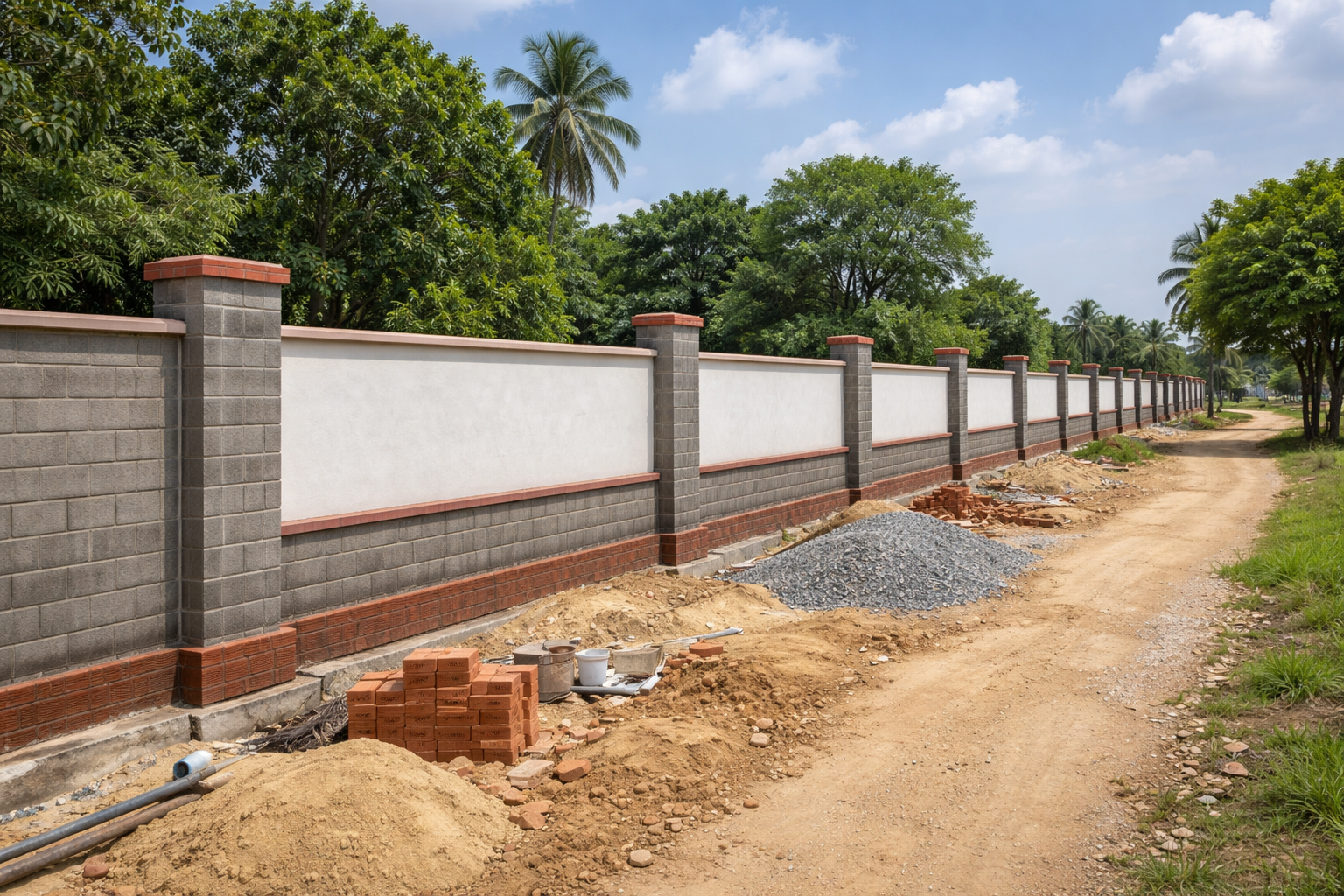
Cost Estimation Example: 500-Meter Boundary Wall
Let's calculate the cost for a typical 500-meter, 6-foot-high, 9-inch reinforced brick masonry boundary wall in Bangalore:
Material Cost: 500m × ₹900 = ₹4,50,000
Labor Cost: 500m × 1m labor × ₹700/day = ₹3,50,000
Foundation & Excavation: 500m × ₹250 = ₹1,25,000
Plastering & Finishing: 500m × ₹250 = ₹1,25,000
Subtotal: ₹11,50,000
Contingency (12%): ₹1,38,000
Total Estimated Cost: ₹12,88,000
Cost per Running Meter: ₹2,576
Ways to Optimize Boundary Wall Construction Costs
Choose the Right Material
Evaluate your requirements carefully. For temporary boundaries, metal fencing is cost-effective. For permanent structures, brick masonry offers a good balance between cost and durability. Concrete blocks are another economical option that requires less skilled labor.
Plan Proper Foundation
Investing in a proper foundation prevents costly repairs later. Poor foundation work may lead to wall cracks and structural issues, requiring expensive remedial work. Spend 10-12% of your budget on foundation to ensure longevity.
Bulk Material Procurement
Purchase materials in bulk to negotiate better rates. Direct sourcing from manufacturers can save 8-12% compared to retail prices. However, ensure proper storage facilities to prevent wastage.
Schedule Work During Off-Season
Scheduling construction during June-September (monsoon off-season in some regions) or May-June can reduce labor costs by 10-15%. However, consider weather implications and adjust timelines accordingly.
Simplify Design
Complex designs with curves, multiple heights, or decorative elements increase costs. A straight, uniform boundary wall is the most economical option. You can add aesthetic appeal through painting or planting without significantly increasing expenses.
Use Local Materials
Using locally available materials reduces transportation costs. For instance, if your area has abundant stone, stone masonry might be more economical than importing bricks from distant locations.
Digital Project Management for Boundary Wall Construction
Modern construction management platforms can help optimize costs and timelines. Using tools available on platforms like AECORD, you can:
Get multiple quotations from local contractors and suppliers
Compare material prices across vendors in real-time
Track project progress and expenses digitally
Access standardized specifications and cost benchmarks
Maintain transparent communication with all stakeholders
Digital management reduces cost overruns by 8-12% through better visibility and accountability.
Quality Assurance and Maintenance
Quality Control During Construction
Investing in quality control prevents costly rework. Regular inspections, material testing, and adherence to specifications ensure your boundary wall lasts 30-40 years. Quality control costs approximately 2-3% of the project budget but save multiples in maintenance.
Maintenance and Longevity
Proper maintenance extends wall life and reduces overall cost of ownership. Annual maintenance costs are approximately:
Brick Masonry: ₹30 to ₹50 per running meter annually
RCC Walls: ₹20 to ₹40 per running meter annually
Stone Masonry: ₹40 to ₹60 per running meter annually
Regulatory Compliance and Permits
Before starting construction, ensure compliance with local building bylaws. Most Indian municipalities require:
Approved architectural plans
Boundary wall permission from local authorities
Compliance with setback requirements (typically 0.5-1 meter from property line)
Height restrictions (usually 6-8 feet for residential areas)
Non-compliance can result in penalties (₹5,000 to ₹50,000) or mandatory demolition, making it essential to obtain proper approvals before construction.
Environmental Considerations
Sustainable boundary wall construction is gaining importance in 2026. Consider:
Eco-friendly Materials: Fly ash bricks, recycled aggregate, and sustainable timber (for gates)
Water Management: Proper drainage design to prevent water logging
Green Boundaries: Combining walls with hedges and green planting reduces environmental impact
Waste Management: Proper disposal of construction waste (typically ₹100-200 per cubic meter)
Conclusion
Boundary wall construction costs in India for 2026 range from ₹800 to ₹2,500 per running meter, depending on material choice, location, and specifications. By understanding the cost components, optimizing material selection, and leveraging digital project management tools, you can effectively manage your budget while ensuring quality construction.
The key to cost-effective boundary wall construction lies in proper planning, accurate material estimation, and choosing the right contractor. Whether you're working on a residential property in Bangalore or a commercial complex in Delhi, these guidelines will help you make informed decisions and achieve your construction goals within budget.
Frequently Asked Questions
What is the most cost-effective boundary wall material in India?
Brick masonry remains the most cost-effective option, costing ₹800-1,200 per running meter. It offers a good balance between durability, aesthetics, and cost. Concrete blocks are slightly cheaper (₹1,000-1,500) but may require more maintenance. For temporary structures, metal fencing at ₹600-1,500 per meter is economical.
How long does a typical boundary wall last?
A well-constructed boundary wall can last 30-40 years. Brick masonry walls typically last 25-35 years, while RCC walls can last 40-50 years with proper maintenance. Regular maintenance, timely repairs, and protection from water damage significantly extend wall life and reduce long-term costs.
Do I need permission from the municipality to construct a boundary wall?
Yes, most Indian municipalities require prior approval for boundary wall construction. You need to submit architectural plans, obtain building permission, and ensure compliance with local height and setback regulations. Failure to obtain permission can result in penalties or demolition orders. Check with your local municipal corporation for specific requirements.
What is the typical height of boundary walls in residential areas?
In most Indian residential areas, boundary walls are 4-6 feet high. However, regulations vary by municipality and location. Some areas permit up to 8 feet, while others restrict to 4 feet. Check your local municipal bylaws before finalizing wall height to avoid compliance issues.
How can I reduce boundary wall construction costs without compromising quality?
Several strategies can reduce costs: (1) Choose brick masonry over RCC if appropriate for your needs, (2) Simplify the design and avoid decorative elements, (3) Purchase materials in bulk directly from manufacturers, (4) Schedule construction during off-season when labor rates are lower, (5) Use locally available materials, and (6) Get multiple quotations from contractors. Digital project management tools can also help optimize costs by 8-12%.