


Understanding Structural Engineering Fees in India for Residential Projects
When planning a residential construction project in India, structural engineering is one of the most critical components. Whether you're building a single-story house, a multi-story apartment complex, or a renovation project, understanding structural engineering fees is essential for budgeting and project planning. The cost of structural engineering services varies significantly based on project scope, location, complexity, and the engineer's experience level.
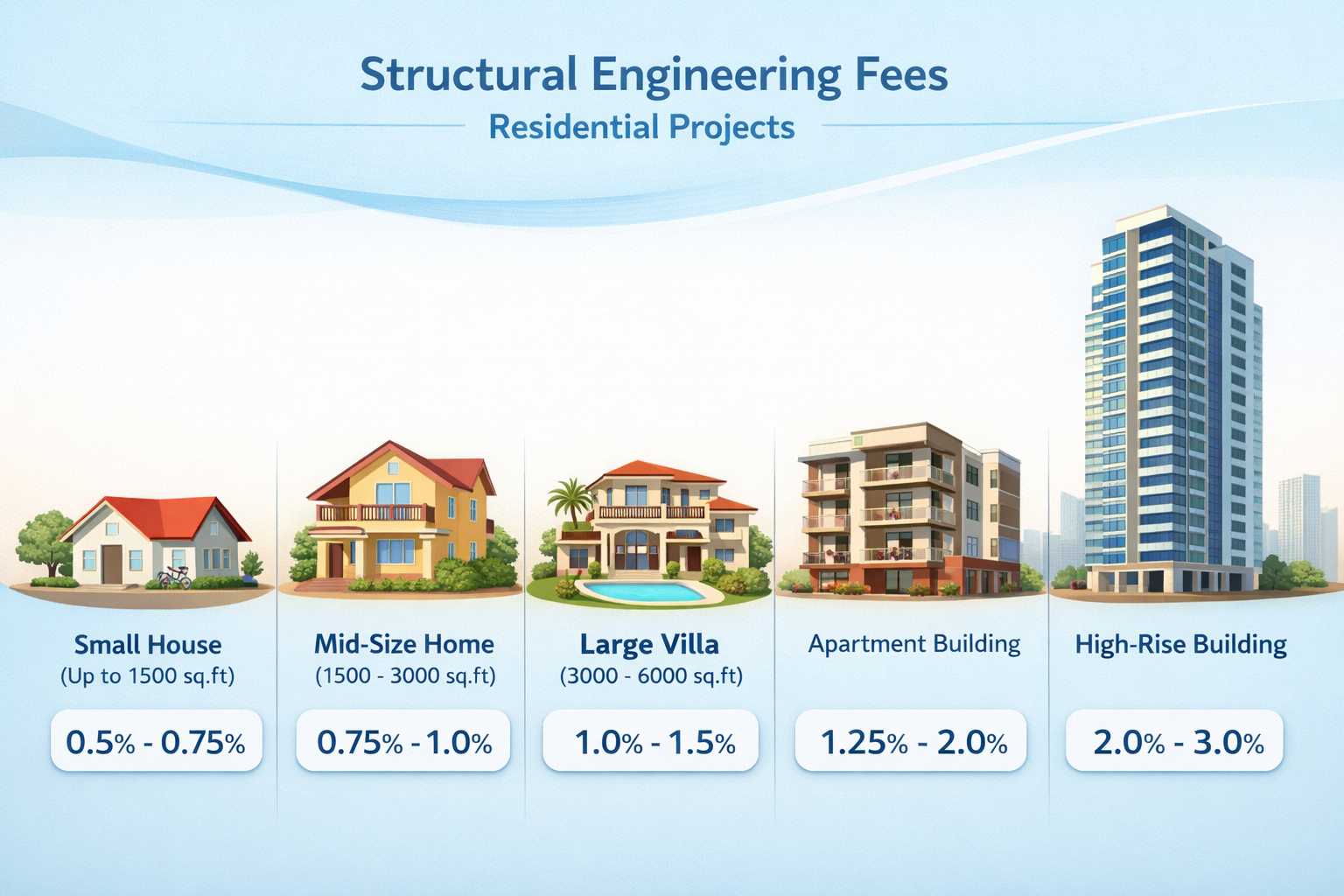
In India, structural engineering fees for residential projects typically range from 0.5% to 2% of the total construction cost, though this can vary considerably. For a residential project costing ₹50 lakhs, you might expect to pay ₹25,000 to ₹1 lakh for structural engineering services. Understanding these costs and what they include can help you make informed decisions for your project.
Build cost · Bengaluru, May 2026
What Do Structural Engineering Fees Include?
Design and Planning Services
Structural engineering fees cover comprehensive design work that forms the foundation of your construction project. This includes:
Structural analysis and design of the building framework
Load calculations and stress analysis
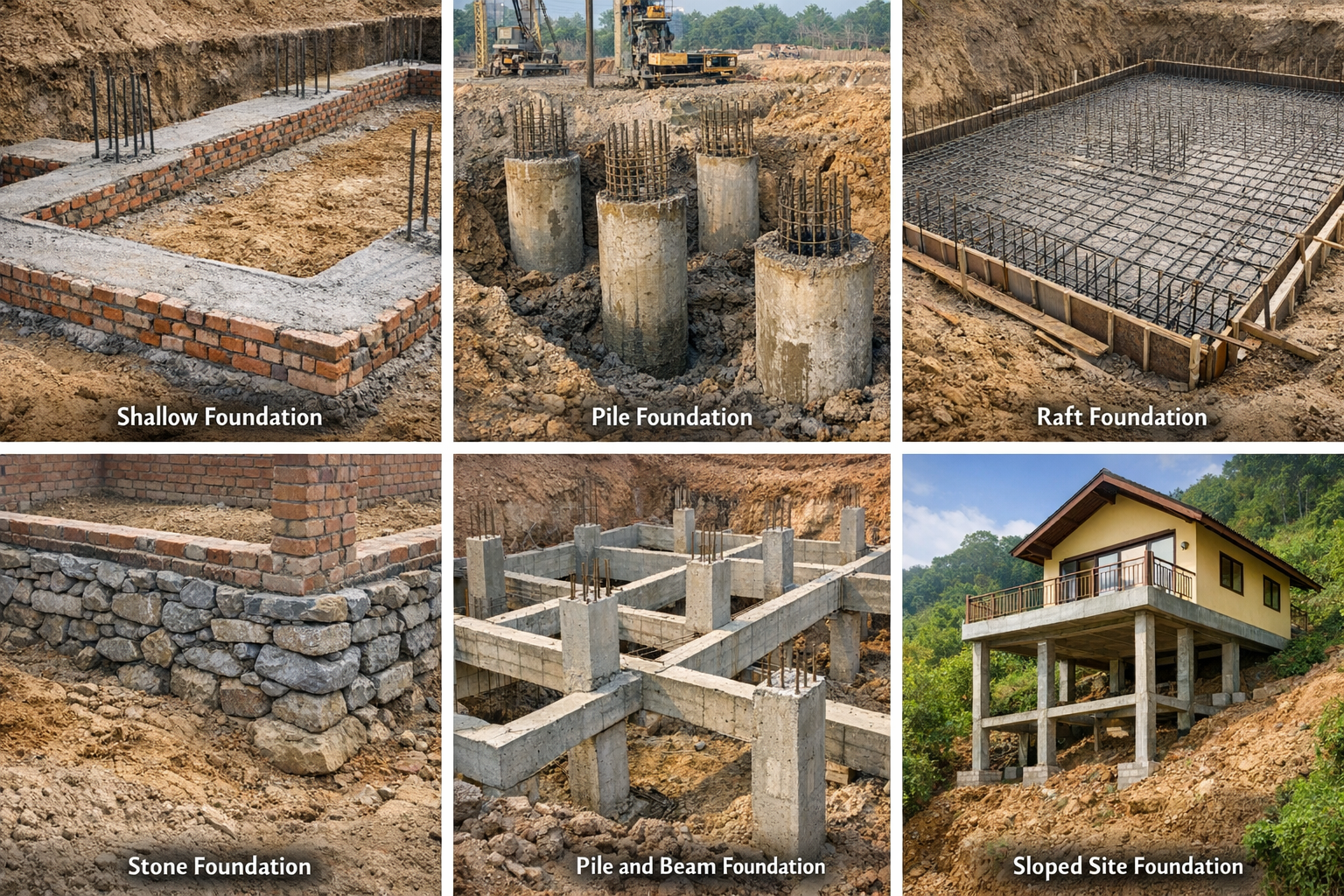
Foundation design suitable for soil conditions
Preparation of detailed structural drawings
Building Information Modeling (BIM) in modern practices
Compliance with Indian Standards (IS codes)
The design phase is crucial as it determines the safety, durability, and cost-effectiveness of your construction. A structural engineer analyzes factors like the building's height, intended use, local climate conditions, and soil bearing capacity to create an optimal design.
Site Investigation and Soil Testing
Most structural engineering projects require soil investigation to determine the foundation requirements. This typically includes:
Borehole drilling and soil sample collection
Laboratory testing of soil samples
Soil bearing capacity determination
Groundwater level assessment
Geotechnical report preparation
Soil testing costs in India typically range from ₹10,000 to ₹40,000 depending on the project location and site conditions. In metro cities like Mumbai, Delhi, and Bangalore, these costs tend to be higher due to specialized testing requirements and stricter regulations.
Frequently asked
Supervision and Quality Control
Structural engineers provide on-site supervision during construction to ensure the project is executed according to design specifications. This includes:
Regular site inspections and monitoring
Quality control of materials and workmanship
Verification of concrete strength through testing
Structural health monitoring
Compliance certification and documentation
Structural Engineering Fee Structure in India
Percentage-Based Fees
The most common fee structure in India is percentage-based, calculated as a percentage of the total construction cost:
Simple residential projects (G+1 to G+2): 0.5% to 0.75% of construction cost
Medium complexity (G+3 to G+5): 0.75% to 1.25% of construction cost
High complexity (G+6 and above): 1.25% to 2% of construction cost
Projects with special requirements: 1.5% to 2.5% of construction cost
For example, a 2-story residential building costing ₹80 lakhs would incur structural engineering fees of approximately ₹40,000 to ₹60,000 at 0.5-0.75% of the construction cost.
Fixed Fee Structure
Some structural engineers charge fixed fees based on project parameters:
Small residential projects (up to 1000 sq ft): ₹20,000 to ₹50,000
Medium residential projects (1000-2500 sq ft): ₹50,000 to ₹1.5 lakhs
Large residential projects (2500-5000 sq ft): ₹1.5 lakhs to ₹3 lakhs
Very large projects (above 5000 sq ft): ₹3 lakhs and above
Hourly Consultation Rates
For specific consultations or smaller components, some engineers charge hourly rates:
Junior structural engineers: ₹500 to ₹1,500 per hour
Senior structural engineers: ₹1,500 to ₹3,500 per hour
Principal/Lead engineers: ₹3,500 to ₹7,000 per hour
Regional Variations in Structural Engineering Fees
Metropolitan Cities
In major metropolitan areas, structural engineering fees are significantly higher due to increased demand, stricter regulations, and higher cost of living:
Mumbai: 1.0% to 2.0% of construction cost (premium rates due to high-rise construction and seismic considerations)
Delhi: 0.8% to 1.8% of construction cost (stricter building codes)
Bangalore: 0.75% to 1.5% of construction cost
Hyderabad: 0.7% to 1.4% of construction cost
Tier-2 and Tier-3 Cities
Smaller cities and towns generally have lower structural engineering fees:
Pune, Ahmedabad, Jaipur: 0.5% to 1.0% of construction cost
Smaller towns: 0.4% to 0.75% of construction cost
The variation reflects differences in project complexity, local expertise availability, and regulatory requirements. Tier-1 cities often have stricter seismic codes (particularly Mumbai, Delhi, and Kolkata) which increase design complexity and fees.
Factors Affecting Structural Engineering Fees
Building Height and Complexity
The number of stories significantly impacts structural design complexity. A G+4 building requires more sophisticated structural analysis than a G+2 building due to increased loads and lateral forces. Taller buildings in seismic zones require specialized design considerations, which increases fees by 20-40%.
Soil and Foundation Conditions
Difficult soil conditions require more extensive investigation and specialized foundation designs. Projects requiring:
Pile foundations: Add 30-50% to base fees
Raft foundations: Add 20-30% to base fees
Deep excavation: Add 25-40% to base fees
Seismic Zone Classification
India is divided into seismic zones (Zone 1-5, with Zone 5 being most seismic). Projects in higher seismic zones require more rigorous design and analysis:
Zone 1-2 (Low seismic): Standard fees apply
Zone 3-4 (Moderate to high seismic): 15-25% premium
Zone 5 (Very high seismic): 25-40% premium
Cities like Mumbai (Zone 3), Delhi (Zone 4), and parts of Northeast India (Zone 5) fall under higher seismic categories, increasing structural engineering costs.
Building Materials and Systems
Different construction systems affect design complexity and fees:
Conventional RCC frame construction: Standard fees
Shear wall systems: 10-15% higher fees
Steel frame construction: 15-25% higher fees
Composite construction: 20-30% higher fees
Special Features and Requirements
Additional features that increase structural engineering fees include:
Basement construction: 15-25% additional fees
Swimming pools or water tanks: 10-20% additional fees
Cantilever balconies: 10-15% additional fees
Curved or irregular shapes: 20-30% additional fees
Green building compliance (LEED/IGBC): 15-25% additional fees
Typical Cost Examples for Indian Residential Projects
Single-Story Independent House (1500 sq ft)
Construction Cost: ₹40 lakhs Structural Engineering Fee (0.6%): ₹24,000 Soil Testing: ₹12,000 Site Supervision (per month): ₹5,000-8,000 Total Structural Engineering Cost: ₹36,000-60,000
2-Story Independent House (3000 sq ft)
Construction Cost: ₹90 lakhs Structural Engineering Fee (0.75%): ₹67,500 Soil Testing: ₹18,000 Site Supervision (per month): ₹8,000-12,000 Total Structural Engineering Cost: ₹85,500-1,35,000
Apartment Building (G+3, 20 units)
Construction Cost: ₹3 crores Structural Engineering Fee (1.0%): ₹30 lakhs Soil Testing: ₹30,000 Site Supervision (per month): ₹20,000-30,000 Total Structural Engineering Cost: ₹32-36 lakhs
How AECORD Can Help with Structural Engineering
Finding the right structural engineer for your residential project can be challenging. AECORD, India's B2B2C AECO marketplace, connects you with qualified structural engineers who understand local regulations, soil conditions, and seismic requirements specific to your region.
Through AECORD, you can:
Compare structural engineers and their fee structures across your city
Review engineer credentials, certifications, and past projects
Get transparent cost quotes for your specific project
Access engineers experienced with projects similar to yours
Ensure compliance with local building codes and Indian Standards
Tips for Managing Structural Engineering Costs
Plan Early
Involve structural engineers during the initial planning stages. Early involvement helps identify potential design issues and cost-saving opportunities before construction begins.
Choose the Right Engineer
While cost is important, selecting an experienced engineer can save money in the long run by avoiding design errors and construction delays. An engineer with experience in your specific project type and location will provide better value.
Understand Your Soil
Invest in proper soil testing early. This prevents expensive foundation redesigns later. A ₹15,000-30,000 investment in soil testing can save ₹2-5 lakhs in foundation costs.
Standardize Designs
For similar units in multi-unit projects, standardized designs reduce engineering costs. Repeating the same structural design across multiple units is cheaper than custom designs for each unit.
Clarify Scope of Work
Ensure you have a detailed agreement specifying what's included in the structural engineering fees. This prevents unexpected additional charges later.
Get Multiple Quotes
Obtain quotes from at least 3-4 structural engineers. This helps you understand the market rate and choose the best value, not just the lowest price.
Structural Engineering Standards and Compliance in India
All structural engineering work in India must comply with Indian Standards (IS codes). Key relevant standards include:
IS 456:2000 - Plain and Reinforced Concrete Code
IS 1893:2016 - Criteria for Earthquake Resistant Design of Structures
IS 875:2015 - Code of Practice for Design Loads for Buildings
IS 1904:1986 - Code of Practice for Design, Execution and Supervision of Brick Work
Structural engineers must be registered with the Council of Architecture (CoA) or have relevant engineering degrees and experience. Always verify your engineer's credentials and registration status before hiring.

Additional Costs to Consider
Beyond the structural engineer's fees, consider these related costs:
Building Approval/Sanction: ₹10,000-50,000 (varies by municipal corporation)
Third-party structural audit: ₹20,000-1 lakh (recommended for large projects)
Material testing and certification: ₹5,000-15,000
Completion certificate: ₹5,000-10,000
Frequently Asked Questions
What is the typical timeline for structural engineering design?
For a simple residential project, structural design typically takes 2-4 weeks. Medium complexity projects (G+3 to G+5) take 4-8 weeks. Large or complex projects may take 8-12 weeks or more. This timeline depends on site conditions, approvals, and any design revisions required. Having clear requirements and timely approvals from your end speeds up the process.
Are structural engineering fees negotiable?
Yes, fees are often negotiable, especially for larger projects or when multiple services are bundled together. However, avoid choosing an engineer solely based on lowest cost. An experienced engineer who charges slightly more may provide better designs, catch potential issues early, and save you money overall. Always prioritize quality and credentials over cost alone.
Do I need a separate structural engineer if I hire an architect?
Yes, you typically need both. While architects focus on design, aesthetics, and space planning, structural engineers focus on safety, load-bearing capacity, and structural integrity. Some architects have structural engineering qualifications, but for residential projects, it's best to have a dedicated structural engineer. They work together to create safe, functional, and beautiful buildings.
What happens if I don't hire a structural engineer?
Building without proper structural engineering is risky and illegal in India. It can result in structural failures, safety hazards, legal penalties, and rejection of your building by municipal authorities. You won't get completion certificates or occupancy permits without proper structural certification. The cost of hiring an engineer is minimal compared to the risks of not doing so.
How often should structural engineers supervise the construction?
For residential projects, structural engineers should visit the site at critical construction stages: foundation laying, concrete pouring, column construction, and before concrete finishing. For complex projects, weekly or bi-weekly visits are recommended. Most engineers charge supervision fees separately from design fees, typically ₹5,000-30,000 per site visit depending on project size and location.