



Introduction to TMT Steel Bars in India
TMT (Thermo-Mechanically Treated) steel bars are widely used in the construction industry due to their high strength, durability, and cost-effectiveness. In India, the demand for TMT steel bars is on the rise, driven by rapid urbanisation and infrastructure development. This article provides a comprehensive comparison of TMT steel bars, including their types, properties, applications, and cost considerations in the Indian market.
Build cost · Bengaluru, May 2026
Types of TMT Steel Bars
TMT steel bars come in various grades and types, each designed for specific applications. Here’s a detailed look at the most common types:
1. Fe 415 TMT Steel Bars
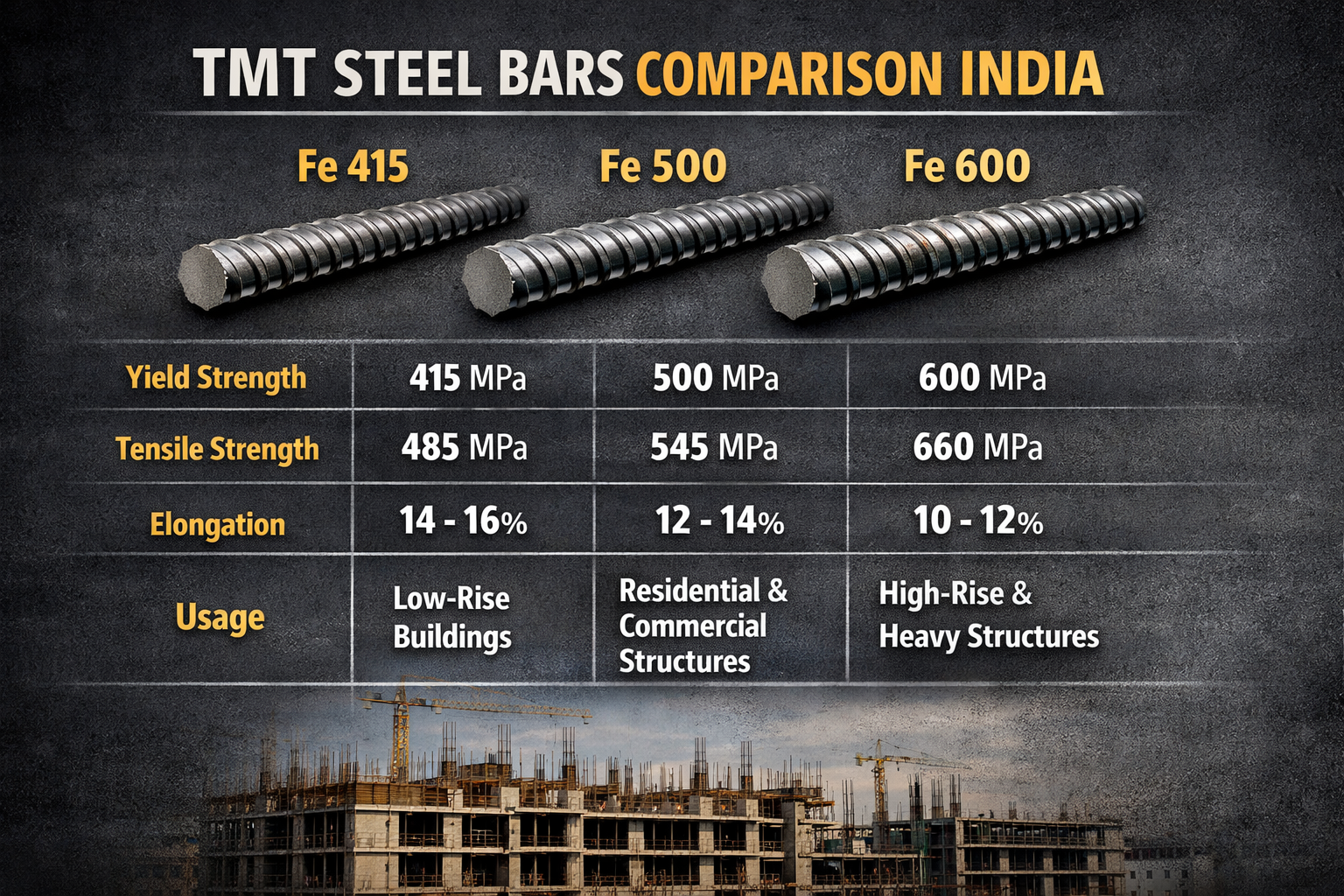
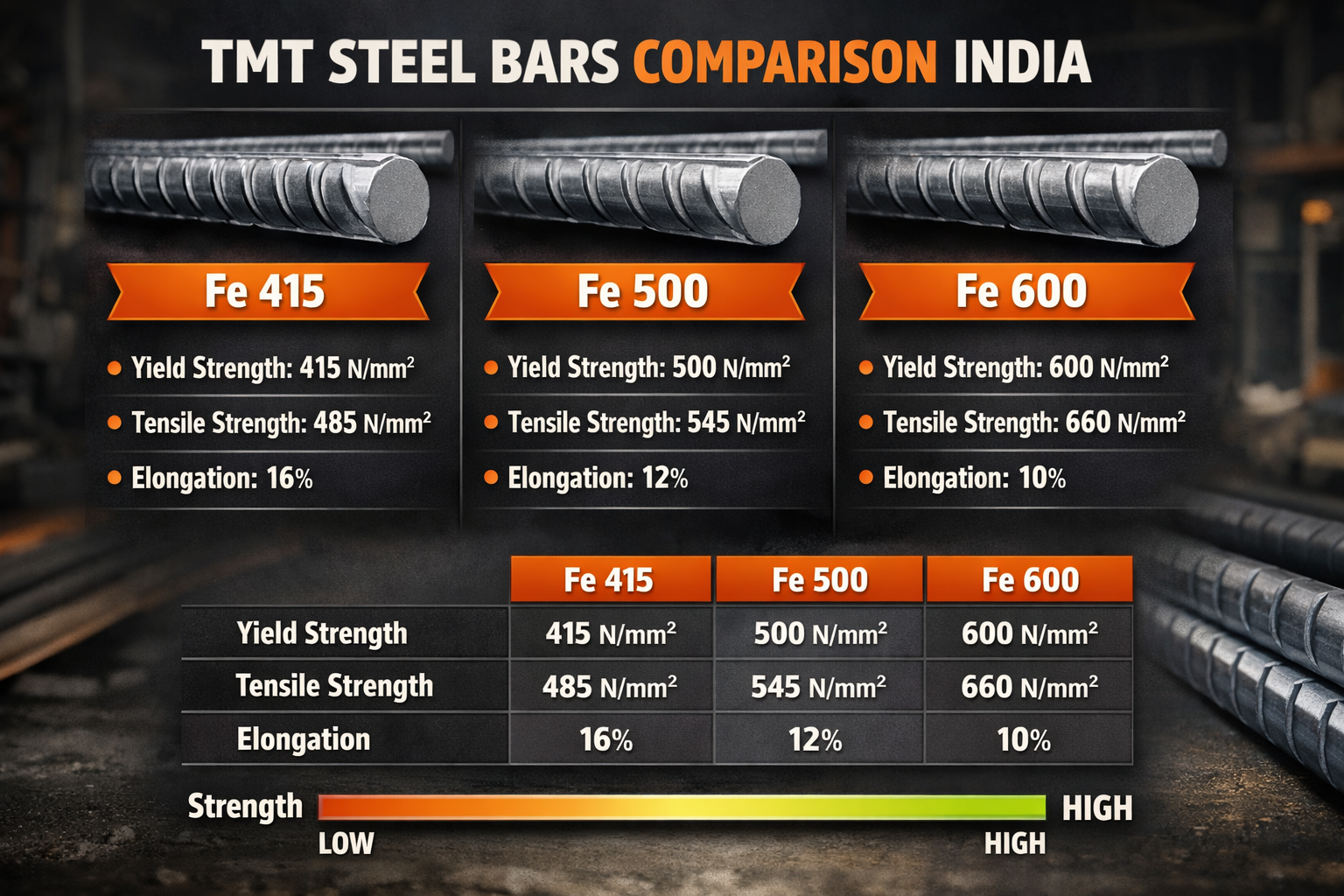
Fe 415 TMT steel bars are the most commonly used grade in India. They have a yield strength of 415 MPa, making them suitable for general construction purposes. These bars are ideal for residential buildings, small commercial structures, and light industrial projects.
2. Fe 500 TMT Steel Bars
Fe 500 TMT steel bars offer higher strength with a yield strength of 500 MPa. They are suitable for structures requiring greater load-bearing capacity, such as multi-story buildings and bridges. These bars are also used in heavy industrial applications where high tensile strength is essential.
Frequently asked
3. Fe 600 TMT Steel Bars
Fe 600 TMT steel bars have a yield strength of 600 MPa. They are used in large industrial projects, high-rise buildings, and structures requiring exceptional load-bearing capacity. These bars are also suitable for offshore constructions due to their corrosion-resistant properties.
Properties of TMT Steel Bars
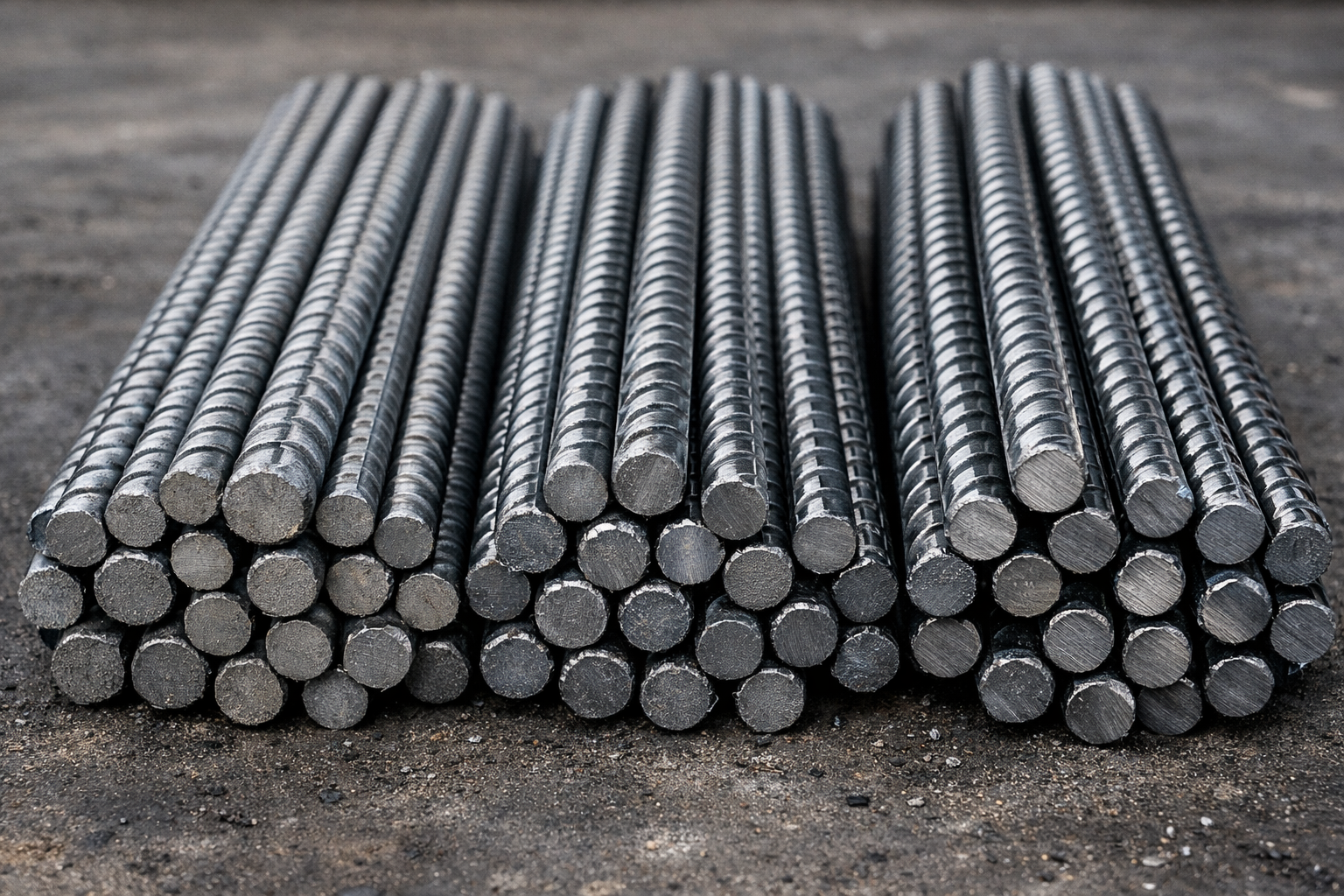
The properties of TMT steel bars are crucial in determining their suitability for various applications. The key properties include:
1. Yield Strength
The yield strength of TMT steel bars is the maximum stress that can be applied without causing permanent deformation. Higher yield strength indicates greater durability and load-bearing capacity.
2. Tensile Strength
The tensile strength of TMT steel bars is the maximum stress that can be applied before breaking. This property ensures that the bars can withstand extreme loads and stresses.
3. Elongation
Elongation is the percentage increase in length of a steel bar when subjected to tension. Higher elongation indicates better ductility, making the bars more resistant to cracking and breaking under stress.
4. Surface Finish
The surface finish of TMT steel bars can affect their corrosion resistance and aesthetic appeal. Smooth-surfaced bars are more resistant to rust and provide a better finish in construction.
Applications of TMT Steel Bars
TMT steel bars are used in a wide range of construction applications, from residential homes to large infrastructure projects. Here are some common applications:
1. Residential Construction
TMT steel bars are extensively used in residential construction due to their cost-effectiveness and high strength. They are suitable for load-bearing walls, beams, columns, and floors.
2. Commercial Construction
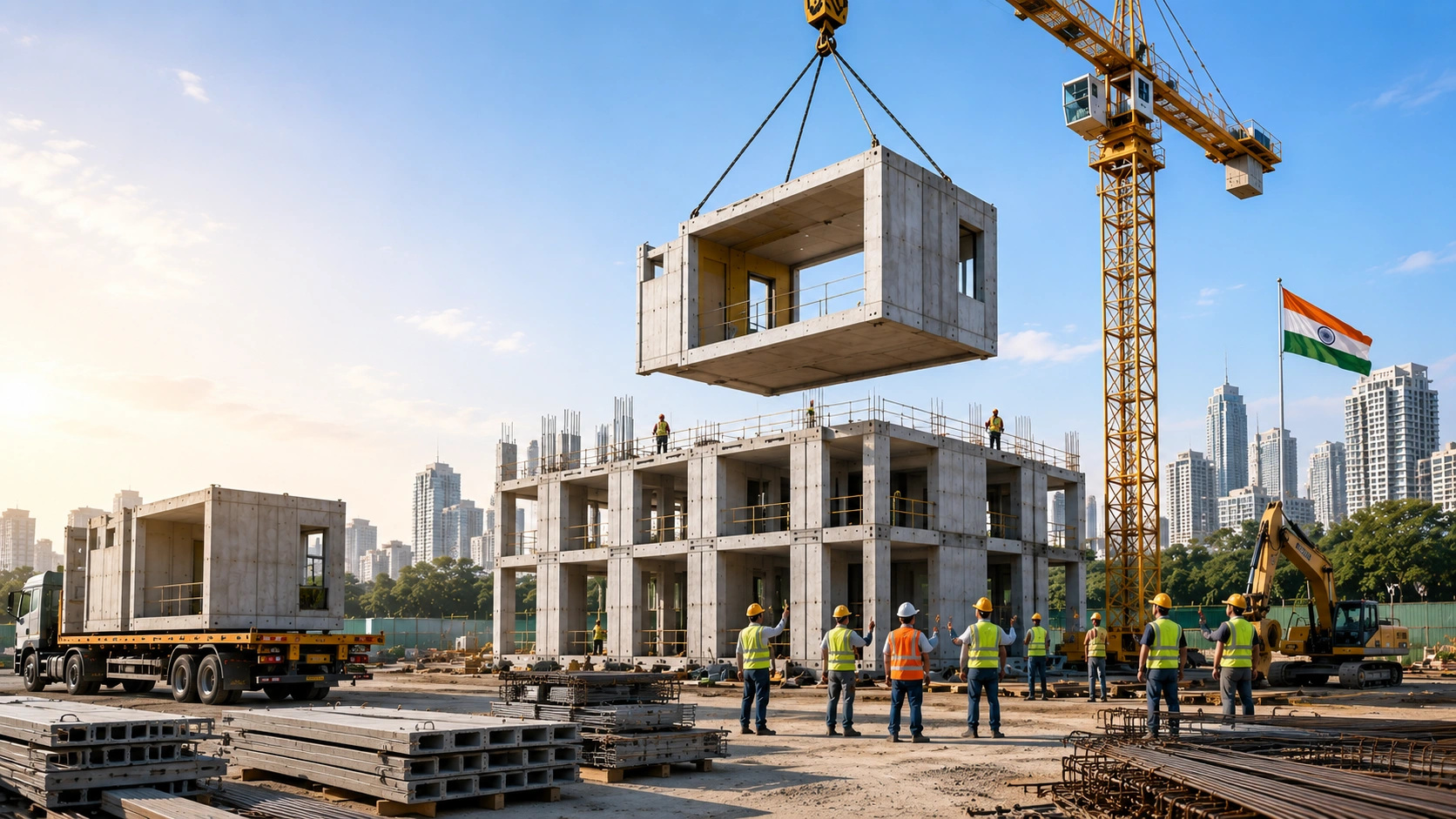
TMT steel bars are used in commercial construction for high-rise buildings, shopping malls, and office complexes. They provide the required load-bearing capacity and are suitable for long spans.
3. Industrial Construction
TMT steel bars are used in industrial construction for factories, warehouses, and power plants. They offer the necessary strength and durability to withstand heavy loads and vibrations.
4. Infrastructure Projects
TMT steel bars are used in infrastructure projects such as bridges, roads, and dams. They provide the required strength and stability to support heavy loads.
Cost Considerations of TMT Steel Bars in India
The cost of TMT steel bars is influenced by various factors, including grade, quality, location, and market demand. Here’s a detailed look at the cost considerations:
1. Grade and Quality
The cost of TMT steel bars varies based on their grade and quality. Higher-grade bars with better properties tend to be more expensive.
2. Location
The cost of TMT steel bars can vary depending on the location in India. Prices may be higher in urban areas compared to rural areas due to increased demand and transportation costs.
3. Market Demand
The cost of TMT steel bars can fluctuate based on market demand. During peak construction seasons, prices may rise due to higher demand.
4. Production Costs
The cost of TMT steel bars is also influenced by production costs, including raw material prices, labor costs, and energy costs. Higher production costs can lead to higher bar prices.
Regulations and Standards in India
The Indian government has established various regulations and standards for TMT steel bars to ensure their quality and safety. Here’s a brief overview of the key regulations:
1. IS 458:2006
The Indian Standards (IS) 458:2006 specifies the general properties and requirements for mild steel bars, including TMT steel bars. It sets standards for strength, ductility, and other properties.
2. CPSC 458-1996
The Central Pollution Control Standards (CPSC) 458-1996 sets standards for air pollution from steel plants, including those producing TMT steel bars. It aims to reduce emissions and protect the environment.
3. BIS Certification The Bureau of Indian Standards (BIS) certification is required for TMT steel bars sold in India. It ensures that the bars meet quality and safety standards. Choosing the Right TMT Steel Bars for Your Project Selecting the right TMT steel bars is crucial for ensuring the safety and durability of your construction project. Here are some key considerations: 1. Project Requirements
The first step is to assess the requirements of your project, including load-bearing capacity, span length, and structural design. This will help you determine the appropriate grade of TMT steel bars.
2. Quality and Compliance Choose TMT steel bars that meet quality standards and comply with regulations. Look for BIS certification and ensure that the bars are produced by reputable manufacturers. 3. Price and Availability
Compare prices and availability from different suppliers to get the best deal. However, prioritize quality over price to avoid potential issues in the long run.
h3>4. Testing and Inspection
Before using TMT steel bars in your project, ensure that they are tested and inspected by certified agencies. This will help you verify their strength and quality.
Conclusion
TMT steel bars are an essential component of modern construction in India. Their high strength, durability, and cost-effectiveness make them suitable for various applications ranging from residential buildings to large infrastructure projects. By understanding the different types, properties, and cost considerations of TMT steel bars, you can make informed decisions for your construction projects. Remember to choose high-quality TMT steel bars that meet regulatory standards and ensure the safety and longevity of your structures.
Call to Action
If you are in need of high-quality TMT steel bars or other construction materials, visit AECORD, India's premier B2B2C marketplace for architecture, engineering, construction, and operations (AECO) professionals. AECORD connects you with trusted suppliers and manufacturers who can provide the materials you need for your project. Explore our wide range of products, compare prices, and find the best deals today!
Frequently Asked Questions
What is the difference between Fe 415, Fe 500, and Fe 600 TMT steel bars?
The main difference is their yield strength: Fe 415 has 415 MPa yield strength and is used for general residential construction, Fe 500 offers 500 MPa for multi-story buildings and bridges, and Fe 600 provides 600 MPa for high-rise buildings and industrial projects. Higher grades offer greater load-bearing capacity but typically cost more.
Which TMT steel bar grade is best for residential construction in India?
Fe 415 TMT steel bars are the most commonly used and cost-effective grade for residential construction in India. They provide sufficient yield strength of 415 MPa for load-bearing walls, beams, columns, and floors in residential buildings.
What is yield strength in TMT steel bars and why does it matter?
Yield strength is the maximum stress a steel bar can handle without permanent deformation, measured in MPa. It's crucial because higher yield strength indicates greater durability and load-bearing capacity, ensuring the structure can safely support heavier loads.
When should you use Fe 500 or Fe 600 TMT steel bars instead of Fe 415?
Use Fe 500 for multi-story buildings, bridges, and heavy industrial applications requiring greater load-bearing capacity. Choose Fe 600 for large industrial projects, high-rise buildings, and offshore constructions where exceptional strength and corrosion resistance are essential.
What properties of TMT steel bars affect their construction performance?
Key properties include yield strength (load capacity), tensile strength (breaking point), elongation (ductility and crack resistance), and surface finish (corrosion resistance). These properties determine how well the bars perform under stress and environmental conditions.