

Understanding GFRC Panels: The Future of Lightweight Facade Systems in India
Glass Fiber Reinforced Concrete (GFRC) is rapidly transforming modern architecture in India. Combining the strength of concrete with the flexibility of composite materials, GFRC panels offer architects and developers a lightweight, durable, and design-friendly alternative to traditional cladding systems. From commercial towers in Mumbai to luxury residences in Bengaluru, GFRC is becoming a preferred material for contemporary facade design.
Build cost · Bengaluru, May 2026
What is GFRC?
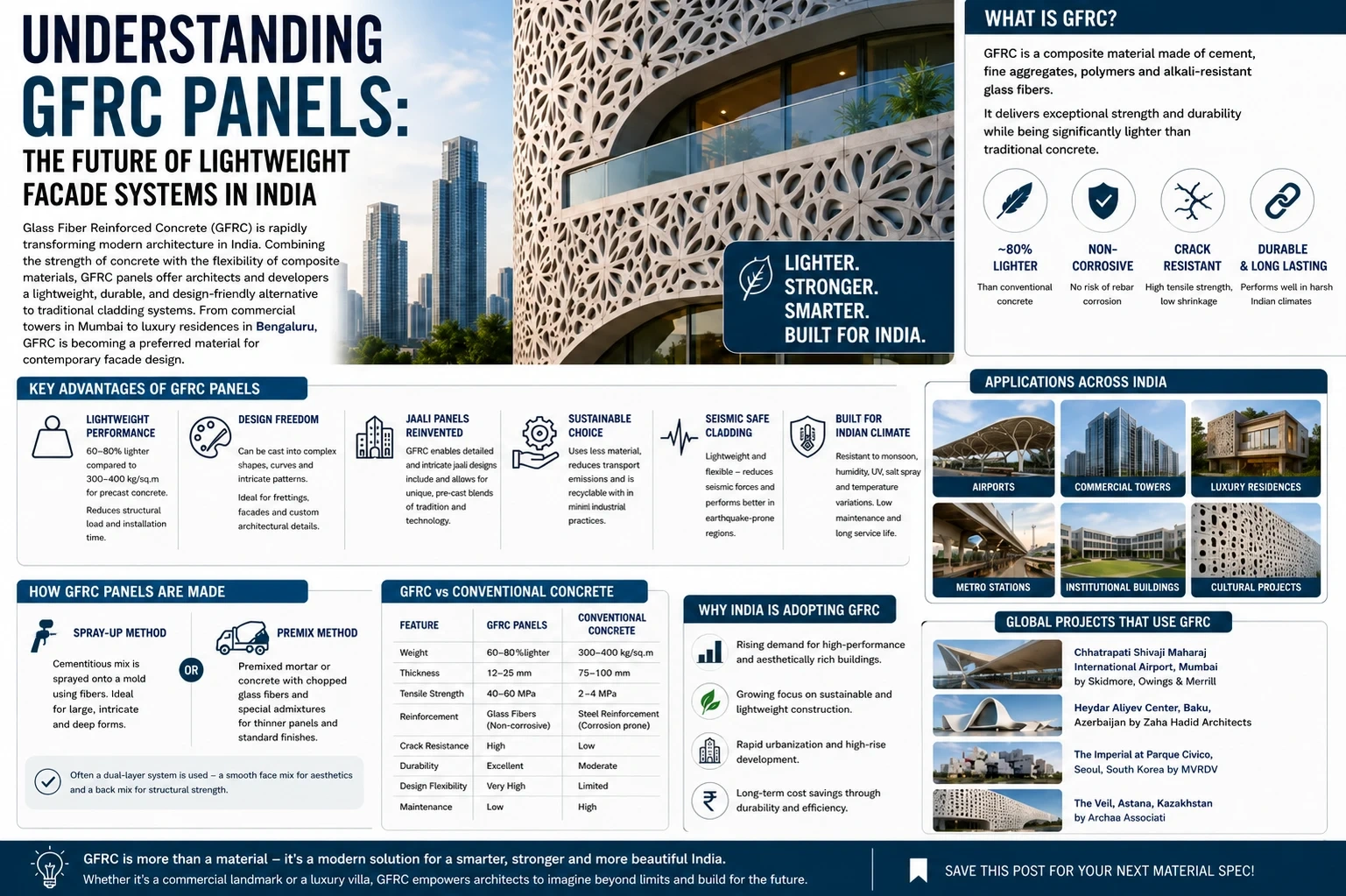
GFRC is a composite material made using cement, fine aggregates, polymers, and alkali-resistant glass fibers. Unlike conventional RCC, GFRC does not rely on steel reinforcement, making it non-corrosive and significantly lighter.
GFRC panels are typically up to 80% lighter than conventional precast concrete while still offering excellent tensile and flexural strength. This makes them ideal for high-rise buildings, complex facades, and retrofit projects where reducing structural load is critical.
Why GFRC is Different from Traditional Concrete
Lightweight Performance
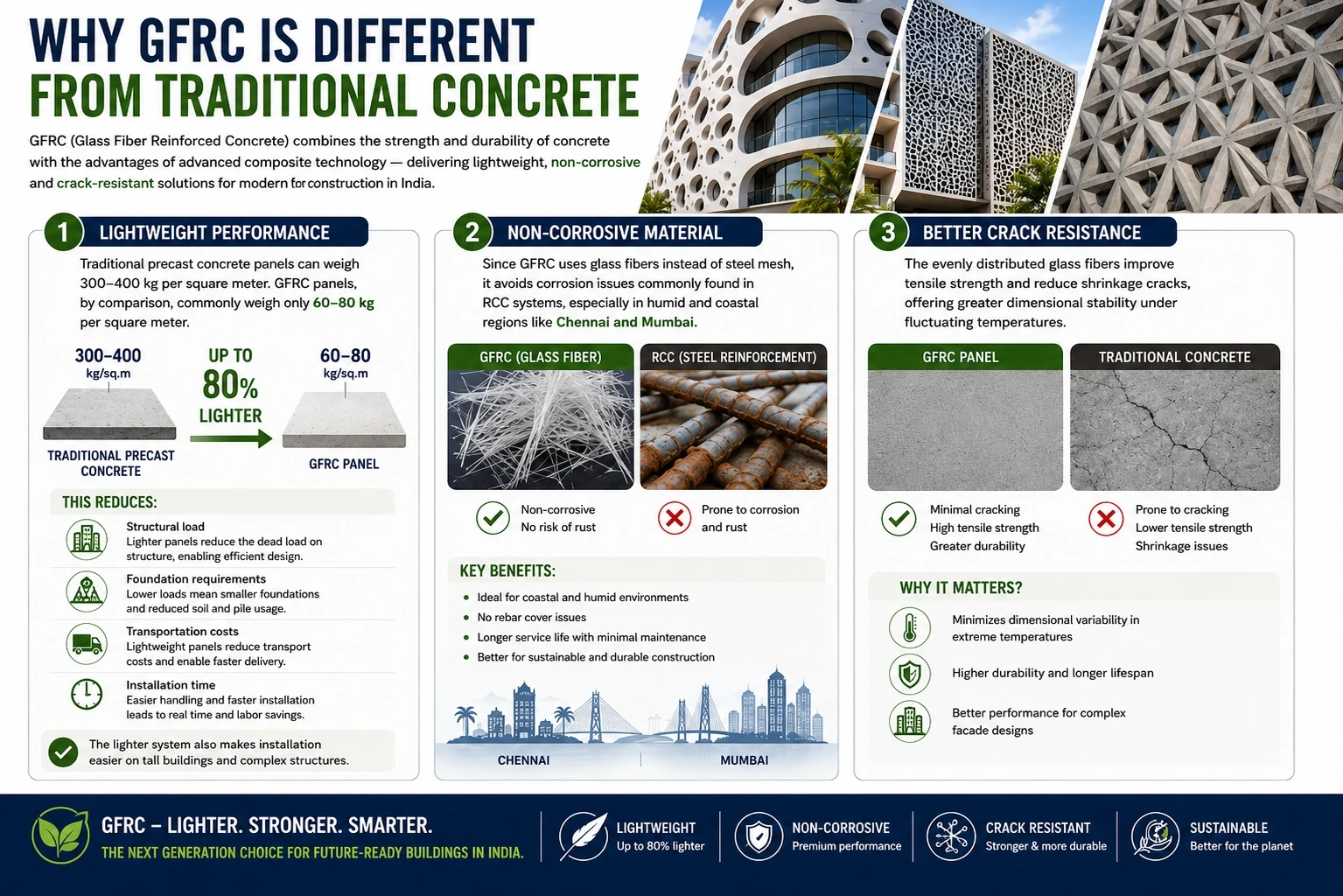
Traditional precast concrete panels can weigh 300–400 kg per square meter. GFRC panels, by comparison, generally weigh only 60–80 kg per square meter.
This reduces:
Structural load
Foundation requirements
Transportation costs
Installation time
The lighter system also makes installation easier on tall buildings and complex structures.
Frequently asked
Non-Corrosive Material
Since GFRC uses glass fibers instead of steel mesh, it avoids corrosion issues commonly found in RCC systems, especially in humid and coastal regions like Chennai and Mumbai.
Better Crack Resistance
The evenly distributed glass fibers improve tensile strength and reduce shrinkage cracks, offering greater dimensional stability under fluctuating temperatures.
Design Freedom for Architects
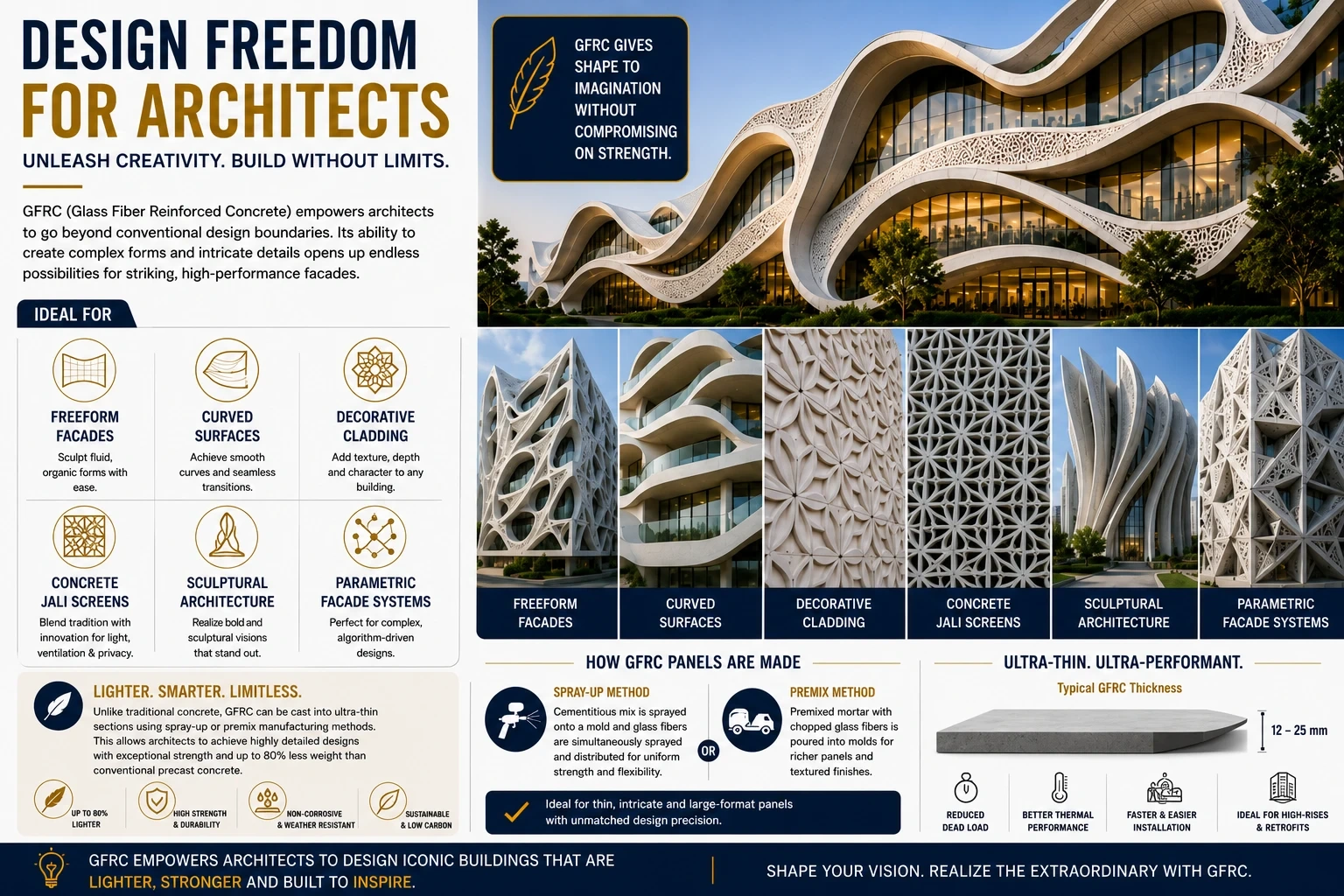
One of GFRC’s biggest advantages is its ability to create complex forms and intricate details.
Ideal for:
Freeform facades
Curved surfaces
Decorative cladding
Concrete jali screens
Sculptural architecture
Parametric facade systems
Unlike traditional concrete, GFRC can be cast into ultra-thin sections using spray-up or premix manufacturing methods, allowing architects to achieve highly detailed designs with minimal weight.
GFRC Jali Panels: Tradition Meets Innovation
GFRC has revived the traditional Indian jali system in modern architecture.
GFRC jali panels provide:
Solar shading
Natural ventilation
Privacy
Lightweight installation
High durability
Architects across cities like Jaipur and Ahmedabad are using GFRC to reinterpret traditional Indian patterns in contemporary buildings.
Durability in Indian Climate Conditions
India’s climate presents major challenges for facade systems:
Intense monsoons
High humidity
UV exposure
Coastal salinity
Thermal expansion
GFRC performs exceptionally well under these conditions due to its:
Corrosion resistance
Low permeability
Crack resistance
UV stability
Long service life
Most well-designed GFRC systems can perform for decades with minimal maintenance.
Sustainable Facade Material
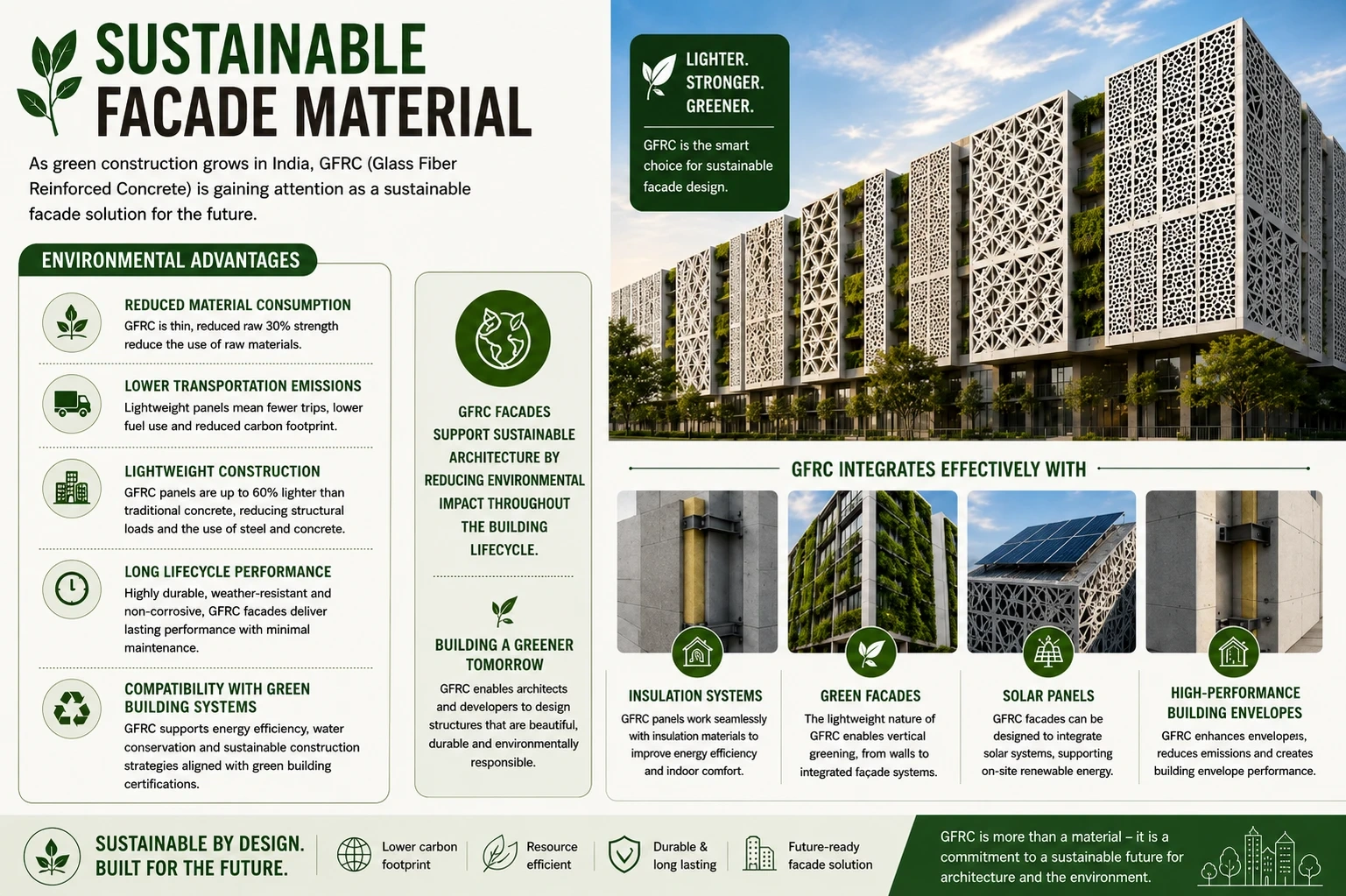
As green construction grows in India, GFRC is gaining attention as a sustainable facade solution.
Environmental Advantages:
Reduced material consumption
Lower transportation emissions
Lightweight construction reduces structural material use
Long lifecycle performance
Compatibility with green building systems
GFRC also integrates effectively with:
Insulation systems
Green facades
Solar panels
High-performance building envelopes
Seismic-Safe Cladding for Modern Buildings
GFRC is especially valuable in seismic zones due to its lightweight nature and improved flexibility.
Compared to heavier cladding systems, GFRC reduces:
Inertial forces during earthquakes
Structural stress
Risk of dangerous facade failure
This makes it ideal for projects in earthquake-sensitive regions and high-rise urban developments.
Applications of GFRC in India
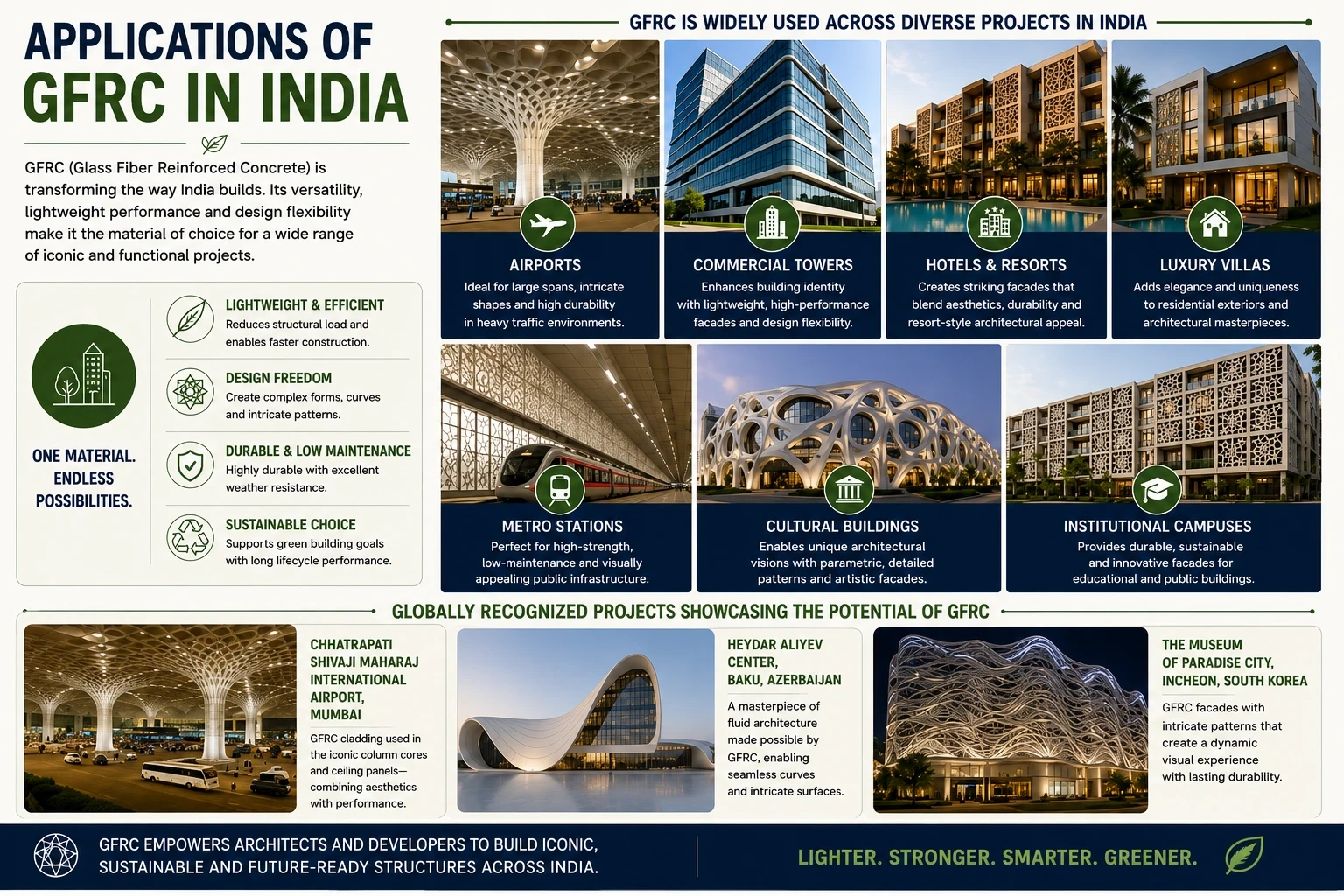
GFRC is now widely used across:
Airports
Commercial towers
Hotels and resorts
Luxury villas
Metro stations
Cultural buildings
Institutional campuses
Globally recognized projects such as the Chhatrapati Shivaji Maharaj International Airport, Heydar Aliyev Center, and The Imprint at Paradise City demonstrate the material’s architectural potential.
The Future of Facade Design
As India moves toward smarter, lighter, and more sustainable buildings, GFRC is becoming an essential material in contemporary construction. Its ability to combine structural performance, lightweight efficiency, and architectural freedom makes it ideal for next-generation facade systems.
For architects, developers, and engineers, GFRC is no longer just an alternative material — it is becoming a key technology shaping the future of Indian architecture.
Frequently Asked Questions
What is GFRC and how is it different from regular concrete?
GFRC (Glass Fiber Reinforced Concrete) is a composite material made with cement, fine aggregates, polymers, and alkali-resistant glass fibers instead of steel reinforcement. Unlike traditional concrete, GFRC panels are up to 80% lighter, non-corrosive, and offer better crack resistance, making them ideal for modern facade systems in India.
How much lighter are GFRC panels compared to traditional concrete?
GFRC panels typically weigh only 60–80 kg per square meter, compared to traditional precast concrete panels that weigh 300–400 kg per square meter. This significant weight reduction lowers structural load, reduces foundation requirements, and decreases both transportation and installation costs.
Why is GFRC better for Indian coastal and humid climates?
GFRC uses glass fibers instead of steel mesh, eliminating corrosion issues common in humid and coastal regions like Mumbai and Chennai. Its low permeability, crack resistance, and UV stability allow GFRC systems to perform for decades with minimal maintenance in India's challenging monsoon and high-humidity conditions.
Can GFRC be used for decorative architectural designs?
Yes, GFRC excels at creating complex forms including freeform facades, curved surfaces, decorative cladding, and traditional jali screens. Its ability to be cast into ultra-thin sections allows architects to achieve highly detailed and sculptural designs while maintaining minimal weight.
What are GFRC jali panels and why are they popular in India?
GFRC jali panels are lightweight versions of traditional Indian jali screens that provide solar shading, natural ventilation, and privacy. They combine India's architectural heritage with modern innovation, and architects across cities like Jaipur and Ahmedabad use them to reinterpret traditional patterns in contemporary buildings.