

Prefabrication is revolutionizing the construction industry in India. As urbanization accelerates and project timelines compress, prefabricated construction offers a compelling alternative to traditional on-site building methods. This comprehensive guide explores how prefabrication works, its benefits for Indian projects, and practical considerations for implementation.
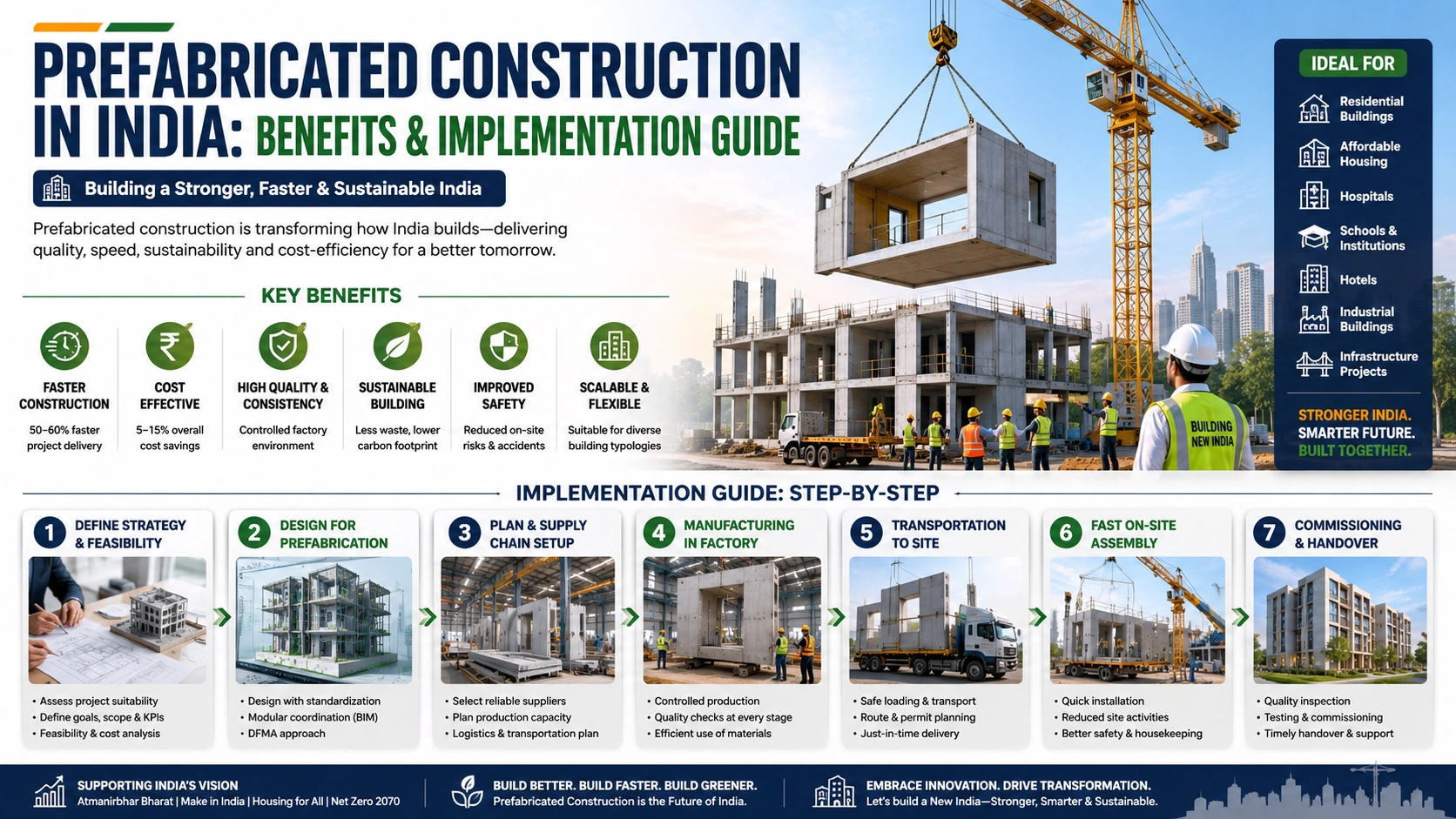
What is Prefabricated Construction?
Prefabricated construction, often called prefab or off-site construction, involves manufacturing building components in a controlled factory environment before transporting them to the construction site for assembly. Rather than building everything on-site, workers create walls, floors, roof trusses, bathroom modules, and other structural elements in a dedicated facility.
In India, this approach is gaining traction across residential, commercial, and industrial projects. Cities like Bangalore, Mumbai, Pune, and Delhi are seeing increased adoption of prefab methods, particularly for affordable housing and rapid infrastructure development./blog/india-residential-real-estate-market-competition-size-and-industry-growth-analysis-till-2026
Build cost · Bengaluru, May 2026
Types of Prefabrication
Volumetric Prefabrication: Complete 3D modules (bathrooms, kitchens, entire rooms) manufactured off-site
Panelized Prefabrication: Wall, floor, and roof panels produced in factories and assembled on-site
Component Prefabrication: Individual elements like stairs, door frames, and structural columns manufactured separately
Hybrid Prefabrication: Combination of factory-made components with some on-site assembly and finishing
Key Benefits of Prefabricated Construction in India
Significant Time Savings
One of the most compelling advantages of prefabrication is accelerated project delivery. Traditional construction in India typically takes 18-24 months for a mid-rise residential building. Prefabricated projects can reduce this timeline by 30-50%, depending on project complexity.
Why? Because manufacturing happens simultaneously with site preparation. While foundation work progresses, factory workers are already producing wall panels and structural elements. This parallel processing dramatically compresses overall project duration.
For developers operating in competitive markets like Bangalore or Mumbai, faster time-to-market directly translates to earlier revenue realization and reduced carrying costs.
Frequently asked
Cost Efficiency
While prefabrication requires significant upfront capital investment in manufacturing facilities, the long-term economics are favorable. Projects typically experience:
15-25% reduction in labor costs: Factory production is more efficient than on-site work, with better worker productivity and reduced overtime
10-20% material waste reduction: Controlled factory environments minimize material losses compared to construction sites
Lower indirect costs: Shorter timelines mean reduced site supervision, security, and temporary facility expenses
Reduced weather delays: Factory work isn't affected by monsoons or extreme heat, common challenges in Indian construction
A 200-unit residential project in Pune using prefabrication might save ₹2-3 crores compared to conventional construction, though initial prefab component costs may be 5-10% higher per unit.
Superior Quality Control
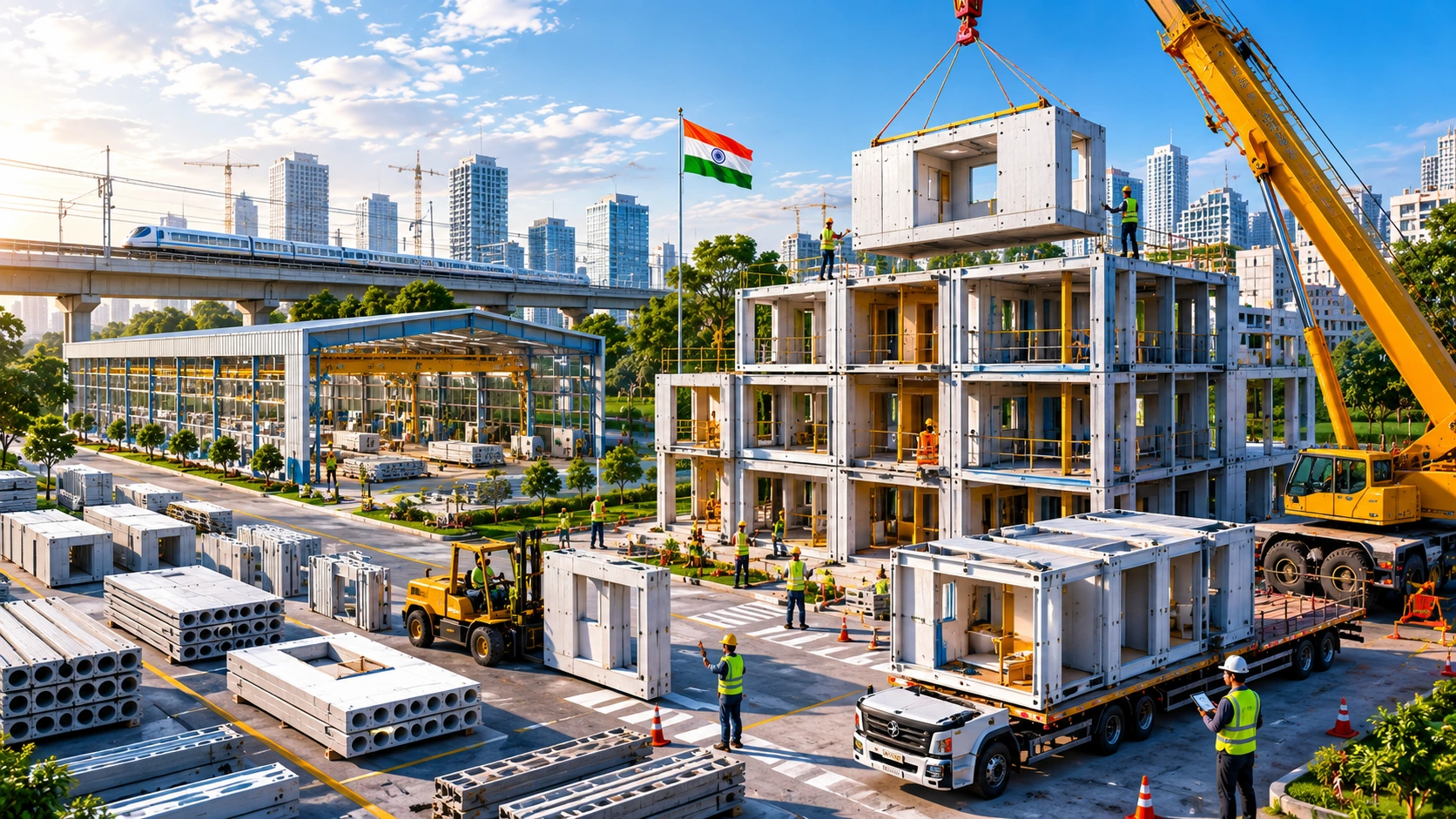
Factories operate with consistent environmental conditions and standardized processes. Quality checks occur at multiple stages before components leave the facility. This contrasts sharply with on-site construction, where quality varies based on weather, worker skill levels, and site conditions.
Prefabricated components undergo rigorous testing for structural integrity, waterproofing, thermal performance, and fire safety. For Indian projects in high-rainfall areas like Mumbai or flood-prone regions, this quality consistency is invaluable.
Improved Worker Safety
Manufacturing in controlled factory environments significantly reduces safety risks. Workers aren't exposed to heights, weather extremes, or chaotic site conditions. This is particularly important in India, where construction safety standards vary widely across projects.
Fewer on-site workers mean reduced congestion, better sanitation facilities, and more manageable safety protocols—benefits that resonate with both developers and local communities.
Environmental Sustainability
Prefabrication aligns with India's growing focus on sustainable construction:
Reduced material waste: Precise manufacturing generates 50-60% less waste than traditional construction
Lower carbon footprint: Shorter project timelines and optimized logistics reduce emissions
Energy efficiency: Factory-produced components can be engineered for superior insulation and thermal performance
Water conservation: Controlled factory processes use significantly less water than on-site construction
For projects pursuing LEED or IGBC (Indian Green Building Council) certification, prefabrication provides tangible sustainability advantages.
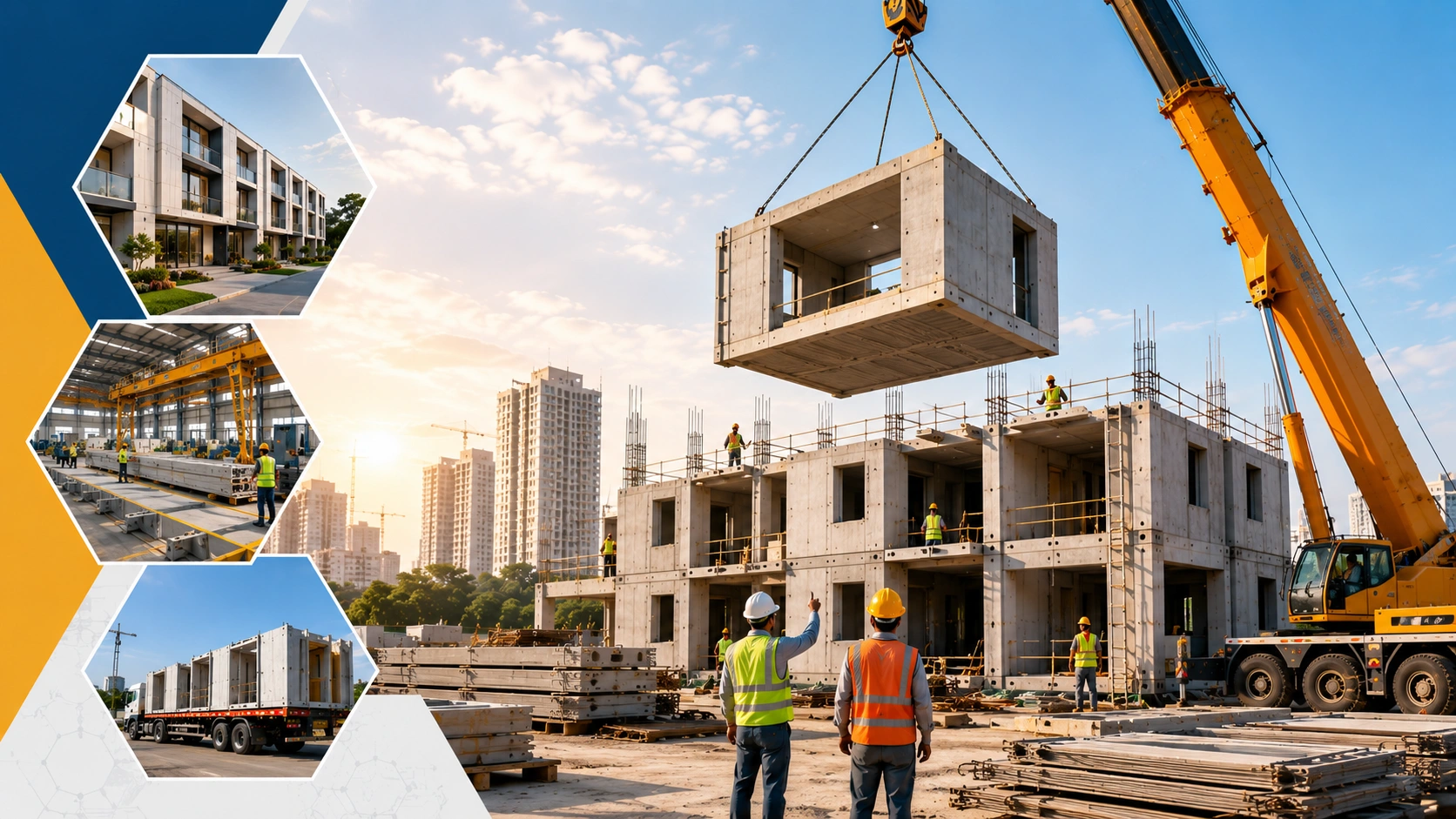
Prefabrication Applications in India
Affordable Housing
India's affordable housing shortage makes prefabrication particularly relevant. Projects under the Pradhan Mantri Awas Yojana (PMAY) increasingly utilize prefab methods to meet construction targets. States like Maharashtra and Karnataka have implemented prefab-based affordable housing developments.
Standardized, repeatable designs work perfectly for large-scale affordable housing, where cost control and speed are paramount.
Commercial and Office Spaces
IT parks and commercial complexes in Bangalore, Hyderabad, and Pune increasingly adopt prefabrication for structural systems and MEP (mechanical, electrical, plumbing) modules. This approach accelerates occupancy and reduces operational disruptions.
Industrial Facilities
Factories, warehouses, and logistics facilities benefit tremendously from prefabricated structural systems. Manufacturing plants can be operational months earlier using prefab methods.
Hospitality and Healthcare
Hotels and hospitals require rapid, quality construction. Prefabricated bathroom and kitchen modules, combined with structural prefabs, accelerate these projects while maintaining stringent quality standards.
Regulatory and Logistical Considerations in India
Building Codes and Approvals
India's National Building Code (NBC) doesn't explicitly restrict prefabrication, but local municipal corporations sometimes lack familiarity with prefab methodologies. Securing approvals requires:
Detailed documentation of prefab manufacturing processes and quality assurance
Third-party certification from agencies like NABET (National Accreditation Board for Testing and Calibration Laboratories)
Structural design certifications from qualified engineers
Coordination with local building departments early in project planning
Cities like Bangalore and Pune have more streamlined approval processes for prefab projects, while smaller municipalities may require additional time and documentation.
Transportation Logistics
Moving large prefabricated components across Indian roads presents challenges:
Road conditions: Potholes and poor road quality in some regions require specialized transport vehicles
Permit requirements: Oversized loads need special permits from state highways authorities
Distance constraints: Economical prefab transportation typically limits manufacturing facilities to within 300-500 km of project sites
Traffic regulations: Many Indian cities restrict heavy vehicle movement during peak hours
Successful prefab projects carefully plan logistics, often establishing manufacturing facilities closer to project clusters rather than centralizing production.
Skilled Workforce Requirements
Prefabrication requires different skills than traditional construction. Workers need training in:
Factory-based manufacturing processes
Precision assembly and alignment techniques
Operation of specialized equipment
Quality control and inspection procedures
India's construction sector is gradually developing this skilled workforce, but training remains essential for successful prefab adoption.
Cost Analysis: Prefab vs. Traditional Construction in India
Let's examine a realistic comparison for a 300-unit residential project in Pune:
Traditional On-Site Construction
Project duration: 24 months
Total construction cost: ₹150 crores (₹50 lakhs per unit)
Labor costs: ₹45 crores (30% of total)
Material waste: 8-10% of materials
Site overhead: ₹8 crores
Prefabricated Construction
Project duration: 16 months
Total construction cost: ₹142 crores (₹47.3 lakhs per unit)
Labor costs: ₹34 crores (24% of total)
Material waste: 3-4% of materials
Site overhead: ₹4.5 crores
Factory setup and manufacturing: ₹12 crores (amortized across projects)
In this scenario, prefabrication saves approximately ₹8 crores (5.3%) on direct costs while reducing project duration by 8 months. The financial advantage increases on larger projects and when amortizing factory setup across multiple developments.
Implementation Strategy for Indian Projects
Phase 1: Planning and Design
Begin with a design-for-manufacturability (DFM) review. Engage prefab specialists early to optimize designs for factory production. Standardize component dimensions and reduce custom elements.
Phase 2: Factory Selection and Setup
Partner with experienced prefab manufacturers or establish dedicated facilities. Verify certifications, quality management systems, and production capacity. Site visits to existing projects are essential.
Phase 3: Regulatory Approvals
Submit comprehensive prefab documentation to municipal authorities. Obtain necessary approvals before manufacturing begins. This prevents costly delays and design modifications later.
Phase 4: Manufacturing and Quality Control
Implement rigorous quality checkpoints. Conduct regular inspections and testing. Maintain detailed documentation for regulatory compliance and future reference.
Phase 5: Logistics and Site Coordination
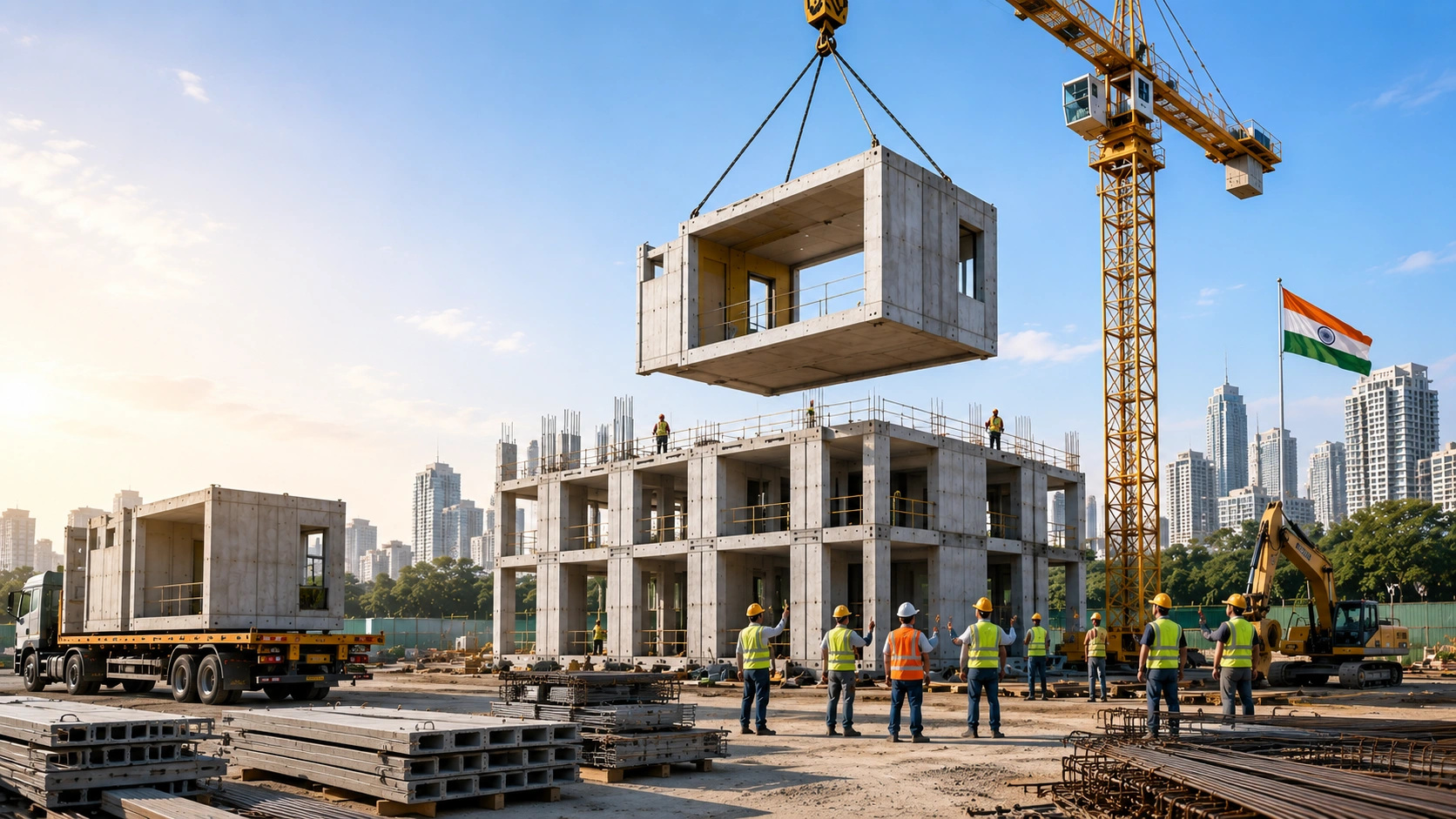
Plan transportation meticulously. Coordinate delivery schedules with site preparation. Ensure adequate storage and handling facilities at project sites.
Phase 6: Assembly and Finishing
Train on-site teams on assembly procedures. Maintain quality standards during installation. Coordinate MEP connections and finishing works efficiently.
Challenges and Solutions
Initial Capital Investment
Challenge: Setting up prefab manufacturing facilities requires significant upfront investment (₹10-50 crores depending on capacity).
Solution: Consider joint ventures with established prefab manufacturers, phased facility expansion, or contract manufacturing arrangements with existing facilities.
Regulatory Uncertainty
Challenge: Local building departments may lack experience approving prefab projects.
Solution: Engage regulatory consultants, provide comprehensive documentation, and build relationships with municipal authorities early.
Transportation Constraints
Challenge: Moving large components across Indian roads is complex and sometimes costly.
Solution: Locate manufacturing facilities strategically near project clusters, optimize component sizes for transportation, and plan logistics carefully.
Supply Chain Disruptions
Challenge: Delays in raw material supply or transportation can halt manufacturing.
Solution: Maintain strategic material inventory, develop relationships with reliable suppliers, and build buffer time into schedules.
Future of Prefabrication in India
India's prefab construction market is poised for significant growth. Industry experts project a CAGR of 12-15% through 2030, driven by:
Government emphasis on rapid housing delivery
Increasing labor costs making automation attractive
Growing awareness of sustainability benefits
Technological advances in manufacturing and logistics
Successful case studies demonstrating economic viability
Cities like Bangalore, Pune, and Hyderabad are likely to become prefab adoption leaders, with technology-driven developers pioneering new methodologies.
Finding Prefab Expertise Through AECORD
Implementing prefabricated construction requires expertise across multiple disciplines. Architects must design for manufacturability, structural engineers need prefab-specific knowledge, and contractors require experience with assembly methodologies.
AECORD connects you with India's leading prefab specialists, manufacturers, and experienced contractors. Whether you're exploring feasibility, seeking manufacturing partners, or managing a prefab project, AECORD's network includes professionals who've successfully delivered prefab projects across Indian cities.
Browse detailed profiles, review past projects, and connect directly with specialists who understand local regulations, logistics, and market conditions in your region.
Conclusion
Prefabricated construction represents a fundamental shift in how India builds. By combining factory precision with on-site assembly, prefab methods deliver faster timelines, better quality, cost savings, and environmental benefits.
While challenges exist—particularly around logistics, regulations, and workforce training—successful implementations across India demonstrate that prefabrication is viable and increasingly competitive. As more projects adopt these methods, costs will decrease, expertise will expand, and prefabrication will become mainstream.
For developers, contractors, and architects considering prefabrication, the time to act is now. Early adoption positions you ahead of market trends while building valuable expertise.
Ready to explore prefabrication for your next project? Connect with experienced prefab manufacturers, structural engineers, and construction specialists on AECORD. Find the right partners to guide your prefab journey and deliver exceptional results on time and within budget.
Frequently Asked Questions
What is prefabricated construction and how does it work in India?
Prefabricated construction involves manufacturing building components like walls, floors, and roof trusses in a controlled factory environment before transporting and assembling them on-site. In India, this method is gaining adoption across residential, commercial, and industrial projects in cities like Bangalore, Mumbai, and Delhi as an alternative to traditional on-site building.
How much time can prefabricated construction save on Indian construction projects?
Prefabricated construction can reduce project timelines by 30-50% compared to traditional methods. While conventional mid-rise residential buildings in India typically take 18-24 months, prefab projects compress this timeline because manufacturing happens simultaneously with site preparation, allowing parallel processing.
What are the cost savings of prefabricated construction in India?
Prefabricated projects typically achieve 15-25% labor cost reduction, 10-20% material waste reduction, and lower indirect costs through shorter timelines. A 200-unit residential project in Pune could save ₹2-3 crores using prefabrication, though initial component costs may be 5-10% higher per unit.
What types of prefabrication methods are used in Indian construction?
India uses four main prefabrication types: volumetric (complete 3D modules), panelized (wall and floor panels), component (individual elements like stairs), and hybrid (combination of factory-made components with on-site assembly).
Does prefabricated construction provide better quality control than traditional methods?
Yes, prefabricated construction offers superior quality control because factories operate with consistent environmental conditions and standardized processes, with rigorous testing at multiple stages. This contrasts with on-site construction where quality varies based on weather, worker skill levels, and site conditions.