

Selecting the right exterior paint is one of the most critical decisions in maintaining and enhancing your property's appearance and durability. Whether you're renovating a residential home in Mumbai, a commercial building in Bangalore, or an industrial facility in Delhi, the quality of exterior paint directly impacts longevity, aesthetic appeal, and protection against India's diverse climate conditions.
This comprehensive guide explores everything you need to know about choosing the best exterior paint for your specific needs, with particular focus on Indian market options, climate considerations, and cost-effectiveness.
Understanding Exterior Paint Types
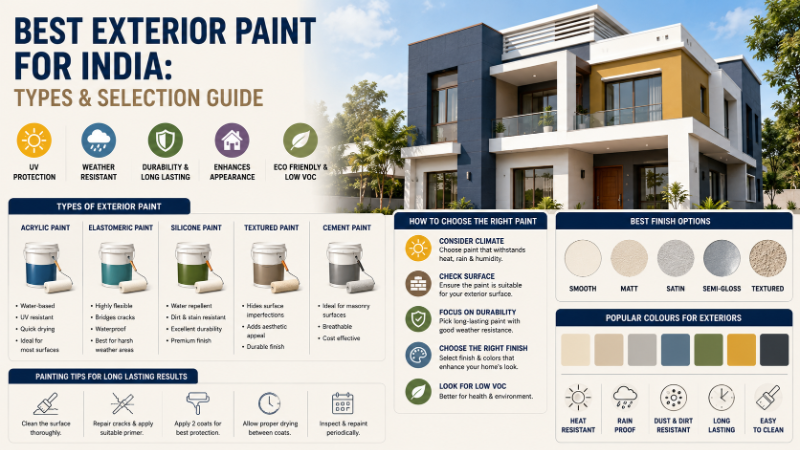
Before diving into specific products and brands, it's essential to understand the different types of exterior paint available in the Indian market. Each type offers distinct advantages depending on your climate zone, building type, and budget.
Build cost · Bengaluru, May 2026
Acrylic Latex Paint
Acrylic latex paint is among the most popular choices for exterior applications in India. These water-based paints offer excellent adhesion, flexibility, and breathability—crucial factors in India's humid and monsoon-prone regions.
Advantages:
Quick drying time (2-4 hours in dry climates)
Low VOC emissions, making them environmentally friendly
Easy cleanup with water
Excellent color retention and UV resistance
Better performance in humid conditions
Cost-effective compared to oil-based alternatives
Best for: Residential properties, coastal areas, and regions with high humidity like Kerala and Goa.
Oil-Based Paint
Traditional oil-based exterior paints provide a durable, glossy finish and superior penetration into surfaces. However, they're becoming less common due to environmental concerns and longer drying times.
Advantages:
Excellent adhesion to chalky surfaces
Durable protective coating
Superior finish quality
Disadvantages:
Longer drying time (12-24 hours)
Higher VOC emissions
Difficult cleanup requiring solvents
Prone to cracking in extreme temperature variations
Elastomeric Paint
Elastomeric coatings are specialized formulations that expand and contract with building movement, making them ideal for areas experiencing significant temperature fluctuations or structural settling. /blog/wall-and-roof-paints
Best for: Buildings in areas like Rajasthan and Punjab where temperature variations are extreme, or structures with minor cracks.
Frequently asked
Textured Paint
Textured exterior paints provide aesthetic appeal while hiding surface imperfections. They're particularly popular in Indian residential markets for creating distinctive finishes.
Best for: Covering minor surface irregularities and adding visual interest to plain walls.
Climate and Weather Conditions
Key Factors to Consider When Choosing Exterior Paint
India's diverse climate zones demand different paint solutions. Your location significantly influences which paint performs best:
Coastal Regions (Mumbai, Chennai, Kochi): Choose paints with excellent salt resistance and moisture protection. Acrylic latex paints with anti-fungal and anti-algae properties are ideal. Expect to repaint every 3-4 years due to salt spray corrosion.
Monsoon-Heavy Areas (Goa, Kerala, Assam): Prioritize breathable paints that allow moisture vapor to escape. Look for formulations with mildew-resistant additives.
Hot and Dry Regions (Delhi, Rajasthan): Select paints with superior UV protection and elasticity to handle extreme temperature variations. Light colors reflect heat and reduce cooling costs by 10-15%.
Moderate Climate Zones (Bangalore, Pune): These regions offer flexibility in paint selection, though quality UV-resistant acrylic paints remain the safest choice.
Surface Type and Preparation
The existing surface condition dramatically affects paint performance and longevity. Different surfaces require different paint formulations:
Concrete and Cement Surfaces: Use paints specifically formulated for concrete with excellent alkali resistance. Acrylic latex paints designed for masonry work best.
Metal Surfaces: Metal requires paint with anti-rust properties and excellent adhesion. Epoxy-based or polyurethane coatings provide superior protection for 8-10 years.
Previously Painted Surfaces: Ensure the new paint is compatible with existing coatings. If the old paint is peeling, proper surface preparation is crucial.
Quality and Brand Selection
Investing in quality exterior paint yields better long-term value despite higher initial costs. Premium brands typically offer:
Superior pigment quality for color retention
Better binder formulations for durability
Enhanced UV and weather resistance
Longer warranty periods (5-10 years)
Better coverage rates reducing overall project cost
Reputable brands in the Indian market include Asian Paints, Berger, Nippon Paint, Dulux, and Kansai Nerolac. These manufacturers offer specialized exterior formulations tested for Indian climate conditions.
Finish Type
Matte/Flat Finish: Hides surface imperfections but offers less durability and is harder to clean. Cost: ₹200-400 per liter.
Eggshell Finish: Provides subtle sheen with moderate durability and better cleanability. Cost: ₹250-450 per liter.
Satin Finish: Offers good balance between aesthetics and functionality with enhanced durability. Cost: ₹300-500 per liter.
Gloss Finish: Maximum durability and water resistance but shows imperfections. Cost: ₹350-600 per liter.
Best Exterior Paint Products for Indian Market
Premium Exterior Paints
Asian Paints Apex Exterior: A market leader offering excellent UV protection and weather resistance. Suitable for all Indian climates with 10-year durability promise. Price range: ₹800-1200 per liter.
Berger Weathercoat: Specifically formulated for Indian weather with superior moisture resistance. Ideal for monsoon regions. Price range: ₹700-1100 per liter.
Nippon Paint Weather Guard: Advanced formulation with anti-fungal and anti-algae properties. Excellent for coastal and humid areas. Price range: ₹750-1150 per liter.
Mid-Range Options
Dulux Weathershield: Reliable performance at moderate pricing with 5-7 year durability. Price range: ₹400-700 per liter.
Kansai Nerolac Exterior: Good quality-to-price ratio with decent weather resistance. Price range: ₹350-650 per liter.
Budget-Friendly Choices
While budget paints may seem economical initially, they often require repainting within 2-3 years, negating initial savings. However, for temporary solutions or less critical applications, brands like Nerolac Pristine or Asian Paints Royale offer acceptable quality at ₹200-400 per liter.
Durability and Longevity Expectations
The lifespan of exterior paint varies significantly based on quality, climate, and maintenance:
Premium Paints: 8-10 years in moderate climates, 5-7 years in harsh coastal or monsoon areas
Mid-Range Paints: 5-7 years in moderate climates, 3-5 years in challenging environments
Budget Paints: 2-4 years in most climates
Coastal Regions: Reduce expected lifespan by 30-40% due to salt spray
Industrial Areas: Pollution reduces durability by 20-30%
Regular maintenance, including cleaning and touch-ups, can extend paint life by 20-30%. When calculating true cost per year, premium paints often prove more economical.
Cost Considerations and Budget Planning
For a typical 1500 sq ft residential property exterior, budget calculations look like this:
Premium Paint Option:
Paint cost (₹1000/liter, 12-15 liters needed): ₹12,000-15,000
Primer (₹500/liter, 6-8 liters): ₹3,000-4,000
Labor (₹20-30 per sq ft): ₹30,000-45,000
Total: ₹45,000-64,000
Cost per year over 8-year lifespan: ₹5,625-8,000
Mid-Range Paint Option:
Paint cost (₹500/liter, 12-15 liters): ₹6,000-7,500
Primer (₹300/liter, 6-8 liters): ₹1,800-2,400
Labor (₹20-30 per sq ft): ₹30,000-45,000
Total: ₹37,800-54,900
Cost per year over 5-year lifespan: ₹7,560-10,980
This analysis demonstrates that premium paints often provide better value despite higher upfront costs.
Preparation and Application Tips
Surface Preparation
Proper surface preparation is crucial for paint longevity. Follow these steps:
Clean the surface thoroughly, removing dirt, algae, and loose paint
Repair cracks and holes with appropriate fillers
Sand rough areas for smooth application
Apply primer, especially on new or previously unpainted surfaces
Allow proper drying time between coats
Application Best Practices
Apply paint during dry season or when humidity is below 85%
Use quality brushes and rollers for even coverage
Apply thin, even coats rather than one thick coat
Maintain consistent paint temperature during application
Follow manufacturer's drying time recommendations before recoating
Environmental and Health Considerations
Modern exterior paints increasingly focus on sustainability and safety. When selecting paint, consider:
VOC Content: Look for low-VOC or zero-VOC formulations. The Indian Bureau of Indian Standards (BIS) recommends paints with VOC content below 340 g/liter for exterior applications.
Eco-Friendly Options: Several manufacturers now offer water-based, non-toxic exterior paints. These options are safer for applicators and the environment without compromising performance.
Lead-Free Formulations: Ensure paints comply with Indian standards regarding lead content, particularly for residential applications.
Finding Professional Help
While DIY painting is possible, professional application ensures better results and longevity. When hiring painters or contractors, consider using platforms like AECORD, which connects you with vetted professionals in the architecture, engineering, construction, and operations sectors. AECORD helps you find experienced contractors who understand regional climate challenges and can recommend appropriate paint solutions for your specific location and building type.
Professional painters bring expertise in surface preparation, application techniques, and product selection. They can also identify underlying issues that might affect paint performance, such as moisture problems or structural concerns.
Maintenance and Longevity Enhancement
To maximize your exterior paint investment:
Annual Inspection: Check for peeling, cracking, or discoloration annually
Regular Cleaning: Clean painted surfaces every 6-12 months to remove dirt, algae, and pollutants
Prompt Repairs: Address small issues immediately before they worsen
Protective Measures: Consider additional protection in harsh environments, such as sealers for coastal properties
Vegetation Management: Keep plants trimmed away from painted surfaces to prevent moisture retention
Conclusion
Choosing the best exterior paint involves balancing quality, climate appropriateness, budget, and durability expectations. While premium paints require higher initial investment, they typically offer superior long-term value, especially in India's challenging climate conditions. Consider your specific location's weather patterns, surface type, and maintenance capacity when making your selection.
Whether you're in Mumbai's humid coastal environment, Delhi's extreme temperature variations, or Bangalore's moderate climate, quality exterior paint remains one of the most cost-effective ways to protect and enhance your property. Invest in reputable brands, ensure proper surface preparation, and consider professional application for optimal results.
For expert advice on paint selection and professional application services, explore AECORD, where you can connect with qualified contractors and specialists experienced in exterior painting projects across India. Whether you need recommendations for specific climate zones or want to hire professionals for your project, AECORD provides access to vetted experts who understand the nuances of exterior painting in the Indian market.
Ready to transform your property's exterior? Start by assessing your specific needs, consulting with professionals on AECORD, and investing in quality paint that will protect and beautify your building for years to come.