

Understanding Cement Selection for Coastal Construction in India
Coastal construction in India presents unique challenges that extend far beyond typical inland building projects. The combination of salt spray, high humidity, and aggressive environmental conditions can rapidly deteriorate concrete structures if the wrong cement is used. Whether you're building in Mumbai, Chennai, Kolkata, or Kochi, selecting the appropriate cement grade is one of the most critical decisions you'll make during the planning phase.
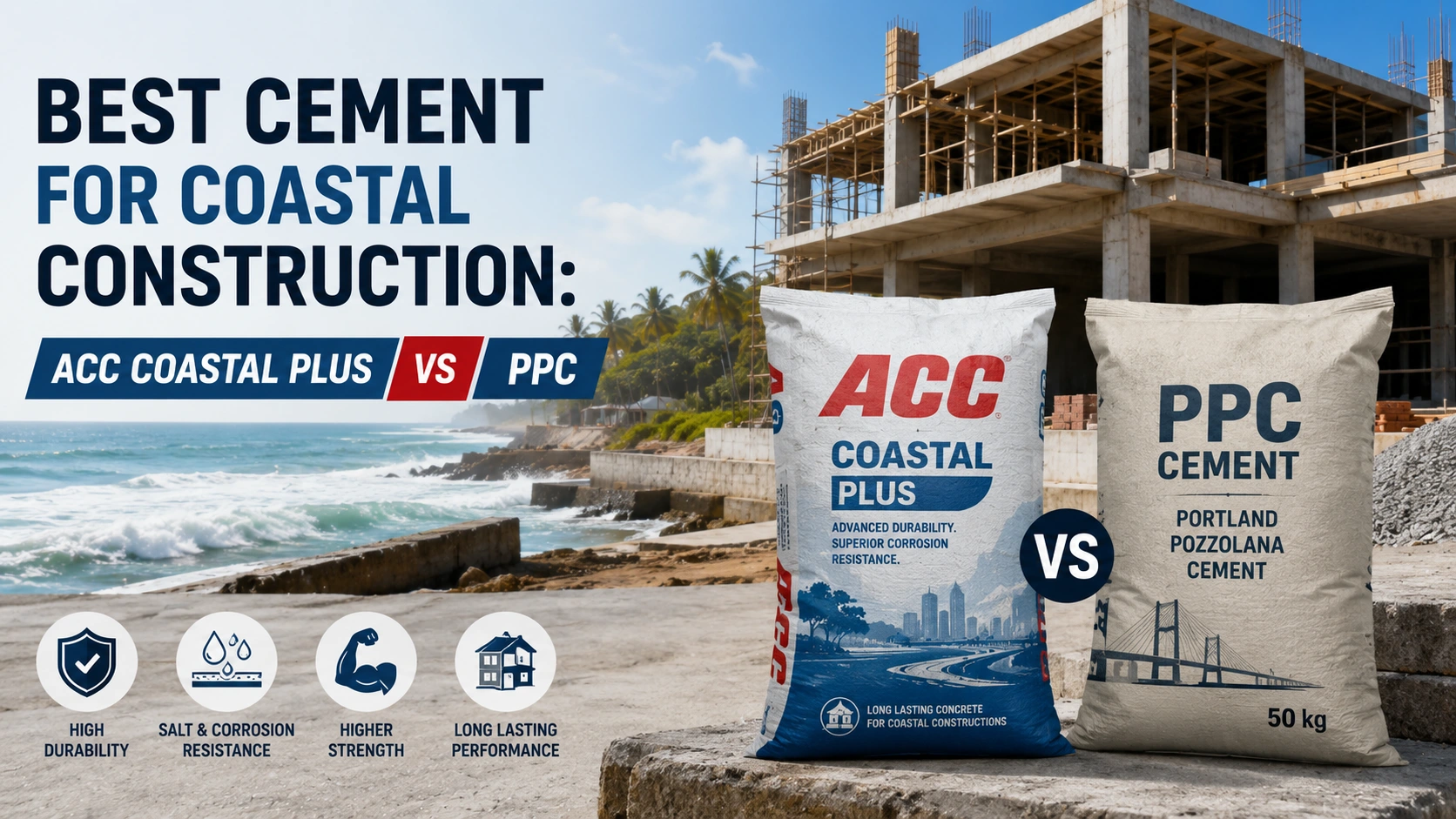
The Indian cement industry has evolved significantly to address these specific challenges, with manufacturers like ACC introducing specialized products such as ACC Coastal Plus. Understanding the differences between coastal-specific cements and regular Portland Pozzolana Cement (PPC) can mean the difference between a structure that lasts 50 years and one that requires major repairs within a decade.
Build cost · Bengaluru, May 2026
The Challenge of Coastal Construction in India
Environmental Factors Affecting Coastal Structures
Coastal regions in India experience some of the harshest environmental conditions for concrete structures. The primary challenges include:
Chloride Ion Penetration: Salt spray from the ocean carries chloride ions that penetrate concrete and attack reinforcing steel, causing corrosion and structural weakening
High Humidity Levels: Coastal areas maintain humidity levels between 70-90%, accelerating concrete deterioration
Sulfate Attack: Seawater contains sulfates that chemically react with concrete components, causing expansion and cracking
Carbonation: The combination of moisture and atmospheric CO2 reduces concrete alkalinity, further compromising steel protection
Temperature Fluctuations: Coastal regions experience significant daily temperature variations that create thermal stress in concrete
Cities like Mumbai, which experiences monsoon rains combined with salt spray, face particularly severe conditions. A study of structures along the Arabian Sea coast revealed that regular concrete without proper protective measures showed visible deterioration within 3-5 years.
The Cost of Using Wrong Cement
Choosing incorrect cement for coastal projects can be extremely expensive in the long run. Repairs to corroded reinforcement, concrete patching, and structural rehabilitation can cost 3-5 times more than using the right cement from the beginning. A 10-story residential building in a coastal area that requires premature waterproofing repairs might spend an additional ₹50-75 lakhs on remedial measures that could have been prevented with proper cement selection.
Frequently asked
Regular PPC Cement: Limitations in Coastal Environments
What Is Regular PPC Cement?
Portland Pozzolana Cement (PPC) is one of India's most common cement types, containing Portland clinker, gypsum, and pozzolanic materials (typically fly ash). It's widely used for general construction across the country and represents approximately 40% of India's cement consumption. PPC cement typically costs between ₹350-450 per 50 kg bag, making it economical for standard construction projects.
Why Regular PPC Falls Short in Coastal Areas
While PPC cement offers good durability for inland construction, it has significant limitations in coastal environments:
Limited Chloride Resistance: Regular PPC doesn't have the specialized composition needed to effectively resist chloride ion penetration from salt spray
Moderate Sulfate Resistance: Although better than OPC, standard PPC provides only moderate protection against sulfate attack from seawater
Higher Permeability: The pore structure of regular PPC allows moisture and aggressive ions to penetrate more easily
Slower Strength Development: PPC develops strength more slowly than specialized coastal cements, which can delay construction schedules
Inadequate Long-term Performance: Structures built with regular PPC in coastal areas typically show deterioration within 5-10 years
Research conducted by the Indian Institute of Technology (IIT) on concrete samples exposed to coastal conditions found that regular PPC concrete showed chloride penetration of 15-20mm within 3 years, compared to specialized coastal cements which showed only 5-8mm penetration under identical conditions.
ACC Coastal Plus: Engineered for Coastal Protection
Composition and Special Features
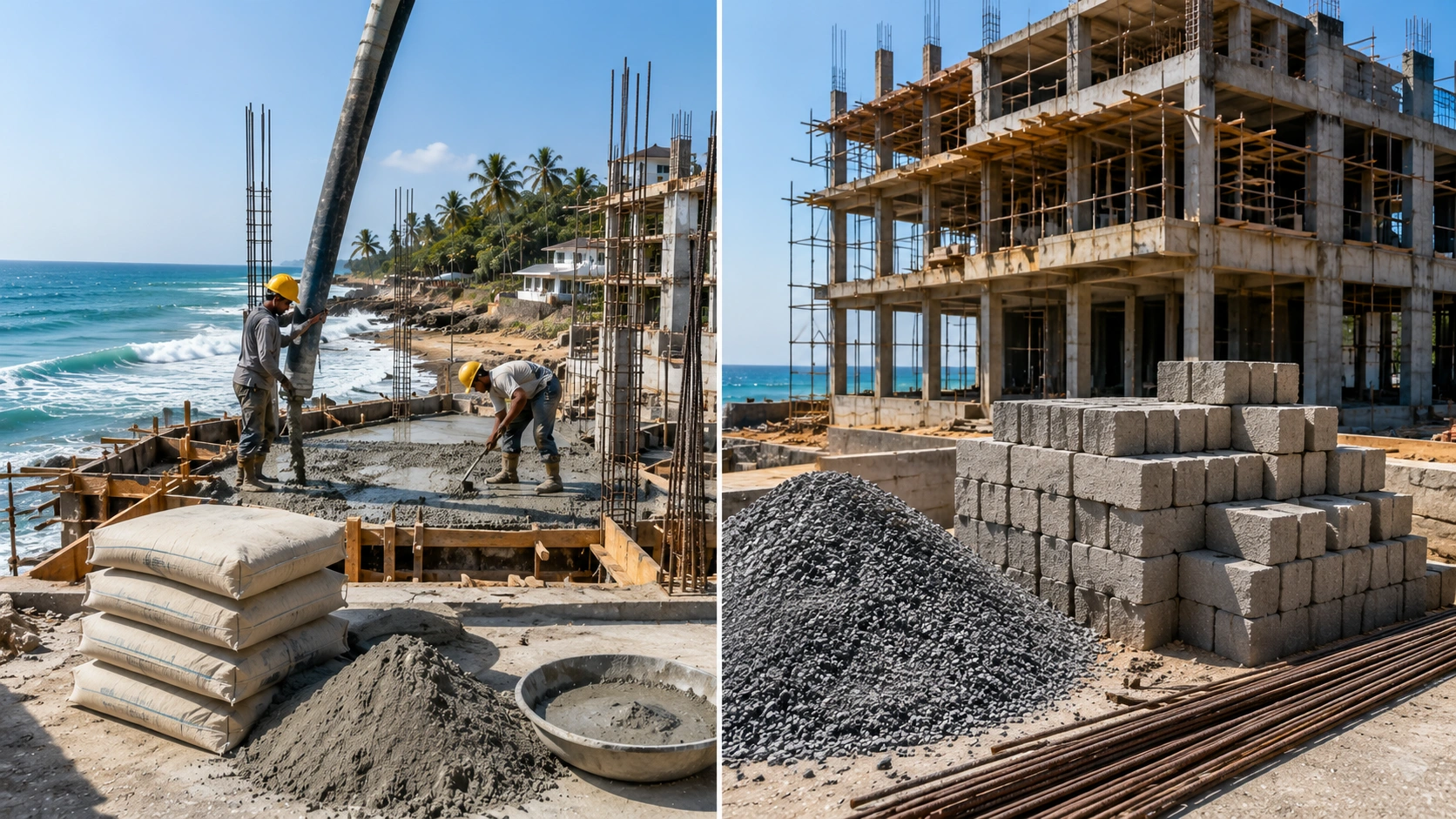
ACC Coastal Plus is specifically engineered for coastal and marine construction projects. This specialized cement combines Portland clinker, gypsum, and carefully selected pozzolanic materials in proportions optimized for coastal durability. The key differentiators include:
Enhanced Pozzolanic Content: Higher proportion of fly ash and silica fumes reduces permeability and improves chloride resistance
Lower C3A Content: Reduced tricalcium aluminate (C3A) provides superior sulfate resistance
Optimized Pore Structure: The cement composition creates a denser, less permeable concrete matrix
Improved Hydration Products: Specialized formulation creates hydration products that are more resistant to chemical attack
Built-in Corrosion Inhibitors: Some formulations include additives that provide extra protection to reinforcing steel
ACC Coastal Plus typically costs between ₹500-600 per 50 kg bag, representing a 30-40% premium over regular PPC. However, this additional investment is recovered through extended service life and reduced maintenance costs.
Performance Advantages in Coastal Conditions
Comparative testing of ACC Coastal Plus versus regular PPC in coastal exposure conditions demonstrates significant performance differences:
Chloride Resistance: Reduces chloride penetration by up to 60% compared to regular PPC
Sulfate Resistance: Provides significantly better protection against seawater sulfates
Reduced Permeability: Creates concrete with 40-50% lower permeability, limiting moisture ingress
Extended Service Life: Structures built with coastal-specific cements can achieve 50+ year service life in coastal environments
Better Steel Protection: Higher alkalinity maintains better protection of reinforcing steel over time
Comparative Analysis: Coastal Plus vs Regular PPC
Technical Properties Comparison
Property | Regular PPC | ACC Coastal Plus |
|---|---|---|
Initial Setting Time | 90-120 minutes | 100-130 minutes |
28-day Compressive Strength | 32-35 MPa | 32-38 MPa |
Sulfate Resistance | Moderate | High |
Chloride Resistance | Moderate | Very High |
Permeability | Higher | Lower |
Price per 50kg bag | ₹350-450 | ₹500-600 |
Cost-Benefit Analysis Over Project Lifetime
While ACC Coastal Plus costs more initially, the total cost of ownership over a 50-year period favors the specialized cement. Consider a typical 5,000 sq ft residential building in Mumbai:
Regular PPC Approach: Initial cement cost ₹8-10 lakhs, but requires major repairs at years 8, 15, 25, and 35, totaling ₹25-35 lakhs in additional costs
Coastal Plus Approach: Initial cement cost ₹12-14 lakhs, with minimal maintenance, totaling ₹12-14 lakhs over 50 years
The Coastal Plus option saves ₹10-20 lakhs over the building's lifetime, not accounting for the value of avoiding disruption and inconvenience from repairs.
When to Use Each Cement Type
ACC Coastal Plus Is Essential For:
Buildings within 500 meters of the coastline
Structures in high-humidity coastal cities (Mumbai, Chennai, Kolkata, Kochi, Visakhapatnam)
Marine structures, jetties, and harbor facilities
Underground basements in coastal areas prone to seawater intrusion
Swimming pools and water-retaining structures in coastal regions
Projects with 50+ year service life requirements
High-rise buildings where repair access is difficult
Regular PPC May Be Adequate For:
Inland construction projects (more than 5 km from coast)
Temporary structures with limited service life
Projects with tight budget constraints and lower durability requirements
Low-rise buildings with easy maintenance access
Projects in arid or semi-arid regions
Best Practices for Coastal Construction in India
Beyond Cement Selection
Choosing the right cement is crucial, but it's only one component of successful coastal construction. AECORD professionals recommend implementing these additional measures:
Concrete Quality Control: Maintain water-cement ratio below 0.45 to minimize permeability
Proper Curing: Extended curing (14-21 days) improves concrete density and durability
Concrete Admixtures: Use water-reducing admixtures and air-entrainment agents to improve concrete quality
Protective Coatings: Apply epoxy or polyurethane coatings to exposed concrete surfaces
Reinforcement Protection: Use stainless steel or epoxy-coated reinforcement in high-exposure zones
Design Considerations: Ensure adequate concrete cover (50-75mm) over reinforcement in coastal areas
Drainage Design: Implement effective drainage systems to minimize water accumulation
Indian Standards and Regulations
Indian Standards (IS) provide specific guidance for coastal construction. IS 456:2000 recommends specific concrete grades and protective measures for different exposure conditions. For coastal areas, IS 456 specifies:
Minimum concrete grade M40 for severe exposure conditions
Maximum water-cement ratio of 0.40
Minimum concrete cover of 50mm for reinforcement
Use of sulfate-resistant cement for structures in seawater exposure
These standards align with the use of specialized cements like ACC Coastal Plus for coastal projects.
Real-World Examples from Indian Coastal Cities
Case Study: Mumbai Residential Development
A 20-story residential complex built along the Mumbai coastline in 2005 used regular PPC cement. By 2015, visible concrete deterioration appeared on the facade, with rust staining from reinforcement corrosion. Remedial measures cost ₹2.5 crores. A similar project built in 2010 using coastal-specific cement showed no deterioration by 2023.
Case Study: Chennai Commercial Project
A commercial building in Chennai's IT corridor, constructed 3 km from the coast with regular PPC, experienced basement waterproofing failures within 8 years. The developer implemented extensive repairs costing ₹1.2 crores. Engineering consultants on AECORD recommended that coastal-specific cement could have prevented these issues.
Making the Right Decision for Your Project
Factors to Consider
When deciding between ACC Coastal Plus and regular PPC for your coastal construction project, evaluate:
Project Location: Distance from coast and local humidity levels
Service Life Requirements: Expected duration the structure must perform
Budget Constraints: Available capital and long-term maintenance budget
Structural Type: Exposed vs. protected elements, reinforcement density
Maintenance Accessibility: Ease of performing repairs if needed
Environmental Regulations: Local building codes and environmental standards
Project Timeline: Schedule flexibility for proper curing and quality control
Consulting with Professionals
The decision between cement types should involve collaboration with experienced structural engineers, architects, and construction specialists familiar with coastal conditions. AECORD connects you with verified professionals across India who have extensive experience with coastal construction projects. These experts can provide site-specific recommendations based on local environmental conditions, soil characteristics, and regulatory requirements.
Whether you're planning a residential complex in Kochi, a commercial development in Visakhapatnam, or an industrial facility in Kolkata, consulting with coastal construction specialists ensures your project meets durability requirements and provides value over its entire lifespan.
Conclusion
For coastal construction in India, ACC Coastal Plus and similar specialized coastal cements represent a significant advancement over regular PPC. While the initial cost premium of 30-40% may seem substantial, the extended service life, reduced maintenance requirements, and prevention of costly repairs make it a sound investment for any coastal project.
Regular PPC cement remains suitable for inland construction, but coastal environments demand the enhanced chloride and sulfate resistance that specialized cements provide. The harsh combination of salt spray, high humidity, and aggressive seawater conditions found in coastal Indian cities like Mumbai, Chennai, Kolkata, and Kochi necessitates this higher level of protection.
By combining the right cement with proper construction practices, adequate concrete cover, quality control measures, and protective coatings, you can ensure your coastal structures maintain their integrity and performance for 50+ years.
Ready to plan your coastal construction project? Connect with experienced architects, structural engineers, and construction professionals on AECORD who specialize in coastal development. Browse verified contractors and consultants in your city, review their portfolios of coastal projects, and get expert recommendations tailored to your specific location and requirements. Start your project journey on AECORD today and ensure your coastal construction succeeds.
Frequently Asked Questions
Why is regular PPC cement not suitable for coastal construction in India?
Regular PPC cement lacks the specialized composition needed to resist chloride ion penetration from salt spray and provides only moderate protection against sulfate attack from seawater. Its higher permeability allows moisture and aggressive ions to penetrate concrete more easily, leading to visible deterioration within 3-5 years in coastal environments.
What are the main environmental challenges for concrete structures in coastal India?
Coastal structures face chloride ion penetration from salt spray, high humidity levels (70-90%), sulfate attack from seawater, carbonation, and temperature fluctuations. These factors combined can cause reinforcing steel corrosion, expansion, cracking, and rapid concrete deterioration if not properly addressed.
How much more expensive is it to repair coastal concrete structures with wrong cement?
Repairs to corroded reinforcement and structural rehabilitation can cost 3-5 times more than using the correct cement initially. A single 10-story coastal building might require an additional ₹50-75 lakhs in remedial waterproofing and repair measures that could have been prevented with proper cement selection.
What is ACC Coastal Plus cement and how does it differ from regular PPC?
ACC Coastal Plus is a specialized cement designed specifically for coastal construction with enhanced chloride and sulfate resistance compared to regular PPC. It features a composition optimized to protect reinforcing steel from corrosion and reduce concrete permeability in harsh marine environments.
Which Indian coastal cities are most affected by cement deterioration issues?
Cities like Mumbai, Chennai, Kolkata, and Kochi experience severe concrete deterioration due to salt spray, monsoon rains, and high humidity. Mumbai's Arabian Sea coast is particularly challenging, with studies showing regular concrete without protective measures deteriorating visibly within 3-5 years.