


Understanding Smart Glass Technology
Smart glass, also known as switchable glass or dynamic glass, represents one of the most innovative advancements in modern architectural design. Unlike conventional windows that remain static throughout the day, smart glass can dynamically adjust its light transmission and thermal properties in response to environmental conditions or user preferences. In India's rapidly growing urban landscape, where cities like Bangalore, Mumbai, and Delhi experience extreme temperature fluctuations and intense solar radiation, this technology is becoming increasingly relevant for architects and building developers.
The primary mechanism behind smart glass is electrochromism—a process where a material changes color and light transmission properties when an electrical voltage is applied. When you apply voltage to electrochromic windows, ions move within the glass material, causing it to darken or lighten. This transformation happens in seconds, allowing buildings to respond intelligently to changing light and heat conditions throughout the day.
Build cost · Bengaluru, May 2026
Types of Smart Glass Technologies
Electrochromic Windows
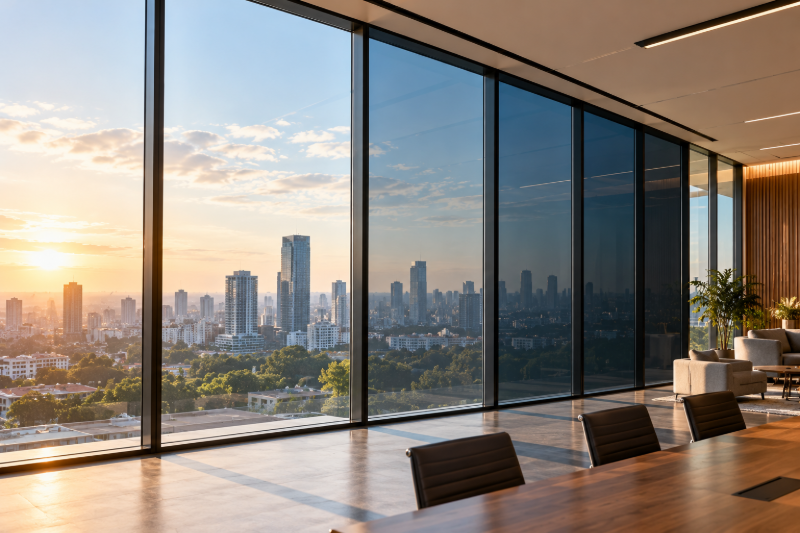
Electrochromic windows are the most mature and widely adopted form of smart glass technology. These windows consist of multiple layers: an electrochromic material, ion conductor, counter electrode, and transparent conductors. When voltage is applied, lithium ions move through the ion conductor, creating a color change that reduces light transmission from 60% to as low as 2%. This technology is particularly effective for Indian commercial buildings where solar heat gain is a significant challenge.
The cost of electrochromic windows in India typically ranges from ₹8,000 to ₹15,000 per square meter, depending on the manufacturer and specifications. While this is higher than conventional glazing (₹1,500-₹3,000 per square meter), the long-term energy savings often justify the investment.
Thermochromic Glass
Thermochromic glass changes its properties based on temperature rather than electrical input. This passive technology is ideal for buildings where automatic response to heat is desired without requiring external power or control systems. However, thermochromic glass offers less precise control compared to electrochromic options.
Frequently asked
Photochromic Glass
Similar to sunglasses that darken in sunlight, photochromic glass responds to UV radiation. While effective for reducing glare, this technology provides limited control over the degree of tinting and is less commonly used in commercial architecture compared to electrochromic solutions.
How Electrochromic Windows Improve Energy Efficiency
Reducing Solar Heat Gain
India's tropical and subtropical climate means buildings receive intense solar radiation year-round. In cities like Delhi, the summer peak solar radiation can exceed 900 W/m², creating significant cooling loads. Electrochromic windows can reduce solar heat transmission by up to 99% when fully tinted, dramatically decreasing the demand on air conditioning systems.
A typical commercial building in Bangalore can reduce its cooling energy consumption by 20-30% by installing smart glass on south and west-facing facades. This translates to annual energy savings of ₹2-4 lakhs for a medium-sized office building, depending on occupancy patterns and climate control strategies.
Optimizing Daylight Utilization
Smart glass maintains optimal daylight levels throughout the day by automatically adjusting transparency. This reduces reliance on artificial lighting, which accounts for 20-30% of total energy consumption in commercial buildings. By maintaining comfortable light levels without excessive glare, electrochromic windows can reduce artificial lighting energy use by 15-25%.
Thermal Mass Management
During cooler months or early mornings, smart glass can remain transparent to allow solar heat gain, reducing heating requirements. This dual-benefit approach—blocking heat when needed and allowing it when beneficial—makes electrochromic windows particularly valuable for buildings in India's varied climate zones.
Improving Indoor Comfort and Productivity
Glare Reduction
Excessive glare is a common problem in Indian office buildings, particularly those with large glass facades. Glare reduces visual comfort, causes eye strain, and decreases worker productivity. Studies show that employees in spaces with uncontrolled glare experience 15-20% reduction in task performance. Smart glass eliminates glare by selectively reducing light transmission while maintaining visibility, creating a more comfortable working environment.
Temperature Regulation
By controlling solar heat gain, electrochromic windows maintain more consistent indoor temperatures, reducing thermal discomfort. This is particularly important in open-plan offices where different zones receive varying amounts of solar exposure. Employees working near windows experience less temperature fluctuation, improving overall comfort and satisfaction.
Privacy Control
Smart glass provides an additional benefit of privacy without requiring traditional blinds or curtains. Conference rooms and executive offices can switch to opaque mode instantly, eliminating the need for mechanical shading systems. This creates cleaner aesthetic lines while providing functional privacy control.
Smart Glass Applications in Indian Architecture
Commercial Office Buildings
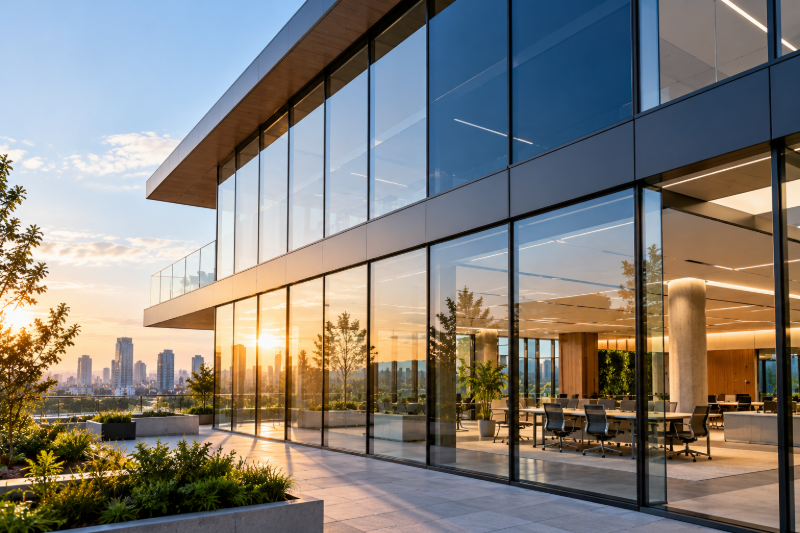
India's commercial real estate sector is increasingly adopting smart glass technology. Premium office buildings in Mumbai's Bandra Kurla Complex, Bangalore's Indiranagar, and Delhi's Gurgaon are incorporating electrochromic windows to achieve LEED and IGBC (Indian Green Building Council) certifications. These certifications not only improve building valuation but also attract multinational corporations seeking sustainable workspaces.
Hospitality and Retail
Hotels and high-end retail establishments use smart glass to create sophisticated, adaptable environments. Luxury hotels in cities like Hyderabad and Pune employ smart glass in guest rooms and conference facilities to provide guests with personalized control over their environment, enhancing the premium experience.
Healthcare Facilities
Hospitals and diagnostic centers benefit from smart glass by creating controlled environments for sensitive areas. Operating rooms can achieve complete light control for medical imaging, while patient rooms can optimize natural light for faster recovery. The technology also helps maintain sterile environments by eliminating traditional blinds that accumulate dust and bacteria.
Residential Applications
While still emerging in the residential sector, smart glass is gaining traction in high-end residential projects. Luxury apartments in metropolitan areas offer smart glass as a premium feature, providing residents with automated privacy and climate control.
Integration with Building Management Systems
Automated Control Systems
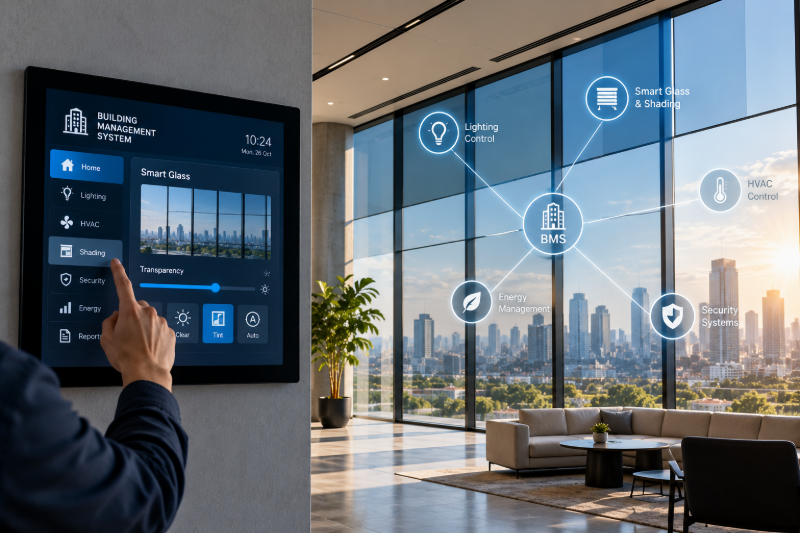
Modern electrochromic windows integrate seamlessly with Building Management Systems (BMS). Sensors monitor solar radiation, interior temperature, occupancy, and time of day to automatically adjust glass tinting. This eliminates the need for manual control and ensures optimal performance throughout the day.
Indian architectural firms increasingly specify integrated control systems that work with popular BMS platforms. These systems can be programmed with different schedules for weekdays and weekends, and can prioritize energy savings or comfort based on building operational requirements.
User Control Options
Despite automation capabilities, most smart glass installations include manual override options. Employees can adjust glass tinting in their immediate workspace, balancing automated efficiency with individual comfort preferences. This combination of automated and manual control typically provides the best user satisfaction.
Regulatory Framework and Building Standards in India
Energy Conservation Building Code (ECBC)
India's Energy Conservation Building Code mandates specific thermal performance standards for building envelopes. Smart glass helps buildings exceed ECBC requirements by reducing overall heat transfer coefficient (U-value) and solar heat gain coefficient (SHGC). Buildings utilizing electrochromic windows often achieve 30-40% better performance than ECBC minimum standards.
IGBC Green Building Certification
The Indian Green Building Council recognizes smart glass as a contributing technology toward LEED and IGBC certification. Points are awarded for daylighting strategies, energy efficiency, and thermal comfort—all areas where smart glass excels. Many developers view smart glass installation as a strategic investment in achieving higher certification levels.
Cost-Benefit Analysis for Indian Projects
Initial Investment
The capital cost of smart glass installation in India includes:
Electrochromic glass panels: ₹8,000-₹15,000 per m²
Control system and sensors: ₹50,000-₹2,00,000 depending on building size
Installation and integration: ₹2,000-₹5,000 per m²
Total cost for a typical 5,000 m² commercial building: ₹50-75 lakhs
Operational Savings
Annual energy savings typically range from ₹2-4 lakhs for medium-sized commercial buildings. Additional benefits include:
Reduced HVAC maintenance costs (15-20% reduction)
Lower peak demand charges from power utilities
Extended window lifespan due to reduced UV exposure
Improved employee productivity (estimated 5-10% in some studies)
Premium rental rates (5-10% higher for certified green buildings)
Return on Investment Timeline
For most commercial buildings in India, smart glass installations achieve payback within 5-8 years through energy savings alone. When combined with premium rental rates for LEED/IGBC certified buildings and improved employee retention due to better working conditions, ROI can be achieved within 3-5 years.
Challenges and Considerations
Maintenance Requirements
Smart glass systems require regular maintenance to ensure optimal performance. Electrical connections must be inspected periodically, and the glass surface needs cleaning like conventional windows. Most manufacturers recommend annual professional maintenance, costing approximately ₹50,000-₹1,00,000 annually for a typical commercial installation.
Durability in Indian Climate
India's diverse climate—from humid coastal areas to dry desert regions—presents durability challenges for smart glass. High humidity in cities like Mumbai and Kolkata can affect electrical components, while intense UV radiation in Delhi and Rajasthan may impact electrochromic material longevity. Specifying products with appropriate environmental ratings and protective coatings is essential.
Electrical Infrastructure
Smart glass requires reliable electrical supply and backup power systems. Power fluctuations common in many Indian cities can damage control systems. Buildings must invest in voltage stabilizers and uninterruptible power supplies (UPS) to protect smart glass installations, adding ₹2-5 lakhs to project costs.
Future Trends in Smart Glass Technology
Energy-Generating Smart Glass
Emerging technologies combine electrochromic properties with photovoltaic capabilities, allowing windows to generate electricity while controlling solar transmission. These bifunctional windows could transform building facades into active energy-generating elements.
Advanced Materials
Research into new electrochromic materials promises faster switching times, improved durability, and lower costs. Perovskite-based smart glass and organic electrochromic materials show significant potential for commercialization within the next 5-10 years.
Integration with IoT and AI
Future smart glass systems will increasingly incorporate artificial intelligence and Internet of Things connectivity. Predictive algorithms will anticipate occupancy patterns, weather changes, and energy prices, optimizing glass tinting in real-time for maximum efficiency and comfort.
Selecting the Right Smart Glass Solution
Assess Your Building's Needs
Before specifying smart glass, evaluate your building's orientation, climate zone, occupancy patterns, and primary performance goals. South and west-facing facades typically benefit most from electrochromic windows in India.
Work with Experienced Professionals
Successful smart glass implementation requires expertise in architectural design, electrical engineering, and building systems integration. Engaging professionals through platforms like AECORD ensures access to architects and engineers with proven experience in smart glass projects. AECORD connects you with vetted professionals who understand Indian building codes, climate considerations, and local supply chains.
Evaluate Total Cost of Ownership
Rather than focusing solely on initial capital costs, calculate total cost of ownership including maintenance, electricity, and potential replacement over 25-30 years. Compare this against energy savings and productivity improvements.
Conclusion
Electrochromic windows and smart glass technology represent a significant evolution in architectural design, particularly relevant for India's challenging climate and growing emphasis on sustainable building practices. By reducing energy consumption, improving indoor comfort, and supporting green building certifications, smart glass delivers compelling value for commercial, hospitality, healthcare, and residential projects.
While initial costs remain higher than conventional glazing, the combination of operational savings, productivity improvements, and premium building valuation makes smart glass a sound investment for forward-thinking developers and building owners. As technology matures and costs decline, smart glass will become increasingly common in Indian architecture.
If you're considering smart glass for your next project, connect with experienced architects and engineers through AECORD. Our platform features professionals specializing in sustainable building technologies, smart building systems, and energy-efficient design. Whether you're planning a commercial office, hospitality venue, or premium residential development, AECORD helps you find the right expertise to bring your vision to life while maximizing energy performance and occupant comfort.
Frequently Asked Questions
What is smart glass and how does it work in buildings?
Smart glass, also called electrochromic windows, dynamically adjusts its light transmission and thermal properties using electrical voltage to change color and block heat. When voltage is applied, ions move within the glass material, causing it to darken or lighten in seconds, allowing buildings to respond intelligently to changing light and heat conditions throughout the day.
How much energy can smart glass windows save in commercial buildings?
Electrochromic windows can reduce cooling energy consumption by 20-30% in commercial buildings by reducing solar heat transmission by up to 99% when fully tinted. For a medium-sized office building in Bangalore, this translates to annual energy savings of ₹2-4 lakhs, depending on occupancy patterns and climate control strategies.
What is the cost of installing electrochromic windows in India?
Electrochromic windows in India typically cost ₹8,000 to ₹15,000 per square meter, which is higher than conventional glazing at ₹1,500-₹3,000 per square meter. However, the long-term energy savings often justify the higher initial investment.
What are the different types of smart glass technology?
The main types of smart glass include electrochromic windows (electrically controlled, most mature), thermochromic glass (temperature-responsive, passive), and photochromic glass (UV-responsive, similar to transition lenses). Electrochromic windows are the most widely adopted for commercial buildings due to their precise control and effectiveness.
Why is smart glass particularly beneficial for buildings in India?
India's tropical and subtropical climate experiences intense solar radiation year-round, with summer peak solar radiation exceeding 900 W/m² in cities like Delhi. Smart glass helps reduce this excessive solar heat gain and cooling loads, making it especially valuable for managing energy consumption in India's extreme temperature fluctuations.