

Understanding Low-Carbon Building Materials
India's construction industry is at a critical juncture. With the country expected to add over 2 billion square meters of built space by 2050, the environmental impact of traditional construction materials has become impossible to ignore. Cement, steel, and conventional bricks account for approximately 25-30% of India's total carbon emissions, making the shift to low-carbon alternatives not just an environmental imperative but an economic necessity.
Low-carbon building materials are construction products designed to minimize greenhouse gas emissions throughout their lifecycle—from raw material extraction and manufacturing to transportation and installation. Unlike traditional materials that rely on energy-intensive processes, these alternatives employ innovative technologies, recycled content, and waste products to deliver equivalent or superior performance with significantly reduced environmental footprint.
The Indian government has recognized this challenge. The National Action Plan on Climate Change and various state-level green building codes now incentivize the use of sustainable materials. Professionals in the AECO sector are increasingly seeking expertise in specifying and sourcing these alternatives, making this knowledge essential for architects, engineers, and construction managers across Indian cities like Bangalore, Mumbai, Delhi, and Pune.
Build cost · Bengaluru, May 2026
The Carbon Problem with Traditional Materials
Cement's Environmental Impact
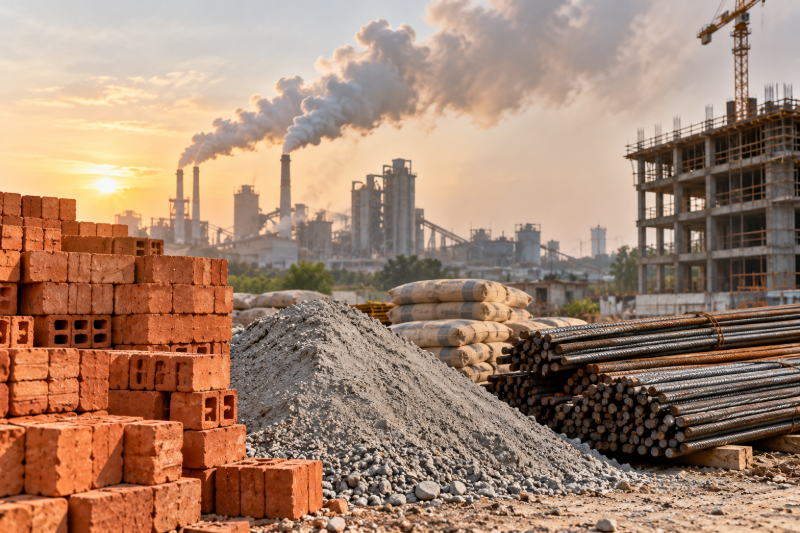
Ordinary Portland Cement (OPC) is the backbone of Indian construction, with the country consuming approximately 380 million tons annually. However, the production of one ton of cement generates roughly 0.9 tons of CO₂ emissions. The process involves heating limestone at 1,450°C, which requires massive energy inputs and releases CO₂ both from fuel combustion and limestone decomposition.
For a typical Indian residential building consuming 300-400 tons of cement, this translates to 270-360 tons of CO₂ emissions—equivalent to the carbon footprint of an average Indian household for 3-4 years. Multiply this across India's construction boom, and the scale of the problem becomes evident.
Steel's Carbon Footprint
Steel production accounts for approximately 7-9% of global CO₂ emissions. In India, where blast furnace technology still dominates, producing one ton of steel generates 1.8-2.2 tons of CO₂. A medium-rise commercial building in Bangalore or Hyderabad might require 80-120 tons of structural steel, resulting in 144-264 tons of CO₂ emissions before even considering concrete.
Frequently asked
Traditional Brick Manufacturing
While individual bricks have lower carbon intensity than cement or steel, the cumulative effect is significant. Conventional clay brick kilns across India operate with poor thermal efficiency, consuming 0.8-1.2 MJ of energy per brick. A residential building requiring 30,000-40,000 bricks generates substantial emissions through fuel consumption and transportation.
Low-Carbon Cement Alternatives
Portland Pozzolana Cement (PPC)
Portland Pozzolana Cement represents the most accessible low-carbon alternative currently available in India. By replacing 20-40% of clinker with fly ash—a waste product from thermal power plants—PPC reduces embodied carbon by 20-30% compared to OPC while maintaining comparable strength development.
The cost difference is minimal: PPC typically costs ₹50-80 per bag compared to ₹55-85 for OPC, depending on the region and supplier. Indian standards (IS 1489) guarantee that PPC meets all structural requirements, making it an ideal substitute for general construction applications. However, PPC has slower early strength gain, requiring extended curing periods—a consideration for projects with tight schedules.
Fly Ash Based Cement
High-volume fly ash (HVFA) concrete uses 40-60% fly ash replacement, reducing carbon emissions by up to 60%. India's thermal power plants generate approximately 200 million tons of fly ash annually, with only 25-30% currently utilized. This represents both an environmental problem and an opportunity.
HVFA concrete requires careful mix design and quality control but delivers excellent long-term durability and reduced heat of hydration—beneficial for mass concrete applications like dams and large foundations. Costs are 10-15% lower than OPC-based concrete, making HVFA economically attractive for large-scale projects.
Geopolymer Cement
Geopolymer technology represents a revolutionary approach, replacing Portland cement entirely with alkali-activated binders derived from industrial waste materials like fly ash or slag. This technology can reduce carbon emissions by up to 80% compared to conventional cement.
While geopolymer concrete offers exceptional durability and chemical resistance, it remains expensive (₹800-1,200 per cubic meter additional cost) and requires specialized expertise. Early adoption is occurring in high-performance applications across Indian metros, but mainstream adoption awaits cost reduction and standardization of Indian specifications.
Slag-Based Cement
Ground Granulated Blast Furnace Slag (GGBFS), a byproduct of iron production, can replace 50-80% of Portland cement in concrete. With carbon emissions 50-70% lower than OPC, slag-based concrete offers excellent durability in aggressive environments.
The primary limitation is availability. India produces approximately 15-20 million tons of GGBFS annually, with significant geographic concentration near steel plants in Odisha, Jharkhand, and Karnataka. Transportation costs can be substantial for projects in distant locations, but for construction near steel hubs, slag-based concrete is both economical and environmentally superior.
Sustainable Aggregates and Recycled Materials
Recycled Concrete Aggregates (RCA)
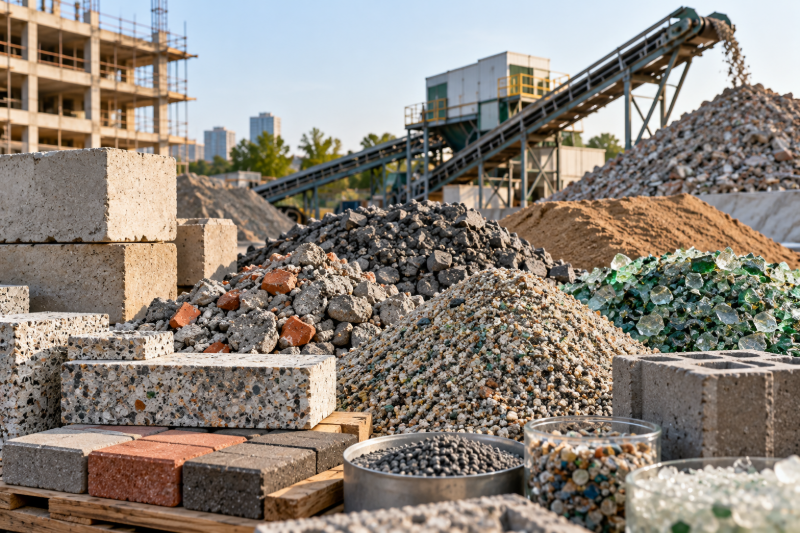
Recycled concrete aggregates, derived from demolition waste, can replace 30-100% of virgin aggregates in new concrete. India generates approximately 600-700 million tons of construction and demolition (C&D) waste annually, with less than 5% currently recycled.
Using RCA reduces extraction pressure on natural resources, lowers transportation distances, and decreases embodied carbon by 15-25%. Quality RCA costs ₹400-600 per cubic meter compared to ₹500-800 for virgin aggregates, making it economically competitive. However, specifications must account for higher water absorption and slightly lower strength.
Leading projects across Delhi, Mumbai, and Bangalore are increasingly incorporating RCA, demonstrating technical feasibility and building market confidence. AECORD connects professionals seeking expertise in specifying recycled aggregates with experienced practitioners who have successfully implemented these materials.
Recycled Steel
Steel's recyclability is nearly perfect, with over 85% of structural steel globally recovered and reused. Recycled steel requires only 25-30% of the energy needed for virgin steel production, reducing carbon emissions by approximately 70%.
India's steel recycling industry is growing, with secondary steel producers now supplying 25-30% of domestic demand. While recycled steel costs 5-10% less than virgin material, availability and quality consistency remain challenges. Specifying recycled steel requires working with suppliers who can guarantee material certifications and traceability.
Alternative Masonry and Infill Materials
Fly Ash Bricks
Fly ash bricks utilize thermal power plant waste to replace clay, reducing embodied carbon by 40-60% compared to conventional clay bricks. With compressive strength of 3.5-5 MPa—meeting IS 3495 standards—fly ash bricks perform identically to clay bricks in most applications.
Cost-wise, fly ash bricks are 10-20% cheaper than quality clay bricks, typically priced at ₹3.50-5.50 per brick versus ₹4-7 for conventional alternatives. Availability is excellent in regions with thermal power plants, particularly in Odisha, Chhattisgarh, Jharkhand, and Andhra Pradesh.
The primary advantage beyond carbon reduction is dimensional consistency and lower water absorption, reducing mortar requirements and improving construction efficiency. However, aesthetic considerations may limit use in exposed facades where traditional clay brick appearance is desired.
Autoclaved Aerated Concrete (AAC) Blocks
AAC blocks are manufactured by mixing cement, lime, silica, and aluminum powder, then autoclaving the resulting mixture. The aluminum causes hydrogen gas evolution, creating a lightweight, porous material with exceptional thermal and acoustic properties.
With embodied carbon 30-40% lower than conventional bricks and concrete blocks, AAC blocks offer multiple benefits: 80% lighter weight reduces structural loads, excellent insulation properties reduce operational energy, and faster construction speeds reduce project timelines. At ₹50-80 per block, AAC is 20-30% more expensive than clay bricks but delivers superior performance.
AAC adoption is accelerating across Indian cities, particularly in Bangalore, Hyderabad, and Pune where thermal comfort is critical. The material is ideal for infill walls in skeletal frame structures, reducing overall building weight and foundation costs.
Interlocking Stabilized Earth Blocks
Compressed stabilized earth blocks (CSEB) represent a traditional material modernized through technology. By compressing locally-sourced soil with minimal cement stabilization (5-10%), these blocks achieve 2-3 MPa compressive strength while reducing embodied carbon by 70-80%.
At ₹2-4 per block, CSEBs are the most economical alternative, particularly valuable for rural construction and low-cost housing projects. The material is non-toxic, breathable, and excellent for passive climate control. However, structural limitations restrict use to low-rise buildings, and performance variability based on local soil characteristics requires careful testing.
Structural Applications and Advanced Solutions
Timber and Cross-Laminated Timber (CLT)
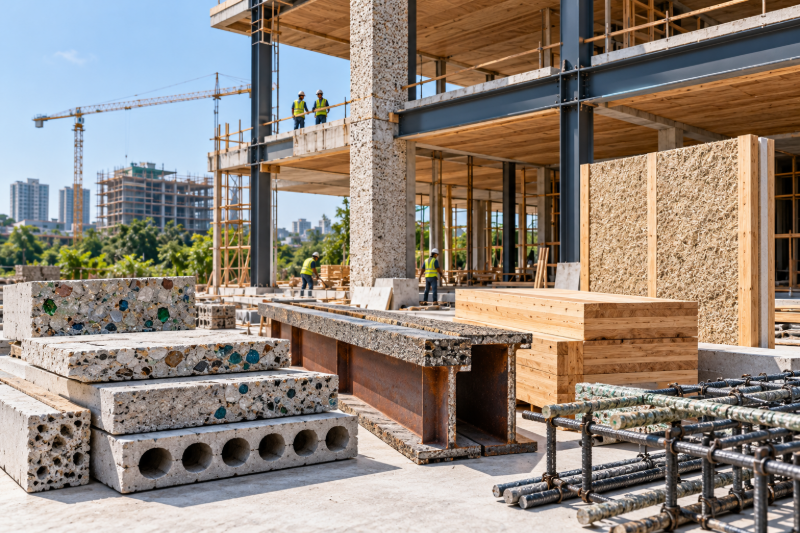
Sustainably harvested timber is carbon-negative, sequestering CO₂ throughout its lifecycle. Cross-Laminated Timber, engineered by laminating solid wood boards perpendicular to one another, enables mid-rise construction with exceptional strength-to-weight ratios.
While timber is not yet mainstream for commercial construction in India due to cost (₹40,000-60,000 per cubic meter) and limited supply of certified sustainable material, pilot projects in Bangalore and Pune demonstrate technical feasibility. Government incentives for sustainable forestry are gradually improving availability.
Recycled Plastic Lumber
Plastic waste, particularly polyethylene terephthalate (PET) from beverage bottles, can be converted into structural lumber suitable for non-load-bearing applications. With embodied carbon 90% lower than conventional timber and superior durability in aggressive environments, recycled plastic lumber is finding applications in coastal construction and industrial settings.
Cost remains prohibitive (₹60,000-80,000 per cubic meter), but as recycling infrastructure improves across Indian cities, this alternative will become increasingly viable.
Implementation Challenges and Solutions
Code and Standardization Issues
While Indian Standards (IS) cover most low-carbon alternatives, specifications remain conservative and sometimes outdated. PPC and fly ash concrete have well-established standards, but geopolymer and other emerging materials lack comprehensive Indian specifications, requiring designers to reference international standards or conduct extensive testing.
The solution involves collaborative engagement between industry bodies, regulatory authorities, and professional organizations to develop practical, performance-based standards that encourage innovation while ensuring safety.
Supply Chain Maturity
Low-carbon material availability varies dramatically across India. Fly ash is abundant near thermal power plants but scarce in regions relying on hydro or renewable power. Recycled aggregates are emerging in metro regions but virtually unavailable in smaller towns.
Building supply chains requires regional expertise. Professionals on AECORD can connect with local suppliers and specialists who understand regional material availability and can develop practical sourcing strategies.
Cost and Value Perception
While many low-carbon materials offer lifecycle cost advantages, initial capital costs can be higher, particularly for emerging solutions like geopolymer concrete. Overcoming this requires demonstrating operational energy savings, durability benefits, and regulatory incentives that justify upfront investments.
Quality Assurance
Recycled and waste-derived materials require rigorous quality control. Inconsistent fly ash properties, variable recycled aggregate quality, and performance variability in earth blocks demand testing protocols and supplier relationships based on trust and transparency.
Regulatory Incentives and Market Drivers
India's green building certification systems—LEED India, IGBC Green Building Rating System, and GRIHA—provide market incentives for low-carbon materials through points and certifications. Many state governments offer tax benefits, reduced development charges, and expedited approvals for projects incorporating sustainable materials.
The Ministry of Housing and Urban Affairs' guidelines for green buildings increasingly mandate embodied carbon calculations, creating regulatory pressure for material substitution. Progressive developers and institutional clients are now specifying low-carbon materials as standard requirements.
Making the Transition: Practical Steps
Conduct Material Audits
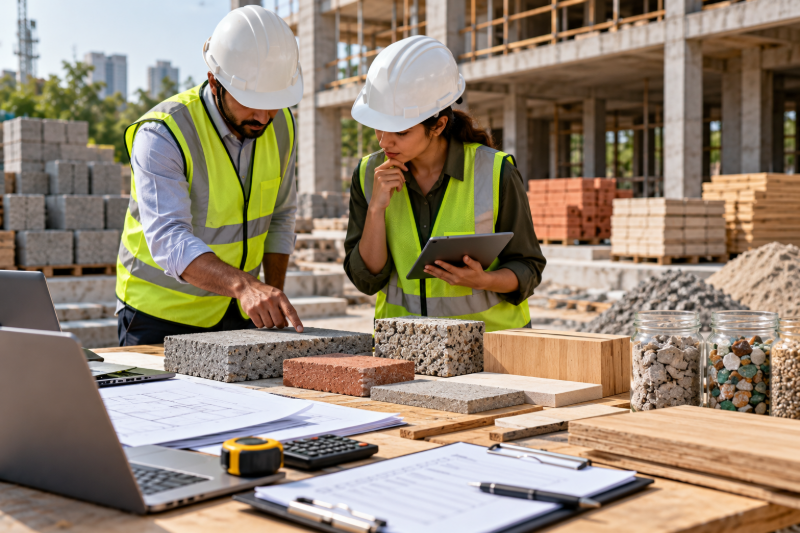
Begin by analyzing current material specifications and identifying high-carbon components. For most Indian buildings, cement and steel represent 60-70% of embodied carbon—logical starting points for substitution.
Engage Qualified Professionals
Transitioning to low-carbon materials requires expertise in mix design, construction methodology, and quality control. Connecting with experienced professionals through AECORD ensures access to practitioners who have successfully implemented these materials in Indian projects.
Pilot Projects
Consider pilot applications on non-critical elements to validate performance, cost, and constructability before full-scale implementation. Learning from initial projects reduces risk and builds organizational confidence.
Supplier Partnerships
Develop long-term relationships with suppliers of low-carbon materials. Consistent specifications and volume commitments can improve pricing and ensure supply reliability.
Future Outlook
The trajectory is clear: low-carbon building materials will become the norm rather than the exception. Technological advances, regulatory mandates, and market demand are converging to make sustainable materials economically and technically superior to conventional alternatives.
India has unique advantages—abundant waste materials like fly ash, growing recycling infrastructure, and a construction industry large enough to support specialized suppliers. Professionals who develop expertise in specifying and implementing low-carbon materials will be increasingly valuable.
Whether you're an architect designing your next project, an engineer optimizing structural systems, or a contractor managing construction logistics, understanding low-carbon alternatives is essential. The transition requires knowledge, experience, and collaboration—resources that AECORD connects you with through its network of AECO professionals across India.
Conclusion
Low-carbon building materials are no longer experimental or economically marginal. From fly ash bricks costing less than clay alternatives to recycled steel offering cost savings alongside carbon reduction, practical, affordable options exist for most construction applications. The challenge is not technological or economic—it's organizational and educational.
The construction industry's carbon footprint will be determined by millions of material decisions made by architects, engineers, and contractors across Indian cities. Each decision to specify PPC instead of OPC, recycled aggregates instead of virgin materials, or AAC blocks instead of conventional bricks contributes to systemic change.
Ready to implement low-carbon materials in your next project? Explore AECORD's network of architects, engineers, and material specialists who have expertise in sustainable construction practices. Find professionals who can help you navigate material selection, ensure quality standards, and deliver projects that perform environmentally and economically. Visit AECORD today to connect with experienced practitioners in your region and transform your commitment to sustainability into built reality.
Frequently Asked Questions
What percentage of India's carbon emissions come from traditional building materials?
Cement, steel, and conventional bricks account for approximately 25-30% of India's total carbon emissions. With the country expected to add over 2 billion square meters of built space by 2050, shifting to low-carbon alternatives has become both an environmental and economic necessity.
How much CO₂ does cement production generate in India?
Producing one ton of cement generates roughly 0.9 tons of CO₂ emissions through fuel combustion and limestone decomposition. A typical Indian residential building consuming 300-400 tons of cement results in 270-360 tons of CO₂ emissions, equivalent to an average Indian household's carbon footprint for 3-4 years.
What is Portland Pozzolana Cement and how much carbon does it reduce?
Portland Pozzolana Cement (PPC) replaces 20-40% of clinker with fly ash from thermal power plants, reducing embodied carbon by 20-30% compared to OPC while maintaining comparable strength. It costs only ₹50-80 per bag versus ₹55-85 for OPC, making it an economical low-carbon alternative for Indian construction.
How much CO₂ is produced from steel used in Indian buildings?
In India, producing one ton of steel generates 1.8-2.2 tons of CO₂ using blast furnace technology. A medium-rise commercial building requiring 80-120 tons of structural steel results in 144-264 tons of CO₂ emissions before considering concrete.
What are low-carbon building materials and how do they work?
Low-carbon building materials are construction products designed to minimize greenhouse gas emissions throughout their lifecycle by using innovative technologies, recycled content, and waste products. They deliver equivalent or superior performance compared to traditional materials with significantly reduced environmental footprint.