Understanding the RERA Complaint Process in India: A Step-by-Step Guide
The Real Estate (Regulation and Development) Act, 2016, commonly known as RERA, has been a game-changer for homebuyers in India. It established a structured framework to protect consumer interests and ensure transparency in real estate transactions. However, many homebuyers and property investors are still unclear about how to file a RERA complaint when disputes arise.
Whether you're dealing with delayed project delivery, quality issues, or unfulfilled promises from developers, understanding the RERA complaint process is crucial. This comprehensive guide walks you through each step, from identifying your grievance to resolution, with specific focus on Indian regulations and practical examples.
For more detail, read our guide on Occupancy Certificate Process India 2026.
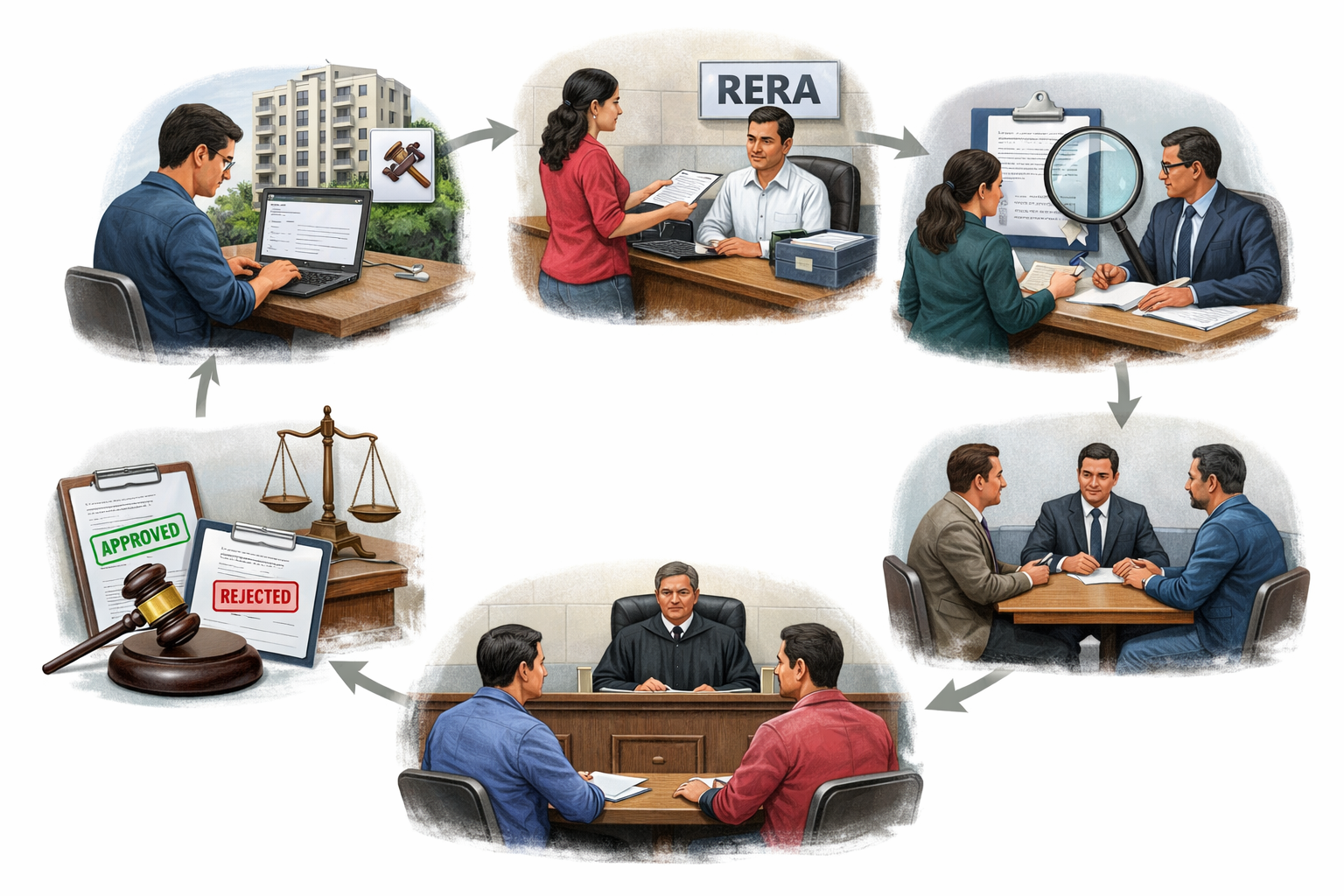
Build cost · Bengaluru, May 2026
What Qualifies as a RERA Complaint?
Before diving into the complaint process, it's important to understand what issues fall under RERA's jurisdiction. The Act covers disputes between homebuyers and real estate developers or agents regarding residential and commercial properties.
Common complaints include:
Delayed project delivery: Projects not completed within the promised timeline
Quality defects: Structural issues, poor construction quality, or deviation from approved plans
Incomplete amenities: Promised facilities like gyms, swimming pools, or parking not delivered
Hidden charges: Unexpected costs not disclosed during the purchase agreement
Non-refund of earnest money: Developers refusing to return deposits without valid reason
Misrepresentation: False claims about location, size, or specifications
Breach of contract: Failure to deliver as per the agreed-upon terms
It's worth noting that RERA complaints must be filed within 5 years from the date of the complaint or from the date when the cause of action arises, whichever is later.
Step 1: Gather Documentation and Evidence
Before filing a formal complaint, you need to compile all relevant documents. This is the foundation of your case and will significantly strengthen your position.
Essential documents to collect:
Sale deed or purchase agreement
Payment receipts and bank statements showing all transactions
Project brochure and marketing materials
Approved building plans and specifications
Correspondence with the developer (emails, letters, WhatsApp messages)
Inspection reports or photographs of defects
Possession letter (if applicable)
Registration certificate and RERA registration details of the project
Quotations for repair/rectification work
Any written promises or commitments from the developer
For example, if you're complaining about delayed delivery, you'll need the original agreement that specifies the completion date, along with evidence showing the project remains incomplete. Screenshots of WhatsApp conversations or email chains can be valuable evidence in RERA proceedings.
Step 2: Verify Project RERA Registration
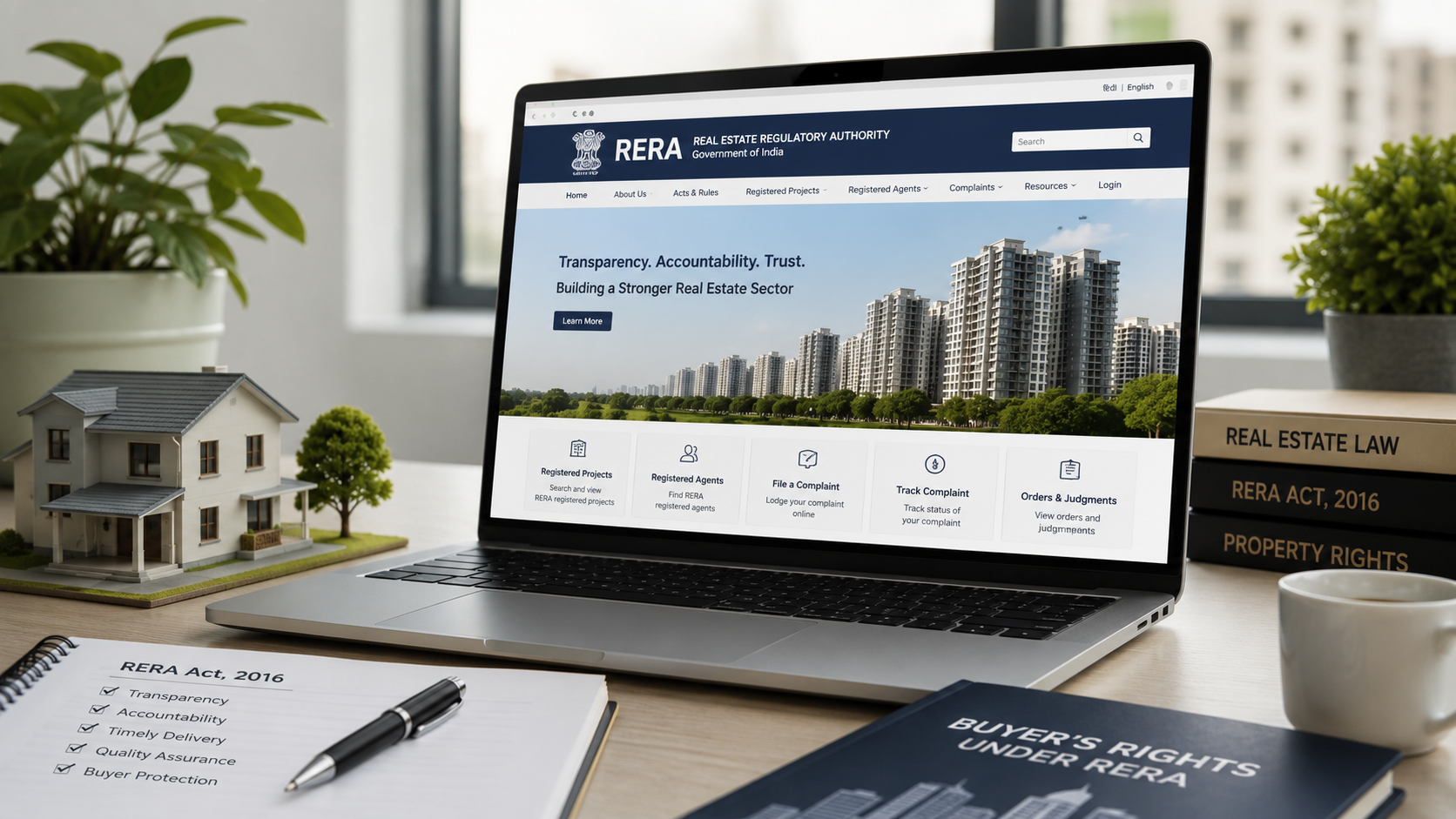
Before filing a complaint, confirm that the project is registered with RERA. Each state in India has its own RERA authority, and projects must be registered to be eligible for RERA protection.
How to check RERA registration:
Visit your state's RERA official website (e.g., MahaRERA for Maharashtra, RERA Haryana, RERA Delhi)
Search for the project name or developer name in the registered projects database
Note the RERA registration number and project details
Verify that the project details match what you were promised
If the project isn't registered with RERA, you cannot file a complaint with the RERA authority. Instead, you may need to pursue legal remedies through civil courts, which can be more time-consuming and expensive.
Frequently asked
Step 3: Attempt Informal Resolution
While not mandatory, attempting to resolve the issue directly with the developer can save time and money. Many disputes are resolved through negotiation before formal proceedings begin.
Tips for informal resolution:
Send a formal written notice to the developer via registered mail or email, clearly stating the issue and your expectations
Allow the developer 30 days to respond or rectify the issue
Keep records of all communication
If the developer responds positively, get the agreement in writing
Document any steps taken by the developer to address the complaint
For instance, if you've identified quality defects in your apartment in Bangalore, send a detailed notice to the developer's office mentioning specific defects (e.g., "cracks in living room wall," "waterproofing issues in bathroom"). This creates a paper trail and often motivates developers to act quickly.
Step 4: File the RERA Complaint
If informal resolution doesn't work, it's time to file a formal complaint with the RERA authority. This is where the actual legal process begins.
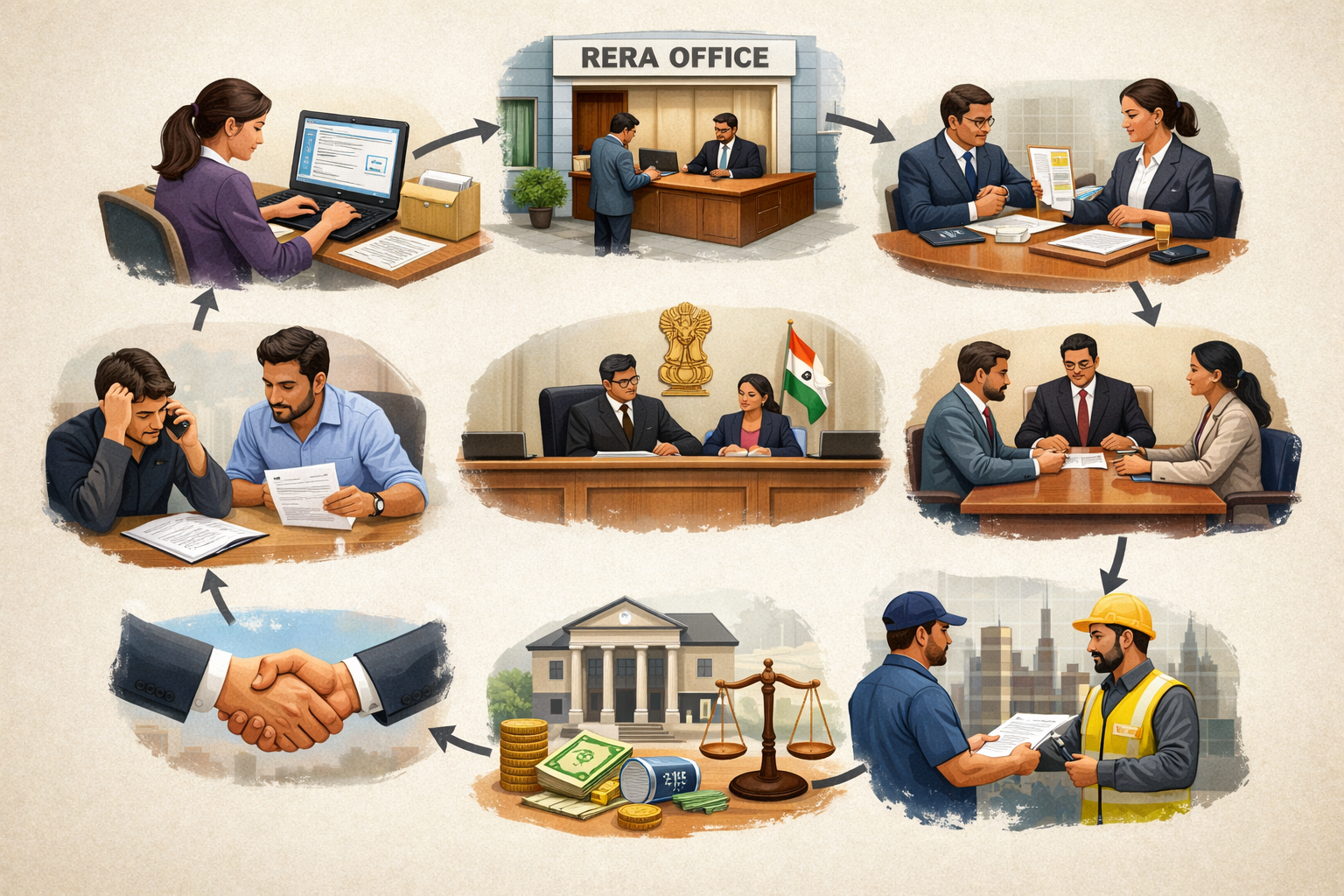
Where to File
RERA complaints are filed with the Real Estate Regulatory Authority of your state. Each state has its own authority:
Maharashtra: MahaRERA (Mumbai, Pune, Nagpur offices)
Delhi: RERA Delhi
Haryana: RERA Haryana
Uttar Pradesh: RERA UP
Karnataka: RERA Karnataka
Tamil Nadu: RERA Tamil Nadu
And so on for all other states
How to File
Most RERA authorities now provide online filing systems. Here's the typical process:
Visit the official RERA website: Create an account on your state's RERA portal
Complete the complaint form: Fill in details about yourself, the developer, the project, and the complaint
Upload documents: Attach all supporting documents (purchase agreement, payment receipts, photographs, correspondence)
Pay the filing fee: RERA filing fees vary by state and complaint value. For example:
Delhi: ₹500 to ₹2,000 depending on claim value
Haryana: ₹500 to ₹1,000
Submit and get a reference number: Once submitted, you'll receive a complaint registration number
What to Include in Your Complaint
Your RERA complaint should include:
Your name, address, and contact details
Developer's name and details
Project name and RERA registration number
Detailed description of the complaint with dates
Specific clauses of the agreement violated
Financial impact (amount claimed)
Relief sought (refund, compensation, completion, etc.)
Relevant documentary evidence
Step 5: RERA Authority Reviews and Admits the Complaint
After filing, the RERA authority reviews your complaint to ensure it's complete and falls within its jurisdiction. This typically takes 7-14 days.
What happens during this phase:
The authority checks if all required documents are submitted
It verifies that the complaint is within the limitation period (5 years)
It confirms that the project is registered with RERA
If complete, the complaint is admitted and registered
If incomplete, you're given 30 days to submit missing documents
Once admitted, you'll receive an admission order with a case number. This is your proof that the complaint has been formally registered.
Step 6: Notice to the Developer
After admission, the RERA authority issues a notice to the developer, asking them to respond to your complaint within a specified period (usually 30-45 days).
The developer's response may include:
Denial of the allegations
Explanation for delays or defects
Counterclaim against the buyer (e.g., for unpaid amounts)
Offer for settlement
Request for extension of time
Keep monitoring your case status on the RERA portal. You'll be notified when the developer submits their reply.
Step 7: Hearing and Evidence Submission
Once both parties have submitted their initial documents, the RERA authority schedules a hearing. This is where you present your case in detail.
Before the Hearing
Prepare a detailed statement of your complaint
Organize all documents in chronological order
Identify key witnesses (if applicable)
Consider hiring a lawyer (optional but recommended for complex cases)
Calculate the exact amount of compensation you're seeking
During the Hearing
Present your case clearly and factually
Answer questions from the RERA officer
Submit any additional evidence
Cross-examine the developer's representative if needed
Propose settlement terms if you wish to negotiate
For example, if your complaint is about a delayed delivery in a Mumbai project, you might present:
The original agreement specifying the completion date as December 2020
Current photographs showing the project is still incomplete
Correspondence showing your follow-ups with the developer
Calculations of interest and compensation you're claiming
Step 8: RERA Authority's Order and Decision
After hearing both parties and reviewing all evidence, the RERA authority issues a detailed order. This typically happens within 60 days of the last hearing, though it can extend depending on case complexity.
The order may include:
Rejection of the complaint if evidence is insufficient
Partial or full acceptance of your claim
Direction to the developer to complete the project by a specific date
Order to refund the amount paid (with interest)
Compensation for defects or delays
Specific instructions to remedy the defects
The order is communicated to both parties via the RERA portal and registered mail.
Step 9: Appeals and Further Action
If either party is dissatisfied with the RERA authority's order, they can appeal to the RERA Appellate Tribunal within 60 days.
Appeal process:
File an appeal with the Appellate Tribunal (constituted in each state)
Pay the appeal fee (varies by state, typically ₹500-₹1,000)
Submit grounds for appeal with supporting documents
The Tribunal reviews the case and issues a final order
If you still disagree with the Appellate Tribunal's order, you can approach the High Court, though this moves beyond RERA-specific proceedings.
Step 10: Execution of the Order
Once the RERA authority's order becomes final (after the appeal period or after appellate resolution), it's time to ensure compliance.
If the developer fails to comply:
File an execution petition with the RERA authority
The authority can impose penalties on the developer
In extreme cases, the developer's RERA registration can be cancelled
You can also approach the civil court for enforcement
Timeline and Cost Considerations
Understanding the timeline and costs involved helps you plan accordingly.
Typical RERA complaint timeline:
Document preparation: 2-4 weeks
Filing and admission: 2-3 weeks
Developer's response: 4-6 weeks
Hearings and evidence submission: 2-4 months
Order issuance: 2-3 months
Total: 6-12 months (can extend if appeals are filed)
Costs involved:
Filing fee: ₹500-₹2,000 (varies by state)
Lawyer fees (optional): ₹10,000-₹50,000+ depending on case complexity
Document certification: ₹100-₹500
Travel and miscellaneous: ₹2,000-₹5,000
Total out-of-pocket: ₹15,000-₹60,000 (excluding potential compensation)
Tips for a Successful RERA Complaint
To maximize your chances of success, keep these points in mind:
File within the limitation period: Always file within 5 years from the date of the complaint or when the cause of action arises
Document everything: Keep all communications, receipts, photographs, and correspondence
Be specific: Clearly describe the defect or issue with dates and details
Quantify your claim: Provide exact amounts with calculations for compensation
Stick to facts: Avoid emotional language; focus on contractual breaches
Get legal help: For complex cases, consider consulting a RERA lawyer
Monitor your case: Regularly check the RERA portal for updates and deadlines
Attend hearings: Personal presence strengthens your case
Keep records of compliance: If the developer takes corrective action, document it
RERA Complaint Process and AECORD
While navigating the RERA complaint process independently is possible, having access to reliable information and documentation tools is invaluable. Platforms like AECORD help homebuyers and property investors by providing:
Access to verified project information and RERA registration details
Tools to track project progress and timelines
Resources for understanding contracts and agreements
Community insights from other buyers in the same project
Guidance on documentation and evidence collection
By using such platforms, you can build a stronger case and ensure you have all necessary documentation before filing a complaint.
Common Mistakes to Avoid
Learning from others' mistakes can help you navigate the process more smoothly:
Filing after the limitation period: Don't delay; file within 5 years
Incomplete documentation: Submit all relevant documents with your complaint
Vague complaints: Be specific about issues, dates, and financial impact
Missing deadlines: Respond promptly to RERA notices and attend scheduled hearings
Unrealistic claims: Base your compensation on actual damages and market standards
Ignoring the developer's response: Prepare counter-arguments to their claims
Lack of legal assistance: For substantial claims, consider professional legal help
Frequently Asked Questions
Q1: What is the filing fee for a RERA complaint in India?
The filing fee varies by state but typically ranges from ₹500 to ₹2,000. For example, Maharashtra charges ₹1,000 for complaints up to ₹50 lakhs and ₹2,000 for higher amounts. Delhi charges ₹500 to ₹2,000 depending on the claim value. Check your state's RERA authority website for exact fees.
Q2: How long does the RERA complaint process typically take?
The entire RERA complaint process usually takes 6-12 months from filing to order issuance. This includes time for admission (2-3 weeks), developer's response (4-6 weeks), hearings (2-4 months), and order issuance (2-3 months). If either party appeals, the timeline extends further.
Q3: Can I file a RERA complaint if the project is not registered with RERA?
No, RERA complaints can only be filed for registered projects. If your project is not registered, you'll need to pursue legal remedies through civil courts, which can be more time-consuming and expensive. Always verify RERA registration before purchasing a property.
Q4: What compensation can I expect from a RERA complaint?
Compensation depends on the nature of the complaint. For delays, you may receive interest on your investment. For quality defects, you might get refunds for repair costs or a reduction in the property price. For non-delivery, you could claim full refund with interest. The RERA authority determines compensation based on evidence and applicable regulations.
Q5: Do I need a lawyer to file a RERA complaint?
While not mandatory, hiring a lawyer is recommended, especially for complex cases involving large amounts. A lawyer can help you prepare a stronger case, organize documents, represent you during hearings, and handle appeals. For straightforward complaints, you can file independently, but ensure you have all required documentation and understand the process thoroughly.
```