

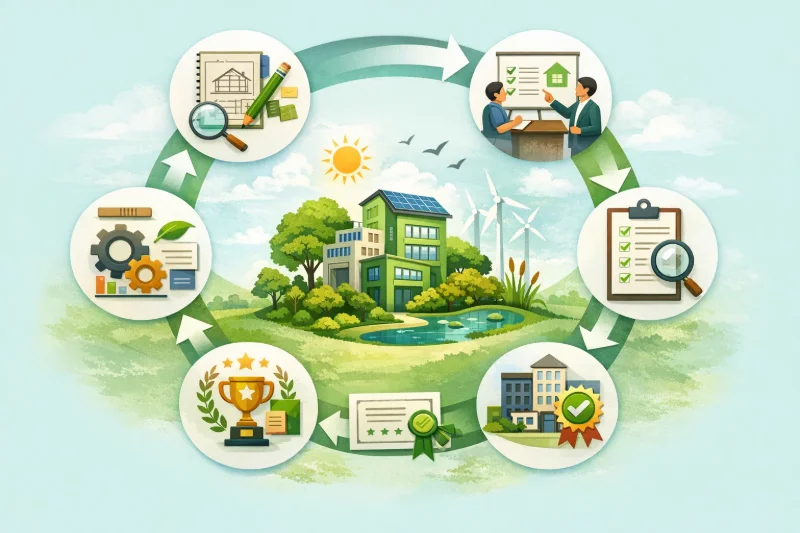
Understanding GRIHA Certification in India
Green Rating for Integrated Habitat Assessment (GRIHA) is India's premier green building rating system, developed by The Energy and Resources Institute (TERI) in collaboration with the Ministry of New and Renewable Energy. For architects, engineers, and construction professionals, GRIHA certification has become a critical credential for demonstrating commitment to sustainable building practices. Whether you're designing a commercial complex in Bangalore, a residential project in Mumbai, or an industrial facility in Delhi, understanding the GRIHA certification process is essential for meeting modern sustainability standards and client expectations.
This comprehensive guide walks you through every step of the GRIHA certification journey, from initial planning to final certification, helping you navigate the process efficiently and ensure your projects meet India's most stringent green building requirements.
Build cost · Bengaluru, May 2026
What is GRIHA Certification?
The Fundamentals of GRIHA
GRIHA is a rating system specifically designed for the Indian climate, geography, and building practices. Unlike international standards like LEED, GRIHA is tailored to address India's unique environmental challenges, including high solar radiation, water scarcity in certain regions, and the need for natural ventilation in tropical climates.
The certification system evaluates buildings across multiple dimensions:
Site Selection and Planning: Location, accessibility, and site management
Conservation and Efficiency: Water and energy consumption reduction
Sustainable Materials: Use of locally sourced and eco-friendly materials
Indoor Environmental Quality: Ventilation, lighting, and thermal comfort
Construction Practices: Waste management during construction
Commissioning and Performance Optimization: Building operation efficiency
GRIHA Versions and Evolution
GRIHA has evolved through multiple versions. GRIHA v1.0 was the original framework, followed by GRIHA v2.0, which introduced more rigorous criteria and flexibility. The current version incorporates learnings from thousands of certified buildings across India, making it increasingly relevant for modern construction practices.
Frequently asked
GRIHA Certification Levels Explained
Rating Scale and Achievement Levels
GRIHA uses a 100-point scale, with buildings rated across five achievement levels:
1-Star: 50-60 points – Basic compliance with green building standards
2-Star: 61-70 points – Good green building performance
3-Star: 71-80 points – Very good environmental performance
4-Star: 81-90 points – Excellent sustainability achievement
5-Star: 91-100 points – Outstanding green building excellence
Most projects aim for 3-star or higher ratings, as these demonstrate significant commitment to sustainability while remaining economically viable. Premium projects in metropolitan areas like Pune, Hyderabad, and Chennai often target 4-5 star ratings to gain competitive advantage in the market.
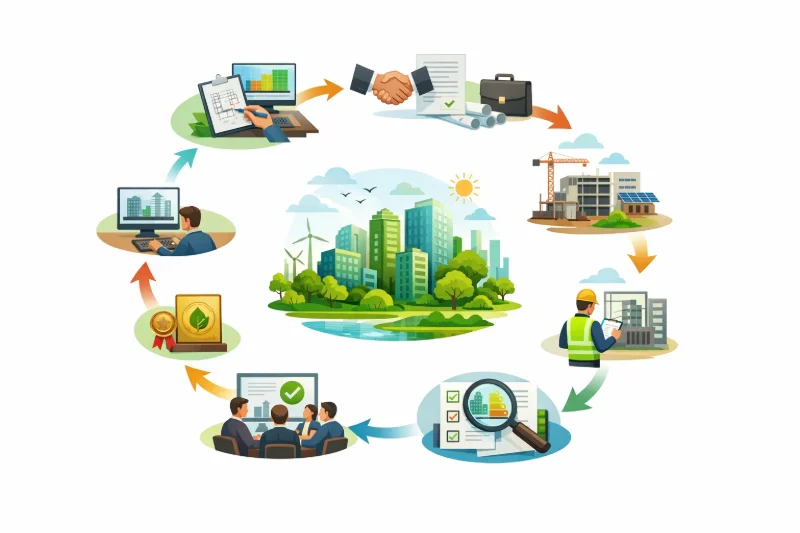
Step-by-Step GRIHA Certification Process
Step 1: Determine Project Eligibility
Before initiating the certification process, verify that your project meets GRIHA eligibility criteria. GRIHA certification is applicable to:
New building projects (complete buildings or significant portions)
Existing buildings undergoing major retrofitting
Fit-outs in existing buildings (under specific conditions)
Buildings with a minimum size of 1,000 square meters (typically)
Projects that don't meet size or scope requirements may not be eligible for formal certification, though they can still implement GRIHA principles. It's crucial to clarify eligibility early in your design process to avoid complications later.
Step 2: Select a Qualified GRIHA Professional
GRIHA requires involvement of a certified GRIHA Accredited Professional (GAP) or GRIHA Design Consultant. These professionals have completed TERI's rigorous training and certification program and understand the nuances of applying GRIHA criteria to diverse project types.
When selecting a GRIHA professional, consider:
Their experience with similar building typologies (residential, commercial, industrial)
Their track record of successful certifications in your region
Their understanding of local regulations and climate conditions
Their ability to integrate GRIHA requirements with your project's specific needs
On AECORD, you can find vetted GRIHA consultants and sustainability professionals across major Indian cities who can guide your project through the certification journey.
Step 3: Conduct Pre-Design Assessment
Before finalizing your design, conduct a preliminary assessment to understand which GRIHA criteria are applicable and achievable for your project. This involves:
Analyzing the project site's orientation, climate zone, and environmental context
Identifying water availability and wastewater management opportunities
Evaluating renewable energy potential (solar, wind, biomass)
Assessing material availability and local sourcing opportunities
Understanding regulatory requirements in your city or state
For instance, a project in Jaipur might prioritize water conservation and solar energy integration, while a project in Kochi might focus on ventilation and moisture management. This contextual analysis ensures your GRIHA strategy aligns with your site's unique characteristics.
Step 4: Integrate GRIHA Criteria into Design
With your GRIHA consultant's guidance, integrate sustainability measures into your architectural and engineering design. This is where most of the critical decisions happen:
Energy Efficiency Measures
Design strategies should include:
Building Orientation: Optimize orientation to minimize solar heat gain and maximize natural ventilation
Passive Design: Use thermal mass, natural ventilation, and daylighting to reduce mechanical system loads
HVAC Systems: Specify high-efficiency equipment with demand-controlled ventilation
Lighting Design: Incorporate LED systems with occupancy sensors and daylight harvesting
Building Envelope: Use insulation and high-performance glazing appropriate for your climate
Energy modeling using software like eQUEST or DesignBuilder helps predict performance and identify optimization opportunities. Most 3-star projects achieve 20-30% energy savings compared to baseline buildings.
Water Management Strategy
Water conservation is critical, especially in water-stressed regions. Design considerations include:
Rainwater Harvesting: Capture and store monsoon rainfall for non-potable use
Wastewater Treatment: Treat and recycle greywater for toilet flushing and landscaping
Efficient Fixtures: Specify low-flow taps, showerheads, and dual-flush toilets
Landscaping: Use native, drought-resistant plants requiring minimal irrigation
In cities like Bangalore and Hyderabad, where water availability is a major concern, well-designed water systems can reduce consumption by 40-50%, directly contributing to GRIHA points.
Material Selection and Sourcing
GRIHA encourages use of:
Locally Sourced Materials: Reduce embodied carbon through shorter transportation distances
Recycled Content Products: Incorporate recycled steel, concrete, and aggregates
Low-VOC Materials: Use paints, adhesives, and finishes that don't off-gas harmful chemicals
Certified Sustainable Products: Specify FSC-certified wood and other eco-labeled materials
Sourcing from local suppliers in your region (whether it's stone from Rajasthan, timber from Himachal Pradesh, or clay from Tamil Nadu) not only supports local economies but also reduces environmental impact.
Indoor Environmental Quality
Design for occupant well-being through:
Natural Ventilation: Design windows and openings for cross-ventilation
Daylighting: Maximize natural light penetration to reduce artificial lighting needs
Thermal Comfort: Maintain comfortable temperature ranges year-round
Acoustic Design: Control noise pollution through strategic material selection
Views and Biophilia: Provide occupants with views of nature and green spaces
Step 5: Prepare Design Stage Documentation
Submit comprehensive documentation to TERI for design stage review. This includes:
Architectural drawings with sustainable design features highlighted
Energy modeling reports and calculations
Water management plans with calculations
Material specifications and sourcing documentation
GRIHA scorecard showing anticipated points for each criterion
Site analysis and context documentation
Commissioning plan for building systems
The design stage review typically takes 4-6 weeks. TERI provides feedback on compliance and suggestions for improvement. Most projects receive provisional approval with recommendations for refinement during construction.
Step 6: Construction Phase Implementation
During construction, ensure that designed sustainability measures are actually implemented:
Construction Waste Management: Segregate and recycle construction waste (target: 75% recycling rate)
Site Management: Control dust, noise, and water pollution during construction
Quality Assurance: Verify that specified green materials and systems are installed correctly
Documentation: Maintain records of material procurement, waste disposal, and system installation
Worker Safety: Implement sustainable and safe working practices
Many projects engage their GRIHA consultant regularly during construction to ensure compliance and document progress. This proactive approach prevents last-minute surprises during final verification.
Step 7: Pre-Occupancy Verification
Before occupancy, conduct a pre-verification audit:
Walk-through inspection of all sustainability features
Testing of renewable energy systems and efficiency measures
Verification of water and waste management systems
Indoor air quality testing and commissioning
Documentation of all implemented measures
This stage is critical for identifying and correcting any issues before final certification submission.
Step 8: Submit Final Certification Application
Prepare and submit the final certification application to TERI, including:
Completed GRIHA scorecard with evidence for each criterion
As-built drawings showing implemented features
Test reports and commissioning certificates
Photographs documenting green features
Operation and maintenance manuals for building systems
Energy performance data (if available)
Ensure all documentation is comprehensive and well-organized. Incomplete submissions delay the process and may require resubmission.
Step 9: Third-Party Verification and Site Audit
TERI conducts a comprehensive review of your submission and may schedule a site audit. During the audit, verifiers:
Inspect all documented green features
Verify that systems are functioning as designed
Interview building operators and facility managers
Test systems and review maintenance records
Assess indoor environmental quality
This independent verification ensures that GRIHA certification represents genuine environmental performance, not just design intentions.
Step 10: Certification Award and Post-Certification Monitoring
Upon successful completion of verification, TERI issues your GRIHA certification certificate. The certificate specifies:
Your achieved rating (1 to 5 stars)
Total points scored
Validity period (typically 3 years)
Key performance metrics
Most certifications require post-occupancy monitoring for 1-2 years to verify that buildings perform as designed. This data helps TERI refine the rating system and provides valuable feedback to building operators.
Cost Implications of GRIHA Certification
Certification Fees and Expenses
GRIHA certification involves several cost components:
GRIHA Consultant Fees: ₹2-5 lakhs for residential projects, ₹5-15 lakhs for commercial projects (varies by complexity)
TERI Registration and Certification Fees: ₹1-3 lakhs depending on building size and complexity
Testing and Documentation: ₹50,000-2 lakhs for energy modeling, water audits, and third-party testing
Green Material Premiums: 5-15% additional cost for sustainable materials and systems
Total certification costs typically range from ₹8-25 lakhs for most projects, representing 0.5-2% of total construction cost. While this seems significant, the long-term operational savings and market value premium often justify the investment.
Return on Investment
GRIHA-certified buildings offer multiple financial benefits:
Reduced Operating Costs: 20-40% lower energy and water bills
Higher Property Values: Green buildings command 10-20% price premium in major markets
Tax Incentives: Some states offer property tax rebates for green buildings
Better Occupancy Rates: Commercial spaces lease faster and at higher rates
Improved Productivity: Better indoor environmental quality increases occupant satisfaction and productivity
Common Challenges in GRIHA Certification
Design and Planning Challenges
Integrating Sustainability Early: Many projects struggle because green features are added late in design. Start GRIHA planning during concept design, not detailed design.
Climate-Specific Solutions: What works in Delhi won't necessarily work in Kerala. Ensure your GRIHA consultant understands your specific climate zone and regional regulations.
Budget Constraints: Balancing sustainability with budget requires strategic prioritization. Focus on high-impact measures that also provide operational savings.
Construction and Implementation Challenges
Material Sourcing: Finding certified sustainable materials in smaller cities can be difficult. Plan material procurement early and work with suppliers to ensure compliance.
Construction Waste Management: Implementing effective waste segregation requires training and monitoring. Establish clear protocols with contractors before construction begins.
System Commissioning: Complex systems like renewable energy installations and water treatment plants require proper commissioning. Don't skip this step.
Documentation and Verification Challenges
Record Keeping: Maintain detailed records throughout design and construction. Poor documentation is a common reason for certification delays.
Performance Gaps: Sometimes as-built performance doesn't match design predictions. Invest in proper testing and commissioning to identify and address issues early.
GRIHA Certification for Different Building Types
Residential Buildings
For apartment complexes and villas, GRIHA certification focuses on:
Energy-efficient HVAC and lighting systems
Water conservation through efficient fixtures and recycling
Green building materials for interiors and common areas
Waste management systems for residents
Green spaces and landscaping
Residential projects in Pune, Bangalore, and Hyderabad are increasingly pursuing GRIHA certification to attract environmentally conscious buyers.
Commercial Buildings
Office buildings prioritize:
Advanced energy management systems and renewable energy
Optimized daylighting and natural ventilation
Water-efficient landscaping and wastewater recycling
High-performance building envelope
Green procurement and operational practices
Industrial and Manufacturing Facilities
Industrial projects focus on:
Energy-efficient production processes
Waste heat recovery systems
Water recycling for industrial processes
Air quality management
Worker safety and environmental protection
Future of GRIHA Certification in India
GRIHA continues to evolve to address emerging sustainability challenges. Recent updates include:
Embodied Carbon Focus: Increased emphasis on material selection and life-cycle assessment
Climate Resilience: New criteria for buildings' ability to withstand climate impacts
Circular Economy: Integration of circular design principles and material reuse
Biodiversity: Enhanced focus on protecting and enhancing local ecosystems
Social Sustainability: Greater emphasis on occupant health, safety, and community impact
As India's construction industry matures and climate concerns intensify, GRIHA certification is becoming increasingly important for competitive differentiation and regulatory compliance.
Leveraging GRIHA Certification for Professional Growth
For architects, engineers, and construction professionals, GRIHA expertise is increasingly valuable. Consider:
Obtaining GRIHA Accredited Professional certification through TERI's training programs
Building a portfolio of certified projects to demonstrate expertise
Specializing in specific building types or climate zones
Staying updated with GRIHA updates and evolving best practices
On AECORD, professionals with GRIHA expertise can showcase their credentials and connect with projects requiring sustainable design expertise. Building your profile with GRIHA certifications and case studies can significantly enhance your visibility and marketability in India's growing green building sector.
Conclusion
GRIHA certification represents India's commitment to sustainable, climate-responsive building practices. While the certification process requires investment of time, resources, and expertise, the benefits—both environmental and economic—make it increasingly essential for modern construction projects.
By understanding each step of the certification process, engaging qualified professionals early, and maintaining focus on integration of sustainability throughout design and construction, your project can achieve meaningful GRIHA certification. Whether you're targeting a 3-star basic certification or aiming for 5-star excellence, the journey toward sustainable building practice benefits not just your project but the broader built environment in India.
Ready to pursue GRIHA certification for your next project? Connect with experienced GRIHA consultants, sustainable design specialists, and construction professionals on AECORD. Our platform makes it easy to find vetted professionals who understand India's green building landscape and can guide your project to successful certification.
Frequently Asked Questions
What is GRIHA certification and how does it differ from LEED?
GRIHA (Green Rating for Integrated Habitat Assessment) is India's premier green building rating system developed by TERI, specifically designed for Indian climate, geography, and building practices. Unlike international standards like LEED, GRIHA addresses India's unique environmental challenges including high solar radiation, water scarcity, and tropical climate ventilation needs.
What are the GRIHA certification levels and point requirements?
GRIHA uses a 100-point scale with five achievement levels: 1-Star (50-60 points), 2-Star (61-70 points), 3-Star (71-80 points), 4-Star (81-90 points), and 5-Star (91-100 points). Most projects target 3-star or higher ratings, as these demonstrate significant sustainability commitment while remaining economically viable.
Which building types are eligible for GRIHA certification?
GRIHA certification applies to new building projects, existing buildings undergoing major retrofitting, fit-outs in existing buildings under specific conditions, and buildings with a minimum size of approximately 1,000 square meters. Projects below the size threshold may still implement GRIHA principles but won't qualify for formal certification.
What are the main evaluation criteria for GRIHA certification?
GRIHA evaluates buildings across six key dimensions: Site Selection and Planning, Conservation and Efficiency (water and energy), Sustainable Materials, Indoor Environmental Quality, Construction Practices, and Commissioning and Performance Optimization. Each category addresses specific sustainability requirements tailored to Indian building contexts.
Is GRIHA certification mandatory for construction projects in India?
GRIHA certification is not mandatory for all projects but has become increasingly important for demonstrating commitment to sustainable building practices and meeting modern client expectations. Many commercial projects in metropolitan areas voluntarily pursue GRIHA certification for competitive advantage in the market.