

Understanding Electrical Wiring Costs in India 2026: A Comprehensive Guide
Electrical wiring is one of the most critical components of any building project, whether residential, commercial, or industrial. As we move into 2026, understanding the current cost structure and market trends for electrical wiring in India is essential for architects, engineers, contractors, and property owners planning their budgets. This guide provides detailed insights into electrical wiring costs across different project types and Indian cities.
Updated 2026-05-28. 2026 India market ranges — verify with your local cable supplier.
Wire or cable brand? List on AECORD and reach architects + MEP consultants specifying for ₹30–₹150/meter projects. Claim your AECORD page →
Build cost · Bengaluru, May 2026
Electrical Wiring Cost India 2026 — Quick Reference
| Wiring system | ₹/meter | Typical cable | Best for |
|---|---|---|---|
| Surface conduit | ₹40–60 | 1.5–4 sq mm PVC copper | Shops, sheds, industrial |
| Concealed conduit | ₹80–120 | 1.5–4 sq mm FRLS copper | Apartments, villas |
| Batten | ₹35–50 | 1.5–2.5 sq mm PVC | Rural / retrofit |
| Cable tray | ₹100–150 | 4–25 sq mm XLPE / armoured | Offices, malls, factories |
| PVC casing & capping | ₹60–90 | 1.5–4 sq mm PVC copper | Mid-segment apartments |
Current Market Overview for Electrical Wiring in India
The electrical wiring industry in India has experienced significant growth over the past few years, driven by increased construction activity, infrastructure development, and the adoption of modern electrical standards. The cost of electrical wiring varies considerably based on multiple factors including material quality, labor availability, regional differences, and project complexity.
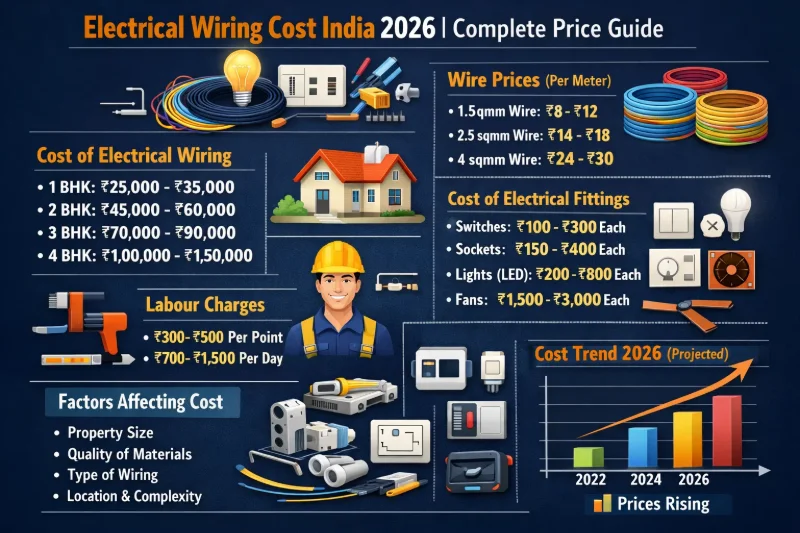
As of 2026, the average cost of electrical wiring in India ranges from ₹30 to ₹150 per running meter, depending on the type of installation and location. However, this is a broad estimate, and actual costs can vary significantly based on specific project requirements and local market conditions.
Factors Affecting Electrical Wiring Costs
Frequently asked
1. Type of Wiring System
The choice of wiring system significantly impacts the overall cost:
Surface Conduit Wiring: ₹40-60 per running meter - Most economical option, commonly used in commercial spaces and industrial facilities
Concealed Conduit Wiring: ₹80-120 per running meter - Requires wall chasing and additional labor, popular in residential apartments
Batten Wiring: ₹35-50 per running meter - Traditional method, increasingly rare in modern construction
Cable Tray System: ₹100-150 per running meter - Premium option for large commercial and industrial projects
PVC Conduit with PVC Casing & Capping: ₹60-90 per running meter - Modern residential standard across Indian metros
2. Wire Gauge and Material Quality
The thickness and quality of electrical wires directly affect pricing. Copper wires are more expensive but offer better conductivity and durability compared to aluminum alternatives. As of 2026, copper wire prices in India have stabilized around ₹500-700 per kilogram, making the cost of wiring materials a significant portion of the total electrical installation expense.
Standard wire gauges used in residential projects include:
1.5 mm² for lighting circuits
2.5 mm² for plug outlets
4 mm² to 6 mm² for heavy-load appliances
10 mm² and above for main distribution boards and submains
Cable Sizing & Load Guide — 2026
| Project type | kVA | Incomer cable | MCB layout |
|---|---|---|---|
| 1 BHK (400–550 sq.ft.) | 3–4 | 4 sq mm Cu | 1 RCCB + 4 MCBs |
| 2 BHK (700–900 sq.ft.) | 5–7 | 6 sq mm Cu | 1 RCCB + 6 MCBs |
| 3 BHK (1,200–1,600 sq.ft.) | 8–10 | 10 sq mm Cu | 2 RCCB + 8–10 MCBs |
| Villa (2,500+ sq.ft.) | 12–18 | 16 sq mm Cu | 2–3 RCCB + 12+ MCBs |
| Small commercial | 15–30 | 25 sq mm Cu/Al | 3-phase DB + isolator |
Indicative only — final sizing by a licensed contractor against actual load and voltage drop.
3. Labor Costs Across Indian Cities
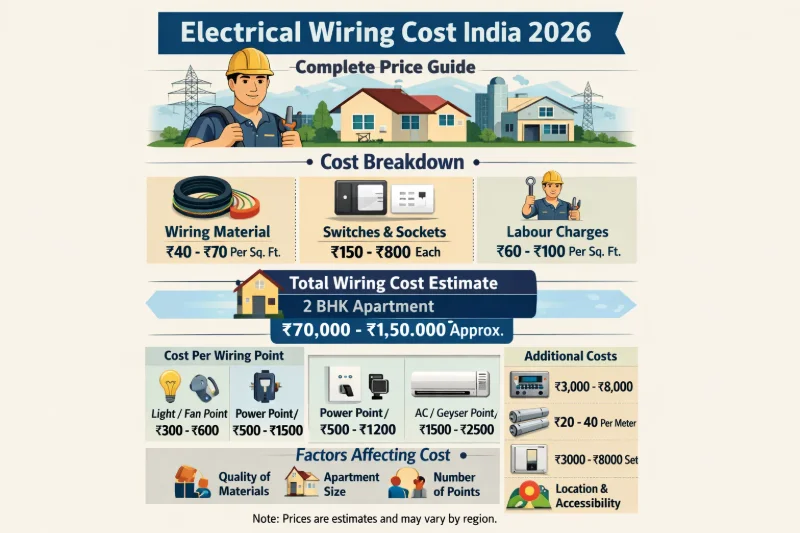
Labor costs vary significantly across different Indian cities. In metro cities like Delhi, Mumbai, Bangalore, and Hyderabad, skilled electricians charge between ₹500-1,200 per day in 2026. In tier-2 cities such as Pune, Ahmedabad, and Jaipur, rates range from ₹300-600 per day, while in smaller towns, you might find electricians at ₹200-400 per day.
For a typical 1,000 sq. ft. apartment, the labor component for complete electrical wiring usually requires 15-20 days of skilled work, translating to ₹7,500-24,000 in labor costs depending on the city.
4. Project Complexity and Layout
Complex projects with multiple circuits, specialized requirements (like home automation, solar integration, or EV charging points), and intricate layouts naturally cost more. A straightforward residential project might cost ₹50-80 per sq. ft., while a complex commercial building could reach ₹150-250 per sq. ft.
Electrical Wiring Costs by Project Type in 2026
Residential Projects
Budget Apartments (500-800 sq. ft.):
Material cost: ₹15,000-25,000
Labor cost: ₹8,000-12,000
Total: ₹23,000-37,000
Per sq. ft.: ₹35-50
Mid-Range Apartments (1,000-1,500 sq. ft.):
Material cost: ₹40,000-65,000
Labor cost: ₹15,000-25,000
Total: ₹55,000-90,000
Per sq. ft.: ₹45-65
Premium/Luxury Residences (2,000+ sq. ft.):
Material cost: ₹100,000-200,000
Labor cost: ₹30,000-50,000
Total: ₹130,000-250,000
Per sq. ft.: ₹65-125
Premium residences often include advanced features like smart home wiring, dedicated circuits for high-power appliances, backup power systems, and aesthetic considerations that increase costs.
Commercial Projects
Commercial electrical wiring costs are typically higher due to stringent safety standards and regulatory requirements. The Indian Electrical Code (IEC) and National Building Code (NBC) mandate specific standards for commercial installations.
Small Commercial Spaces (500-1,000 sq. ft.): ₹80-120 per sq. ft.
Medium Commercial Spaces (1,000-5,000 sq. ft.): ₹100-150 per sq. ft.
Large Commercial Buildings (5,000+ sq. ft.): ₹120-200 per sq. ft.
Commercial projects often require additional components like emergency lighting systems, fire alarm integration, backup generators, and sophisticated distribution systems, which add to the overall cost.
Industrial Projects
Industrial electrical installations are the most expensive category due to heavy-load requirements and specialized equipment:
Small manufacturing units: ₹150-250 per sq. ft.
Medium industrial facilities: ₹200-350 per sq. ft.
Large industrial complexes: ₹250-500+ per sq. ft.
Regional Cost Variations Across India
Electrical wiring costs vary significantly across different regions of India:
Metropolitan Cities
Delhi: ₹70-130 per sq. ft. - High labor costs and strict compliance requirements
Mumbai: ₹75-140 per sq. ft. - Premium pricing due to high demand and limited skilled labor
Bangalore: ₹65-120 per sq. ft. - Competitive market with good availability of skilled electricians
Hyderabad: ₹60-110 per sq. ft. - Relatively affordable compared to other metros
Tier-2 Cities
Pune: ₹50-95 per sq. ft.
Ahmedabad: ₹45-85 per sq. ft.
Jaipur: ₹40-75 per sq. ft.
Lucknow: ₹35-65 per sq. ft.
Material Costs Breakdown
Understanding the material cost breakdown helps in better budgeting. For a typical residential installation, here's how costs are distributed:
Wires and Cables (40-45%): ₹16,000-22,500 for a ₹50,000 project
Conduits and Accessories (20-25%): ₹10,000-12,500
Switch Boards and Distribution Boards (15-20%): ₹7,500-10,000
Switches, Outlets, and Fixtures (10-15%): ₹5,000-7,500
Miscellaneous (5-10%): ₹2,500-5,000
Premium brands like Havells, Schneider Electric, and Legrand command higher prices (10-20% premium) compared to mid-range brands like Finolex, V-Guard, and Anchor.
Additional Costs to Consider
Electrical Testing and Certification
Once installation is complete, electrical testing and certification is mandatory. This typically costs ₹5,000-15,000 depending on project size and includes insulation resistance testing, earth continuity testing, and load testing.
Backup Power Systems
Many modern installations include backup power provisions:
Inverter System (1-2 kW): ₹15,000-30,000
Diesel Generator (5-10 kVA): ₹200,000-400,000
Solar Integration: ₹100,000-300,000+ (depending on capacity)
Smart Home and Automation Features
Modern installations increasingly incorporate smart features:
Smart switches and dimmers: ₹500-2,000 per unit
Home automation wiring: Additional ₹20,000-50,000
EV charging point installation: ₹30,000-80,000
Cost-Saving Tips for Electrical Wiring Projects
1. Plan Thoroughly
Detailed planning before construction prevents costly modifications later. Work with experienced architects and electrical engineers to optimize the layout and minimize wire runs.
2. Choose Quality Over Price
While tempting to cut costs with cheaper materials, investing in quality wires and components reduces maintenance costs and safety risks in the long run.
3. Batch Your Projects
If you're managing multiple properties or units, negotiate bulk discounts with suppliers and contractors. This can reduce per-unit costs by 10-15%.
4. Standardize Your Specifications
Using standardized components across projects simplifies procurement and reduces administrative overhead.
5. Hire Certified Professionals
While certified electricians may charge more, they ensure compliance with regulations and reduce the risk of costly errors or safety issues.
Regulatory Compliance and Standards
All electrical installations in India must comply with the Indian Electrical Code (IEC) and relevant building codes. Compliance ensures safety and may affect insurance claims. The cost of meeting these standards is typically included in the quotes from reputable contractors but should be explicitly confirmed.
For commercial projects in major cities, additional certifications like LEED or IGBC compliance may be required, adding 5-10% to electrical costs.
Safety Watch-Outs — Every Job
- ISI mark on every wire spool — non-ISI = fire-claim refusal.
- IS-694:2010 for PVC-insulated copper up to 1100V (residential default).
- FRLS (Flame Retardant Low Smoke) — mandatory for concealed runs in high-rises >15m.
- IS-9537 Part 3 conduit, min 1.4mm wall for concealed.
- Earth continuity <1 ohm before handover; independent earth pit.
- RCCB / RCBO on every sub-circuit per NBC 2016.
Finding the Right Electrical Contractor
The quality of electrical installation depends significantly on the contractor's expertise. When sourcing electrical contractors, consider:
Relevant certifications and licenses
Portfolio of completed projects
Insurance and warranty coverage
References from previous clients
Compliance with local regulations
Platforms like AECORD provide access to vetted electrical contractors and engineers across India, making it easier to find qualified professionals for your specific project needs. You can compare quotes, review credentials, and connect with specialists in your region.
Future Trends in Electrical Wiring Costs
Several factors will likely influence electrical wiring costs in the coming years:
Renewable Energy Integration: Growing demand for solar and wind integration will increase wiring complexity and costs
Smart Building Technology: IoT and automation features are becoming standard, raising material and installation expenses
Energy Efficiency Standards: Stricter energy codes will likely require upgraded infrastructure
Labor Availability: Skill gaps in the electrical trade may further drive up labor costs
Material Costs: Copper and aluminum prices remain subject to global market fluctuations
Conclusion
Electrical wiring costs in India for 2026 vary widely based on project type, location, material quality, and complexity. Residential projects typically range from ₹35-125 per sq. ft., while commercial and industrial projects are significantly higher. Understanding these cost factors helps in accurate budgeting and project planning.
Key takeaways include the importance of detailed planning, choosing quality materials, hiring certified professionals, and ensuring regulatory compliance. Regional variations mean that costs in metropolitan areas like Delhi and Mumbai are substantially higher than in tier-2 cities.
Whether you're planning a residential renovation, commercial office space, or industrial facility, connecting with experienced electrical professionals is crucial. AECORD makes it easy to find vetted electrical contractors, engineers, and suppliers across India who can provide accurate quotes and ensure your project meets all regulatory standards. Visit AECORD today to connect with professionals in your area and get detailed cost estimates for your electrical wiring project.
Ready to plan your electrical wiring project? Browse qualified electrical contractors and engineers on AECORD to get competitive quotes and expert guidance for your specific needs.
Selling wires, cables, switchgear or conduits in India? AECORD puts your range in front of the architects, MEP consultants and contractors writing these specs every day. Claim your AECORD brand page →
Frequently Asked Questions
What is the average cost of electrical wiring in India in 2026?
The average cost of electrical wiring in India ranges from ₹30 to ₹150 per running meter as of 2026, depending on the type of installation and location. Actual costs vary based on specific project requirements, wiring system type, wire gauge, and local market conditions.
Which type of electrical wiring system is most cost-effective?
Surface conduit wiring is the most economical option at ₹40-60 per running meter, commonly used in commercial and industrial spaces. Batten wiring is also budget-friendly at ₹35-50 per running meter but is increasingly rare in modern construction projects.
How much do electricians charge per day in Indian cities?
In 2026, skilled electricians in metro cities like Delhi and Mumbai charge ₹500-1,200 per day, while tier-2 cities like Pune charge ₹300-600 per day, and smaller towns charge ₹200-400 per day. For a typical 1,000 sq. ft. apartment, labor costs range from ₹7,500-24,000 depending on the city.
What is the difference between concealed and surface conduit wiring?
Concealed conduit wiring costs ₹80-120 per running meter and requires wall chasing and additional labor, making it popular in residential apartments. Surface conduit wiring is more economical at ₹40-60 per running meter and is commonly used in commercial and industrial facilities.
How much does electrical wiring cost per square foot in residential projects?
A straightforward residential electrical wiring project typically costs ₹50-80 per sq. ft., while complex commercial buildings can reach ₹150-250 per sq. ft. Costs vary based on project complexity, layout intricacy, and specialized requirements like home automation or EV charging.