

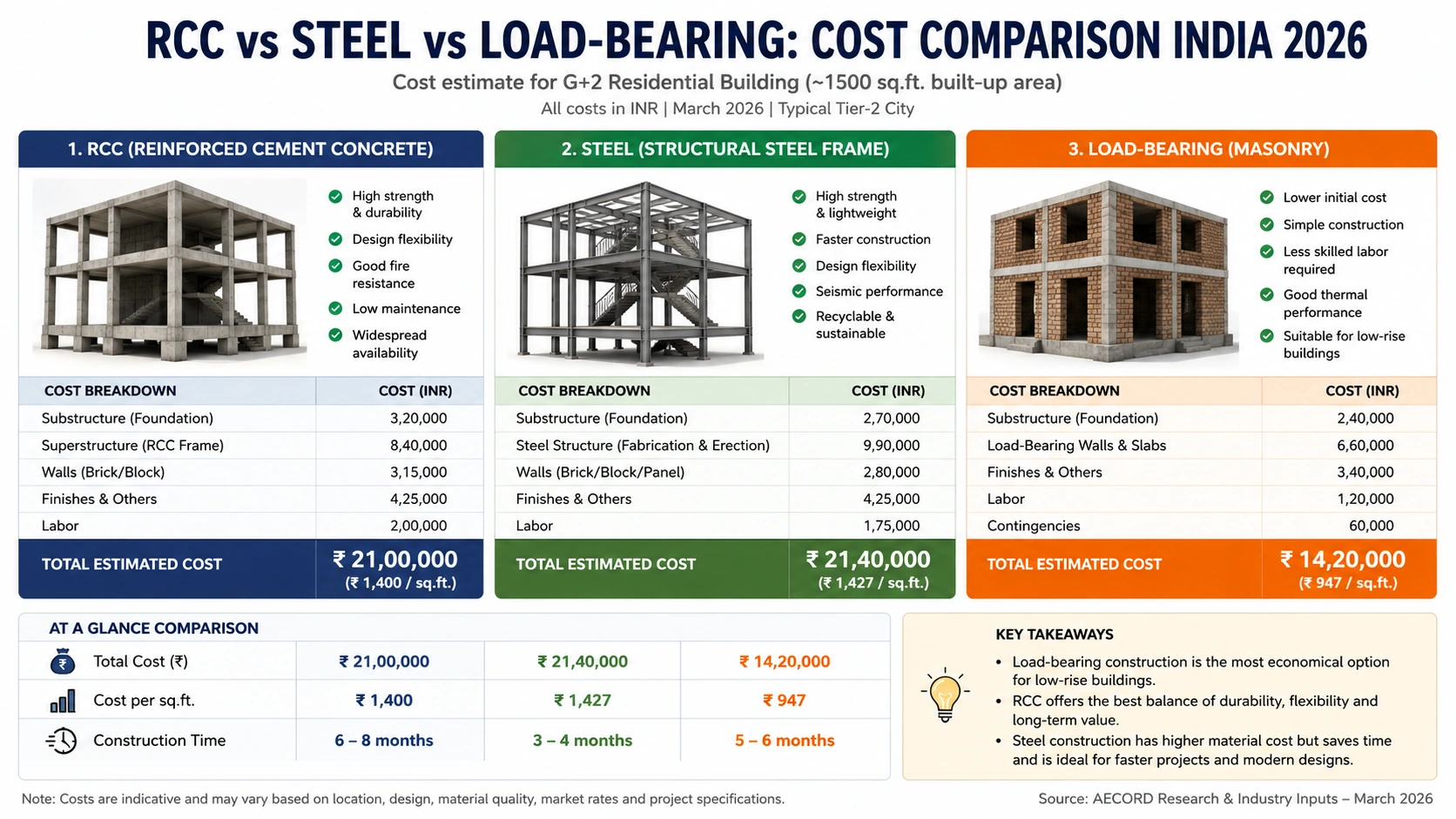
Understanding the Three Main Construction Methods
When planning to build a home in India, one of the most critical decisions you'll make is choosing the structural system. The three primary methods—Reinforced Cement Concrete (RCC), Steel, and Load-bearing masonry—each have distinct advantages, limitations, and cost implications. In 2026, with inflation, material availability, and evolving building codes, understanding these differences is essential for making an informed decision that aligns with your budget and requirements.
The choice between these construction methods affects not just the initial building cost but also maintenance expenses, durability, design flexibility, and resale value. For homeowners across Indian cities like Mumbai, Bangalore, Delhi, and Pune, this decision can mean a difference of 15-30% in total construction costs./blog/2bhk-construction-cost-india-2026
Build cost · Bengaluru, May 2026
RCC (Reinforced Cement Concrete) Construction
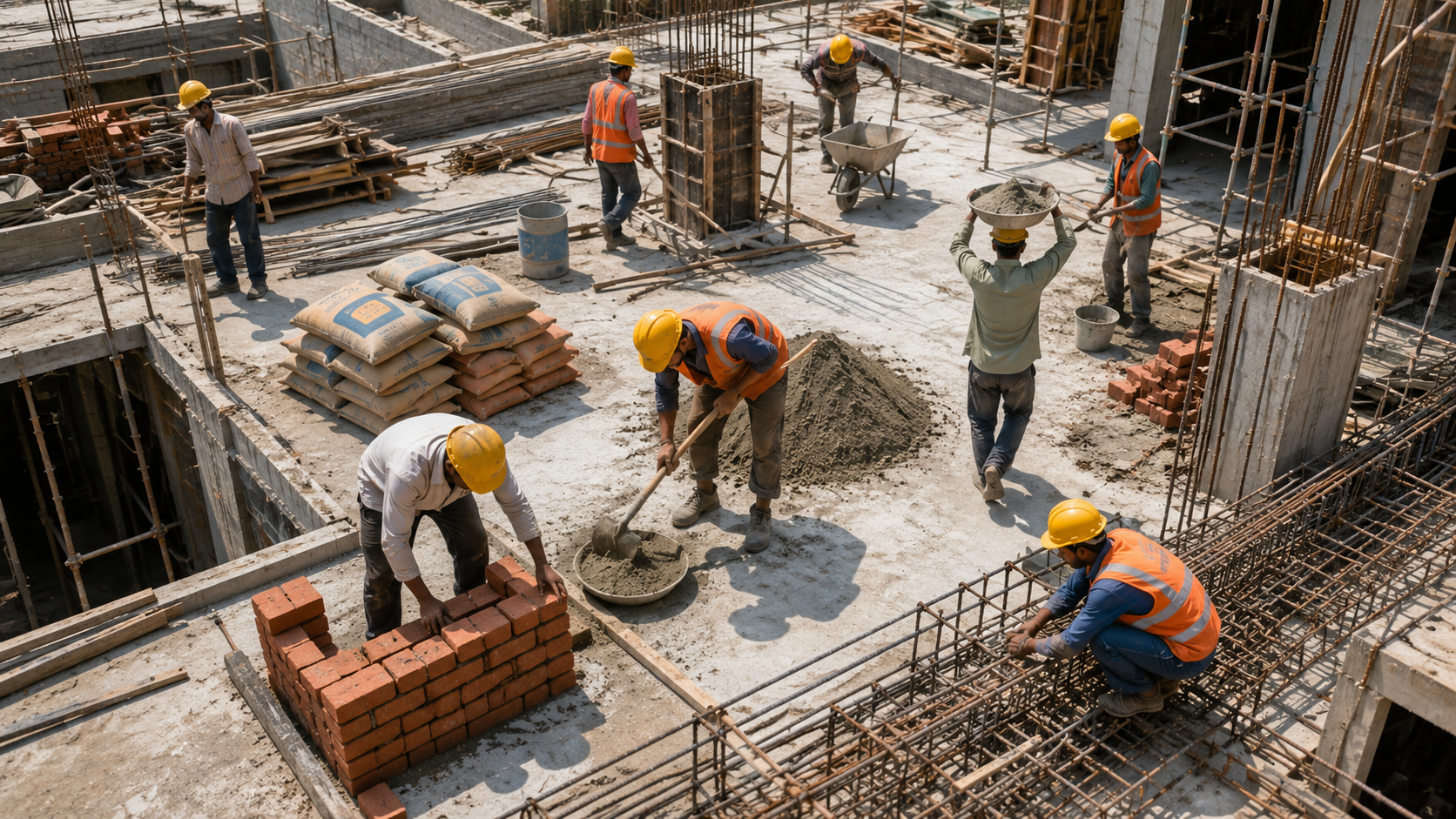
RCC frame construction involves creating a skeletal structure of concrete columns, beams, and slabs, with brick or block infill walls. This method has become the standard in urban India due to its versatility and proven durability.
Steel Frame Construction
Steel frame construction uses steel columns and beams as the primary load-bearing elements, with infill walls and floors of concrete, brick, or other materials. This method is gaining popularity in premium segments and commercial projects.
Load-bearing Masonry Construction
Load-bearing construction relies on brick or stone walls to support the weight of the structure. This traditional method is still prevalent in smaller towns and rural areas across India.
Frequently asked
Detailed Cost Analysis for 2026
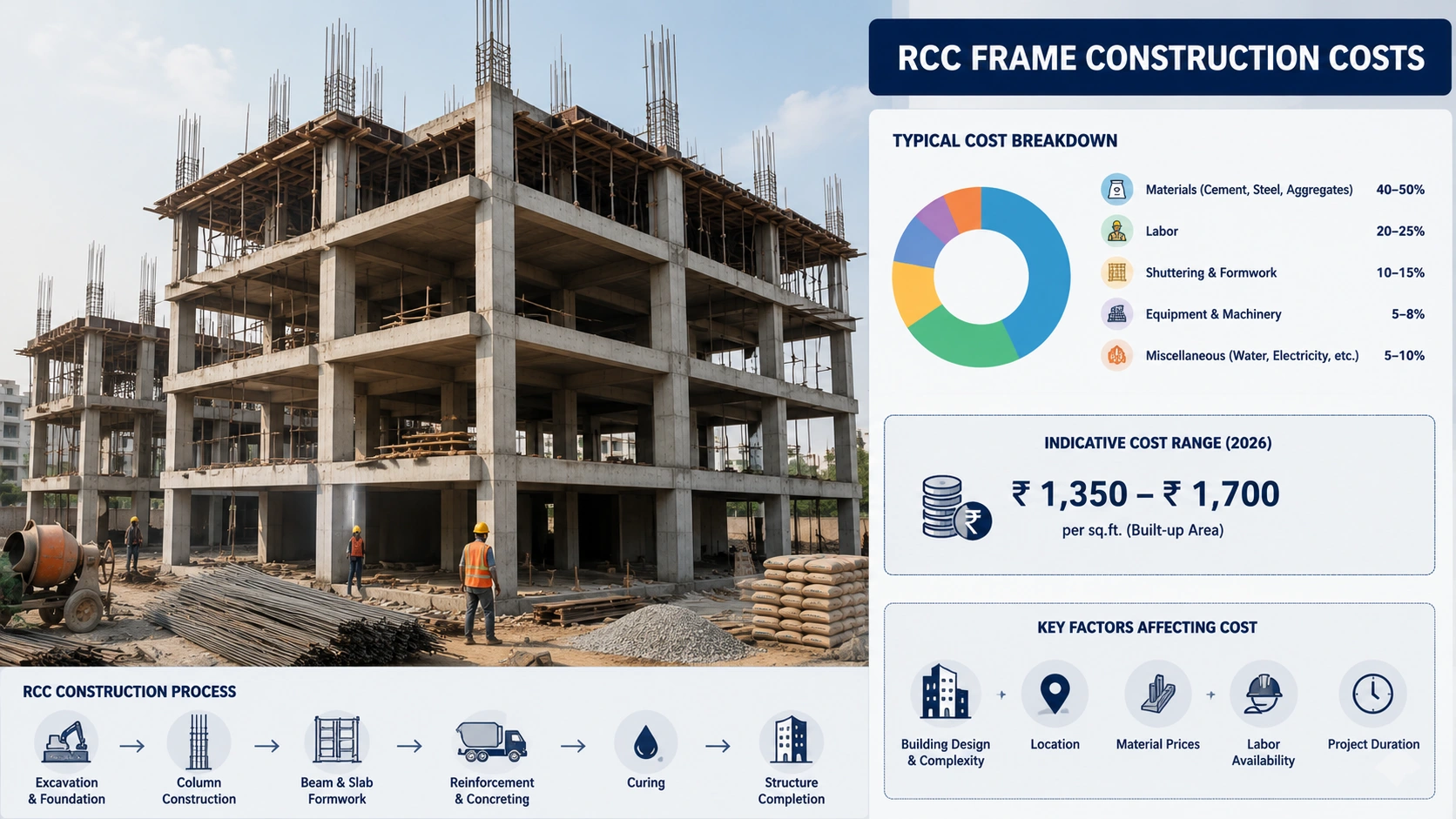
RCC Frame Construction Costs
Material Costs: For a typical 1,500 sq ft residential unit in metropolitan areas, RCC construction costs approximately ₹1,400-₹1,800 per square foot in 2026. This breaks down as follows:
Cement: ₹6,500-₹7,200 per bag (50 kg)
Steel reinforcement: ₹55,000-₹62,000 per metric ton
Concrete aggregates: ₹2,500-₹3,500 per cubic meter
Bricks/blocks: ₹5,000-₹7,500 per 1,000 units
Labor: ₹400-₹600 per square foot
For a 1,500 sq ft home, total construction cost typically ranges from ₹21-27 lakhs. In tier-2 cities like Pune or Ahmedabad, costs are 20-25% lower, while in premium Mumbai locations, they can be 30-40% higher.
Advantages of RCC: RCC offers excellent earthquake resistance (crucial for cities like Delhi and Bangalore), flexibility in design allowing for open floor plans, and proven long-term durability. The method is well-understood by most Indian contractors, making it easier to find skilled labor and supervise construction quality.
Disadvantages: RCC construction is time-consuming, typically taking 18-24 months for a residential project. Concrete curing requires proper weather conditions, and the process generates significant waste. Additionally, RCC structures can develop cracks over time due to concrete shrinkage and thermal movements.
Steel Frame Construction Costs
Material Costs: Steel construction is typically 25-35% more expensive than RCC. For the same 1,500 sq ft unit, costs range from ₹1,800-₹2,400 per square foot, translating to ₹27-36 lakhs for complete construction.
Structural steel: ₹65,000-₹75,000 per metric ton (including fabrication)
Steel decking and connections: ₹1,200-₹1,800 per sq ft
Fireproofing materials: ₹200-₹400 per sq ft
Specialized labor: ₹500-₹800 per sq ft
Advantages of Steel: Steel construction offers superior strength-to-weight ratio, allowing for longer spans and flexible interior layouts. Construction is faster—typically 12-16 months—since steel assembly doesn't require curing time. Steel structures are ideal for areas prone to earthquakes and can accommodate future modifications easily. The method generates minimal on-site waste, making it environmentally preferable.
Disadvantages: Higher initial costs, requirement for specialized contractors (still limited in smaller Indian cities), and the need for proper fireproofing and corrosion protection add to expenses. Steel also conducts heat and cold, requiring additional thermal insulation. Finding experienced steel detailers and fabricators remains challenging outside major metros.
Load-bearing Masonry Construction Costs
Material Costs: Load-bearing construction is the most economical option, costing ₹800-₹1,200 per square foot, or approximately ₹12-18 lakhs for a 1,500 sq ft home. Cost breakdown:
Bricks: ₹5,000-₹6,500 per 1,000 units
Cement mortar: ₹2,500-₹3,200 per cubic meter
Stone aggregates: ₹1,500-₹2,500 per cubic meter
Labor: ₹250-₹400 per square foot
Advantages: Load-bearing construction is significantly cheaper, making it accessible for budget-conscious homeowners. It requires minimal skilled labor and uses traditional methods well-known to local contractors. The thermal mass of thick walls provides natural insulation, reducing cooling costs in hot Indian climates. Construction timeline is moderate—14-18 months—and the method is highly suitable for areas with low seismic activity.
Disadvantages: Load-bearing walls limit architectural flexibility and interior design options. Thick walls reduce usable floor space by 5-8%. Future modifications are difficult and expensive. The method is vulnerable to earthquake damage and not recommended for high-rise construction. Maintenance costs can be higher due to potential water seepage and structural cracks.
Regional Cost Variations Across India
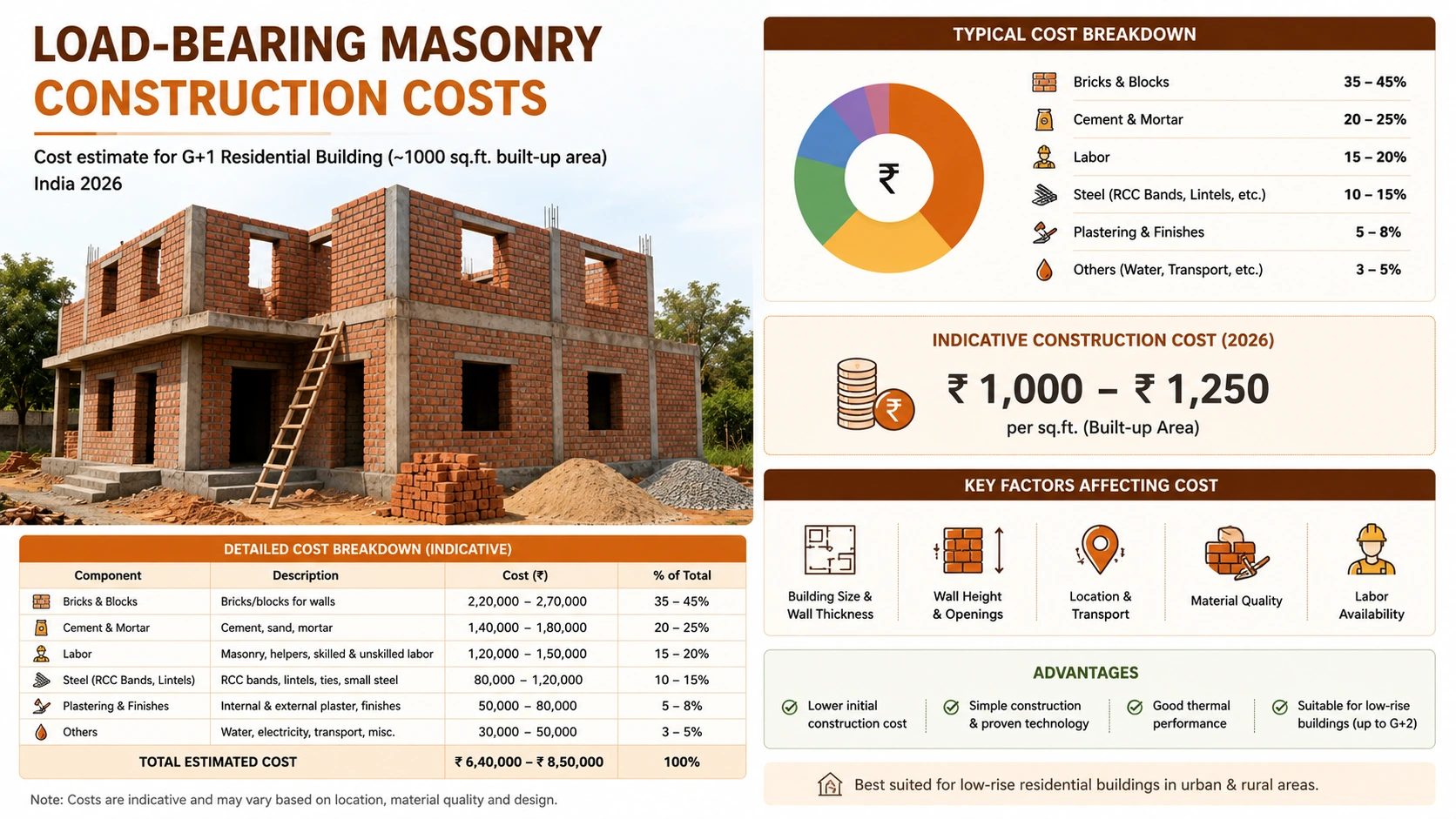
Construction costs vary significantly across Indian cities due to differences in labor rates, material availability, and local regulations:
Metropolitan Cities (Mumbai, Delhi, Bangalore)
RCC construction: ₹1,600-₹1,900 per sq ft | Steel: ₹2,100-₹2,500 per sq ft | Load-bearing: ₹1,000-₹1,300 per sq ft
Tier-2 Cities (Pune, Ahmedabad, Jaipur)
RCC construction: ₹1,200-₹1,500 per sq ft | Steel: ₹1,600-₹2,000 per sq ft | Load-bearing: ₹750-₹1,000 per sq ft
Tier-3 Cities and Towns
RCC construction: ₹900-₹1,200 per sq ft | Steel: ₹1,300-₹1,700 per sq ft | Load-bearing: ₹550-₹800 per sq ft
Long-term Cost Considerations
Maintenance and Repair Costs
RCC Structures: Annual maintenance typically costs 0.5-1% of construction cost. Common issues include concrete spalling, reinforcement corrosion (especially in coastal areas like Mumbai and Goa), and waterproofing failures. A 1,500 sq ft RCC home in Mumbai might require ₹10,000-₹15,000 annually for maintenance.
Steel Structures: Maintenance costs are lower (0.3-0.7% annually) if fireproofing and corrosion protection are properly applied. However, specialized contractors are needed, making repairs expensive. Annual costs for a steel-frame home might be ₹8,000-₹12,000.
Load-bearing Structures: Maintenance costs can be 1-1.5% annually due to potential water seepage, efflorescence, and structural cracks. Repainting and waterproofing are frequent requirements. Annual maintenance might cost ₹7,000-₹10,000 but can spike during monsoon seasons.
Resale Value and Market Perception
In major Indian markets, RCC-framed structures command the highest resale value, with buyers perceiving them as safer and more durable. Steel-frame homes are gaining acceptance among premium buyers but still face resistance in smaller markets. Load-bearing homes typically have lower resale value and appeal primarily to budget-conscious buyers.
Insurance and Compliance Costs
Home insurance premiums vary: RCC structures typically pay 0.5-0.8% of property value annually, while steel structures might pay slightly less (0.4-0.7%) due to lower fire risk. Load-bearing structures in earthquake-prone zones might face higher premiums or coverage limitations.
Factors Influencing Your Choice
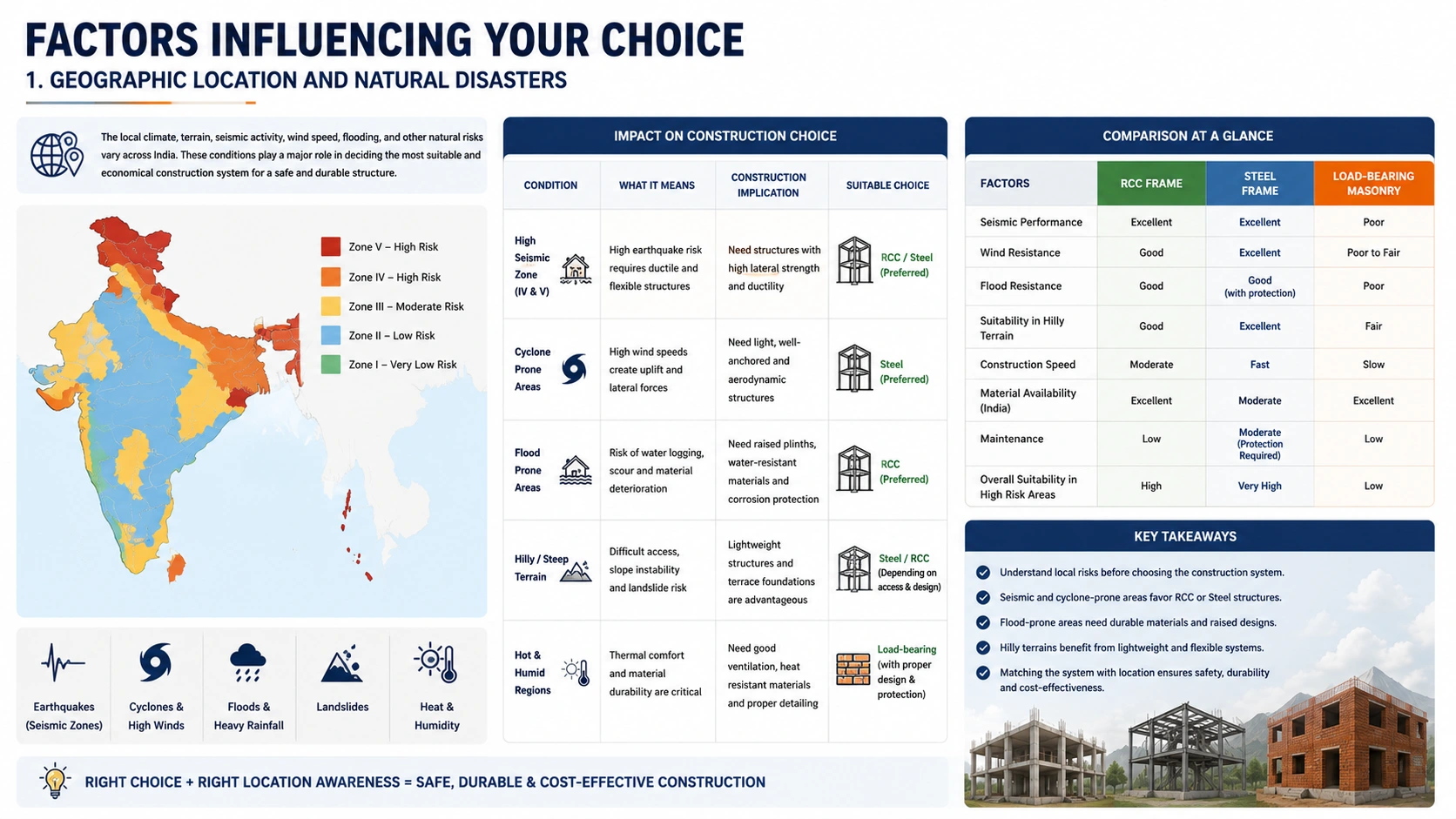
Geographic Location and Natural Disasters
For earthquake-prone regions (Delhi, parts of Gujarat, Northeast India), RCC or steel frame construction is mandatory by building codes. Load-bearing is not recommended. For areas with high rainfall (Kerala, Assam), RCC with proper waterproofing is preferable. In stable geological zones with low seismic activity, load-bearing remains viable.
Plot Size and Building Height
Load-bearing construction is limited to 3-4 stories in most Indian building codes. For homes exceeding 4 floors, RCC or steel becomes necessary. Smaller plots benefit from RCC's flexibility in design, while load-bearing requires thicker walls that consume more space.
Timeline and Urgency
If you need faster construction, steel frame (12-16 months) is superior to RCC (18-24 months). Load-bearing offers moderate timelines (14-18 months) but with less design flexibility.
Budget Constraints
For tight budgets, load-bearing is most economical. For mid-range budgets, RCC offers the best balance of cost, durability, and flexibility. For premium budgets, steel provides superior performance and design possibilities.
Making Your Decision: A Practical Framework
Choose RCC if: You're building in a metropolitan area, want design flexibility, need earthquake resistance, plan a multi-story structure, or want maximum resale value. This remains the safest choice for most Indian homeowners.
Choose Steel if: You have a higher budget, want faster construction, prioritize long-term durability and low maintenance, or need a structure with significant future modification potential.
Choose Load-bearing if: You're on a tight budget, building in a low-seismic, tier-2/3 city, limiting construction to 3-4 stories, and don't require extensive design flexibility.
Working with Professionals on AECORD
Choosing the right structural system requires expert guidance. Platforms like AECORD connect you with experienced structural engineers, architects, and contractors who can assess your specific needs, site conditions, and budget to recommend the most appropriate construction method. These professionals understand local building codes across Indian cities and can provide detailed cost estimates tailored to your location and requirements.
When consulting with AECORD professionals, discuss your timeline, budget, location-specific risks (seismic activity, flooding, etc.), and future expansion plans. A qualified structural engineer can perform soil testing and site analysis to determine which method is most suitable.
Conclusion
In 2026, the choice between RCC, steel, and load-bearing construction remains a critical decision affecting your home's cost, durability, and functionality. RCC continues to dominate Indian residential construction due to its balanced approach to cost, performance, and reliability. Steel offers superior long-term benefits for those with adequate budgets, while load-bearing remains viable for budget-conscious homeowners in appropriate locations.
Rather than viewing these as competing options, consider them as tools suited to different circumstances. Your specific combination of location, budget, timeline, and design requirements should guide your decision. Consulting with experienced professionals through platforms like AECORD ensures you make an informed choice backed by local expertise and site-specific analysis.
Take the time to gather detailed quotes, understand the long-term implications, and consult with qualified structural engineers before committing to any method. Your choice today will impact your home's performance, maintenance costs, and value for decades to come.
Find Expert Guidance on AECORD
Ready to make an informed decision about your home's structural system? Connect with verified architects, engineers, and contractors on AECORD who specialize in residential construction across Indian cities. Get site-specific recommendations, detailed cost breakdowns, and expert guidance tailored to your project's unique requirements. Visit AECORD today to find the right professional for your home construction journey.
Frequently Asked Questions
What is the cost difference between RCC and steel construction in India for 2026?
Steel frame construction is typically 25-35% more expensive than RCC. For a 1,500 sq ft home, RCC costs ₹21-27 lakhs while steel construction ranges from ₹27-36 lakhs. The price difference varies based on location, with tier-2 cities offering 20-25% savings compared to metropolitan areas.
How long does RCC vs steel frame construction take to complete?
RCC construction typically takes 18-24 months due to concrete curing requirements and weather dependencies. Steel frame construction is significantly faster at 12-16 months since steel assembly doesn't require the same curing time, making it ideal for time-sensitive projects.
Which construction method is best for earthquake-prone areas in India?
RCC frame construction offers excellent earthquake resistance, making it the preferred choice for seismic zones like Delhi and Bangalore. RCC's flexibility in design combined with its proven durability in earthquakes makes it more suitable than load-bearing masonry for earthquake-prone regions.
What are the main advantages of steel frame construction over RCC?
Steel construction offers superior strength-to-weight ratio, allowing for longer spans and more flexible interior layouts. It also provides faster construction timelines (12-16 months vs 18-24 months) and generates less waste compared to RCC methods.
Is load-bearing masonry construction still used in India?
Yes, load-bearing masonry construction is still prevalent in smaller towns and rural areas across India. However, it's less common in metropolitan areas due to limitations in design flexibility and earthquake resistance compared to RCC and steel frame methods.