

Understanding 2BHK Construction Costs in India 2026
Building a 2-bedroom, 1-bathroom (2BHK) apartment remains one of the most popular residential construction projects across India. Whether you're a homeowner planning to build your dream home or a developer looking to understand market dynamics, understanding the construction costs is crucial for budgeting and planning. In 2026, the construction landscape in India continues to evolve with new materials, labor rates, and regulatory requirements affecting overall project costs.
The cost of constructing a 2BHK apartment in India varies significantly based on location, materials used, design complexity, and local regulations. This comprehensive guide will help you understand the various cost components and provide realistic estimates for different Indian cities.
Build cost · Bengaluru, May 2026
Current Market Overview for 2BHK Construction in 2026
Average Construction Costs Across India
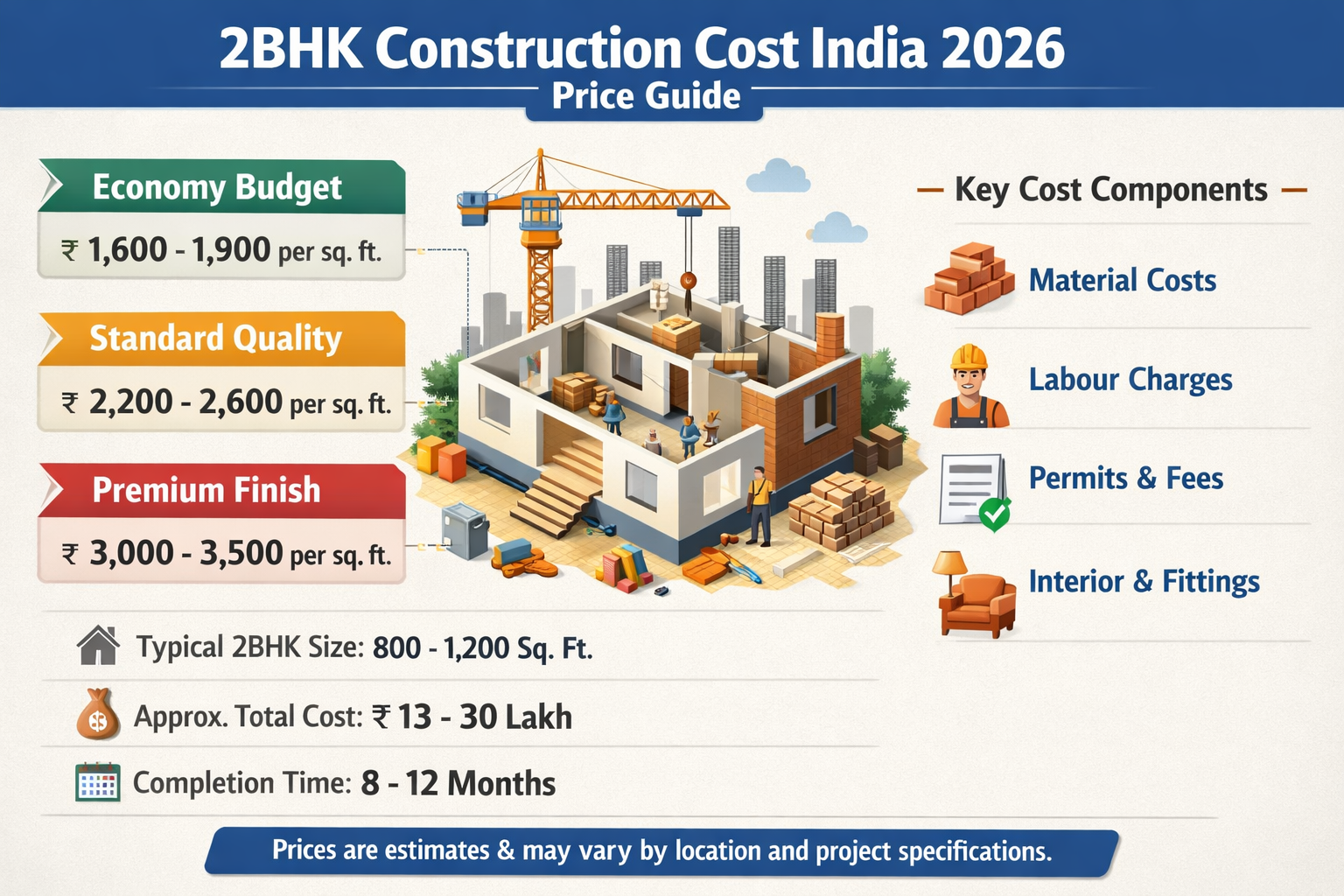
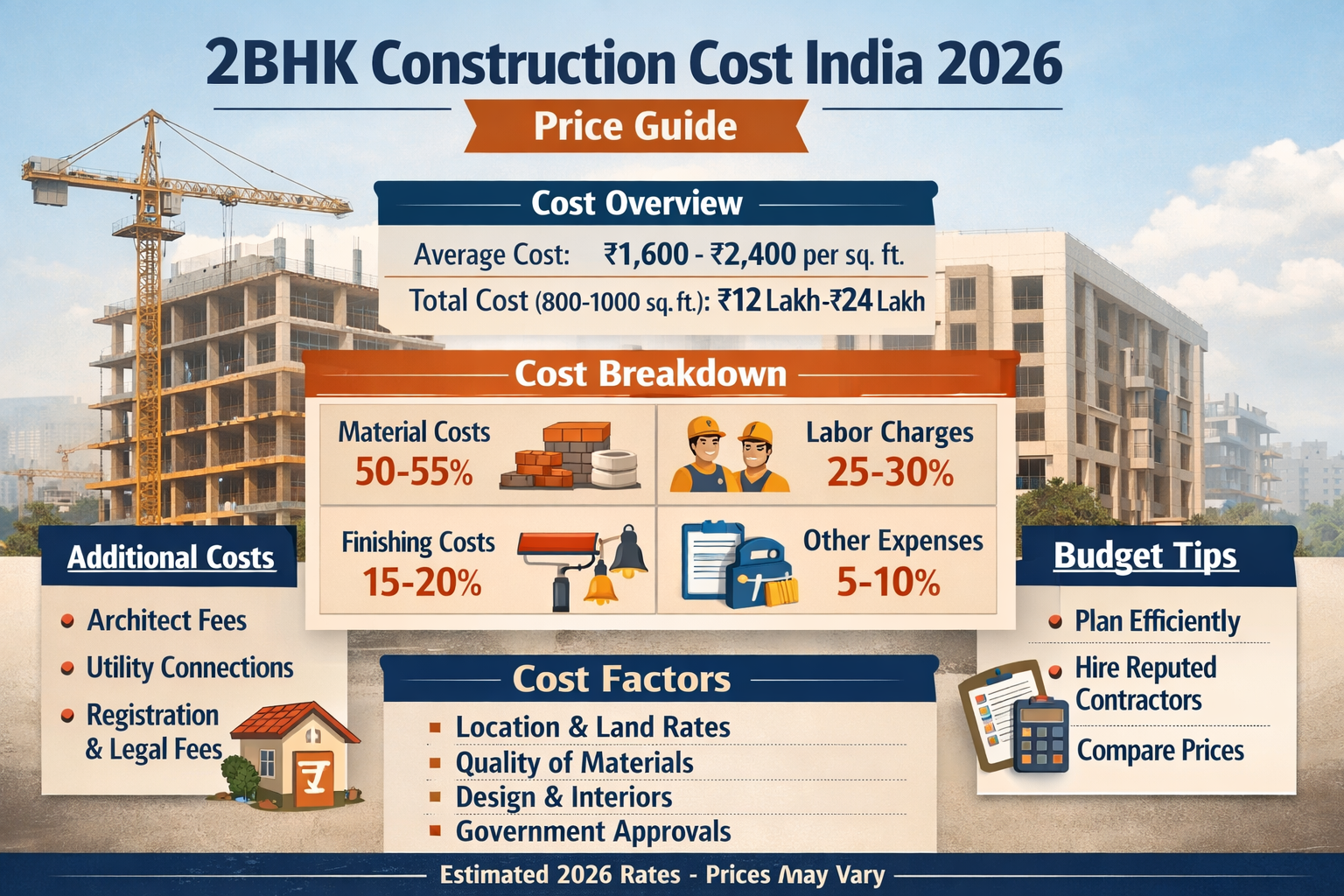
As of 2026, the average construction cost for a 2BHK apartment in India ranges from ₹35 lakhs to ₹1.5 crores, depending on the city and construction quality. This translates to approximately ₹1,200 to ₹5,000 per square foot, with variations based on:
Geographic location (metro cities vs. tier-2 cities)
Construction quality and finishing standards
Local labor availability and wages
Material sourcing and transportation costs
Regulatory compliance and approval requirements
City-Wise Cost Breakdown
Different Indian cities have distinct construction cost profiles based on their economic development, infrastructure, and demand:
Tier-1 Cities (Delhi, Mumbai, Bangalore, Hyderabad): Construction costs range from ₹2,500 to ₹5,000 per square foot for a 1,200-1,400 sq ft 2BHK. In Mumbai, premium locations can exceed ₹6,000 per square foot, while Delhi's costs typically range from ₹2,800 to ₹4,500 per square foot. Bangalore and Hyderabad offer relatively better value at ₹2,200 to ₹3,800 per square foot.
Tier-2 Cities (Pune, Jaipur, Lucknow, Indore): These cities offer more affordable construction at ₹1,200 to ₹2,500 per square foot. Pune, being a growing IT hub, commands slightly higher rates at ₹1,800 to ₹2,800 per square foot, while Jaipur and Lucknow remain more budget-friendly at ₹1,200 to ₹2,000 per square foot.
Tier-3 Cities and Towns: Smaller cities and towns offer the most economical construction options at ₹800 to ₹1,500 per square foot, making them attractive for budget-conscious builders.
Frequently asked
Detailed Cost Components of 2BHK Construction
Structural and Foundation Costs
The foundation and structural work typically accounts for 25-30% of total construction costs. This includes:
Site preparation and excavation: ₹50,000 to ₹2,00,000 depending on soil conditions and site accessibility
Foundation work: ₹3,00,000 to ₹8,00,000 for a 1,200-1,400 sq ft property
Concrete and reinforcement: ₹4,00,000 to ₹10,00,000
Structural design and engineering: ₹50,000 to ₹1,50,000
Masonry and Wall Construction
Brick masonry, block work, and wall construction typically cost ₹1,00,000 to ₹4,00,000 for a complete 2BHK apartment. The choice between traditional brick masonry and modern alternatives like AAC blocks affects this cost significantly. AAC blocks, while slightly more expensive initially, offer better thermal insulation and faster construction timelines.
Plumbing and Water Systems
A comprehensive plumbing system for a 2BHK typically costs ₹1,50,000 to ₹3,50,000, including:
Internal water pipes and fittings
Drainage system installation
Water tank installation (typically 1,000-1,500 liters)
Septic tank or municipal connection
Bathroom and kitchen fixtures
Electrical Installation
Modern electrical systems for a 2BHK apartment cost between ₹1,00,000 to ₹3,00,000. This includes:
Main electrical panel and distribution board
Internal wiring and conduits
Switchboards and outlets
Lighting fixtures and provisions for air conditioning
Earthing and safety systems
Flooring and Finishing
Flooring is one of the most visible and variable cost components, ranging from ₹2,00,000 to ₹8,00,000. Options include:
Ceramic tiles: ₹60-150 per square foot
Vitrified tiles: ₹80-200 per square foot
Marble or granite: ₹150-400 per square foot
Wooden flooring: ₹200-500 per square foot
Polished concrete: ₹30-80 per square foot
Doors, Windows, and Carpentry
Interior carpentry work, including doors, windows, and built-in furniture, typically costs ₹2,00,000 to ₹6,00,000. This includes:
Main entrance door (premium quality)
Interior doors for bedrooms and bathrooms
Window frames and grilles
Kitchen cabinets and shelving
Wardrobes and storage solutions
Painting and Wall Finishes
Quality painting and wall finishes cost approximately ₹50,000 to ₹2,00,000, depending on the number of coats and paint quality. Premium paints with better durability and finish quality command higher prices but provide better long-term value.
Ceiling Work
Ceiling construction and finishing typically costs ₹1,00,000 to ₹3,00,000. Options include:
Concrete ceiling with plaster finish
Gypsum false ceiling with integrated lighting
Modular ceiling systems
Labor Costs in 2026
Labor represents a significant portion of construction costs, typically accounting for 25-35% of total expenses. In 2026, daily wage rates for skilled workers vary by city and specialization:
Skilled laborers (masons, carpenters): ₹600 to ₹1,500 per day
Semi-skilled workers: ₹400 to ₹800 per day
Unskilled laborers: ₹250 to ₹500 per day
Site supervisors and engineers: ₹800 to ₹2,500 per day
Metro cities like Mumbai, Delhi, and Bangalore command premium wages due to higher living costs and competition for skilled labor. Tier-2 cities offer more economical labor rates while maintaining reasonable quality standards.
Material Costs and Market Trends
Cement and Concrete
In 2026, cement prices in India range from ₹350 to ₹450 per 50kg bag, varying by region and brand. A typical 2BHK requires approximately 150-200 bags of cement, translating to ₹52,500 to ₹90,000 in cement costs alone.
Steel and Reinforcement
Steel prices fluctuate based on global market conditions. Current rates range from ₹55,000 to ₹70,000 per ton. A 2BHK typically requires 8-12 tons of reinforcement steel, costing ₹4,40,000 to ₹8,40,000.
Bricks and Blocks
Traditional clay bricks cost ₹4,000 to ₹8,000 per 1,000 units, while AAC blocks cost ₹6,000 to ₹12,000 per 1,000 units. A 2BHK requires approximately 15,000-20,000 bricks or equivalent blocks.
Regulatory and Compliance Costs
Often overlooked, regulatory compliance adds 5-10% to total construction costs. These include:
Building permits and approvals: ₹10,000 to ₹50,000
Municipal registration: ₹5,000 to ₹25,000
Environmental clearances: ₹10,000 to ₹30,000 (if applicable)
Fire safety compliance: ₹20,000 to ₹50,000
Electrical inspection and certification: ₹5,000 to ₹15,000
Water and sanitation approvals: ₹5,000 to ₹20,000
The specific costs depend on your local municipal corporation's requirements. For instance, building approval costs in Delhi differ from those in Bangalore or Mumbai.
Cost-Saving Strategies for 2BHK Construction
Material Selection Optimization
Choosing the right materials can significantly reduce costs without compromising quality. Consider AAC blocks instead of traditional bricks for faster construction and better insulation. Select vitrified tiles instead of marble for flooring to reduce costs by 40-50% while maintaining aesthetic appeal.
Efficient Project Management
Working with experienced professionals through platforms like AECORD can help optimize construction timelines and reduce wastage. Professional project managers can negotiate better material rates and ensure efficient labor utilization, potentially saving 10-15% on overall costs.
Standardized Design
Using standardized architectural designs rather than custom designs can reduce design and approval costs. Simple, rectangular layouts are more cost-effective than complex, irregular shapes.
Bulk Material Purchasing
If constructing multiple units or coordinating with neighboring projects, bulk purchasing of materials can yield 5-10% discounts from suppliers.
Timing Your Construction
Construction during off-peak seasons (monsoon period with adjustments) or avoiding peak demand periods can result in better material prices and labor availability.
Hidden Costs to Consider
Beyond the direct construction costs, several hidden expenses often surprise builders:
Site mobilization and temporary structures: ₹50,000 to ₹2,00,000
Safety equipment and measures: ₹30,000 to ₹1,00,000
Contingency buffer (10-15% of total cost): ₹3,50,000 to ₹22,50,000
Insurance and liability coverage: ₹20,000 to ₹50,000
Utility connections (electricity, water, gas): ₹20,000 to ₹1,00,000
Interior design and consultation: ₹25,000 to ₹1,50,000
Financing Options for 2BHK Construction
Several financing options are available for 2BHK construction in India:
Construction loans: Available from most major banks at interest rates of 8-10% per annum
Home loans: Can be used for construction with rates typically 1-2% lower than construction loans
Personal loans: For smaller projects or partial funding
Government schemes: Credit Linked Subsidy Scheme (CLSS) and other affordable housing initiatives
Timeline and Cost Implications
Construction duration directly affects costs. A typical 2BHK takes 12-18 months to complete. Faster construction through efficient management can save on overhead costs, while delays increase expenses through extended labor contracts and material price fluctuations.
Choosing the Right Construction Professional
Selecting experienced architects, engineers, and contractors is crucial for cost management. Professionals available on AECORD can help you navigate material selection, regulatory requirements, and project timelines. Whether you need structural engineers in Bangalore, architects in Mumbai, or contractors in Delhi, finding vetted professionals ensures better cost control and quality outcomes.
When selecting a contractor, compare at least three detailed quotations that break down all cost components. Ensure the contractor has experience with 2BHK projects in your specific city and understands local building codes and regulations.
2026 Market Outlook
Several factors are shaping 2BHK construction costs in 2026:
Material inflation: Expect 3-5% annual increase in material costs
Labor availability: Skilled labor shortage continues to drive wage increases
Green building standards: Increasing emphasis on sustainability may add 5-10% to costs but offers long-term savings
Technology integration: Smart home features and automation are becoming more affordable and popular
Regulatory changes: Stricter building codes and safety standards continue to evolve
Conclusion
Building a 2BHK apartment in India in 2026 requires careful planning and understanding of cost components. With construction costs ranging from ₹35 lakhs to ₹1.5 crores depending on location and quality, creating a detailed budget is essential. By understanding the various cost components, market rates, and available options, you can make informed decisions that balance quality, aesthetics, and budget constraints.
Whether you're constructing in a metro city or a tier-2 city, working with experienced professionals ensures better cost management and quality outcomes. Find qualified architects, engineers, and contractors on AECORD to help you navigate your 2BHK construction project. Our platform connects you with vetted AECO professionals across India who can provide detailed quotations, project management, and quality assurance for your construction needs.
Start your project today by exploring AECORD's network of construction professionals and get personalized cost estimates for your 2BHK construction project.
Frequently Asked Questions
What is the average cost to build a 2BHK apartment in India in 2026?
As of 2026, the average construction cost for a 2BHK apartment in India ranges from ₹35 lakhs to ₹1.5 crores, translating to approximately ₹1,200 to ₹5,000 per square foot. The exact cost depends on factors like location, construction quality, local labor rates, and regulatory requirements.
How much does 2BHK construction cost per square foot in different Indian cities?
Tier-1 cities like Mumbai cost ₹2,500 to ₹6,000+ per square foot, while Delhi ranges from ₹2,800 to ₹4,500. Tier-2 cities like Pune cost ₹1,800 to ₹2,800 per square foot, and tier-3 cities offer the most economical options at ₹800 to ₹1,500 per square foot.
What percentage of 2BHK construction costs go towards structural and foundation work?
Structural and foundation work typically accounts for 25-30% of total construction costs, including site preparation, excavation, foundation work, concrete, reinforcement, and structural engineering design.
How much does plumbing installation cost for a 2BHK apartment?
A comprehensive plumbing system for a 2BHK typically costs ₹1,50,000 to ₹3,50,000, including internal water pipes, fittings, and drainage systems.
Which Indian cities offer the most affordable 2BHK construction costs?
Tier-3 cities and towns offer the most economical construction at ₹800 to ₹1,500 per square foot, while tier-2 cities like Jaipur and Lucknow provide budget-friendly options at ₹1,200 to ₹2,000 per square foot.