

Sustainability in construction and real estate has evolved from a niche concern to a powerful market differentiator. In India's rapidly growing AECO sector, developers, contractors, and building professionals who embrace sustainable practices aren't just contributing to environmental conservation—they're creating compelling value propositions that attract premium buyers, reduce operational costs, and build lasting brand reputation.
The challenge, however, lies in positioning sustainability as an asset rather than an added expense. Many professionals view green building practices as a compromise—something that costs more upfront and complicates project delivery. This mindset is changing, and for good reason. When executed strategically, sustainability becomes a genuine selling point that justifies premium pricing, accelerates project approvals, and opens doors to new market segments.
Understanding the Sustainability Shift in India's Construction Market
India's construction industry is at an inflection point. With rapid urbanization, increasing environmental concerns, and evolving buyer preferences, the demand for sustainable buildings is accelerating. Major Indian cities like Bangalore, Mumbai, Delhi, and Hyderabad are witnessing a surge in green building certifications and eco-conscious projects.
According to industry reports, green buildings in India command a price premium of 8-15% in metropolitan areas, and this premium is growing. More importantly, operational cost savings from sustainable design often recover the initial investment within 5-7 years, making the financial case compelling for both developers and end-users.
Build cost · Bengaluru, May 2026
Why Buyers and Tenants Care About Sustainability
The Indian buyer profile is evolving. While affordability remains critical, an increasing segment of purchasers—particularly in tier-1 cities—prioritizes health, wellness, and environmental impact. Corporate tenants seeking office spaces now actively evaluate energy efficiency, water conservation, and indoor air quality as part of their leasing decisions.
Additionally, regulatory frameworks like the Energy Conservation Building Code (ECBC) and LEED/IGBC certifications are becoming more stringent. Rather than viewing compliance as a burden, forward-thinking professionals leverage these requirements as marketing opportunities.
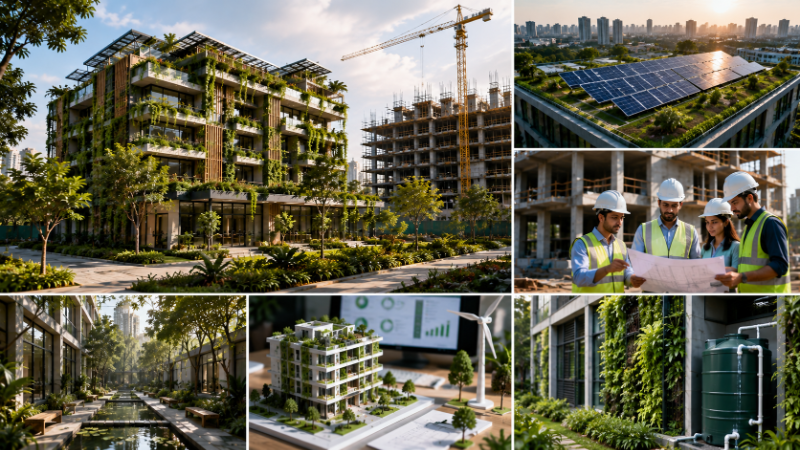
Reframing Sustainability as a Business Advantage
Cost Savings and Long-Term Value Creation
The most effective way to sell sustainability is through tangible financial benefits. Sustainable buildings typically deliver:
Energy savings of 30-40% through efficient HVAC systems, LED lighting, and smart building management
Water conservation of 20-30% via rainwater harvesting, recycled water systems, and efficient fixtures
Waste reduction during construction that can lower project costs by 5-10%
Reduced maintenance costs through durable, high-quality materials and efficient systems
When presenting a sustainable project to potential buyers or investors, quantify these savings. For example: "This apartment will reduce your annual electricity bills by ₹15,000-20,000 through our integrated solar and energy-efficient design." This concrete messaging resonates far more than abstract environmental claims.
Frequently asked
Health and Wellness as Premium Features
Sustainability extends beyond environmental metrics—it's fundamentally about creating healthier living and working environments. In the post-pandemic era, indoor air quality, natural lighting, and access to green spaces have become premium selling points.
Highlight features like:
HVAC systems with HEPA filtration and CO₂ monitoring
Maximized natural ventilation and daylight through smart building orientation
Biophilic design elements—green walls, landscaped courtyards, rooftop gardens
Non-toxic, low-VOC materials that improve indoor air quality
Ergonomic and wellness-focused workspace design
These aren't just environmental features; they're investments in occupant productivity, health, and satisfaction. Research shows that employees in green buildings report higher satisfaction levels and take fewer sick days, directly impacting organizational performance.
Marketing Sustainability Effectively
Tell the Story, Not Just the Specs
Effective sustainability marketing moves beyond listing certifications. Instead, craft narratives that connect environmental practices to tangible benefits for your target audience.
For residential projects: "Live in a home designed for your family's health and your budget's wellness—saving ₹1.5 lakh annually on utilities while enjoying 30% more natural light."
For commercial spaces: "Attract and retain top talent with a workplace that boosts productivity, reduces absenteeism, and demonstrates your commitment to corporate responsibility."
For mixed-use developments: "Build communities where people want to live, work, and invest—creating lasting value through thoughtful, sustainable design."
Leverage Certifications Strategically
LEED, IGBC, and other green certifications carry weight in India's market, particularly among institutional buyers and corporate tenants. However, certifications alone don't drive sales. They serve as third-party validation of your sustainability claims.
Position certifications as proof points within your broader value narrative. For instance: "IGBC Gold certification confirms our building's superior energy efficiency—translating to ₹2 lakh in annual savings for your business."
If pursuing certification, communicate the journey transparently. Buyers appreciate understanding how sustainable practices are integrated into their project.
Transparent Communication and Greenwashing Avoidance
One critical pitfall: greenwashing—making exaggerated or false sustainability claims. In India's increasingly informed market, this backfires quickly and damages credibility.
Instead, embrace transparency:
Provide detailed sustainability reports and third-party audit results
Acknowledge trade-offs and honest limitations
Document actual performance data from completed projects
Engage with skepticism constructively, providing evidence-based responses
This approach builds trust and positions your organization as genuinely committed to sustainability rather than exploiting it as a marketing gimmick.
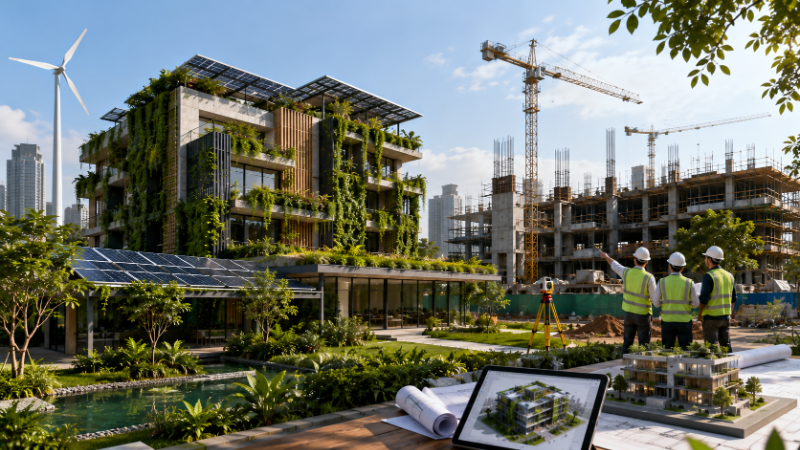
Practical Implementation Strategies
Integrate Sustainability Early in Design
The most cost-effective sustainability comes from early-stage integration, not retrofitting. Involve sustainability consultants in the initial design phase to optimize site orientation, building envelope, and systems integration.
This approach typically costs 2-3% more upfront but delivers 10-15% better performance and significantly simpler marketing. When sustainability is built into the DNA of your project, it becomes authentic and defensible.
Partner with Specialized Professionals
Executing sustainable projects requires expertise across multiple disciplines—sustainable architects, MEP engineers specializing in green systems, environmental consultants, and certification specialists. Finding and coordinating these professionals can be challenging.
Platforms like AECORD connect you with vetted AECO professionals experienced in sustainable project delivery across India. Whether you need a green building consultant in Bangalore, a LEED-accredited architect in Mumbai, or an energy auditor in Pune, AECORD's marketplace makes it easier to assemble the right team for your sustainability goals.
Document and Communicate Performance
Real performance data is your most powerful marketing tool. Implement building management systems that track energy consumption, water usage, waste generation, and indoor environmental quality. Share this data with buyers and tenants.
For completed projects, publish case studies showing actual cost savings and performance metrics. For example: "Our Bangalore IT park reduced energy consumption by 38% compared to conventional buildings, saving tenants ₹4.2 crore annually across all units."
Sustainability Selling Points by Project Type
Residential Projects
In residential markets, emphasize:
Health benefits—better air quality, natural light, thermal comfort
Financial savings—utility bill reductions, lower maintenance costs
Community value—green spaces, reduced noise pollution, walkability
Future-proofing—resilience to climate impacts, future-proof design
In markets like Mumbai and Delhi where real estate prices are high, sustainability can justify premium pricing while improving lifestyle quality.
Commercial and Office Spaces
For commercial properties, focus on:
Operational cost reduction—significant energy and water savings
Tenant attraction and retention—green buildings attract premium tenants and reduce vacancy
Productivity gains—research-backed improvements in employee performance
ESG compliance—supporting corporate sustainability commitments
Many multinational companies and Indian corporations now require their office spaces to meet sustainability standards. This creates substantial competitive advantage for developers offering certified green buildings.
Industrial and Logistics Facilities
Even industrial properties benefit from sustainability marketing:
Lower operating costs through energy-efficient design
Improved worker safety and productivity
Regulatory compliance and reduced environmental liability
Appeal to sustainability-conscious manufacturing clients
Overcoming Common Objections
"Sustainable buildings cost more upfront"
True, but the cost premium is typically 3-8%, which is recovered through operational savings within 5-7 years. Present the lifecycle cost analysis, not just initial capital expenditure. Over a 30-year building lifespan, sustainable design almost always delivers superior financial returns.
"Sustainability is a niche market concern"
This is increasingly untrue in India's major metros. Regulatory trends, corporate ESG requirements, and evolving buyer preferences are mainstreaming sustainability. Early adopters gain competitive advantage; late adopters face compliance risks.
"Green certifications are expensive and time-consuming"
Certification does require investment, but it's an optional amplifier, not a prerequisite. You can build and market sustainable projects without formal certification. However, certification provides third-party credibility that justifies premium pricing and appeals to institutional buyers.
Building Your Sustainability Brand
Positioning sustainability as a selling point requires consistent, long-term brand building:
Develop expertise—Invest in staff training and stay updated on emerging sustainable practices
Document case studies—Build a portfolio of successful sustainable projects with documented performance data
Engage stakeholders—Participate in industry forums, publish thought leadership content, and share knowledge
Measure and report—Track and communicate actual sustainability performance, not just intentions
Collaborate—Partner with specialists and platforms like AECORD to access expertise and expand market reach
The Future of Sustainability in Indian Construction
India's construction sector is at a pivotal moment. Climate change, resource scarcity, and regulatory evolution are making sustainability not just a nice-to-have but a business imperative. Forward-thinking professionals who reframe sustainability from compromise to competitive advantage will capture disproportionate market share and build more resilient, valuable projects.
The question isn't whether to embrace sustainability—it's how quickly you can integrate it into your core business model and market positioning.
Getting Started: Your Next Steps
If you're ready to make sustainability a genuine selling point for your projects, begin by:
Assessing your current projects for sustainability opportunities
Identifying gaps in your team's expertise
Researching sustainability frameworks relevant to your project types and markets
Connecting with experienced professionals who can guide implementation
Finding the right team is critical. AECORD makes this easier by connecting you with vetted architects, engineers, consultants, and specialists experienced in sustainable project delivery across India's AECO sector. Whether you need guidance on LEED certification, energy-efficient design, sustainable materials sourcing, or green building strategy, you can discover qualified professionals on AECORD who understand the Indian market and can help transform sustainability from a cost center into a genuine competitive advantage.
Start exploring AECORD today to build your sustainability team and take your projects to the next level.
Frequently Asked Questions
What price premium can sustainable buildings command in India?
Green buildings in India command a price premium of 8-15% in metropolitan areas, and this premium is growing. Additionally, operational cost savings from sustainable design often recover the initial investment within 5-7 years, making it financially attractive for both developers and end-users.
How much can sustainable buildings save on energy and water costs?
Sustainable buildings typically deliver energy savings of 30-40% through efficient HVAC systems and LED lighting, and water conservation of 20-30% via rainwater harvesting and recycled water systems. These savings translate to concrete benefits like reducing annual electricity bills by ₹15,000-20,000 or more.
Why are Indian buyers increasingly interested in sustainable construction?
An increasing segment of Indian buyers—particularly in tier-1 cities—prioritizes health, wellness, and environmental impact alongside affordability. Corporate tenants now actively evaluate energy efficiency, water conservation, and indoor air quality as part of their leasing and purchasing decisions.
What regulatory frameworks are driving sustainability in Indian construction?
Regulatory frameworks like the Energy Conservation Building Code (ECBC) and certifications such as LEED and IGBC are becoming increasingly stringent. Forward-thinking professionals leverage these compliance requirements as marketing opportunities rather than viewing them as burdens.
How can construction waste reduction impact project costs?
Waste reduction during construction can lower project costs by 5-10%, making sustainability a cost-effective strategy. Combined with reduced maintenance costs from durable, high-quality materials, sustainable practices deliver measurable financial benefits throughout a building's lifecycle.