

Understanding Mass Timber: A Sustainable Revolution in Construction
The construction industry in India is at a critical juncture. With rapid urbanization driving demand for new buildings and the pressing need to reduce carbon emissions, architects and engineers are increasingly exploring alternatives to traditional concrete and steel construction. Mass timber—engineered wood products designed to bear structural loads—represents one of the most promising sustainable solutions emerging today.
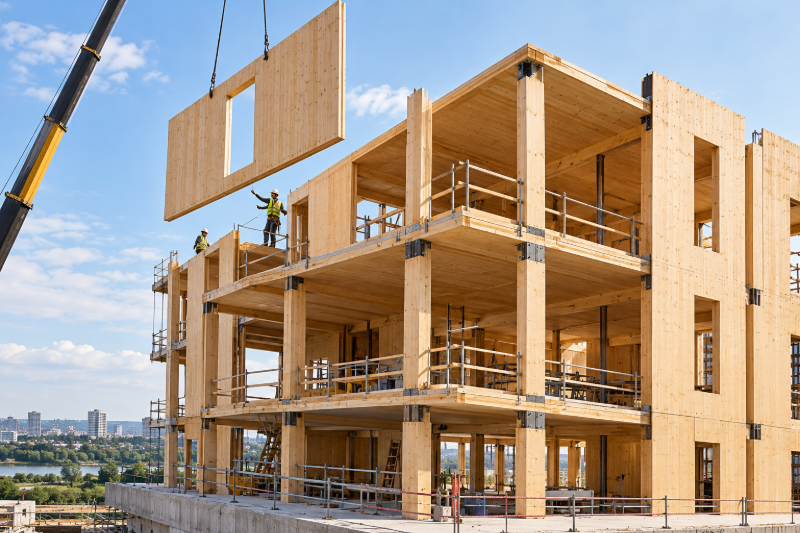
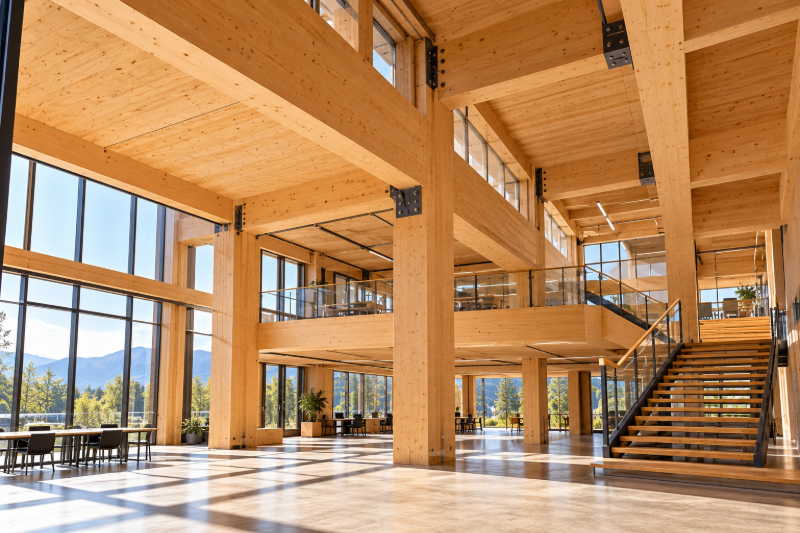
Mass timber construction uses large, solid wood panels and beams manufactured from smaller pieces of wood bonded together with adhesives. The most common types include Cross-Laminated Timber (CLT) and Glued Laminated Timber (Glulam). These materials are transforming how buildings are designed and constructed, offering significant advantages in sustainability, speed of construction, and structural performance.
Build cost · Bengaluru, May 2026
What is Mass Timber and How Does It Work?
Cross-Laminated Timber (CLT)
Cross-Laminated Timber is engineered wood made by stacking and gluing wooden boards in alternating perpendicular directions. This cross-grain structure creates panels that are incredibly strong and stable, capable of spanning large distances without intermediate supports. CLT panels typically measure 2-4 meters in width and can be produced in various thicknesses ranging from 60mm to 500mm.
The manufacturing process involves:
Selecting and grading softwood or hardwood lumber
Drying the wood to optimal moisture content (12-15%)
Sorting and finger-jointing boards end-to-end to achieve desired lengths
Applying structural adhesive between layers
Pressing layers together under controlled temperature and pressure
Cutting panels to precise dimensions for specific projects
In India, where companies like AECORD connect construction professionals with specialized suppliers, CLT is gaining traction in metropolitan areas like Bangalore, Hyderabad, and Mumbai where sustainable construction practices are increasingly valued.
Glued Laminated Timber (Glulam)
Glulam beams are created by bonding multiple layers of solid-sawn lumber or engineered lumber with waterproof adhesives. Unlike CLT, Glulam layers run parallel to each other, creating beams and columns with superior strength-to-weight ratios. These structural members can span distances of 20-40 meters or more, making them ideal for large open spaces in commercial and institutional buildings.
Glulam offers flexibility in design, allowing curved beams and custom shapes that enable architects to create visually distinctive structures while maintaining structural integrity.
Frequently asked
Environmental Benefits: Why Mass Timber Matters for Sustainability
Carbon Sequestration and Reduced Emissions
The most compelling argument for mass timber construction is its carbon footprint. Trees absorb carbon dioxide from the atmosphere during growth, storing carbon in their wood fibers. When timber is harvested and used in construction, this carbon remains locked in the material for the building's lifetime—sometimes 50-100 years or more.
Research indicates that one cubic meter of wood stores approximately 250 kg of CO₂. For a typical mid-rise building constructed with mass timber, this can result in carbon storage equivalent to removing several hundred vehicles from Indian roads for a year.
Compared to concrete and steel production, which generate significant emissions during manufacturing, mass timber offers substantial reductions:
Concrete: Produces approximately 0.9 tonnes of CO₂ per tonne of material
Steel: Generates approximately 1.9 tonnes of CO₂ per tonne of material
Mass Timber: Sequesters carbon, resulting in net negative emissions when sustainably sourced
Sustainable Forestry Practices
The viability of mass timber as a sustainable material depends entirely on responsible forest management. In India, where deforestation remains a concern, sourcing timber from certified sustainable forests is essential. International certifications like FSC (Forest Stewardship Council) and PEFC (Programme for the Endorsement of Forest Certification) ensure that timber is harvested responsibly.
When forests are managed sustainably, they can be continuously harvested while maintaining ecological balance. New trees are planted to replace harvested ones, creating a renewable resource cycle that doesn't deplete natural forests.
Reduced Manufacturing Impact
Manufacturing mass timber requires significantly less energy than producing equivalent volumes of concrete or steel. The primary processing steps—drying, cutting, and adhesive application—consume far less energy than the high-temperature processes required for steel and cement production. This translates to lower operational carbon emissions throughout the material's lifecycle.
Construction Speed and Economic Advantages
Faster On-Site Assembly
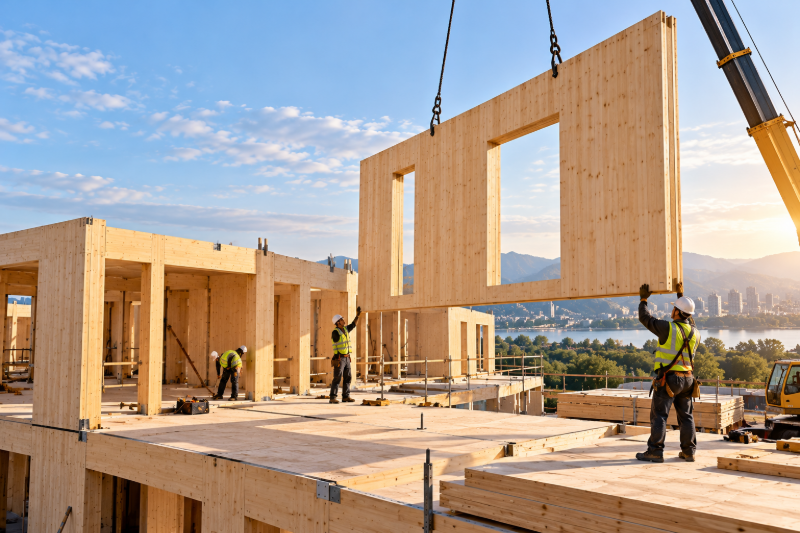
One of the most tangible benefits of mass timber construction is the dramatic reduction in construction time. CLT and Glulam components are prefabricated to precise specifications in manufacturing facilities, then delivered to the construction site ready for assembly. This modular approach eliminates many on-site processes that traditionally consume weeks or months.
For example, a typical 10-story office building in Delhi or Bangalore constructed with conventional methods might require 18-24 months. The same building using mass timber could potentially be completed in 12-16 months, representing a 25-35% reduction in project duration.
This acceleration translates directly to cost savings through reduced labor expenses, faster occupancy, and earlier revenue generation for developers.
Reduced Labor Requirements
Mass timber construction requires fewer skilled workers on-site compared to reinforced concrete construction. The assembly process is more straightforward—panels and beams are positioned and fastened rather than requiring complex formwork, reinforcement placement, and concrete pouring sequences. This is particularly valuable in India's construction market, where skilled labor availability can be a bottleneck.
Cost Considerations in the Indian Market
Currently, mass timber in India remains more expensive than conventional concrete construction, with CLT panels costing approximately ₹25,000-₹35,000 per cubic meter compared to ₹8,000-₹12,000 for reinforced concrete. However, when total project costs are analyzed—including labor, construction duration, and finishing costs—the price differential narrows considerably.
As demand increases and local manufacturing capacity develops, prices are expected to decline significantly. Professionals seeking to explore mass timber options can find specialized suppliers and consultants through platforms like AECORD, which connects architects and engineers with India's growing ecosystem of sustainable material providers.
Structural Performance and Design Flexibility
Fire Resistance
A common misconception is that wood buildings are more fire-prone than concrete or steel structures. In reality, mass timber has excellent fire performance characteristics. When exposed to high temperatures, the outer surface of thick timber members chars at a predictable rate (approximately 0.6-0.8mm per minute), creating a protective layer that insulates the unburned wood beneath.
This charring phenomenon means that large CLT and Glulam members actually maintain structural integrity longer than unprotected steel beams, which lose strength rapidly when heated. Building codes in many countries, including provisions being developed for India, now recognize mass timber's fire safety capabilities.
Seismic Performance
Mass timber buildings demonstrate excellent performance in seismic conditions. The material's light weight reduces inertial forces during earthquakes, while its flexibility allows buildings to sway without catastrophic failure. This characteristic is particularly valuable for Indian cities in seismic zones such as those in the Himalayan region and parts of Gujarat.
Several mass timber buildings in seismically active regions worldwide have performed exceptionally during earthquakes, with minimal damage and rapid recovery potential.
Acoustic and Thermal Properties
Wood naturally provides good acoustic insulation, reducing noise transmission between floors and spaces. This makes mass timber particularly suitable for residential and office buildings where acoustic comfort is important. Additionally, wood's insulating properties reduce heating and cooling requirements, lowering operational energy consumption and costs.
Architectural Possibilities
Mass timber enables architects to create designs that would be difficult or impossible with conventional materials. Curved Glulam beams can create dramatic interior spaces, while CLT's large panel format allows for open floor plans without numerous support columns. This design flexibility has attracted forward-thinking architects in Indian cities like Bangalore and Hyderabad to explore mass timber for premium residential and commercial projects.
Challenges and Barriers to Adoption in India
Regulatory and Code Issues
India's building codes, including the National Building Code (NBC), were developed primarily around concrete and steel construction. While provisions for timber construction exist, they are limited and don't adequately address mass timber applications. Updating these codes to include CLT and Glulam specifications requires extensive research, testing, and coordination among regulatory bodies—a process that is underway but not yet complete.
Manufacturing Capacity
Currently, India has limited domestic capacity for manufacturing CLT and Glulam at scale. Most mass timber used in Indian projects is imported, primarily from Europe and North America, significantly increasing costs and project timelines due to shipping and customs procedures. Developing local manufacturing facilities is essential for mass timber adoption, but requires substantial capital investment.
Perception and Familiarity
Architects, engineers, and developers in India have generations of experience with concrete and steel construction. Mass timber remains unfamiliar to many professionals, creating hesitation about its reliability and performance. Educational initiatives and demonstration projects are gradually changing these perceptions.
Moisture and Climate Considerations
India's tropical and subtropical climate, with high humidity and monsoon rains, presents challenges for timber construction. Proper design, detailing, and maintenance protocols must be implemented to prevent moisture absorption and biological degradation. This requires specialized knowledge and careful specification of protective systems—areas where consulting with experienced professionals through AECORD becomes invaluable.
Mass Timber Projects and Precedents
Global Examples
Internationally, mass timber construction has matured significantly. Projects like the 18-story Mjøstårnet in Norway and the 14-story Ascent in Milwaukee, USA, demonstrate that tall, complex buildings can be successfully constructed with mass timber. These projects have proven structural viability, fire safety, and economic feasibility at significant scale.
Emerging Indian Projects
While mass timber adoption in India remains nascent, pioneering projects are beginning to emerge. Several architects and developers in Bangalore and Hyderabad are incorporating CLT and Glulam in hybrid structures that combine mass timber with concrete and steel, allowing them to gain experience while managing risk. These projects serve as learning opportunities and proof-of-concept demonstrations for the broader market.
The Path Forward: Mass Timber in India's Construction Future
Policy and Regulatory Development
India's construction industry is increasingly focused on sustainability, driven by environmental concerns and government initiatives like the Green Building Code. As policymakers recognize mass timber's potential, regulatory frameworks will evolve to accommodate these materials. Industry associations and professional bodies are actively working to develop standards and guidelines specific to Indian conditions.
Local Manufacturing Development
Several Indian companies and foreign investors are evaluating the feasibility of establishing CLT and Glulam manufacturing facilities in India. Success in this area would dramatically reduce costs and make mass timber economically competitive with conventional materials. States like Karnataka and Telangana, with existing manufacturing infrastructure and supportive policies, are likely candidates for these facilities.
Professional Development and Education
Architecture and engineering schools in India are beginning to incorporate mass timber into their curricula. Professional organizations are conducting workshops and seminars to build expertise among practitioners. For professionals seeking specialized knowledge, connecting with experienced consultants and suppliers through platforms like AECORD provides access to the expertise needed to successfully execute mass timber projects.
Conclusion: Is Mass Timber India's Sustainable Future?
Mass timber construction represents a genuinely transformative opportunity for India's building industry. The combination of environmental benefits, construction speed, and structural performance addresses multiple critical challenges facing Indian construction: sustainability, labor efficiency, and project timeline management.
While barriers remain—regulatory, economic, and perceptual—these are not insurmountable. As awareness grows, manufacturing capacity develops, and building codes evolve, mass timber will increasingly become a viable and attractive option for Indian architects, engineers, and developers.
The transition will likely be gradual, with hybrid structures combining mass timber with other materials becoming common before fully mass timber buildings dominate. However, the trajectory is clear: engineered wood is poised to become a significant component of India's sustainable construction future.
If you're an architect, engineer, or developer interested in exploring mass timber possibilities for your projects, the time to engage with specialists is now. Visit AECORD today to connect with experienced professionals who understand both the potential and practical considerations of mass timber construction in the Indian market. Whether you're planning a pilot project or a full-scale implementation, finding the right partners is essential for success