

Understanding GRIHA Certification: India's Leading Green Building Standard
Green building practices have become increasingly important in India's construction industry, and GRIHA (Green Rating for Integrated Habitat Assessment) certification stands at the forefront of this movement. Developed by the Ministry of New and Renewable Energy (MNRE) in collaboration with The Energy and Resources Institute (TERI), GRIHA is India's own green building rating system that evaluates the environmental performance of buildings across their lifecycle.
For architects, engineers, construction professionals, and building owners across major Indian cities like Delhi, Mumbai, Bangalore, and Hyderabad, understanding GRIHA certification has become essential. This comprehensive guide will walk you through everything you need to know about GRIHA certification, its benefits, implementation process, and how it can enhance your projects.
Build cost · Bengaluru, May 2026
What is GRIHA Certification?
GRIHA is a green building rating system that assesses buildings based on their environmental performance and sustainability metrics. Unlike international standards like LEED or BREEAM, GRIHA is specifically designed for the Indian climate, construction practices, and regulatory environment, making it particularly relevant for projects across the country. /blog/hempcrete-india-sustainable-building-material-guide
The rating system evaluates buildings on a scale of 1 to 5 stars, with 5 stars representing the highest level of sustainability performance. A building must achieve a minimum score to be certified, and the certification process involves detailed documentation, on-site verification, and third-party assessment.
Key Characteristics of GRIHA
Holistic Assessment: GRIHA evaluates buildings across multiple dimensions including site selection, water efficiency, energy performance, waste management, and indoor environmental quality
Climate-Responsive Design: The system accounts for India's diverse climatic zones, from the cold regions of Kashmir to the hot-humid zones of coastal areas
Cost-Effective: GRIHA certification is generally more affordable than international standards, with certification costs typically ranging from ₹50,000 to ₹2,00,000 depending on building size and complexity
Regulatory Recognition: Many Indian states and municipalities offer incentives for GRIHA-certified buildings, including tax benefits, faster approvals, and density relaxation
GRIHA Certification Criteria and Rating Points
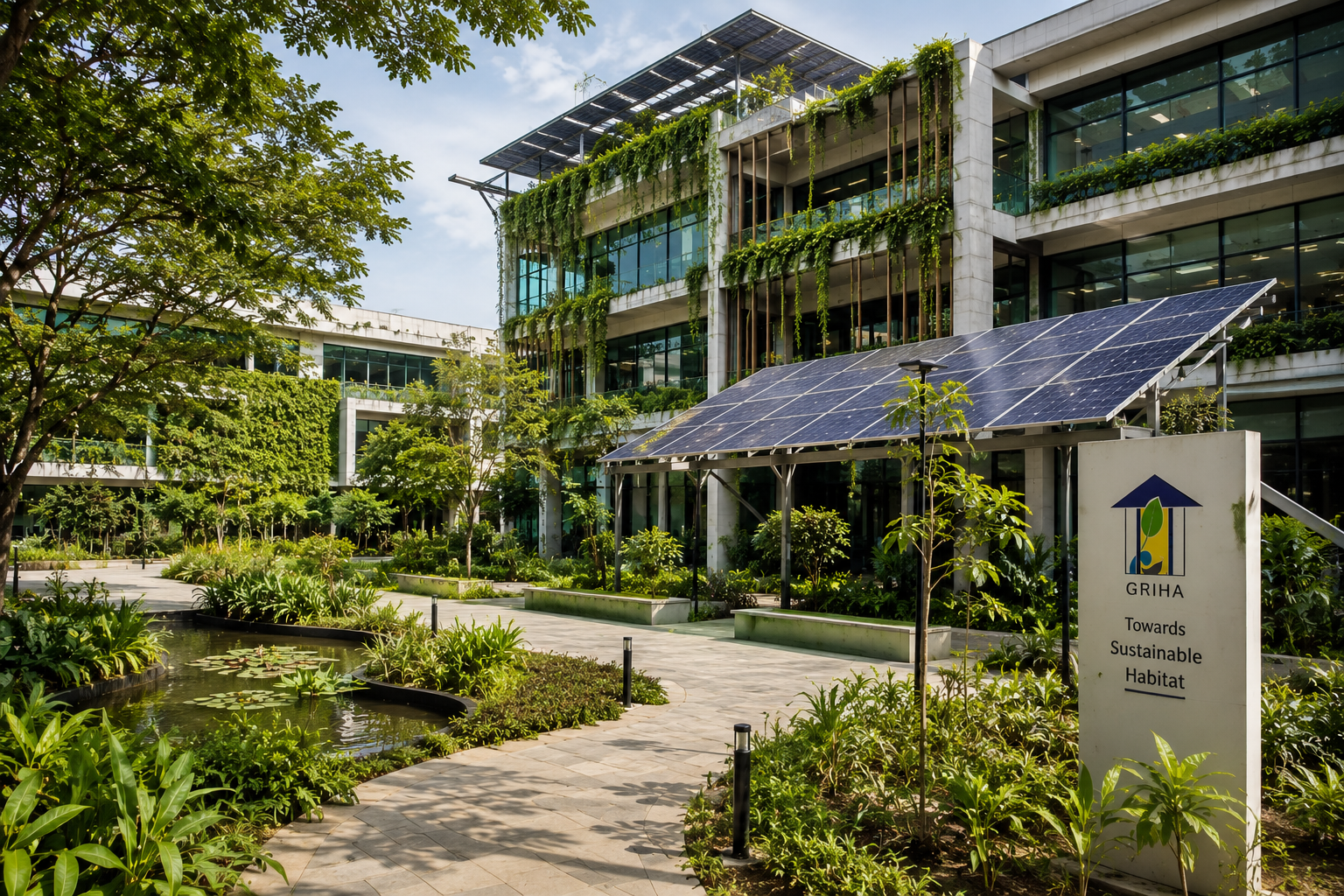
GRIHA uses a points-based system where buildings can score up to 100 points across various categories. Understanding these criteria is crucial for professionals planning to pursue certification on AECORD or working with certified building consultants.
Frequently asked
Major Evaluation Categories
1. Site Selection and Planning (14 Points)
This category emphasizes choosing appropriate sites and planning buildings responsibly. Points are awarded for:
Proximity to public transportation and essential services
Avoiding environmentally sensitive areas
Preservation of natural habitats and water bodies
Urban infill projects and brownfield redevelopment
2. Water Efficiency (12 Points)
Water conservation is critical in India, and GRIHA allocates significant points for efficient water management:
Rainwater harvesting systems
Wastewater recycling and treatment
Water-efficient fixtures and fittings
Landscape irrigation optimization
For example, a residential building in Bangalore implementing comprehensive rainwater harvesting could capture 80-90% of annual rainfall, significantly reducing municipal water dependency.
3. Energy Efficiency (30 Points)
This is the highest-scoring category, reflecting the importance of energy conservation in sustainable buildings:
Building envelope optimization (insulation, glazing, orientation)
HVAC system efficiency
Lighting design and controls
Renewable energy integration (solar panels, wind turbines)
Energy monitoring and management systems
Buildings in Delhi can achieve 30-40% energy savings through proper orientation, natural ventilation, and solar passive design principles aligned with the region's climate. /blog/hygromorphic-materials-used-in-construction-in-india-mp2bnikw
4. Indoor Environmental Quality (18 Points)
GRIHA recognizes that building occupants' health and comfort are paramount:
Natural lighting and views
Indoor air quality and ventilation
Thermal comfort
Acoustic performance
Low-VOC materials and finishes
5. Construction and Waste Management (10 Points)
Sustainable construction practices are evaluated through:
Waste management plans during construction
Use of recycled and locally sourced materials
Construction site environmental management
Reduction of construction waste to landfills
6. Commissioning and Maintenance (6 Points)
Ongoing building performance is ensured through:
Comprehensive commissioning of building systems
Operation and maintenance guidelines
Building management systems documentation
7. Biodiversity and Landscape (10 Points)
Green spaces and ecological considerations receive recognition:
Native plant species integration
Green roofs and walls
Habitat creation and preservation
Landscape water efficiency
GRIHA Certification Levels and Star Ratings
The certification is awarded based on the total points achieved:
1 Star: 40-55 points
2 Stars: 56-70 points
3 Stars: 71-85 points
4 Stars: 86-95 points
5 Stars: 96-100 points
Most buildings in India typically aim for 3-4 star certification, which represents a good balance between sustainability performance and implementation costs.
Benefits of GRIHA Certification
For Building Owners
Financial Benefits: Buildings with GRIHA certification often command premium rental and sale prices. Studies show that certified buildings can achieve 5-15% higher property values in major Indian cities. Additionally, reduced energy and water consumption translates to operational savings of 20-30% annually.
Tax and Regulatory Incentives: Many state governments offer property tax rebates (typically 5-10%) for GRIHA-certified buildings. Some municipalities provide faster building approvals and reduced development charges.
Tenant Attraction: Corporate tenants increasingly prefer sustainable buildings, making GRIHA certification a competitive advantage in cities like Bangalore, Hyderabad, and Mumbai's commercial real estate markets.
For Architects and Engineers
Professionals pursuing GRIHA certification on AECORD can differentiate themselves in the market. The certification demonstrates expertise in sustainable design and positions you as a trusted advisor for environmentally conscious clients. Many large construction firms now require their design teams to have GRIHA knowledge.
For the Environment
GRIHA-certified buildings collectively reduce carbon emissions, conserve water resources, and minimize waste generation. A single 10,000 square meter office building with GRIHA 4-star certification can save approximately 2,000-2,500 MWh of electricity annually, equivalent to the carbon sequestration of 40,000 trees.
GRIHA Certification Process: Step-by-Step
Stage 1: Pre-Design and Design Phase
Begin GRIHA planning during the conceptual design stage. Engage a GRIHA consultant to conduct a feasibility assessment and identify applicable criteria for your building type. This phase typically takes 2-4 weeks and costs ₹30,000-₹50,000.
Stage 2: Detailed Design and Documentation
Develop detailed designs incorporating GRIHA requirements. Prepare comprehensive documentation including energy calculations, water management plans, material specifications, and construction methodologies. This stage involves coordination between architects, engineers, and sustainability consultants.
Stage 3: Pre-Certification Assessment
Submit preliminary documentation to GRIHA for pre-certification review. This stage provides feedback before construction begins, allowing for design modifications if needed. The review period typically takes 4-6 weeks.
Stage 4: Construction Phase Compliance
During construction, maintain detailed records of sustainable practices, material sourcing, waste management, and worker safety. Regular site audits ensure compliance with GRIHA requirements. This documentation is crucial for final certification.
Stage 5: Post-Construction Verification
After construction completion, conduct comprehensive commissioning of all building systems. Verify that HVAC, lighting, water systems, and renewable energy installations perform as designed. Third-party testing and inspections are conducted during this phase.
Stage 6: Final Certification
Submit all post-construction documentation, test reports, and performance data to GRIHA for final assessment. The certification body conducts on-site verification and awards the appropriate star rating. The entire certification process typically takes 6-12 months from initial application.
GRIHA-Certified Building Examples in India
Several landmark projects across India have achieved GRIHA certification, demonstrating the feasibility of sustainable construction at various scales and budgets:
Residential Projects: Multiple housing societies in Delhi and Bangalore have achieved GRIHA 3-4 star ratings by implementing water harvesting, solar power, and waste management systems
Commercial Complexes: Office buildings in Mumbai's Bandra-Kurla Complex and Bangalore's IT corridor have achieved high GRIHA ratings through energy-efficient design and renewable energy integration
Institutional Buildings: Educational institutions and government buildings across India have adopted GRIHA standards, showcasing its applicability across building types
Cost Implications of GRIHA Certification
The additional cost for GRIHA compliance varies based on the building type and target star rating. Generally:
Consultant Fees: ₹50,000-₹2,00,000 depending on building size and complexity
Design Modifications: 2-5% additional construction cost for sustainable features
Certification and Testing: ₹1,00,000-₹3,00,000 for third-party assessment and verification
However, these costs are typically recovered through operational savings and property value premiums within 3-5 years.
Challenges in Implementing GRIHA
Awareness Gap: Many building professionals in smaller Indian cities lack familiarity with GRIHA requirements, making implementation challenging.
Upfront Costs: Initial investments in sustainable technologies like solar systems and rainwater harvesting can be substantial, though long-term savings justify the expense.
Documentation Requirements: GRIHA demands extensive documentation and record-keeping throughout the project lifecycle, requiring dedicated resources.
Coordination Challenges: Successful GRIHA implementation requires seamless coordination between architects, engineers, contractors, and consultants, which can be complex on large projects.
Future of GRIHA in India
As India aims to achieve net-zero carbon emissions and sustainable development goals, GRIHA certification is expected to become increasingly mandatory. Several state governments have already mandated GRIHA certification for public buildings and large commercial projects.
The integration of GRIHA with digital technologies like Building Information Modeling (BIM) and IoT-based monitoring systems is enhancing the certification process and enabling better performance tracking post-construction.
Finding GRIHA Experts on AECORD
If you're planning a GRIHA-certified project, connecting with experienced professionals is crucial. AECORD provides a platform where you can find certified GRIHA consultants, sustainable design architects, and green building engineers across India. Whether you're in Delhi, Mumbai, Bangalore, or other major cities, AECORD helps you locate specialists who understand local regulations, climate conditions, and cost-effective implementation strategies. /blog/regional-architecture-in-india-finds-renewed-voice-through-local-design-realty-p
On AECORD, you can also connect with contractors experienced in sustainable construction practices, material suppliers offering eco-friendly products, and project managers who have successfully delivered GRIHA-certified buildings.
Conclusion
GRIHA certification represents India's commitment to sustainable building practices tailored to local conditions and requirements. Whether you're an architect designing your first green building, an engineer optimizing building systems for sustainability, or a developer seeking to enhance property value, understanding GRIHA is essential for modern construction in India.
The combination of environmental benefits, financial incentives, and market competitiveness makes GRIHA certification a worthwhile investment for most building projects. By partnering with experienced professionals through AECORD and following the systematic certification process, you can successfully implement sustainable practices that benefit both your projects and the environment.
Ready to pursue GRIHA certification for your next project? Visit AECORD today to connect with certified green building consultants, architects, and engineers who can guide you through the certification process and help you create sustainable buildings that meet India's environmental and economic goals.
Frequently Asked Questions
What is GRIHA certification and how does it differ from LEED?
GRIHA (Green Rating for Integrated Habitat Assessment) is India's own green building rating system developed by the Ministry of New and Renewable Energy and TERI. Unlike international standards like LEED, GRIHA is specifically designed for the Indian climate, construction practices, and regulatory environment, making it more relevant and cost-effective for Indian projects.
How much does GRIHA certification cost?
GRIHA certification costs typically range from ₹50,000 to ₹2,00,000 depending on building size and complexity, making it generally more affordable than international green building standards. The exact cost varies based on the scope of assessment and third-party verification requirements.
What are the main evaluation categories in GRIHA certification?
GRIHA uses a points-based system with major categories including Site Selection and Planning (14 points), Water Efficiency (12 points), and Energy Efficiency (30 points), among others. Buildings can score up to 100 points total across various sustainability dimensions including waste management and indoor environmental quality.
What incentives do Indian states offer for GRIHA-certified buildings?
Many Indian states and municipalities provide incentives for GRIHA-certified buildings including tax benefits, faster approvals, and density relaxation. These regulatory recognitions make GRIHA certification financially attractive for developers and building owners.
How does GRIHA rate buildings and what is the certification scale?
GRIHA evaluates buildings on a scale of 1 to 5 stars, with 5 stars representing the highest level of sustainability performance. Buildings must achieve a minimum score to be certified, with the certification process involving detailed documentation, on-site verification, and third-party assessment.