Understanding GFRC Panels: A Comprehensive Guide for Indian Construction Professionals
Glass Fiber Reinforced Concrete (GFRC) panels have revolutionized the construction industry by offering architects, engineers, and builders a versatile, durable, and aesthetically appealing solution for both interior and exterior applications. In India, where rapid urbanization and modern architectural trends are reshaping our cities, GFRC panels have become increasingly popular for commercial complexes, residential projects, and institutional buildings across metros like Mumbai, Bangalore, Delhi, and Hyderabad. /blog/gfrc-panels-glass-fiber-reinforced-concrete-lightweight-facade-systems-architect-mp9fts3a
This comprehensive guide will help AECO professionals understand the technical aspects, benefits, applications, and implementation strategies for GFRC panels in the Indian construction landscape.
Build cost · Bengaluru, May 2026
What Are GFRC Panels?
GFRC panels are composite materials made from a combination of cement, sand, water, and alkali-resistant glass fibers. Unlike traditional reinforced concrete that uses steel bars, GFRC uses glass fibers to provide tensile strength and crack resistance. The glass fibers, typically 10-40mm in length, are randomly distributed throughout the concrete matrix, creating a lightweight yet robust material.
The basic composition of GFRC typically includes:
Cement (Portland cement or specialty cements): 15-30% by weight
Sand (fine aggregate): 40-50% by weight
Glass fibers: 3-6% by weight
Water: 12-18% by weight
Additives: Plasticizers, accelerators, and pigments as required
The resulting panels are typically 6-13mm thick, making them significantly lighter than conventional concrete panels while maintaining excellent structural integrity and durability.
Key Properties and Advantages of GFRC Panels
Lightweight Construction
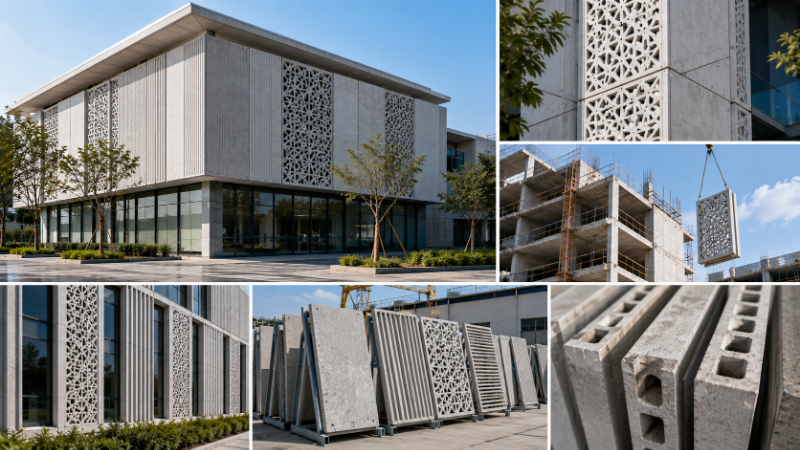
One of the most compelling advantages of GFRC panels is their lightweight nature. A standard GFRC panel weighs approximately 30-40% less than traditional reinforced concrete panels of similar dimensions. This reduced weight translates to lower structural loads, reduced foundation requirements, and easier installation—all factors that can significantly reduce overall project costs in India where labor and structural expenses are considerable./blog/gfrc-panels-glass-fiber-reinforced-concrete-lightweight-facade-systems-architect
Frequently asked
Superior Durability
GFRC panels exhibit exceptional durability, particularly in India's diverse climate conditions. The glass fibers resist corrosion, making these panels ideal for coastal regions like Mumbai and Chennai where salt spray and humidity are constant challenges. Unlike steel-reinforced concrete, GFRC doesn't suffer from rust and spalling issues, ensuring longevity of 40+ years with minimal maintenance.
Design Flexibility
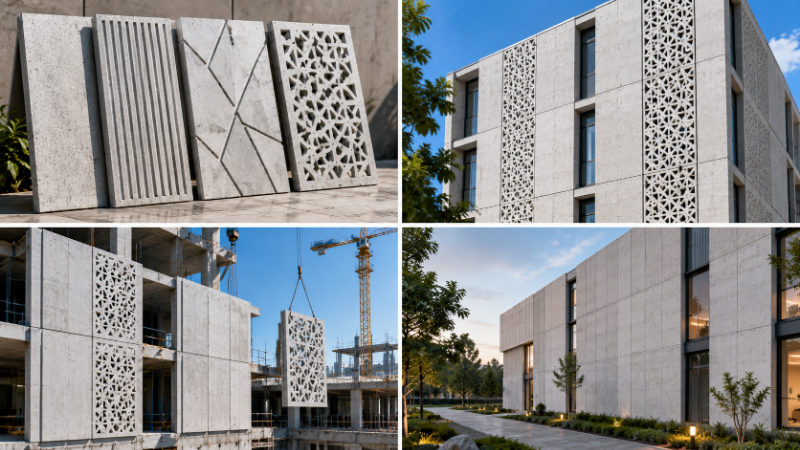
GFRC panels can be manufactured in virtually any shape, texture, or color, allowing architects to realize creative designs without compromise. Whether you need panels with intricate patterns, curved surfaces, or custom finishes, GFRC manufacturing facilities across India can produce them efficiently. This flexibility has made GFRC the preferred choice for premium commercial projects in Bangalore's IT corridor and Mumbai's financial districts. /blog/ppc-vs-opc-cement-which-is-better-for-house-construction-in-india
Fire Resistance
GFRC panels are non-combustible and provide excellent fire resistance ratings. This makes them particularly suitable for high-rise buildings, hotels, and institutional structures where fire safety codes are stringent. In compliance with Indian building codes like NBC (National Building Code), GFRC panels offer superior fire performance compared to many alternative materials. /blog/digital-twins-in-construction-how-they-build-client-trust-before-ground-is-broke
Cost-Effectiveness
While the initial material cost of GFRC may be slightly higher than conventional concrete, the overall project economics are favorable. Reduced structural requirements, faster installation, lower maintenance costs, and extended service life make GFRC panels a cost-effective solution over the building's lifecycle. For a typical commercial project in Delhi or Hyderabad, GFRC can reduce construction timelines by 15-20%.
Types of GFRC Panels
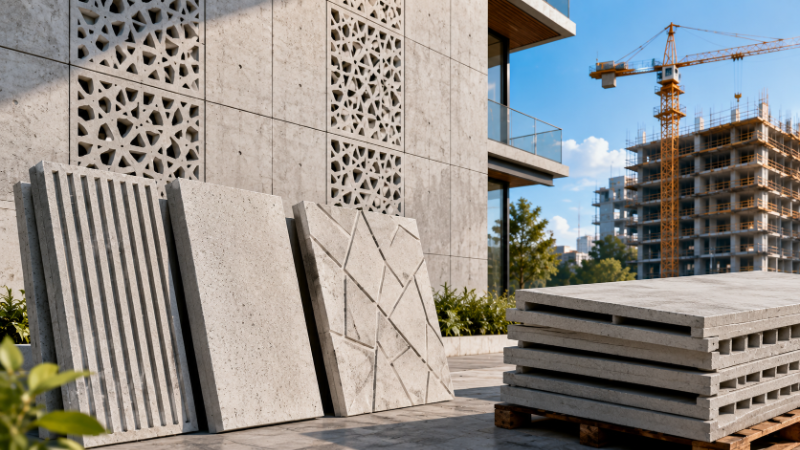
Architectural Cladding Panels
These panels serve as the external facade of buildings, providing both aesthetic appeal and weather protection. They can be manufactured with various finishes including exposed aggregate, smooth, textured, or imitation stone finishes. Architectural cladding panels are extensively used in premium residential and commercial projects across major Indian cities.
Structural GFRC Panels
Designed to carry structural loads, these panels can function as load-bearing elements or infill panels in structural systems. They're commonly used in multi-story buildings where their lightweight properties allow for more efficient structural design.
Precast Concrete Products
GFRC is used to manufacture various precast elements including window surrounds, cornices, balustrades, and decorative architectural features. These components can be prefabricated in controlled factory conditions, ensuring superior quality and faster site assembly.
Acoustic Panels
GFRC panels can be engineered with porous finishes to provide sound absorption properties, making them ideal for commercial interiors, auditoriums, and educational institutions.
Manufacturing Process for GFRC Panels
Spray-Up Method
This is the most common manufacturing technique in India. A spray gun simultaneously sprays the cement mortar and glass fiber strands onto a mold surface. The operator controls the thickness and fiber distribution, ensuring uniform quality. This method is ideal for large panels and complex geometries.
Premix Method
Glass fibers are pre-mixed with the cement mortar before being placed in molds. This method is suitable for smaller components and ensures more uniform fiber distribution. It's commonly used for decorative architectural elements.
Hybrid Techniques
Some advanced manufacturing facilities in India combine spray-up and premix methods to achieve optimal properties for specific applications. This hybrid approach is increasingly popular for high-performance applications.
Technical Specifications and Standards
GFRC panels in India must comply with relevant Indian Standards and building codes. Key standards include:
IS 1199:2018 – Precast Concrete Products
IS 1905:2016 – Code of Practice for Repair and Maintenance of Concrete Structures
NBC (National Building Code of India) – For fire safety and structural requirements
ASTM C1559-20 – Standard Specification for Glass Fiber Reinforced Concrete Panels (often referenced)
Key technical parameters to specify include:
Compressive strength: Typically 40-60 MPa
Flexural strength: 8-15 MPa
Tensile strength: 4-8 MPa
Modulus of elasticity: 10-15 GPa
Water absorption: Less than 5% by weight
Density: 1.8-2.0 g/cm³
Applications of GFRC Panels in Indian Construction
Commercial Buildings
GFRC panels are extensively used for facade cladding in commercial complexes. Their aesthetic versatility allows developers to create distinctive building identities while maintaining structural efficiency. Many IT parks in Bangalore and office complexes in Pune utilize GFRC for both aesthetic and functional benefits.
Residential Projects
In residential developments, GFRC panels provide an economical solution for creating varied architectural expressions across building elevations. They're particularly popular in gated communities and premium housing projects where aesthetic differentiation is valued.
Hospitality Sector
Hotels and resorts benefit from GFRC's design flexibility and durability. The panels can replicate stone, brick, or custom textures, allowing designers to create distinctive hospitality experiences without the maintenance challenges of natural materials.
Institutional Buildings
Schools, colleges, and government buildings utilize GFRC for cost-effective, durable solutions that withstand India's varied climate conditions. Educational institutions particularly appreciate the low maintenance requirements.
Infrastructure Projects
GFRC panels are increasingly used in metro stations, railway facilities, and other infrastructure projects where durability, fire resistance, and aesthetic appeal are paramount.
Cost Considerations for GFRC Panels in India
The cost of GFRC panels varies based on several factors:
Basic architectural panels: ₹800-1,200 per square meter
Textured or specialty finish panels: ₹1,200-2,000 per square meter
Complex custom designs: ₹2,000-3,500 per square meter
Installation costs: ₹200-400 per square meter (varies by location and complexity)
These prices reflect current market rates in major Indian cities and may vary based on project location, order quantity, and specific requirements. Bulk orders typically attract 10-15% discounts.
Installation and Maintenance Considerations
Installation Process
GFRC panels are typically installed using mechanical fasteners or adhesive systems. The lightweight nature of panels allows for faster installation compared to traditional concrete panels. Proper alignment, weather sealing, and movement joint management are critical for ensuring long-term performance.
Maintenance Requirements
One of the significant advantages of GFRC panels is their minimal maintenance needs. Regular cleaning with mild detergent and water is typically sufficient. Unlike natural stone or painted surfaces, GFRC panels don't require periodic resealing or repainting, resulting in lower lifecycle costs.
Weather Sealing
Proper sealing of joints and connections is essential to prevent water ingress. High-quality sealants and gaskets should be used, particularly in regions with heavy monsoon rains like Mumbai and Kerala.
Environmental and Sustainability Aspects
GFRC panels offer several sustainability advantages:
Reduced material usage compared to traditional concrete due to lighter weight
Lower embodied carbon due to thinner sections and reduced structural demands
Long service life (40+ years) reduces replacement frequency
Recyclability potential, though currently limited in India
Reduced transportation emissions due to lightweight nature
As India moves toward sustainable construction practices and green building certifications like LEED and IGBC, GFRC panels are increasingly recognized as a responsible material choice.
Challenges and Limitations
While GFRC offers numerous advantages, professionals should be aware of potential challenges:
Glass fiber durability: Alkali-resistant glass fibers must be specified to ensure long-term durability in the alkaline concrete environment
Shrinkage control: Proper curing and mix design are essential to minimize shrinkage cracks
Quality control: Manufacturing quality can vary; specifying reputable manufacturers is crucial
Skilled labor: Installation requires trained professionals familiar with GFRC handling
Limited local expertise: In smaller Indian cities, finding GFRC specialists may be challenging
Selecting GFRC Suppliers and Manufacturers
When sourcing GFRC panels for your project, consider these factors:
Manufacturing certifications and compliance with Indian Standards
Portfolio of completed projects in similar applications
Quality control procedures and testing protocols
Warranty and after-sales support
Proximity to project location (reduces transportation costs)
Capacity to handle project timeline and volume requirements
AECORD provides a platform where you can connect with verified GFRC manufacturers and suppliers across India, compare quotes, and review their past project experience. Using AECORD to source GFRC specialists ensures you're working with qualified professionals who understand Indian construction requirements and local market conditions.
Future Trends in GFRC Technology
The GFRC industry in India is evolving with several emerging trends:
Advanced fiber technologies: Development of basalt and carbon fiber reinforced alternatives
Self-cleaning surfaces: Photocatalytic coatings that reduce maintenance requirements
Integrated insulation: GFRC panels combined with thermal insulation layers
Smart panels: Integration of sensors and monitoring capabilities
Circular economy focus: Development of recycled content GFRC and recyclable panel systems
Conclusion
GFRC panels represent a mature, proven technology that addresses many challenges faced by Indian construction professionals. Their combination of lightweight properties, design flexibility, durability, and cost-effectiveness makes them an excellent choice for diverse applications across residential, commercial, and institutional sectors. Whether you're designing a premium commercial complex in Mumbai, a residential project in Delhi, or an institutional building in Hyderabad, GFRC panels deserve serious consideration.
The key to successful GFRC implementation lies in proper specification, quality supplier selection, and competent installation. To find experienced GFRC manufacturers, installers, and consultants for your next project, explore AECORD's network of verified professionals. AECORD makes it simple to connect with specialists who understand GFRC technology and Indian construction requirements, ensuring your project achieves the desired aesthetic and performance outcomes.
Ready to incorporate GFRC panels into your next project? Visit AECORD today to connect with India's leading GFRC manufacturers, architects, and construction professionals who can bring your vision to life.