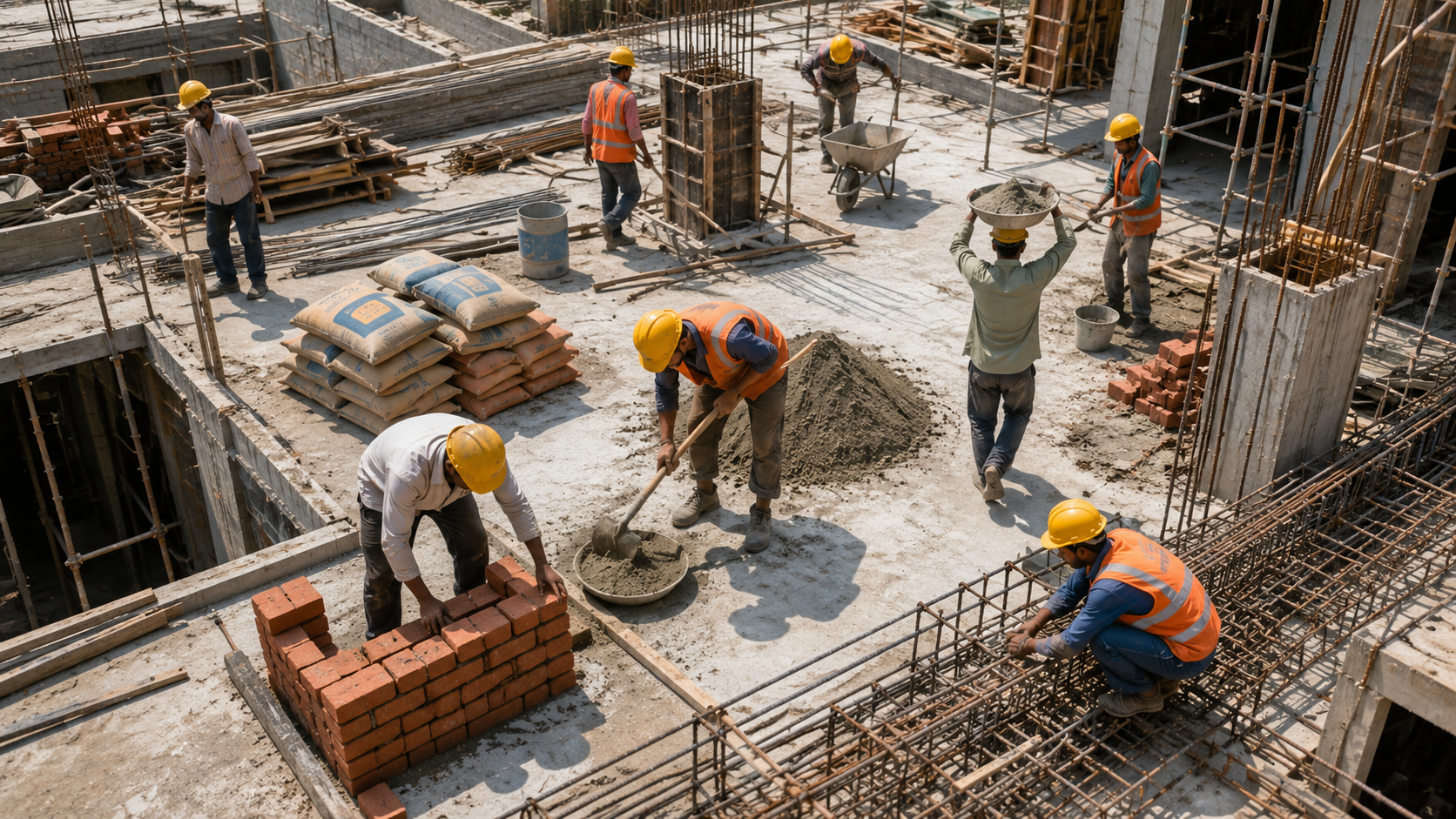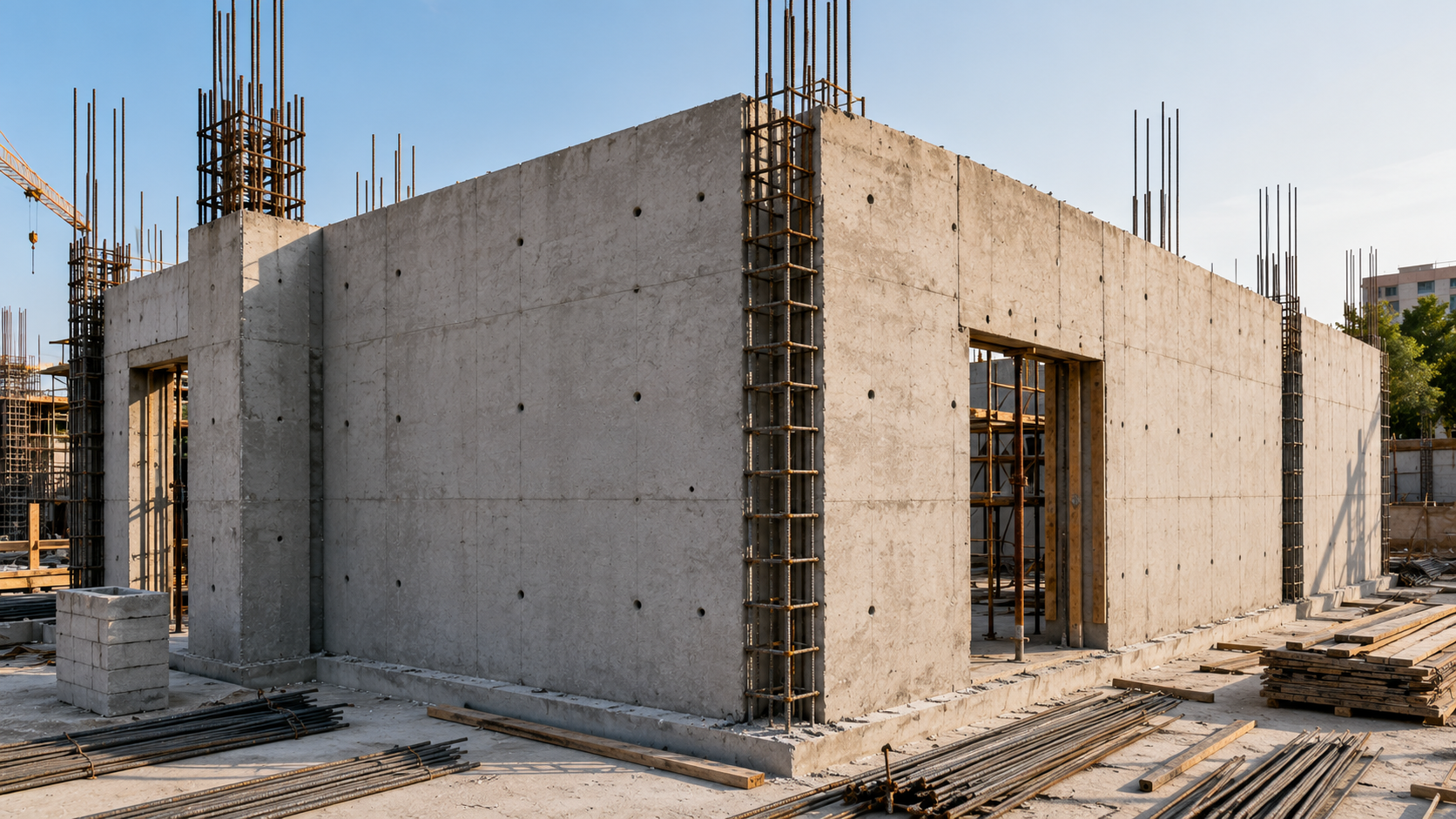


The construction industry in India is undergoing a remarkable digital transformation. One of the most game-changing technologies emerging in this space is the concept of digital twins—virtual replicas of physical construction projects that allow stakeholders to visualize, simulate, and validate every aspect of a building before a single brick is laid. For clients investing crores in commercial projects, residential complexes, or infrastructure developments, digital twins represent far more than just impressive 3D visualizations. They are trust-building tools that fundamentally change how projects are communicated, understood, and executed.
Understanding Digital Twins in Construction
A digital twin is a comprehensive virtual model that mirrors the physical characteristics, systems, and processes of a real construction project. Unlike traditional 2D blueprints or even basic 3D renderings, digital twins integrate real-time data, IoT sensors, building information modeling (BIM), and advanced analytics to create a living, breathing replica of the project.
In the Indian construction context, where projects range from ₹50 lakhs to ₹500+ crores, digital twins serve as a bridge between architects' visions and clients' expectations. They allow stakeholders to walk through completed spaces virtually, understand spatial relationships, identify potential conflicts, and make informed decisions before construction begins.
Build cost · Bengaluru, May 2026
Key Components of Construction Digital Twins
3D BIM Models: Detailed geometric representations of all structural, mechanical, electrical, and plumbing systems integrated into one coherent model
Real-Time Data Integration: Connection to IoT sensors that track environmental conditions, material properties, and construction progress
Simulation Engines: Tools that allow professionals to test scenarios—structural loads, thermal performance, evacuation routes—without physical testing
Augmented Reality (AR) Interfaces: Technology enabling clients to view the project overlaid on actual site locations using smartphones or tablets
Analytics Dashboards: Platforms that visualize project metrics, timelines, resource allocation, and risk factors
How Digital Twins Build Client Confidence
Eliminating Visualization Gaps
One of the primary sources of client dissatisfaction in Indian construction projects is the gap between what clients imagine and what they eventually receive. Traditional 2D drawings, while technically accurate, require spatial reasoning skills that not all clients possess. A client reviewing a floor plan might struggle to visualize how natural light will flow through their office space or how the open-plan layout will actually feel when occupied.
Digital twins eliminate this ambiguity. A prospective buyer of a residential unit in a Bangalore IT corridor project can walk through their apartment virtually, experiencing the view from the balcony, understanding the relationship between the living room and kitchen, and evaluating the spatial flow. This immersive experience significantly reduces post-occupancy disappointment and dispute resolution costs.
Frequently asked
Transparency in Design Decisions
When construction professionals use AECORD to connect with clients or when they present projects through digital twin technology, they demonstrate a commitment to transparency. Every design decision—from the placement of columns to the routing of electrical conduits—can be explained and visualized in context.
For complex projects in metropolitan areas like Mumbai, Delhi, or Bangalore, where regulatory compliance and space optimization are critical, digital twins allow architects and engineers to show clients exactly why certain decisions were made. For instance, if a column placement affects the open-plan design of a commercial space, the digital twin can show the structural necessity while simultaneously displaying alternative design solutions that might have been considered and rejected.
Early Identification of Issues
Digital twins enable clash detection—the identification of conflicts between different building systems before construction begins. In a typical Indian commercial project, MEP (mechanical, electrical, plumbing) clashes can add ₹5-15 lakhs to project costs when discovered during construction. Digital twins catch these conflicts during the design phase, presenting clients with solutions before any delays or cost overruns occur.
This proactive problem-solving builds tremendous trust. Clients see that the project team is competent, thorough, and committed to protecting their investment.
Practical Applications in Indian Construction Projects
Residential Developments
Major residential projects across India—from luxury apartments in Mumbai's Bandra-Worli area to mid-income housing in Pune's emerging tech corridors—increasingly use digital twins to market properties and manage client expectations. Prospective buyers can:
Experience the apartment in various times of day, seeing how sunlight changes throughout the day
Visualize furnished spaces with different interior design options
Understand the relationship between their unit and common areas
Verify that promised amenities (gyms, pools, gardens) are accurately represented
This transparency has become a significant competitive advantage for developers, reducing cancellations and disputes during the construction phase.
Commercial and Office Spaces
For corporate clients leasing or purchasing office space in Bangalore's business parks or Delhi's Gurgaon sector developments, digital twins allow facility managers to:
Plan space allocation and employee seating arrangements before moving in
Understand HVAC coverage and thermal comfort zones
Identify potential bottlenecks in traffic flow during peak hours
Evaluate meeting room acoustics and privacy provisions
Plan IT infrastructure routing and data center placement
These capabilities ensure that when a company takes occupancy, the space functions exactly as promised, reducing operational friction and supporting employee productivity from day one.
Infrastructure and Public Works
For government-funded infrastructure projects—highways, metro systems, water treatment plants—digital twins provide accountability and transparency. Public stakeholders can understand how projects will impact their neighborhoods, and project managers can demonstrate compliance with environmental and safety standards.
Technology Stack Behind Digital Twins
Building Information Modeling (BIM)
BIM is the foundation of digital twins. Tools like Autodesk Revit, ArchiCAD, and Tekla Structures allow architects and engineers to create parametric models where every element carries information about its properties, relationships, and performance characteristics. In India, BIM adoption has grown significantly, with major projects in metros mandating BIM-level documentation.
IoT and Sensor Integration
During construction, IoT sensors embedded in materials, equipment, and structures feed real-time data into the digital twin. Temperature sensors monitor concrete curing conditions, structural sensors track deformation, and environmental sensors ensure worker safety. This data continuously updates the digital twin, making it a true reflection of the project's current state.
Cloud Platforms and Visualization
Platforms like Autodesk Construction Cloud, BIM 360, and specialized Indian solutions host digital twins on cloud infrastructure, making them accessible to all stakeholders regardless of location. This is particularly valuable in India, where project teams are often distributed across cities. A client in Chennai can review a project in Hyderabad in real-time without traveling.
AR and VR Experiences
Augmented reality applications allow clients to view digital twins overlaid on actual construction sites using smartphones. A prospective apartment buyer can stand on the construction site and see their future apartment with full furnishings and finishes overlaid on the bare structure. Virtual reality experiences provide immersive walkthroughs in dedicated VR spaces or using affordable VR headsets.
Overcoming Implementation Challenges in India
Cost and Investment
Implementing digital twin technology requires upfront investment in software, training, and infrastructure. For smaller construction firms in Tier 2 and Tier 3 Indian cities, this investment can seem prohibitive. However, the long-term returns—reduced rework, faster decision-making, fewer disputes—typically justify the cost within 2-3 projects.
Many professionals are finding partners through platforms like AECORD who can help distribute these costs across multiple projects or provide specialized digital twin services.
Data Quality and Standardization
Digital twins are only as good as the data feeding them. Indian construction projects often struggle with inconsistent documentation, varying quality standards across contractors, and incomplete as-built information. Successful digital twin implementation requires establishing data governance protocols and ensuring all team members maintain consistent documentation standards.
Skill Development
Creating and managing digital twins requires professionals trained in BIM, data management, and visualization technologies. India's construction workforce, while growing in technical capability, still has gaps in these specialized skills. Professional development and training are critical for successful implementation.
Real-World Impact: Building Trust Metrics
Reduced Change Orders
Projects using digital twins typically experience 20-30% fewer change orders because design conflicts are resolved before construction begins. For a ₹100 crore project, this can translate to ₹20-30 crore in savings.
Faster Decision-Making
When clients can visualize options immediately through digital twins rather than waiting for new renderings or physical mockups, decision cycles compress from weeks to days. This accelerates project timelines and reduces carrying costs.
Improved Client Satisfaction
Projects with transparent digital twin communication report significantly higher client satisfaction scores. Clients feel heard, understood, and confident in the project team's competence.
Enhanced Safety
Digital twins allow safety teams to simulate emergency scenarios, identify hazards, and train workers before actual construction begins. This proactive approach has demonstrably reduced accident rates on projects using this technology.
The Future of Digital Twins in Indian Construction
As India's construction industry continues to modernize—driven by government initiatives like Smart Cities, housing for all programs, and infrastructure development—digital twin adoption will accelerate. We can expect:
Regulatory Requirements: Increasing mandates for BIM and digital twin documentation in government and institutional projects
Standardization: Development of Indian standards for digital twin implementation and data exchange
Integration with AI: Machine learning algorithms that predict construction risks, optimize resource allocation, and suggest design improvements
Accessibility: More affordable, user-friendly tools that enable smaller firms to adopt digital twin technology
Sustainability Focus: Digital twins increasingly used to model and optimize building performance, energy efficiency, and environmental impact
Practical Steps for Implementation
Start Small
Don't attempt to implement digital twins across your entire portfolio immediately. Begin with a single project, preferably one with moderate complexity and a client who values innovation. Use this as a learning project to develop processes and train your team.
Invest in Training
Ensure your team understands not just the software tools but the philosophy behind digital twins. This is about communication and trust-building, not just technology.
Choose the Right Partners
Whether you're seeking BIM specialists, visualization experts, or technology platforms, AECORD connects you with verified professionals who have experience implementing digital twins in Indian construction contexts.
Establish Clear Protocols
Define how digital twins will be created, maintained, updated, and shared. Unclear processes lead to outdated models that actually undermine trust rather than building it.
Communicate the Value
Help your clients understand what digital twins are and how they benefit from them. Many clients still expect traditional 2D drawings; educating them about the advantages of immersive visualization is crucial.
Conclusion: The Trust Advantage
In an industry where disputes, delays, and disappointments are common, digital twins offer something increasingly rare: genuine transparency. They transform abstract designs into concrete, walkable, testable realities before construction begins. They demonstrate competence, foresight, and commitment to client satisfaction.
For Indian construction professionals looking to differentiate themselves in competitive markets, digital twins represent a powerful tool for building client trust before ground is broken. The technology is mature, the tools are available, and the benefits are quantifiable. The question is no longer whether to implement digital twins, but when.
If you're ready to explore digital twin implementation for your projects, or if you're looking to connect with specialists who can help you adopt this technology, visit AECORD. Our platform connects architects, engineers, contractors, and construction technology experts who are driving innovation in India's AECO sector. Whether you're in Mumbai, Bangalore, Delhi, or any other Indian city, you'll find vetted professionals ready to help you build client trust through cutting-edge digital solutions.
```