

Understanding Building Facades: Design, Materials, and Best Practices for Indian Construction
A building's facade is far more than just its outer appearance—it's a critical component that protects the structure from weather, regulates temperature, reduces noise, and significantly impacts the overall aesthetic appeal and property value. In India's diverse climate zones and rapidly evolving urban landscape, selecting and designing the right facade has become increasingly important for architects, engineers, and developers.
Whether you're working on a residential complex in Bangalore, a commercial tower in Mumbai, or an institutional building in Delhi, understanding facade systems is essential for creating durable, energy-efficient, and visually striking structures. This comprehensive guide explores everything you need to know about building facades in the Indian context.
Build cost · Bengaluru, May 2026
What is a Building Facade?
A facade is the exterior face of a building that is exposed to the elements. It serves multiple critical functions beyond aesthetics:
Weather Protection: Acts as the primary barrier against rain, wind, and temperature fluctuations
Thermal Regulation: Helps maintain internal temperature, reducing HVAC load and energy consumption
Sound Insulation: Minimizes external noise penetration, crucial in busy Indian cities
Structural Support: In some systems, contributes to the overall structural integrity
Aesthetic Expression: Defines the building's character and brand identity
Safety: Provides fire resistance and protects occupants from external hazards
Given India's varied climate—from the humid coastal regions of Chennai and Kolkata to the dry heat of Rajasthan and the temperate zones of Himachal Pradesh—facade design must be carefully tailored to local conditions.
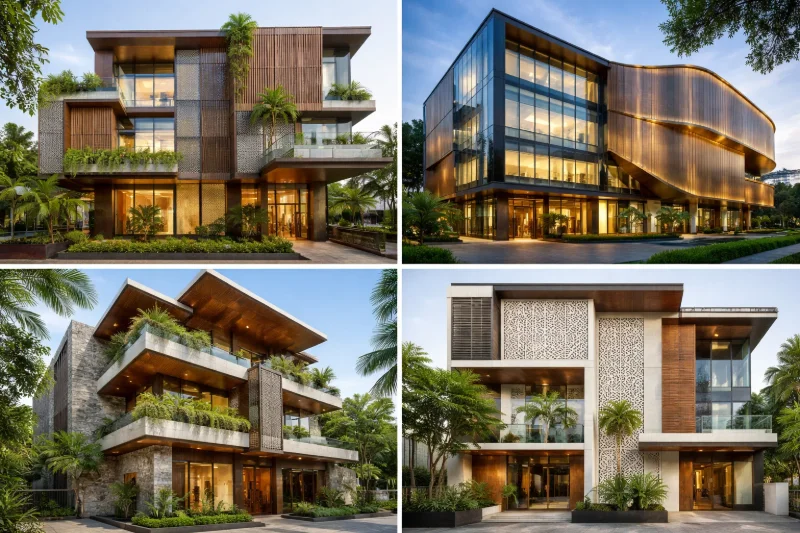
Types of Facade Systems Used in India
1. Brick and Masonry Facades
Brick remains the most traditional and widely used facade material across India. It's affordable, locally available, and well-suited to Indian climates.
Advantages:
Cost-effective (₹400-800 per square meter for basic brickwork)
Excellent thermal mass, helping regulate internal temperatures
Long lifespan (50+ years with proper maintenance)
Local availability and skilled labor
Aesthetic appeal with various color and texture options
Disadvantages:
Requires regular maintenance and repainting
Prone to water seepage in heavy monsoon areas
Limited design flexibility compared to modern systems
Higher labor costs for skilled bricklayers
Frequently asked
2. Glass Facades and Curtain Walls
Modern commercial buildings, particularly in metros like Bangalore, Mumbai, and Hyderabad, increasingly feature glass curtain wall systems. These are non-structural exterior walls that hang from the building's structural frame.
Advantages:
Contemporary aesthetic appeal
Maximizes natural light, reducing energy consumption
Allows flexibility in interior space planning
Lighter load on structural frame
Disadvantages:
High initial cost (₹3,000-8,000 per square meter)
Requires specialized maintenance and cleaning
Potential heat gain in tropical Indian climate without proper glazing
Acoustic insulation challenges in noisy urban areas
Best Practice: In India, double or triple-glazed, low-emissivity (Low-E) glass is recommended to reduce heat transmission and lower air-conditioning costs, which can be substantial in cities like Delhi and Ahmedabad.
3. Stone Cladding and Veneering
Natural and engineered stone facades are popular for premium residential and commercial projects, particularly in upscale neighborhoods of Delhi, Pune, and Bangalore.
Types:
Granite cladding
Limestone and sandstone
Engineered stone panels
Marble veneering
Cost Range: ₹800-3,000 per square meter depending on stone type and finish.
Maintenance Considerations: Stone requires periodic sealing and cleaning, especially in cities with high pollution levels like Delhi and Mumbai. Annual maintenance costs typically range from ₹50-150 per square meter.
4. Metal Facades and Aluminum Cladding
Aluminum composite panels (ACP) and metal cladding have become increasingly popular in Indian construction due to their durability, lightweight nature, and design flexibility.
Advantages:
Lightweight, reducing structural load
Weather-resistant and low-maintenance
Wide range of colors and finishes available
Cost-effective compared to natural stone (₹600-2,000 per square meter)
Important Note: Following safety concerns in major Indian cities, fire-rated ACPs are now mandatory for buildings above a certain height. Ensure your material complies with Indian building codes and fire safety regulations.
5. Rendered and Painted Facades
Cement render with paint finishes is extremely common in residential construction across India, from Kolkata to Chennai.
Advantages:
Most economical option (₹150-400 per square meter)
Easy to repair and repaint
Suitable for all climate zones
Challenges:
Requires repainting every 5-7 years
Prone to cracks in areas with seismic activity
Water seepage issues if not properly detailed
Facade Design Considerations for Indian Climate
Monsoon and Water Management
India's monsoon season, particularly intense in coastal cities like Mumbai, Goa, and Kochi, demands robust water management in facade design. Key considerations include:
Proper Slope and Drainage: All horizontal surfaces should slope away from the building to prevent water pooling
Joint Sealing: Expansion joints must be sealed with high-quality sealants that can withstand thermal movement
Cavity Walls: In high-rainfall areas, consider cavity wall construction to manage water ingress
Waterproof Membranes: Critical for basement facades and lower stories in flood-prone areas
Thermal Performance and Energy Efficiency
With rising energy costs and increasing focus on sustainability, facade thermal performance is crucial. In hot cities like Ahmedabad and Jaipur, facades can account for 30-40% of a building's cooling load.
Strategies to improve thermal performance:
External Shading: Louvers, overhangs, and external blinds reduce solar heat gain by 40-60%
Light-Colored Finishes: High albedo (reflectivity) reduces heat absorption, particularly important in Rajasthan and Gujarat
Ventilated Facades: An air gap between the facade and insulation layer allows heat to dissipate naturally
Thermal Insulation: Materials like mineral wool or polyurethane can reduce heat transmission by 50-70%
Buildings designed with these principles can achieve 20-30% energy savings, translating to significant cost reductions over the building's lifecycle.
Seismic Considerations
In earthquake-prone regions like parts of Himachal Pradesh, Uttarakhand, and northeastern India, facades must be designed to accommodate structural movement. Flexible connections and resilient materials are essential to prevent facade failure during seismic events.
Facade Maintenance and Lifecycle Management
Regular Inspection and Maintenance Schedule
A proactive maintenance approach can extend facade lifespan and prevent costly repairs:
Annual Inspections: Check for cracks, water stains, and material deterioration
Bi-annual Cleaning: Remove dirt, algae, and pollution deposits, particularly important in Delhi and Mumbai
Joint Maintenance: Inspect and reseal expansion joints every 3-5 years
Post-Monsoon Assessment: Identify and address water seepage issues immediately
Common Facade Problems in Indian Buildings
Water Seepage: The most common issue, particularly in older buildings and areas with heavy rainfall. Costs to remediate range from ₹500-2,000 per square meter depending on severity.
Efflorescence: White salt deposits appearing on masonry facades. While not structurally damaging, they indicate moisture problems that should be addressed.
Paint Deterioration: Peeling and fading occur rapidly in tropical climates. Using high-quality exterior paints rated for Indian weather conditions extends repainting intervals.
Structural Cracks: Often indicate deeper issues with the building structure and require professional assessment.
Sustainable and Green Facade Solutions
With increasing environmental awareness, many Indian developers are adopting sustainable facade practices:
Living Facades and Green Walls
Vertical gardens and living walls improve air quality, reduce temperature, and provide aesthetic benefits. Popular in Bangalore and Pune, they require:
Specialized irrigation systems
Structural reinforcement for additional weight (typically 100-300 kg per square meter)
Regular maintenance by trained horticulturists
Recycled and Reclaimed Materials
Using recycled brick, reclaimed stone, and sustainable materials reduces environmental impact and often provides unique aesthetic qualities. Many heritage projects in Delhi and Jaipur successfully incorporate these materials.
High-Performance Materials
Self-cleaning glass, phase-change materials, and photocatalytic coatings are emerging solutions that reduce maintenance requirements and improve building performance.
Regulatory Compliance and Building Codes
All facade designs in India must comply with relevant codes and standards:
National Building Code (NBC): Provides guidelines for safety, fire resistance, and structural requirements
Bureau of Indian Standards (BIS): Specifies material standards and testing requirements
Local Building Bylaws: Individual cities (Mumbai, Delhi, Bangalore, Chennai) have specific regulations regarding facade materials, colors, and design
Fire Safety Codes: Increasingly stringent requirements for fire-rated materials, especially for buildings above 15 meters
Before finalizing facade design, consult with local authorities and building code experts to ensure full compliance.
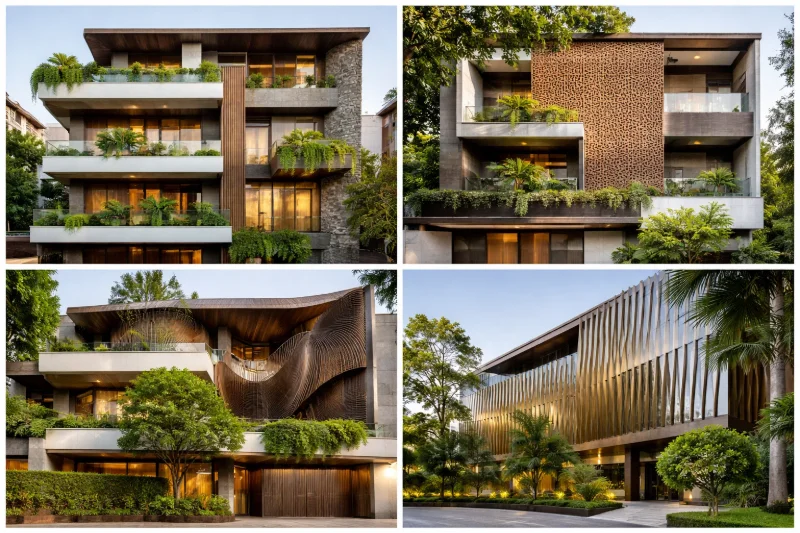
Cost Estimation for Different Facade Systems
Here's a rough cost comparison for different facade systems in India (as of 2024):
Rendered and Painted: ₹150-400 per sq.m.
Brick Masonry: ₹400-800 per sq.m.
Aluminum Cladding: ₹600-2,000 per sq.m.
Stone Cladding: ₹800-3,000 per sq.m.
Glass Curtain Wall: ₹3,000-8,000 per sq.m.
These costs vary based on location, project complexity, material quality, and labor availability. Projects in metros typically cost 20-30% more than in tier-2 cities.
Finding the Right Facade Expertise
Designing and implementing an effective facade requires collaboration between architects, structural engineers, facade specialists, and contractors. If you're working on a project in India, whether it's a residential complex in Pune, a commercial tower in Hyderabad, or an institutional building in Ahmedabad, connecting with experienced professionals is crucial.
AECORD provides a platform where you can find specialized facade consultants, material suppliers, and contractors experienced in Indian construction conditions. Whether you need expertise in monsoon-resistant design, energy-efficient systems, or sustainable solutions, AECORD's network of verified professionals can help you navigate the complexities of facade selection and implementation.
Conclusion
Building facades are a critical investment that impacts aesthetics, functionality, durability, and long-term costs. In India's diverse climate and regulatory environment, selecting the right facade system requires careful consideration of local conditions, budget constraints, maintenance capabilities, and design aspirations.
Whether you opt for traditional brick, modern glass systems, or innovative sustainable solutions, prioritize proper design, quality materials, skilled execution, and proactive maintenance. By understanding the unique challenges and opportunities presented by Indian climate zones and building regulations, you can create facades that not only look impressive but also perform reliably for decades.
Ready to start your facade project? Connect with experienced facade specialists, architects, and contractors on AECORD today. Our platform makes it easy to find vetted professionals who understand the Indian market and can deliver solutions tailored to your specific project requirements and location.
```
Frequently Asked Questions
What is a building facade and why is it important in India?
A building facade is the exterior face of a structure that protects against weather, regulates temperature, reduces noise, and defines aesthetic appeal. In India's diverse climate zones—from humid coastal regions to dry deserts—proper facade design is critical for durability, energy efficiency, and property value.
What are the best facade materials for Indian construction?
Common facade materials in India include brick masonry (cost-effective at ₹400-800/sqm), glass curtain walls (₹3,000-8,000/sqm for modern buildings), and stone cladding for premium projects. The choice depends on climate zone, budget, and architectural requirements specific to your location.
How do I prevent water seepage in brick facades during monsoon?
Brick facades are prone to water seepage in heavy monsoon areas. Proper maintenance, regular repainting, and correct construction techniques are essential. For monsoon-prone regions, consider additional waterproofing treatments or alternative facade systems like glazed curtain walls.
Are glass curtain walls suitable for India's hot climate?
Glass curtain walls can work in India's tropical climate, but double or triple-glazed, low-emissivity (Low-E) glass is recommended to reduce heat transmission and lower air-conditioning costs, particularly in cities like Delhi and Ahmedabad.
What facade system is most cost-effective for residential buildings in India?
Brick and masonry facades remain the most cost-effective option for residential buildings in India, costing ₹400-800 per square meter, with excellent thermal mass properties and long lifespan of 50+ years when properly maintained.