

India's Energy Independence: Building Resilience in Uncertain Times
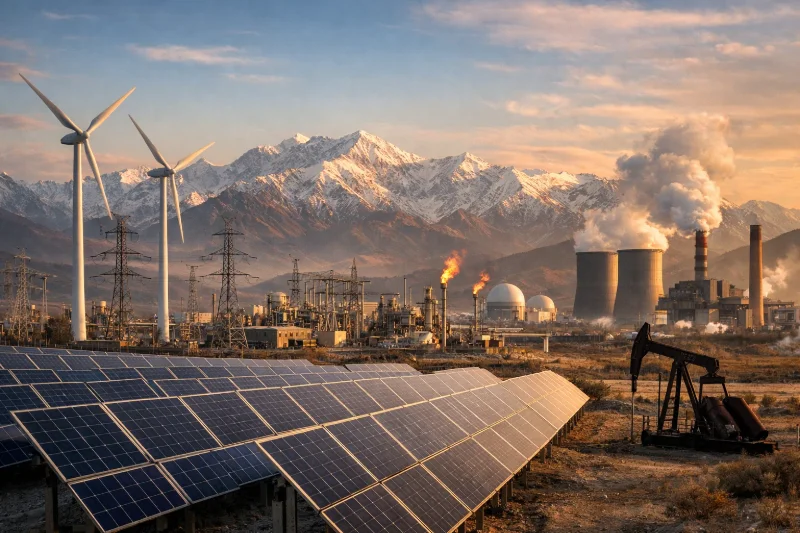
The global energy landscape has shifted dramatically over the past few years. Geopolitical tensions, supply chain disruptions, and international conflicts have exposed vulnerabilities in energy systems worldwide. India, with its rapidly growing economy and massive infrastructure needs, has had to rethink its energy strategy comprehensively. Rather than remaining dependent on volatile international markets, India has embarked on an ambitious journey to build a resilient, diversified energy architecture that can withstand global shocks and uncertainties.
This transformation extends beyond traditional power generation. It encompasses renewable energy adoption, grid modernization, energy storage solutions, and smart infrastructure development. For AECO professionals working in India's construction and engineering sectors, understanding this energy evolution is critical to designing buildings, infrastructure projects, and systems that align with the nation's sustainable future.
Build cost · Bengaluru, May 2026
The Catalyst: Understanding India's Energy Vulnerability
Import Dependency and Economic Impact
India imports approximately 85% of its crude oil requirements, spending over ₹10 lakh crore annually on energy imports. Global conflicts directly translate into price volatility—crude oil prices fluctuate based on geopolitical events, affecting everything from transportation costs to electricity generation expenses. During the 2022 energy crisis triggered by international conflicts, India's energy security concerns became impossible to ignore.
The construction and engineering sectors felt this impact acutely. Project costs escalated, supply chains were disrupted, and energy-intensive manufacturing faced unprecedented challenges. This vulnerability highlighted the need for a fundamental shift in how India approaches energy production and consumption.
Growing Energy Demand
India's energy consumption is projected to increase by 4-5% annually over the next decade. With a population of 1.4 billion and rapid urbanization, electricity demand alone is expected to double by 2040. Traditional fossil fuel-based generation cannot sustainably meet this demand, particularly when international supply remains uncertain.
Frequently asked
Pillar One: Renewable Energy Revolution
Solar Power Expansion
India has emerged as a global leader in solar energy capacity. The government's target of 500 GW of renewable energy by 2030 is driving unprecedented investment in solar infrastructure across the country. States like Rajasthan, Gujarat, and Tamil Nadu are hosting massive solar farms, with some facilities generating 2,500+ MW of power.
What makes this particularly relevant for AECO professionals is the integration of solar technology into building design. Rooftop solar installations, building-integrated photovoltaics (BIPV), and solar facades are becoming standard specifications in modern construction projects. Architects and engineers working through AECORD can now source specialized solar installation expertise and materials more efficiently than ever before.
The costs have become remarkably competitive—solar power in India now costs ₹2-3 per kWh, making it cheaper than coal-based generation in many regions. This economic advantage is driving rapid adoption across industrial, commercial, and residential sectors.
Wind Energy Development
India ranks fourth globally in installed wind capacity. Coastal states like Tamil Nadu, Gujarat, and Maharashtra have developed extensive wind farms, while inland regions are exploring wind energy potential. Offshore wind projects are in development phases, particularly along the Arabian Sea and Bay of Bengal coasts.
The construction of wind farms requires specialized engineering expertise—foundation design for turbines, electrical infrastructure, and grid connection systems. Engineering firms on AECORD increasingly specialize in renewable energy projects, providing critical expertise for these large-scale installations.
Pillar Two: Grid Modernization and Smart Infrastructure
Digital Transformation of Power Distribution
India's power distribution system is being revolutionized through digitalization. Smart grids, advanced metering infrastructure (AMI), and real-time monitoring systems are replacing traditional analog systems. This transformation improves efficiency, reduces transmission losses (currently around 6-7%), and enables better demand management.
Cities like Pune, Bangalore, and Hyderabad are implementing smart grid pilot projects. These systems use IoT sensors, AI algorithms, and cloud computing to optimize power distribution. For construction professionals, this means new infrastructure requirements—cable systems, substations, control centers, and communication networks must be designed with smart grid compatibility in mind.
Smart Building Integration
Modern buildings are evolving into energy-smart entities. Building Management Systems (BMS) that integrate HVAC, lighting, water systems, and renewable energy sources are becoming standard in commercial and institutional projects. These systems can reduce energy consumption by 20-30% compared to conventional buildings.
Energy audits and efficiency certifications like LEED, IGBC (Indian Green Building Council), and GRIHA (Green Rating for Integrated Habitat Assessment) are now integral to building design specifications. Architects and engineers collaborating through AECORD increasingly incorporate these elements from the design phase itself, rather than as afterthoughts.
Pillar Three: Energy Storage Solutions
Battery Technology Development
Renewable energy's intermittency has long been a challenge. Solar and wind power generation fluctuates based on weather conditions, creating grid stability issues. Battery Energy Storage Systems (BESS) are the solution. India is developing domestic battery manufacturing capabilities, with plants in Gujarat and Maharashtra producing lithium-ion cells at scale.
The government's Production-Linked Incentive (PLI) scheme is attracting major battery manufacturers to establish production facilities in India, targeting ₹50,000 crore in battery manufacturing capacity by 2030. This domestic production will significantly reduce costs and improve energy security.
Thermal and Pumped Storage
Beyond batteries, India is leveraging thermal storage and pumped hydro storage systems. Pumped storage facilities in states like Karnataka, Maharashtra, and Himachal Pradesh act as mechanical batteries, storing energy by pumping water uphill during low-demand periods and releasing it during peak demand.
These large-scale projects require sophisticated civil engineering. Dam construction, underground cavern development, and water management systems demand expertise that construction professionals specializing in infrastructure projects must possess. Finding the right engineering partner for such specialized work is now easier through platforms like AECORD.
Pillar Four: Nuclear and Hydrogen Energy
Nuclear Power Expansion
India operates 22 nuclear reactors with a combined capacity of 6.8 GW. The government plans to increase this to 22.5 GW by 2031. New reactor sites are being developed in states like Haryana, Madhya Pradesh, and Odisha. While nuclear power represents only about 3% of India's electricity generation, it provides crucial baseload power that complements renewable sources.
Green Hydrogen Initiative
Green hydrogen—produced by electrolysis using renewable energy—is emerging as a transformative technology. India has launched the National Green Hydrogen Mission targeting 5 million tonnes of annual production by 2030. This hydrogen will fuel heavy industry, long-distance transport, and provide long-term energy storage.
Hydrogen production facilities, storage infrastructure, and fuel cell systems represent entirely new construction and engineering opportunities. Companies specializing in industrial infrastructure on AECORD are positioning themselves to capture this emerging market.
Regional Implementation: State-Level Energy Strategies
Rajasthan's Solar Dominance
Rajasthan has become India's solar powerhouse, with over 17 GW of installed solar capacity. The state's high solar irradiance and abundant land make it ideal for large-scale solar farms. The Bhadla Solar Park, one of the world's largest, spans 5,700 hectares and generates 2,245 MW of power.
Gujarat's Energy Ecosystem
Gujarat has diversified its energy portfolio effectively, combining solar, wind, and traditional power. The state is also developing battery manufacturing capabilities and has become a hub for clean energy innovation. The Gujarat Energy Research and Management Institute (GERMI) drives technological advancement in the sector.
Tamil Nadu's Wind Leadership
Tamil Nadu leads India in wind energy capacity with over 9 GW installed. The state's coastal geography and consistent wind patterns make it ideal for wind farms. Additionally, Tamil Nadu is developing offshore wind projects, representing the next frontier in renewable energy.
Infrastructure Challenges and Solutions
Transmission and Distribution Network Upgrades
Renewable energy is often generated in remote locations—deserts for solar, coastal areas for wind. Transmitting this power to consumption centers requires massive infrastructure upgrades. High-voltage transmission lines, substations, and distribution networks must be expanded and modernized.
This creates substantial opportunities for construction and engineering firms. Underground cabling, transmission tower construction, substation design, and grid connection infrastructure all require specialized expertise. Professionals on AECORD can collaborate across project teams to deliver these complex installations.
Land Acquisition and Environmental Compliance
Large-scale renewable energy projects require significant land areas. Balancing energy needs with environmental protection and community concerns requires careful planning. Environmental Impact Assessments (EIA), community engagement, and land management are critical components of project success.
Economic Impact and Job Creation

Investment Surge
India's renewable energy sector attracted over ₹2 lakh crore in investments between 2015 and 2023. This growth is accelerating, with government incentives and corporate sustainability commitments driving further investment. Manufacturing, construction, and operations roles are being created across the country.
Skill Development Requirements
This energy transformation requires a skilled workforce. Solar panel installation, wind turbine maintenance, battery technology, grid operations, and smart building systems demand specialized training. Educational institutions and industry bodies are developing certification programs to meet these needs.
For AECO professionals, continuous learning in renewable energy integration, sustainable building practices, and smart infrastructure design is becoming essential for career advancement.
International Collaboration and Technology Transfer
Global Partnerships
India is collaborating with countries like Denmark (wind technology), Germany (solar and battery technology), and Japan (nuclear and hydrogen technology) to accelerate energy innovation. These partnerships facilitate technology transfer and knowledge sharing.
Manufacturing Localization
Rather than importing all renewable energy equipment, India is developing domestic manufacturing capabilities. Solar panel production, wind turbine manufacturing, and battery production are increasingly localized, reducing costs and creating employment.
Challenges Ahead
Grid Stability and Integration
Managing a grid with high renewable energy penetration is complex. Variable generation requires sophisticated forecasting, demand management, and storage solutions. Grid operators must balance supply and demand in real-time, a challenge that grows with renewable energy's share.
Cost of Transition
While renewable energy costs have declined dramatically, the overall transition requires massive investment in grid modernization, storage, and backup systems. Financing this transition while maintaining affordable electricity for consumers remains challenging.
Skill and Knowledge Gaps
The rapid pace of technological change outstrips workforce development. Finding professionals with expertise in emerging technologies—green hydrogen, advanced battery systems, smart grids—remains difficult. This is where platforms connecting specialized professionals become invaluable.
The Path Forward: India's Energy Future
India's energy architecture is being fundamentally rebuilt. The shift from import-dependent fossil fuels to domestically-produced renewable energy represents a historic transformation. This isn't just about electricity—it's about energy security, economic resilience, climate responsibility, and technological leadership.
For AECO professionals, this transformation creates unprecedented opportunities. Buildings must be designed for energy efficiency and renewable integration. Infrastructure projects must incorporate smart technologies and sustainable practices. Engineering solutions must address new challenges in grid management, energy storage, and system integration.
The professionals who understand this evolving landscape and can deliver innovative solutions will lead India's construction and engineering sectors into the next decade. Whether you're an architect designing net-zero buildings, an engineer planning renewable energy projects, or a contractor implementing smart infrastructure, this energy revolution touches every aspect of your work.
Finding the Right Partners for India's Energy Future
Building India's resilient energy architecture requires collaboration across disciplines. Architects, structural engineers, electrical engineers, project managers, and specialized contractors must work together seamlessly. This is precisely what AECORD enables—connecting AECO professionals across India to collaborate on complex, technology-driven projects.
Whether you're seeking specialists in renewable energy integration, smart building systems, or large-scale infrastructure projects, AECORD provides a platform to find vetted professionals with the expertise your projects demand. Browse through profiles of engineers, architects, and contractors who are already working on India's energy transformation projects.
Don't let your projects fall behind in this energy revolution. Connect with experienced AECO professionals on AECORD today and ensure your next project incorporates the latest in sustainable, resilient energy design and implementation.
Frequently Asked Questions
Why is India focusing on energy independence and renewable energy?
India imports 85% of its crude oil and spends over ₹10 lakh crore annually on energy imports, making it vulnerable to global price volatility and geopolitical conflicts. With energy demand projected to double by 2040 due to rapid urbanization and a population of 1.4 billion, India is building a resilient, diversified energy architecture through renewables to reduce import dependency and ensure long-term sustainability.
What is India's renewable energy target and how does it affect construction projects?
India targets 500 GW of renewable energy capacity by 2030, driving significant investment in solar and wind infrastructure. For AECO professionals, this means integrating solar technology into building design through rooftop installations, building-integrated photovoltaics (BIPV), and solar facades is becoming standard practice in modern construction projects.
How competitive is solar energy cost in India compared to traditional power?
Solar power in India now costs ₹2-3 per kWh, making it cheaper than coal-based generation in many regions. This economic advantage is driving rapid adoption across industrial, commercial, and residential sectors, making solar a viable option for construction and engineering projects.
What is India's current position in global wind energy capacity?
India ranks fourth globally in installed wind capacity, with coastal states like Tamil Nadu, Gujarat, and Maharashtra hosting extensive wind farms. Offshore wind projects are also in development phases along the Arabian Sea and Bay of Bengal coasts.
How did global conflicts impact India's construction and engineering sectors?
The 2022 energy crisis triggered by international conflicts caused project cost escalation, supply chain disruptions, and challenges for energy-intensive manufacturing. These impacts highlighted the vulnerability of India's 85% crude oil import dependency and accelerated the need for energy-independent building and infrastructure design.