

Air-to-air heat pumps represent one of the most efficient and cost-effective heating and cooling solutions available today. As India increasingly focuses on sustainable building practices and energy efficiency, these systems are gaining significant traction among architects, engineers, and construction professionals. This comprehensive guide explores everything you need to know about air-to-air heat pumps, their applications in the Indian market, and how to select the right system for your projects.
Understanding Air-to-Air Heat Pumps
An air-to-air heat pump is a heating and cooling system that transfers thermal energy from outside air to condition indoor spaces. Unlike traditional heating systems that generate heat by burning fuel, heat pumps extract existing heat from the environment and move it where it's needed. This fundamental difference makes them significantly more efficient than conventional HVAC systems.
The system operates on a refrigeration cycle, using a compressor, condenser, expansion valve, and evaporator to facilitate heat transfer. During winter months, the heat pump extracts warmth from cold outside air and transfers it indoors. In summer, the process reverses, removing heat from inside and releasing it outdoors, functioning as an air conditioner.
Build cost · Bengaluru, May 2026
How Air-to-Air Heat Pumps Work
The Heating Cycle
During heating mode, the outdoor unit (evaporator) absorbs heat from the outside air, even when temperatures are quite cold. This heat warms refrigerant circulating through the system. The compressor then pressurizes this refrigerant, raising its temperature further. The heated refrigerant flows to the indoor unit (condenser), where it releases heat into your living space. The refrigerant then returns to the outdoor unit to repeat the cycle.
The Cooling Cycle
In cooling mode, the process reverses. The indoor unit acts as an evaporator, absorbing heat from indoor air. The refrigerant carries this heat to the outdoor unit, where it's released into the atmosphere. This dual functionality makes air-to-air heat pumps an all-in-one solution for year-round climate control.
Frequently asked
Types of Air-to-Air Heat Pump Systems
Split Systems
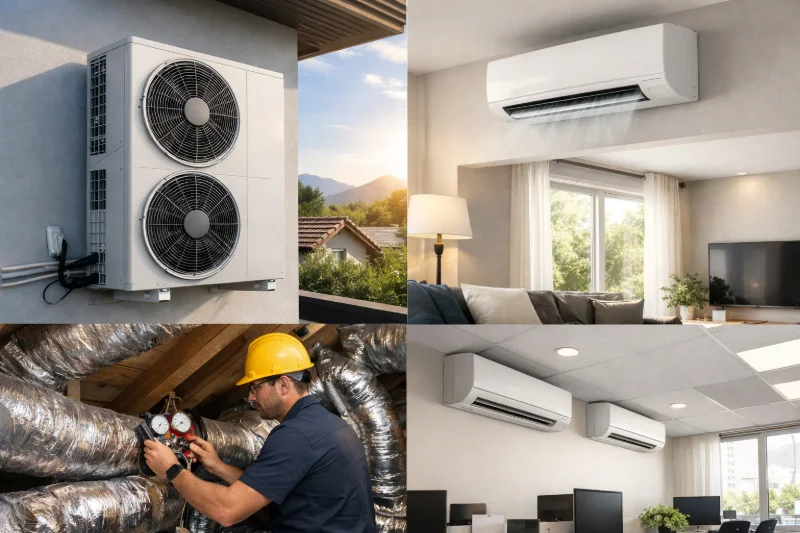
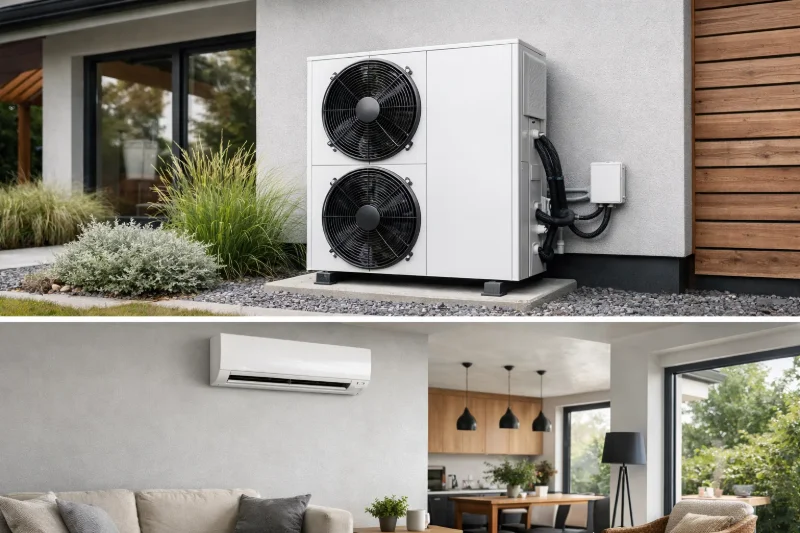
Split systems feature an outdoor compressor unit connected to one or more indoor air-handling units. These are the most common type in residential and small commercial applications across India. They offer flexibility in placement and can be aesthetically integrated into modern interiors. Prices for split systems in India typically range from ₹40,000 to ₹150,000 per unit, depending on capacity and brand.
Multi-Split Systems
Multi-split configurations allow a single outdoor unit to serve multiple indoor units. This setup is ideal for larger homes or office spaces where different zones require independent temperature control. It's a popular choice among architects designing premium residential projects in cities like Mumbai, Bangalore, and Delhi.
Ducted Systems
Ducted heat pumps distribute conditioned air through a network of ducts, providing whole-building climate control. These systems are increasingly specified in commercial projects and large residential complexes across India. Installation costs are higher, typically ranging from ₹200,000 to ₹500,000 for a complete system, but they offer superior aesthetics and even temperature distribution.
Portable/Window Units
Compact portable heat pumps are suitable for small spaces or temporary installations. While less efficient than split systems, they offer flexibility and lower initial investment, making them popular in rental properties and temporary office setups.
Efficiency Metrics and Performance Standards
Coefficient of Performance (COP)
COP is the primary measure of heat pump efficiency. It represents the ratio of heat output to electrical energy input. A COP of 3.0 means the system delivers 3 units of heat for every 1 unit of electricity consumed. Modern air-to-air heat pumps in India typically achieve COP values between 2.5 and 4.5, depending on outdoor temperature conditions and system design.
Seasonal Energy Efficiency Ratio (SEER)
SEER measures cooling efficiency over an entire season. Higher SEER ratings indicate better energy performance. In India's context, where cooling demands are significant in most regions, SEER ratings above 4.0 are considered excellent.
Heating Seasonal Performance Factor (HSPF)
HSPF measures heating efficiency across the heating season. While less critical in most Indian climates, this metric becomes important for northern regions like Himachal Pradesh, Uttarakhand, and Kashmir where winter heating is necessary.
Air-to-Air Heat Pumps in the Indian Climate
Suitability for Different Regions
Air-to-air heat pumps perform exceptionally well in India's diverse climate zones. In coastal regions like Mumbai and Goa, they excel at cooling while maintaining energy efficiency. In the Indo-Gangetic plains covering Delhi, Lucknow, and Kolkata, they provide effective heating during winter months and superior cooling during summer. Even in tropical regions like Bangalore and Hyderabad, where cooling is the primary concern, these systems deliver excellent performance.
Modern inverter-based heat pumps are particularly well-suited to India's climate, as they can modulate their output based on demand. This capability is crucial during India's transitional seasons when heating or cooling needs fluctuate significantly.
Regional Considerations
In northern India, where winter temperatures can drop to 5-10°C, selecting heat pumps with low-temperature operation capability is essential. Systems designed for temperatures as low as -15°C are available and recommended for hill stations. In southern India, focus on systems with excellent cooling efficiency and moisture management features to handle high humidity levels.
Advantages of Air-to-Air Heat Pumps
Energy Efficiency
Air-to-air heat pumps consume 50-70% less energy than traditional electric heating systems and 30-40% less than gas heating. For a typical Indian household, this translates to annual electricity savings of ₹15,000 to ₹30,000, depending on usage patterns and local electricity rates.
Cost Savings
While initial installation costs are higher than conventional systems, the operational savings quickly offset this investment. Most systems achieve payback periods of 5-8 years, after which they continue delivering savings throughout their 15-20 year lifespan.
Environmental Benefits
Heat pumps produce zero direct emissions and significantly reduce carbon footprint when powered by renewable energy sources. As India transitions toward renewable energy, the environmental benefits of heat pumps will only increase.
Year-Round Comfort
A single system handles both heating and cooling, eliminating the need for separate systems and reducing installation complexity. This integrated approach is particularly valuable in Indian homes where space constraints are common.
Improved Indoor Air Quality
Heat pump systems typically include advanced filtration, removing dust, allergens, and pollutants from indoor air. This feature is increasingly important in Indian cities facing air quality challenges.
Challenges and Limitations
High Initial Investment
Installation costs for air-to-air heat pumps are typically 20-40% higher than conventional systems. However, government incentives and subsidies in some states can help offset these costs.
Performance in Extreme Cold
While modern systems perform well at low temperatures, efficiency decreases as outdoor temperatures approach freezing. In extreme cold conditions, supplementary heating may be necessary, though this is rarely needed in most Indian regions.
Space Requirements
Both outdoor and indoor units require adequate space. In compact urban apartments, finding suitable installation locations can be challenging. Working with experienced professionals from AECORD can help identify optimal placement solutions.
Noise Considerations
Outdoor units generate noise, typically 22-28 dB during operation. Proper installation and acoustic design can minimize impact on neighbors and surrounding areas.
Installation and Design Considerations
Site Assessment
Professional site assessment is crucial for optimal system performance. Engineers must evaluate outdoor unit placement, ensuring adequate airflow and minimal obstruction. Indoor units should be positioned for effective air distribution without creating drafts or uncomfortable temperature variations.
Capacity Sizing
Proper capacity sizing is essential for efficiency and comfort. Oversized systems cycle on and off frequently, reducing efficiency, while undersized systems struggle to maintain desired temperatures. Load calculations should account for building insulation, window area, occupancy patterns, and local climate data specific to your region.
Refrigerant Handling
Installation must comply with Indian Standards (IS) and Environmental Protection Act regulations regarding refrigerant handling. Only certified technicians should handle refrigerants to prevent environmental damage and ensure system efficiency.
Electrical Requirements
Heat pumps require dedicated electrical circuits with appropriate capacity. Most residential split systems need 15-20 ampere circuits, while larger systems may require 30 amperes or more. Consultation with licensed electricians ensures safe, code-compliant installation.
Maintenance and Operational Tips
Regular Filter Cleaning
Indoor unit filters should be cleaned every 2-4 weeks during heavy use seasons. Clean filters maintain efficiency and improve indoor air quality. Annual professional filter replacement is recommended.
Outdoor Unit Maintenance
Keep outdoor units clear of debris, leaves, and dust. Ensure vegetation is trimmed back at least 1 meter from the unit. Regular cleaning with water and soft brushes prevents performance degradation.
Professional Servicing
Annual professional servicing ensures optimal performance and extends system lifespan. Technicians check refrigerant levels, clean coils, inspect electrical connections, and verify system efficiency. This investment typically costs ₹2,000-₹5,000 annually but prevents costly repairs.
Seasonal Preparation
Before switching between heating and cooling modes, have the system inspected to ensure proper operation. This is particularly important in regions with distinct seasons.
Cost Analysis and ROI in the Indian Market
Installation Costs
Split system installation in India ranges from ₹40,000 to ₹150,000 for residential applications. Multi-split systems cost ₹100,000 to ₹300,000, while ducted systems range from ₹200,000 to ₹500,000 depending on building size and complexity.
Operating Costs
Monthly operating costs depend on local electricity rates (typically ₹5-₹8 per kWh in most Indian cities), usage patterns, and system efficiency. A typical 1.5-ton split system operates at approximately ₹1,500-₹3,000 monthly during peak seasons.
Return on Investment
Considering energy savings, reduced maintenance requirements, and government incentives, most heat pump installations achieve ROI within 5-8 years. Over a 20-year lifespan, total savings can exceed ₹3-₹5 lakhs compared to conventional systems.
Government Incentives and Support
Several Indian states offer subsidies for energy-efficient HVAC systems. The UJALA scheme and various state-level programs provide rebates for heat pump installations. Check with your state's energy department for current incentive programs applicable to your location.
Finding the Right Professionals
Selecting qualified professionals is critical for successful heat pump installation. Look for engineers and technicians certified by Indian Standards Institution and registered with your state's regulatory bodies. When planning your next project, AECORD connects you with verified AECO professionals experienced in heat pump design, installation, and maintenance across India.
Whether you're designing a residential project in Pune, a commercial office in Bangalore, or a hospitality property in Goa, finding the right expertise ensures your heat pump system delivers optimal performance and maximum return on investment. AECORD's marketplace features detailed professional profiles, past project portfolios, and client reviews to help you make informed decisions.
Future Trends in Heat Pump Technology
Smart Integration
Modern heat pumps increasingly integrate with smart home systems, allowing remote control and optimization based on occupancy and weather patterns. This capability can further improve efficiency by 10-15%.
Improved Refrigerants
Development of environmentally friendly refrigerants with higher efficiency continues. Next-generation systems will deliver better performance with lower environmental impact.
Hybrid Systems
Combining heat pumps with solar panels or other renewable energy sources represents the future of sustainable building climate control. This integration is becoming increasingly popular in premium residential and commercial projects across Indian metros.
Conclusion
Air-to-air heat pumps represent a smart investment for Indian architects, engineers, and building owners seeking efficient, sustainable climate control solutions. Their superior energy performance, year-round functionality, and increasingly affordable pricing make them an excellent choice for residential, commercial, and hospitality projects across diverse Indian climates.
Success with heat pump installations depends on proper design, professional installation, and regular maintenance. When you're ready to specify heat pumps for your next project, AECORD provides access to experienced professionals who understand Indian building codes, climate conditions, and market-specific considerations. Explore AECORD's network of verified AECO professionals today to find the right partner for your heating and cooling needs.
Frequently Asked Questions
What is the difference between an air-to-air heat pump and a traditional HVAC system?
Air-to-air heat pumps transfer existing thermal energy from outside air to condition indoor spaces, making them significantly more efficient than traditional systems that generate heat by burning fuel. They operate on a refrigeration cycle and can both heat and cool, functioning as an all-in-one solution for year-round climate control.
How do air-to-air heat pumps work in winter when it's cold outside?
During heating mode, the outdoor unit extracts heat from cold outside air using a refrigeration cycle, even when temperatures are quite low. The compressor pressurizes the refrigerant to raise its temperature further, and the heated refrigerant then releases this warmth into your indoor space.
What types of air-to-air heat pump systems are available for commercial buildings in India?
The main types include split systems (most common for residential and small commercial), multi-split systems (ideal for larger spaces with multiple zones), ducted systems (for whole-building climate control in commercial projects), and portable units (for temporary installations). Ducted systems are increasingly specified in large commercial projects across India.
What is COP and why is it important for heat pump selection?
COP (Coefficient of Performance) measures heat pump efficiency as the ratio of heat output to electrical energy input. A higher COP indicates better efficiency and lower operating costs, making it a critical metric for AECO professionals when selecting the right system for their projects.
How much do air-to-air heat pump systems cost in India?
Split systems typically range from ₹40,000 to ₹150,000 per unit depending on capacity and brand, while ducted systems for larger installations cost between ₹200,000 to ₹500,000. Costs vary based on system type, capacity, and installation complexity.