

Oxide flooring, once a staple in Indian homes and commercial spaces, is experiencing a remarkable resurgence. What was considered outdated just a decade ago is now being recognized as one of the most intelligent, sustainable, and cost-effective flooring solutions for modern India. This quiet revolution is reshaping how architects, builders, and homeowners think about floor finishes.
Understanding Oxide Flooring: What It Really Is
Oxide flooring, commonly known as terrazzo or oxide terrazzo flooring, is a composite material made by mixing marble chips, granite fragments, or other aggregates with a cement or epoxy binder. The mixture is poured onto a prepared substrate, allowed to cure, and then ground and polished to create a smooth, lustrous surface.
In India, oxide flooring has been used for over a century. From the grand colonial buildings in Delhi to traditional homes in Kerala, this material has proven its durability and timeless appeal. What's changing now is the technology and understanding surrounding its installation, maintenance, and aesthetic possibilities.
The material comes in two primary variants:
Cement-based oxide flooring: Traditional, cost-effective, and widely available across India
Epoxy-based oxide flooring: More durable, stain-resistant, and increasingly popular in commercial spaces
Build cost · Bengaluru, May 2026
Why Oxide Flooring Is Becoming Intelligent Again
Superior Thermal Properties
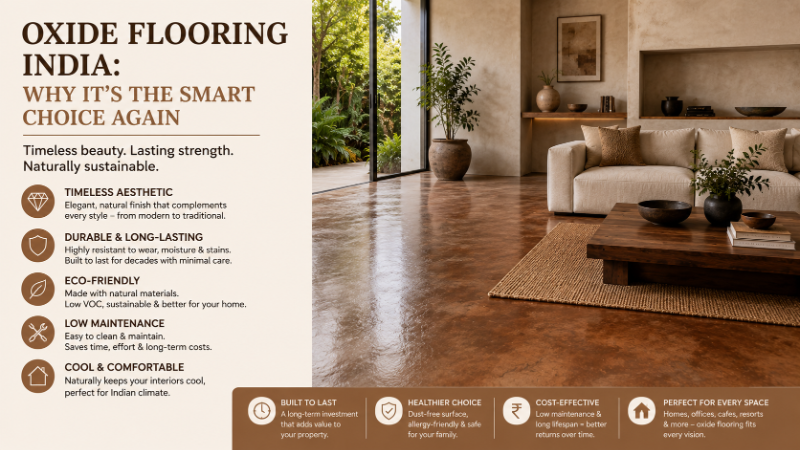
India's climate presents unique challenges for flooring materials. In cities like Delhi, Mumbai, and Bangalore, temperature fluctuations can be extreme. Oxide flooring's natural thermal mass makes it an intelligent choice for temperature regulation.
Unlike ceramic tiles that become scorching hot in summer, oxide floors maintain a cooler surface temperature. This reduces the need for air conditioning, directly lowering energy costs by 15-20% in residential spaces. For commercial buildings, this translates to significant savings across multiple floors.
The material's density and composition allow it to absorb and release heat gradually, creating a naturally comfortable indoor environment—a feature that architects in Pune and Hyderabad are increasingly leveraging in their designs.
Exceptional Durability and Longevity
A well-installed oxide floor can last 30-50 years with minimal maintenance. This longevity is unmatched by most contemporary flooring options. Buildings in Kolkata and Chennai that have oxide floors installed 40 years ago still show excellent surface integrity.
The material doesn't degrade quickly under heavy foot traffic, making it ideal for:
Commercial offices and retail spaces
Hospitals and healthcare facilities
Educational institutions
High-traffic residential areas
This durability means lower replacement costs over the building's lifetime, making it economically intelligent for long-term investments.
Frequently asked
Sustainability and Environmental Intelligence
As India moves toward sustainable construction practices, oxide flooring stands out as an environmentally conscious choice. The material uses locally sourced aggregates—marble waste from quarries in Rajasthan, granite chips from Karnataka, and recycled materials from construction sites.
The manufacturing process has a lower carbon footprint compared to porcelain tiles or luxury vinyl planks. By choosing oxide flooring, builders reduce transportation costs and environmental impact simultaneously. AECORD professionals working on green building projects increasingly recommend oxide flooring for LEED and IGBC certifications.
Additionally, oxide flooring is 100% recyclable. When a building is demolished or renovated, the material can be crushed and reused in new applications, supporting India's circular economy goals.
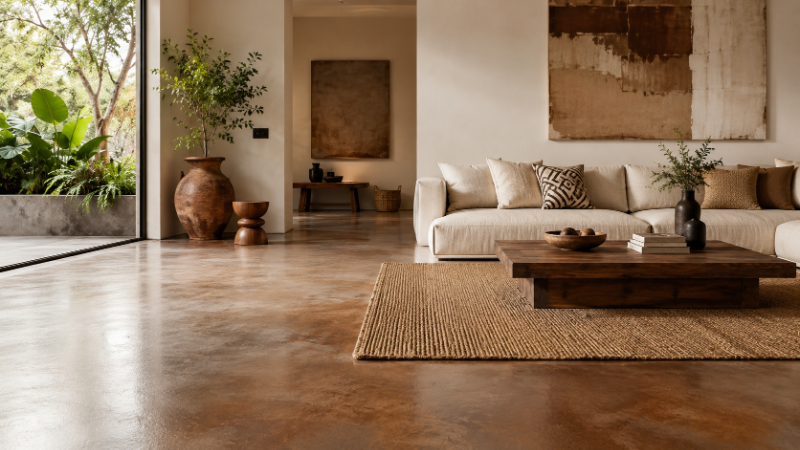
Cost-Effectiveness Without Compromising Quality
In the current Indian market, oxide flooring costs approximately ₹80-150 per square foot for cement-based variants and ₹150-250 per square foot for epoxy-based options. Compare this to:
Premium ceramic tiles: ₹150-300 per square foot
Luxury vinyl planks: ₹200-400 per square foot
Natural marble: ₹250-500+ per square foot
The initial cost advantage is significant. But the real intelligence lies in the total cost of ownership. Oxide floors require minimal maintenance—just regular sweeping and occasional mopping with mild solutions. No expensive sealants, no specialized cleaning products, and no frequent repairs.
For budget-conscious developers in tier-2 cities like Jaipur, Lucknow, and Nagpur, oxide flooring offers a premium appearance at a fraction of the cost.
Aesthetic Evolution: Modern Designs Meet Traditional Appeal
Customization and Design Flexibility
Contemporary oxide flooring has moved far beyond the monochromatic brown or gray surfaces of the past. Modern technology allows architects to create sophisticated color combinations and patterns.
Aggregates can be sourced in various colors—white marble from Makrana, black granite from Karnataka, colored glass fragments, and even metallic inserts. This flexibility enables designers to create:
Branded logos and patterns in corporate offices
Decorative borders and geometric designs
Color-coded zones in hospitals and educational institutions
Sophisticated neutral tones for luxury residential projects
Projects across Mumbai, Bangalore, and Delhi are showcasing oxide floors that rival the aesthetic appeal of imported materials while maintaining local manufacturing advantages.
Seamless Integration with Modern Architecture
Oxide flooring works seamlessly with contemporary architectural styles. Whether a project features minimalist design, industrial aesthetics, or traditional elements, oxide floors adapt beautifully. The material's inherent elegance means it doesn't compete with other design elements—it complements them.
Architects specializing in commercial spaces have discovered that oxide flooring creates a sense of sophistication and permanence that clients associate with established, trustworthy organizations.
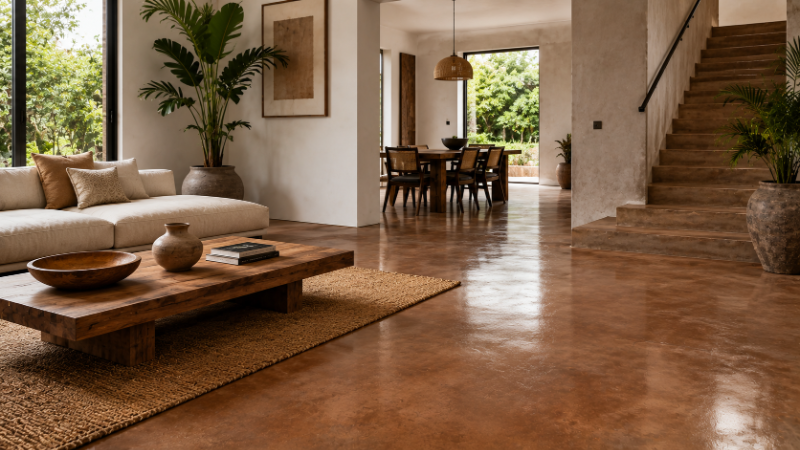
Performance Characteristics That Matter
Slip Resistance and Safety
A properly finished oxide floor provides excellent slip resistance, especially important in hospitals, kitchens, and public spaces. The polished surface is less slippery than glazed ceramics, reducing accident risks and liability concerns for building owners.
Acoustic Properties
Unlike hard ceramic tiles that amplify sound, oxide floors have natural sound-dampening qualities. This makes them ideal for office spaces, libraries, and residential areas where noise control is important. The material reduces echo and creates a more pleasant acoustic environment.
Stain and Chemical Resistance
Modern epoxy-based oxide floors offer excellent resistance to stains, acids, and chemicals. This makes them particularly suitable for:
Pharmaceutical manufacturing facilities
Food processing units
Automotive service centers
Research laboratories
In cities like Pune and Bangalore, where industrial and tech sectors are booming, epoxy oxide flooring is becoming the preferred choice for facility managers.
Installation and Maintenance: The Practical Side
Professional Installation Requirements
Proper installation is critical for oxide flooring performance. The substrate must be well-prepared, with adequate slope for drainage in wet areas. The mixture must be applied by skilled professionals who understand curing times, temperature conditions, and finishing techniques.
Finding qualified installers is easier now, especially in metropolitan areas. However, for projects in smaller cities, connecting with experienced professionals through platforms like AECORD can ensure quality workmanship and adherence to best practices.
Maintenance That Actually Works
One of the key reasons oxide flooring is becoming "intelligent" again is the simplicity of maintenance:
Daily care: Sweep regularly to remove dust and debris
Weekly cleaning: Mop with water and mild detergent solution
Monthly maintenance: Use a pH-neutral cleaner appropriate for oxide surfaces
Annual care: Professional polishing to restore shine and seal micro-cracks
This low-maintenance requirement appeals to facility managers and homeowners alike. There's no need for expensive sealants every few years or specialized equipment for cleaning.
Longevity Through Simple Care
With proper maintenance, oxide floors don't degrade significantly over decades. Unlike vinyl flooring that can warp or ceramic tiles that crack, oxide surfaces remain stable. Even after 20-30 years, a well-maintained oxide floor can be restored to near-original condition through professional grinding and polishing—a process far more cost-effective than replacement.
Market Trends: Why Professionals Are Reconsidering Oxide Flooring
Green Building Movement
India's construction industry is increasingly focused on sustainable practices. LEED, IGBC, and other green building certifications favor materials with low environmental impact and long lifespans. Oxide flooring scores well on both counts, making it attractive for projects targeting these certifications.
Commercial Real Estate Evolution
Developers of office spaces, retail centers, and hospitality projects are recognizing that oxide flooring enhances property value and reduces operational costs. Premium commercial properties in Bangalore, Hyderabad, and Pune are increasingly featuring oxide floors as a mark of quality and durability.
Residential Market Shift
Homebuyers are becoming more informed about flooring choices. The appeal of oxide flooring—combining aesthetic beauty, durability, and affordability—resonates strongly with middle and upper-middle-class buyers who prioritize long-term value.
Rising Costs of Alternatives
As prices for imported materials, premium tiles, and vinyl flooring increase due to logistics and tariffs, oxide flooring's cost advantage becomes more pronounced. What was once chosen primarily for budget reasons is now recognized as a smart investment.
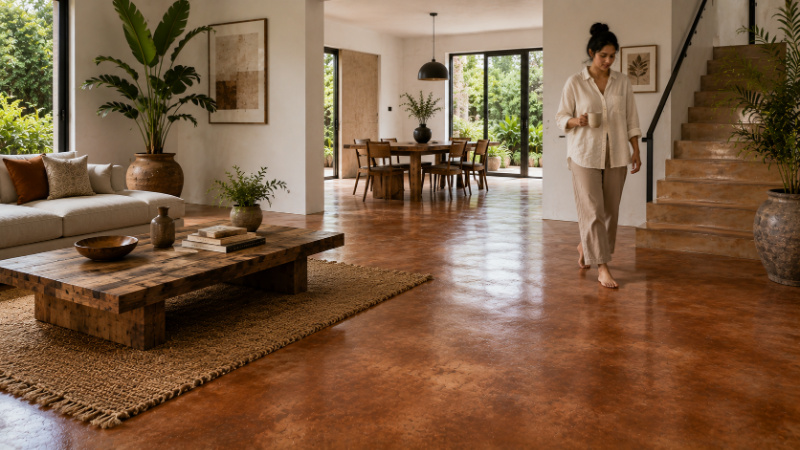
Challenges and How to Address Them
Perception Issues
Some perceive oxide flooring as "old-fashioned" due to its historical use. However, contemporary designs and finishes are rapidly changing this perception. Architects and designers working on modern projects can showcase oxide floors that look contemporary and sophisticated.
Finding Skilled Professionals
Not all contractors have expertise in oxide flooring installation. When planning a project, it's important to work with experienced professionals. AECORD can help connect you with verified contractors and specialists who understand oxide flooring requirements and best practices.
Quality Variations
The quality of oxide flooring depends heavily on material sourcing and installation expertise. Specifying high-quality aggregates, appropriate binders, and proper curing conditions ensures excellent results.
Future Prospects for Oxide Flooring in India
As India continues its construction boom, oxide flooring is poised for significant growth. The convergence of sustainability requirements, cost consciousness, and aesthetic sophistication creates an ideal environment for this material's resurgence.
Innovations in oxide flooring technology—such as self-healing variants, enhanced stain resistance, and improved customization options—are expanding its applications. Research institutions and manufacturers are developing next-generation oxide flooring that maintains the material's traditional advantages while adding modern performance characteristics.
For architects, builders, and facility managers, understanding oxide flooring's capabilities is becoming essential knowledge. The material's intelligence lies not just in its physical properties but in its alignment with contemporary construction values: sustainability, durability, cost-effectiveness, and aesthetic appeal.
Conclusion: Making Intelligent Flooring Decisions
Oxide flooring represents a convergence of time-tested reliability and modern understanding. It's not a new material—it's a rediscovered one, appreciated anew through the lens of contemporary values and requirements.
Whether you're planning a residential renovation in Mumbai, designing a commercial office in Bangalore, or developing a large-scale project in any Indian city, oxide flooring deserves serious consideration. The material offers exceptional value, proven durability, environmental benefits, and aesthetic flexibility that few alternatives can match.
The resurgence of oxide flooring reflects a broader shift in India's construction industry toward intelligent, sustainable, and economically sound choices. It's a quiet revolution, but one that's reshaping how professionals think about building better spaces.
If you're considering oxide flooring for your next project or need expert guidance on flooring options, AECORD connects you with experienced architects, engineers, and contractors who specialize in oxide flooring and other modern construction solutions. Explore verified professionals in your city and make informed decisions about your building's future. Visit AECORD today to find the right experts for your project needs.
Frequently Asked Questions
What is oxide flooring and how is it made?
Oxide flooring, also called terrazzo flooring, is a composite material made by mixing marble chips, granite fragments, or other aggregates with a cement or epoxy binder. The mixture is poured onto a substrate, allowed to cure, then ground and polished to create a smooth, lustrous surface.
How much can oxide flooring reduce energy costs in India?
Oxide flooring's natural thermal mass helps regulate temperature and can reduce the need for air conditioning by 15-20% in residential spaces. The material maintains a cooler surface temperature compared to ceramic tiles, resulting in significant energy savings, especially in hot Indian climates.
How long does oxide flooring last?
A well-installed oxide floor can last 30-50 years with minimal maintenance, making it one of the most durable flooring options available. This exceptional longevity results in lower replacement costs over a building's lifetime compared to most contemporary flooring alternatives.
Is oxide flooring environmentally sustainable?
Yes, oxide flooring is highly sustainable as it uses locally sourced aggregates like marble waste and granite chips, has a lower carbon footprint than porcelain tiles, and is 100% recyclable. It's increasingly recommended for LEED and IGBC green building certifications in India.
What are the two main types of oxide flooring?
Cement-based oxide flooring is traditional, cost-effective, and widely available across India, while epoxy-based oxide flooring is more durable, stain-resistant, and increasingly popular in commercial spaces. The choice depends on budget and application requirements.