



Understanding Staircase Design and Cost in India: A Comprehensive Guide
Staircases are more than just functional elements in a building—they are architectural features that define the aesthetic and spatial flow of your home or commercial space. Whether you're designing a residential villa in Mumbai, a commercial complex in Bangalore, or a modest apartment in Delhi, understanding staircase design principles and associated costs is crucial for making informed decisions. This comprehensive guide explores everything you need to know about staircase design and pricing in the Indian market.
Build cost · Bengaluru, May 2026
Why Staircase Design Matters
A well-designed staircase serves multiple purposes: it provides safe vertical circulation, enhances interior aesthetics, maximizes space efficiency, and can significantly impact your property's value. In India's diverse architectural landscape—from traditional homes to modern high-rises—staircase design must balance cultural preferences, building codes, and budget constraints.
The Indian National Building Code (NBC) and local municipal bylaws specify minimum requirements for staircase dimensions, including tread width, riser height, and handrail specifications. However, beyond compliance, thoughtful design can transform a staircase into a focal point that adds character and functionality to your space.
Types of Staircases: Design Options and Considerations
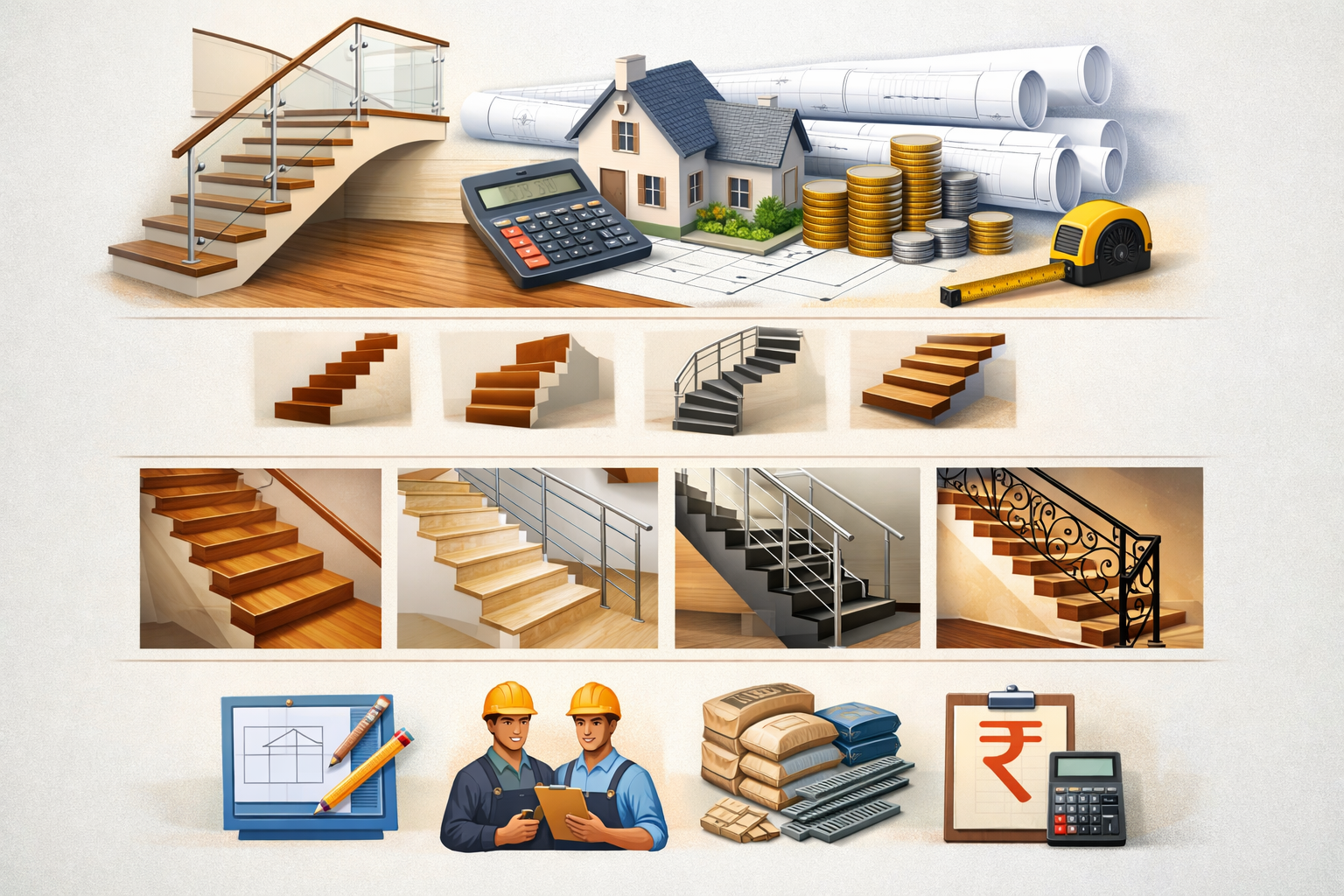
Straight Staircases
Straight staircases are the most common and economical option. They run in a single direction without turns and are ideal for narrow spaces or when you need maximum headroom. In India, straight staircases are popular in:
Narrow residential buildings in cities like Kolkata and Chennai
Linear apartment layouts common in metropolitan areas
Commercial spaces where functionality is prioritized
Cost Range: ₹40,000 to ₹1,50,000 depending on materials and finishing quality.
Frequently asked
L-Shaped and U-Shaped Staircases
These designs incorporate a landing and a 90-degree turn (L-shaped) or 180-degree turn (U-shaped). They're more visually interesting and space-efficient than straight staircases, making them popular in spacious homes and villas across India.
Cost Range: ₹80,000 to ₹3,00,000, depending on complexity and materials.
Spiral Staircases
Spiral staircases are compact and architecturally striking, perfect for limited floor space. They're increasingly popular in modern apartments in Pune, Hyderabad, and Bangalore. However, they require careful design for safety and comfort.
Cost Range: ₹1,00,000 to ₹5,00,000 for quality spiral designs.
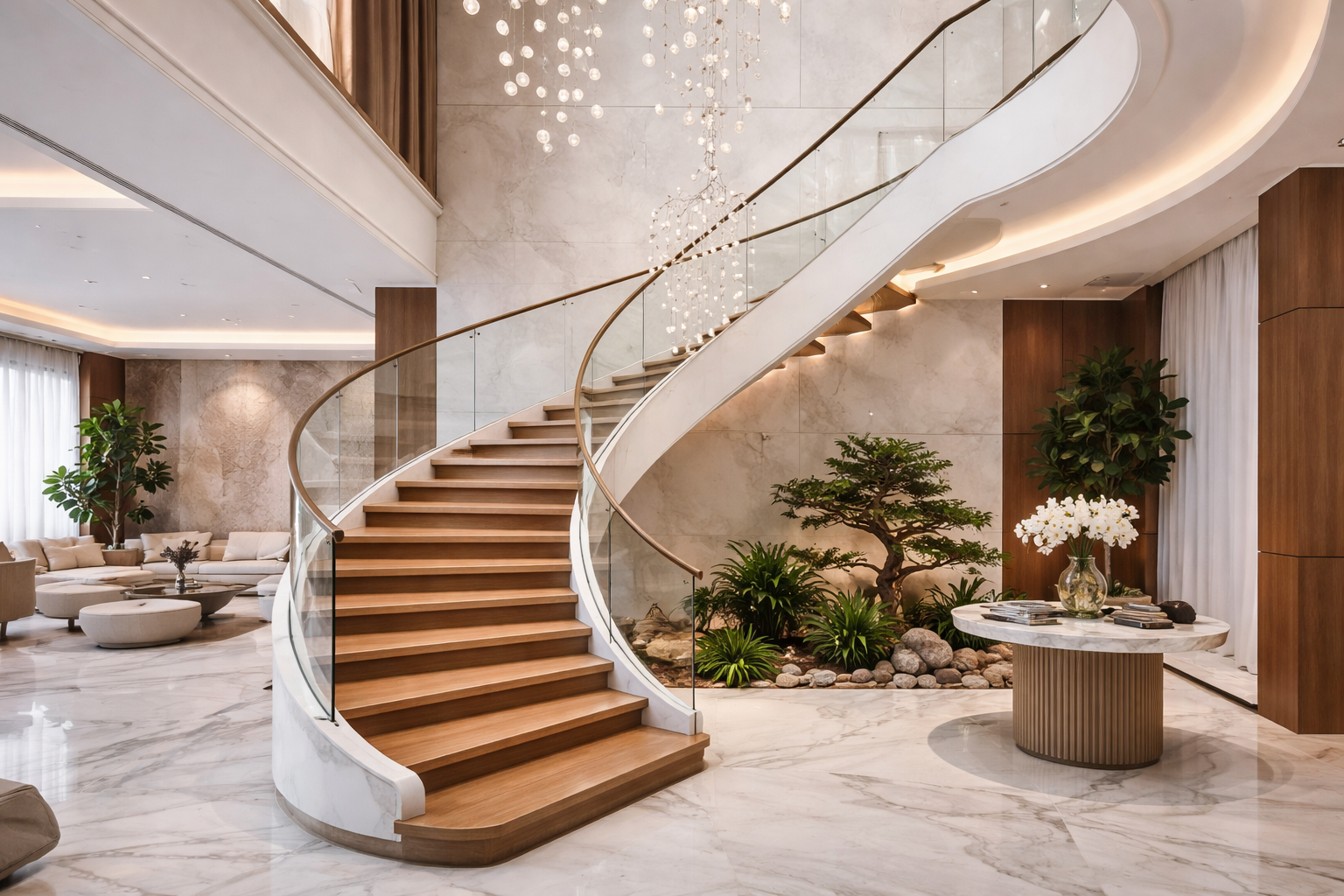
Floating or Cantilever Staircases
These modern designs feature treads that appear to float without visible support, creating a minimalist aesthetic. They're popular in contemporary homes and high-end residences but require precise engineering and are more expensive to construct.
Cost Range: ₹2,50,000 to ₹8,00,000 or more.
Key Design Parameters According to Indian Building Code
The Indian National Building Code (NBC) specifies several critical dimensions for staircase safety and functionality:
Tread and Riser Dimensions
Tread Width (Run): Minimum 250mm (preferably 300mm)
Riser Height: Maximum 190mm (preferably 150-180mm)
Formula: 2 × Riser + Tread = 550-700mm (the "step formula")
These dimensions ensure comfortable climbing and reduce fatigue, particularly important in Indian homes where staircases are frequently used.
Width and Headroom
Minimum Staircase Width: 900mm for residential, 1200mm for public buildings
Headroom Clearance: Minimum 2100mm (2200mm recommended)
Landing Width: Equal to staircase width
Handrails and Balustrades
Handrail height: 900-1000mm from tread surface
Baluster spacing: Maximum 100mm (to prevent child entrapment)
Handrail grip diameter: 30-40mm
Materials and Their Impact on Cost
Concrete Staircases
Reinforced cement concrete (RCC) is the most common material in India due to its durability, cost-effectiveness, and structural integrity. RCC staircases form the structural base for most residential and commercial buildings.
Cost: ₹300-500 per square foot for basic RCC construction.
Wood Staircases
Wooden staircases add warmth and elegance to homes. Popular wood types in India include teak, sal, and engineered wood. They're preferred in upper-middle and luxury segments.
Cost: ₹800-3,000 per square foot depending on wood quality and finish.
Marble and Stone Staircases
Marble and granite staircases are popular in Indian homes, particularly for ground floors and main entrances. They're durable, elegant, and add significant value to properties.
Cost: ₹600-2,500 per square foot depending on stone quality and finish.
Steel and Glass Combinations
Modern staircases often combine steel frames with glass panels or wooden treads, creating contemporary aesthetics. Popular in Bangalore, Pune, and Delhi's premium residential projects.
Cost: ₹1,200-4,000 per square foot.
Tile and Ceramic Finishes
Anti-slip tiles and ceramic finishes are cost-effective and practical, especially for high-traffic commercial spaces and budget-conscious residential projects.
Cost: ₹400-1,200 per square foot.
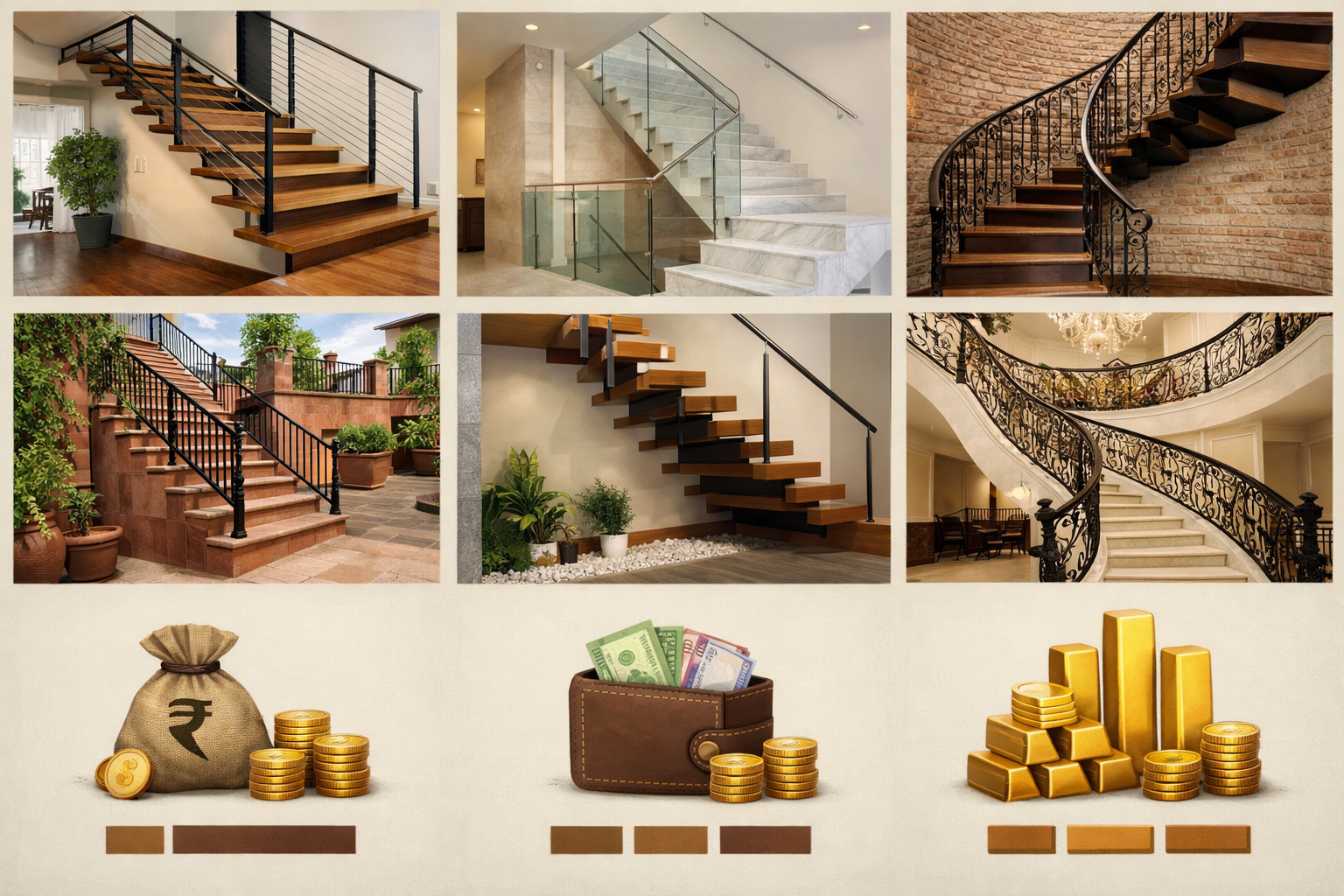
Breakdown of Staircase Construction Costs in India
Structural Work
RCC structure, reinforcement, and formwork typically account for 30-40% of total staircase cost. This includes:
Concrete pouring and curing
Steel reinforcement (rebar)
Formwork and support structures
Quality testing and inspection
Typical Cost: ₹15,000-60,000 depending on staircase size.
Finishing Materials
Finishing materials—whether marble, wood, tile, or paint—represent 35-50% of costs. This includes:
Material procurement
Cutting and shaping
Installation and adhesives
Grouting and sealing
Handrails and Balustrades
Safety elements typically cost 15-25% of the total budget:
Steel or wood handrails: ₹150-500 per running meter
Balusters (wood or steel): ₹200-800 per piece
Glass panels (if applicable): ₹300-1,000 per square foot
Labor Costs
In Indian cities, labor typically represents 20-30% of costs:
Skilled mason: ₹500-1,000 per day
Carpenter: ₹600-1,200 per day
Finisher: ₹400-800 per day
Cost Variations Across Indian Cities
Metropolitan Cities (Mumbai, Delhi, Bangalore)
In tier-1 cities, staircase costs are 20-30% higher due to premium material availability and skilled labor rates. A marble and glass staircase might cost ₹3,00,000-6,00,000.
Tier-2 Cities (Pune, Hyderabad, Chennai)
These cities offer better value, with costs 10-15% lower than metros. Quality materials are available at competitive prices.
Smaller Cities and Towns
In smaller towns, costs can be 30-40% lower, but material selection and skilled labor availability may be limited.
Design Trends in Indian Staircase Architecture
Minimalist Designs
Contemporary Indian homes increasingly favor clean lines, open designs, and minimal ornamentation. Floating staircases and transparent balustrades are trending in metropolitan areas.
Sustainable Materials
Eco-conscious homeowners are choosing sustainable materials like reclaimed wood, recycled steel, and natural stone finishes that reduce environmental impact.
Smart Integration
Modern staircases now incorporate LED lighting, smart storage under treads, and integrated technology—adding functionality to aesthetic design.
Cultural Fusion
Many Indian designs blend traditional architectural elements with modern materials, creating unique staircases that reflect cultural identity while maintaining contemporary appeal.
Space Planning and Staircase Efficiency
Calculating Staircase Area
Effective space planning requires understanding how much floor area a staircase occupies. For a straight staircase:
Floor Area = Tread Width × Number of Treads + Landing Area
In space-constrained Indian homes, optimizing staircase footprint is crucial. Spiral staircases can reduce floor area by 40-50% compared to straight designs.
Vertical Space Utilization
Innovative designs maximize vertical space:
Under-stair storage for books, shoes, or utilities
Integrated shelving on staircase walls
Open designs that don't block natural light
Hiring the Right Professionals for Your Staircase Project
Designing and constructing a staircase requires expertise from multiple professionals. Whether you're working on a residential renovation in Mumbai or a commercial project in Bangalore, finding qualified architects, structural engineers, and contractors is essential.
AECORD connects you with verified staircase designers, structural engineers, and construction contractors across India. The platform helps you compare professionals, view portfolios, and find experts who understand both aesthetic design and building code compliance. When you're ready to start your staircase project, AECORD makes it easy to find professionals who have successfully completed similar projects in your city.
Questions to Ask Professionals
What staircase designs do they recommend for your space?
How do they ensure compliance with NBC and local bylaws?
Can they provide cost breakdowns and material alternatives?
What's their timeline and warranty policy?
Do they have experience with your preferred materials?
Budget Planning: Creating Your Staircase Budget
Sample Budget for Different Scenarios
Budget Residential (₹50,000-1,00,000):
RCC structure with tile or concrete finish
Basic steel handrails
Minimal finishing
Mid-Range Residential (₹1,50,000-3,50,000):
RCC structure with marble or wood finish
Steel or wooden handrails with balusters
Professional finishing and lighting
Premium Residential (₹4,00,000+):
Floating or spiral designs
High-end materials (premium marble, teak wood)
Glass panels and custom handrails
Integrated lighting and smart features
Common Staircase Mistakes to Avoid
Learning from others' mistakes can save time and money:
Ignoring Building Codes: Non-compliance can lead to rejection during inspections and costly modifications.
Poor Material Selection: Choosing inappropriate materials for your climate or usage pattern leads to premature deterioration.
Inadequate Lighting: Poorly lit staircases are safety hazards and look uninviting.
Neglecting Maintenance: Some materials require regular maintenance; factor this into long-term costs.
Skipping Professional Design: DIY designs often violate safety codes or create structural issues.
Maintenance and Long-Term Cost Considerations
Marble Staircases
Require regular sealing (every 2-3 years) and professional cleaning. Annual maintenance cost: ₹5,000-15,000.
Wooden Staircases
Need periodic polishing and termite treatment. Annual maintenance: ₹8,000-20,000.
RCC with Tile Finish
Low maintenance; occasional regrouting needed. Annual maintenance: ₹2,000-5,000.
Conclusion: Planning Your Ideal Staircase
Staircase design in India requires balancing aesthetic preferences, functional requirements, building code compliance, and budget constraints. Whether you're designing a modest straight staircase for a compact apartment or an elaborate floating design for a luxury villa, understanding costs, materials, and design principles is essential.
The investment in a well-designed staircase pays dividends in safety, functionality, and property value. From the bustling streets of Mumbai to the tech hubs of Bangalore, Indians are increasingly recognizing that staircases are not just utilitarian—they're design statements that define interior spaces.
Ready to bring your staircase vision to life? AECORD makes it simple to find experienced architects, structural engineers, and contractors who specialize in staircase design across India. Browse portfolios, compare professionals, and connect with experts who can transform your space. Visit AECORD today to start your staircase project with confidence, knowing you're working with verified professionals who understand both design excellence and Indian building standards.
```
Frequently Asked Questions
What is the cost of a staircase in India?
Staircase costs in India vary significantly by type: straight staircases range from ₹40,000 to ₹1,50,000, L-shaped/U-shaped from ₹80,000 to ₹3,00,000, spiral staircases from ₹1,00,000 to ₹5,00,000, and floating staircases from ₹2,50,000 to ₹8,00,000 or more. The final cost depends on materials, finishing quality, and design complexity.
What are the minimum staircase dimensions according to Indian Building Code?
The Indian National Building Code (NBC) specifies a minimum tread width of 250mm (preferably 300mm), maximum riser height of 190mm (preferably 150-180mm), minimum staircase width of 900mm for residential buildings, and a minimum headroom clearance of 2100mm. These dimensions ensure safety and comfort for users.
Which type of staircase is best for small spaces in India?
Spiral staircases are the most space-efficient option for limited floor space and are increasingly popular in modern apartments in cities like Pune, Hyderabad, and Bangalore. Straight staircases are also economical and suitable for narrow spaces, though they require more linear room.
What is the step formula for staircase design?
The standard step formula is 2 × Riser + Tread = 550-700mm, which ensures comfortable and safe climbing. This formula helps architects and builders calculate proportional dimensions that reduce fatigue and comply with Indian building codes.
What is a floating staircase and why is it expensive?
A floating or cantilever staircase features treads that appear to float without visible support, creating a minimalist aesthetic popular in contemporary homes. It's expensive (₹2,50,000 to ₹8,00,000+) because it requires precise structural engineering and specialized construction techniques to ensure safety and durability.