Construction Cost Calculator: A Comprehensive Guide for Indian AECO Professionals
Construction projects in India are becoming increasingly complex, with budgets ranging from a few lakhs for residential renovations to several crores for commercial developments. One of the most critical tools for project success is an accurate construction cost calculator. Whether you're a contractor, architect, engineer, or project manager, understanding how to calculate and manage construction costs is essential for profitability and client satisfaction.
In this guide, we'll explore everything you need to know about construction cost calculators, how they work, and how to leverage them effectively for your projects across India.
Build cost · Bengaluru, May 2026
What is a Construction Cost Calculator?
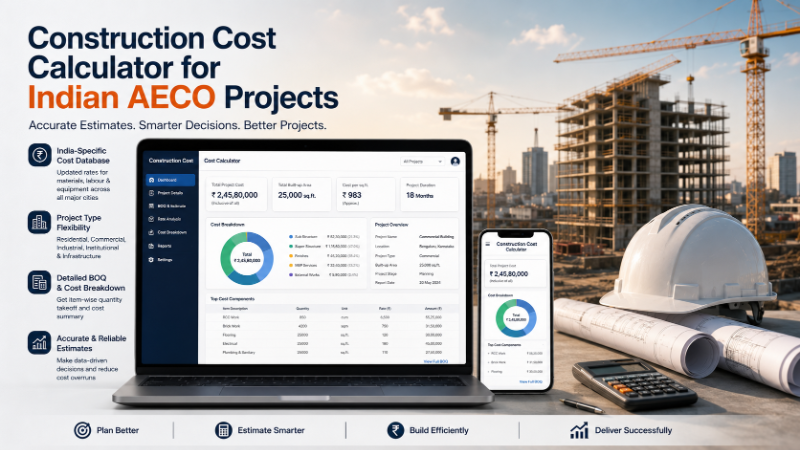
A construction cost calculator is a tool—either digital or manual—that helps estimate the total cost of a construction project. It takes into account various factors such as materials, labor, equipment, overhead, and contingencies to provide a comprehensive budget overview.
For Indian construction professionals, these calculators are invaluable because they help:
Provide accurate quotations to clients
Identify cost-saving opportunities
Track expenses throughout the project lifecycle
Manage budgets more effectively
Compare different construction methodologies
Secure better financing from lenders
The construction industry in India is evolving rapidly, with new materials, technologies, and regulations constantly changing cost structures. A reliable construction cost calculator helps professionals stay updated and competitive.
Key Components of Construction Cost Calculation
Material Costs
Materials typically account for 40-50% of total construction costs in India. This includes:
Cement and concrete: Currently priced around ₹400-600 per bag in major Indian cities
Steel: Ranges from ₹55,000-65,000 per ton depending on market conditions
Bricks: Approximately ₹4-8 per unit depending on quality and location
Sand and aggregates: ₹1,500-3,000 per cubic meter
Finishing materials: Tiles, paint, fixtures vary widely based on quality
A good construction cost calculator should allow you to input current market rates for your specific region, as prices vary significantly between metros like Mumbai, Bangalore, Delhi, and Hyderabad versus tier-2 and tier-3 cities.
Frequently asked
Labor Costs
Labor costs in India are more variable than material costs and depend on:
Skill level of workers (unskilled, semi-skilled, skilled)
Geographic location (labor rates in Mumbai are 30-40% higher than in smaller cities)
Project complexity and duration
Local regulations and minimum wage requirements
As of 2024, average daily wage rates in India range from ₹400-800 for unskilled labor to ₹1,500-3,000 for skilled workers. Your construction cost calculator should account for these variations and include provisions for worker benefits, insurance, and compliance costs.
Equipment and Machinery
Equipment costs include both rental and ownership expenses for:
Cranes and hoisting equipment
Concrete mixers and pumps
Scaffolding and temporary structures
Power tools and small equipment
Transportation vehicles
Equipment rental in India typically costs ₹500-5,000 per day depending on the equipment type and your location. A comprehensive calculator should itemize these costs separately.
Overhead and Indirect Costs
These often-overlooked expenses can add 15-25% to your total project cost:
Site office and facilities
Permits and licenses
Insurance and safety compliance
Utilities (water, electricity, fuel)
Administrative staff salaries
Quality control and testing
Environmental compliance
Contingency Reserve
Industry best practice recommends adding a contingency reserve of 5-15% to your total estimate to account for unforeseen expenses, price fluctuations, and design changes. For complex projects in metropolitan areas, consider the higher end of this range.
How Construction Cost Calculators Work
Input Parameters
A typical construction cost calculator requires you to input:
Total built-up area (in square feet or square meters)
Project type (residential, commercial, industrial, etc.)
Construction quality (basic, standard, premium)
Location and city
Specific materials and specifications
Labor rates for your region
Timeline and project duration
Calculation Methods
Most construction cost calculators use one of several methodologies:
Per Square Foot/Meter Method: This is the simplest approach, multiplying built-up area by a standard rate. For example, basic residential construction in Tier-2 Indian cities costs approximately ₹800-1,200 per square foot, while premium construction can reach ₹2,000-3,500 per square foot.
Detailed Line-Item Method: This breaks down costs into specific components (foundation, structure, walls, finishes, etc.) and calculates each separately. While more time-consuming, it provides greater accuracy.
Parametric Method: Uses historical data and project parameters to estimate costs based on similar completed projects.
Three-Point Estimate: Combines optimistic, pessimistic, and most likely cost scenarios to provide a range rather than a single figure.
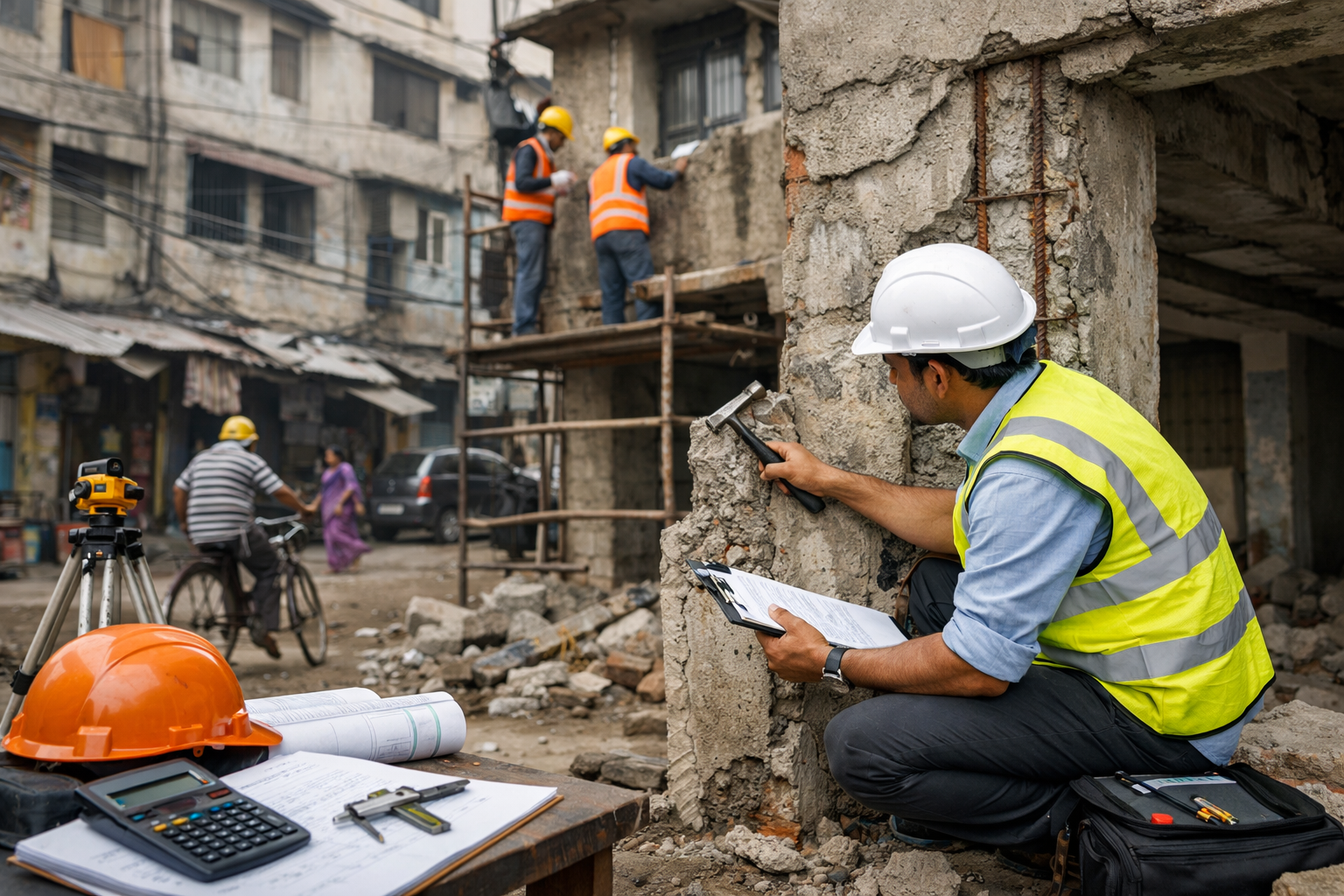
Factors Affecting Construction Costs in India
Geographic Location
Construction costs vary dramatically across India. For example:
Metropolitan areas (Mumbai, Delhi, Bangalore, Hyderabad): 30-50% higher costs due to land prices, labor rates, and stringent regulations
Tier-2 cities (Pune, Ahmedabad, Jaipur): Moderate costs with growing infrastructure
Tier-3 cities and rural areas: 20-40% lower costs but potentially longer project timelines
Regulatory Compliance
Different states and municipalities have varying building codes, FSI (Floor Space Index) regulations, and environmental requirements. These impact costs significantly:
Earthquake-resistant construction in seismic zones adds 5-10% to costs
Green building certifications (LEED, IGBC) add 3-8% but offer long-term savings
Municipal approval and inspection fees vary by location
Material Availability
Remote locations may require premium transportation costs for materials. Coastal areas have different material availability compared to inland regions. A good construction cost calculator should account for regional material availability and sourcing costs.
Market Fluctuations
Construction material prices in India fluctuate based on global commodity markets, import duties, and domestic demand. Steel and cement prices are particularly volatile. Professional calculators should be regularly updated with current market rates.
Project Complexity
Complex architectural designs, specialized systems, and high-rise construction increase costs exponentially. A 20-story building costs significantly more per square foot than a 3-story structure due to structural requirements and safety systems.
Types of Construction Cost Calculators Available
Online Digital Calculators
Web-based tools offer convenience and real-time updates. Many are free or low-cost and provide instant estimates. However, they may lack customization for your specific project requirements.
Spreadsheet-Based Calculators
Excel-based templates allow for complete customization and are popular among contractors and project managers. You can tailor them to your specific cost structures and historical data.
Professional Software Solutions
Enterprise-level software like Primavera, Microsoft Project, and specialized construction management tools offer comprehensive cost estimation, tracking, and forecasting capabilities. These are ideal for large, complex projects.
Mobile Applications
Smartphone apps provide on-site cost calculations and real-time updates. They're useful for quick estimates and field reference.

Best Practices for Using Construction Cost Calculators
Gather Accurate Data
The accuracy of your calculator depends entirely on input data quality. Spend time collecting:
Current market rates from multiple suppliers
Historical labor rate data from completed projects
Equipment rental rates from local vendors
Regulatory and compliance cost information
Regularly Update Rates
Construction material prices change monthly in India. Update your calculator's database at least quarterly, or monthly for volatile materials like steel and cement.
Include Contingency Buffers
Never present a calculator result as the final quote without adding contingency. A 10% buffer is standard practice for most Indian construction projects.
Cross-Reference with Similar Projects
Compare your calculator results with costs from similar completed projects in your region. This validation step catches errors and ensures reasonableness.
Break Down by Phase
Calculate costs for different project phases separately (site preparation, foundation, structure, finishing, etc.). This helps with cash flow planning and progress tracking.
Common Mistakes to Avoid
Underestimating labor costs: Many professionals use outdated wage rates. Current labor costs in major Indian cities have increased significantly.
Forgetting indirect costs: Overhead expenses are often underestimated or completely overlooked, leading to project losses.
Ignoring location-specific factors: Using national average rates instead of local market rates leads to inaccurate estimates.
Not accounting for seasonal variations: Construction costs fluctuate seasonally in India, with monsoon season affecting both material prices and labor availability.
Overlooking regulatory changes: New building codes or environmental regulations can significantly impact costs.
Leveraging AECORD for Better Cost Estimation
When calculating construction costs for your projects, connecting with verified professionals on AECORD can enhance accuracy. The platform allows you to:
Get competitive quotations from multiple suppliers and contractors
Access real-time market rates from verified vendors
Connect with experienced cost estimators and quantity surveyors
Compare pricing from different regions
Build a network of reliable subcontractors for accurate labor cost estimates
Using AECORD's network of professionals alongside your construction cost calculator ensures that your estimates are not only mathematically sound but also grounded in current market reality.
Advanced Features in Modern Cost Calculators
Integration with BIM
Building Information Modeling (BIM) integration allows automatic quantity calculations from 3D models, reducing manual errors and saving time.
Real-Time Market Data
Advanced calculators pull live pricing data from material suppliers and labor market indices, ensuring your estimates reflect current conditions.
Scenario Analysis
Modern tools allow you to run multiple scenarios (different materials, construction methods, timelines) to identify cost-optimal solutions.
Cost Tracking and Variance Analysis
Integration with project management systems allows real-time comparison of estimated versus actual costs, helping identify overruns early.
Conclusion
A construction cost calculator is an indispensable tool for any AECO professional in India. Whether you're bidding for a small residential project or managing a large commercial development, accurate cost estimation is fundamental to project success and profitability.
The key to effective cost calculation lies in using reliable data, understanding your local market, accounting for all cost components, and regularly updating your assumptions. By combining a robust construction cost calculator with insights from experienced professionals on AECORD, you can ensure that your projects are accurately budgeted and competitively priced.
Start improving your cost estimation today by identifying the right calculator for your needs and building a network of verified suppliers and professionals who can provide accurate, market-based pricing information. Your bottom line will thank you.
Ready to connect with verified cost estimators, quantity surveyors, and material suppliers for your next project? Visit AECORD today and access India's most comprehensive B2B2C marketplace for AECO professionals.
Frequently Asked Questions
What percentage of construction costs in India goes to materials?
Materials typically account for 40-50% of total construction costs in India. This includes cement, steel, bricks, sand, aggregates, and finishing materials, with prices varying significantly by region and current market conditions.
How much do skilled and unskilled workers cost per day in India?
As of 2024, unskilled labor in India ranges from ₹400-800 per day, while skilled workers cost ₹1,500-3,000 per day. Labor rates vary by 30-40% between major metros like Mumbai and smaller cities, and depend on project complexity and local regulations.
What should a construction cost calculator include?
A comprehensive construction cost calculator should account for material costs, labor expenses, equipment rental, overhead costs (15-25% of total), contingencies, and regional price variations. It should allow input of current market rates specific to your location and project type.
How much do overhead and indirect costs add to construction projects?
Overhead and indirect costs, including site facilities, permits, licenses, insurance, and compliance expenses, typically add 15-25% to your total project cost and are often overlooked in initial budgeting.
Why do construction costs vary between Indian cities?
Construction costs vary significantly between metros like Mumbai, Bangalore, Delhi, and Hyderabad versus tier-2 and tier-3 cities due to differences in material availability, labor rates (30-40% higher in major metros), local regulations, and transportation costs.