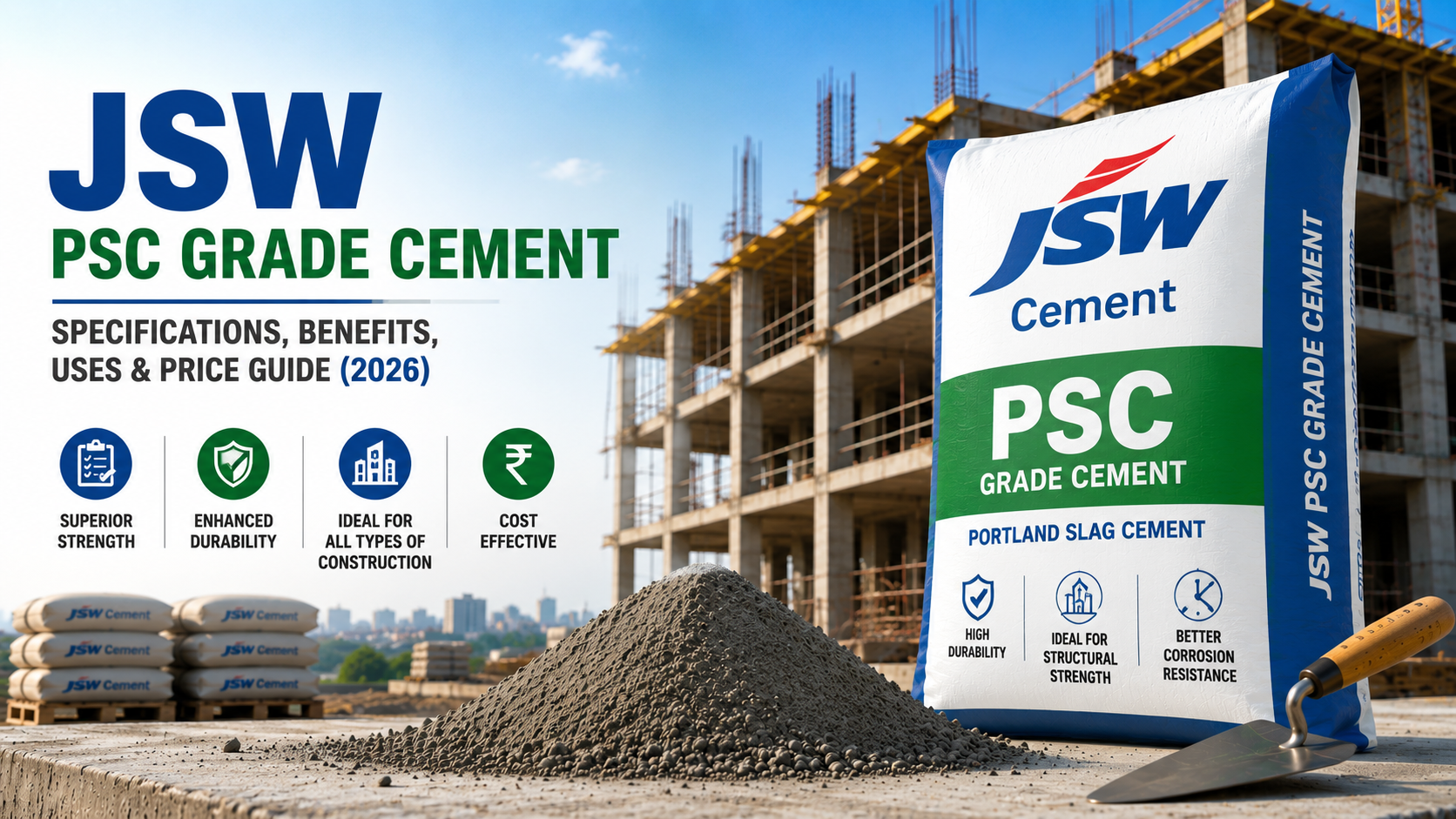
Understanding Sankar Super Power OPC 43 Grade Cement: A Complete Guide for Indian Construction Professionals
Cement is the backbone of modern construction in India, and choosing the right type can significantly impact the durability and strength of your structures. Sankar Super Power OPC 43 Grade Cement has emerged as a popular choice among builders, contractors, and architects across the country. Whether you're working on residential projects in Bangalore, commercial developments in Mumbai, or infrastructure projects in Delhi, understanding the properties and applications of this cement grade is crucial for your success./blog/jsw-vs-tata-steel
In this comprehensive guide, we'll explore everything you need to know about Sankar Super Power OPC 43 Grade Cement, from its composition and benefits to practical applications and where to source it through professional networks like AECORD.
Build cost · Bengaluru, May 2026
What is OPC 43 Grade Cement?
Understanding the Basics
OPC stands for Ordinary Portland Cement, and the "43" designation refers to the cement's compressive strength after 28 days of curing. OPC 43 Grade Cement must achieve a minimum compressive strength of 43 MPa (megapascals) at 28 days, making it a standard choice for most general construction applications in India.
Sankar Super Power OPC 43 Grade Cement is manufactured by Sankar Cement, a trusted brand in the Indian cement industry. The paper bag typically weighs 50 kg, which is the standard packaging size used across India. This particular product is designed to meet the Bureau of Indian Standards (BIS) specifications, ensuring quality and consistency in every batch.
Composition and Manufacturing Process
OPC 43 Grade Cement is produced through a carefully controlled process that involves:
Raw Material Selection: Limestone, clay, and other minerals are quarried and crushed
Blending: Raw materials are blended in precise proportions to achieve the desired chemical composition
Clinkerization: The blended material is heated to extremely high temperatures (around 1450°C) in a kiln
Cooling and Grinding: The clinker is cooled and ground with gypsum to produce the final cement powder
Quality Testing: Each batch undergoes rigorous testing before packaging
The composition of OPC 43 Grade typically includes approximately 60-65% calcium oxide (CaO), 20-25% silicon dioxide (SiO₂), and smaller percentages of aluminum oxide (Al₂O₃), iron oxide (Fe₂O₃), and magnesium oxide (MgO).
Frequently asked
Key Properties of Sankar Super Power OPC 43 Grade Cement
Strength Development
One of the primary reasons contractors prefer OPC 43 Grade Cement is its rapid strength development. This cement typically achieves:
3-day strength: Approximately 18-20 MPa
7-day strength: Approximately 28-32 MPa
28-day strength: Minimum 43 MPa
This rapid strength gain is particularly valuable in construction projects where time is critical. In cities like Pune, Hyderabad, and Kolkata, where construction schedules are often tight, the quick strength development of OPC 43 allows for faster formwork removal and project progression.
Heat of Hydration
OPC 43 Grade generates moderate heat during the hydration process. While this isn't as low as PPC (Portland Pozzolana Cement), it's suitable for most applications. The heat generation is typically in the range of 320-380 J/g, making it appropriate for general construction work but requiring careful attention in mass concrete applications./blog/ppc-vs-opc-cement-which-is-better-for-house-construction-in-india
Durability and Sustainability
Sankar Super Power OPC 43 Grade Cement provides good durability when used in appropriate conditions. It offers:
Good resistance to sulfates: Suitable for structures exposed to moderate sulfate environments
Adequate water impermeability: Provides reasonable protection against water ingress when properly cured
Long-term strength gain: Continues to gain strength over years, improving durability
Applications of OPC 43 Grade Cement in Indian Construction
Residential Construction
For residential buildings across India—whether in tier-1 cities like Mumbai and Delhi or tier-2 cities like Jaipur and Lucknow—OPC 43 Grade is the most commonly used cement. It's ideal for:
RCC (Reinforced Cement Concrete) framing
Brick masonry work
Plastering and finishing
Concrete flooring
Foundation work
Commercial and Institutional Projects
Office buildings, schools, hospitals, and shopping centers across major Indian metros regularly use OPC 43 Grade Cement for structural elements. The predictable strength development makes it easier for structural engineers to design and execute projects on schedule.
Infrastructure and Civil Works
Roads, bridges, and water infrastructure projects often utilize OPC 43 Grade Cement, particularly in scenarios where rapid strength development is beneficial. Projects in cities like Bangalore, Pune, and Ahmedabad frequently specify this grade for various components.
Precast and Prefabricated Elements
The rapid strength gain of OPC 43 makes it particularly suitable for manufacturing precast concrete elements such as:
Concrete blocks and bricks
Precast beams and columns
Paving stones
Concrete pipes
Advantages of Choosing Sankar Super Power OPC 43 Grade Cement
Cost-Effectiveness
OPC 43 Grade is typically more economical than higher grades like OPC 53 Grade, making it an attractive choice for budget-conscious projects. In the Indian market, OPC 43 Grade generally costs ₹350-450 per bag, compared to OPC 53 which may cost ₹50-100 more per bag. For large projects requiring hundreds of tons, this difference adds up significantly.
Availability and Supply Chain
Being the most commonly used cement grade in India, OPC 43 is readily available across the country. Whether you're sourcing materials in Chennai, Kolkata, or Chandigarh, you'll find consistent supply and competitive pricing. This widespread availability also means you can find skilled workers experienced in working with this cement grade.
Proven Track Record
Sankar Super Power OPC 43 Grade has been used in countless projects across India for years. This proven performance record gives architects and engineers confidence in specifying this product. Buildings constructed with this cement decades ago continue to perform well, demonstrating its long-term reliability./blog/building-materials-guide-india-2026
Quality Assurance
Sankar Cement maintains strict quality control standards. Each 50 kg paper bag undergoes quality checks to ensure it meets BIS specifications. The product is also tested for consistency, fineness, and strength development.
Technical Specifications and Standards
BIS Compliance
Sankar Super Power OPC 43 Grade Cement complies with IS 269:2015 (Indian Standard for Portland Cement). This standard specifies:
Fineness: Not more than 10% residue on 90 micron sieve
Setting time: Initial setting time between 30-600 minutes
Soundness: Expansion not exceeding 10 mm
Compressive strength: Minimum 43 MPa at 28 days
Paper Bag Specifications
The standard 50 kg paper bag is designed to protect the cement from moisture and contamination. The bag typically features:
Multi-wall kraft paper construction
Waterproof inner lining
Clear product labeling with manufacturing and expiry dates
Batch number for traceability
BIS certification mark
Proper Storage and Handling
Storage Conditions
To maintain the quality of Sankar Super Power OPC 43 Grade Cement, proper storage is essential:
Keep it dry: Store bags in a moisture-free environment to prevent hydration
Ventilation: Ensure adequate air circulation to prevent dampness accumulation
Temperature control: Avoid extreme temperature fluctuations
Stacking: Don't stack bags more than 8-10 bags high to prevent bottom bags from getting crushed
Shelf life: Use cement within 3 months of manufacturing for optimal performance
Handling Best Practices
Proper handling ensures you get the maximum value from your cement purchase:
Handle bags carefully to avoid tears or punctures
Keep bags away from direct contact with ground moisture
Use cement in FIFO (First In, First Out) order
Check manufacturing dates before purchasing
Inspect bags for any signs of damage or moisture
Cost Considerations in Indian Markets
Pricing Across Major Cities
The cost of Sankar Super Power OPC 43 Grade Cement varies slightly across Indian cities due to transportation and local demand:
Northern India (Delhi, Noida, Gurgaon): ₹380-420 per bag
Western India (Mumbai, Pune, Ahmedabad): ₹370-410 per bag
Southern India (Bangalore, Chennai, Hyderabad): ₹360-400 per bag
Eastern India (Kolkata, Patna): ₹390-430 per bag
These prices are approximate and subject to market fluctuations. For bulk purchases, contractors can often negotiate better rates with distributors and suppliers.
Bulk Purchasing Strategies
For large construction projects, consider these strategies to optimize cement costs:
Purchase directly from manufacturing units or authorized distributors
Negotiate volume discounts for purchases exceeding 100 tons
Plan your cement requirements in advance to avoid rush purchases
Build relationships with local suppliers for consistent pricing
Finding Quality Suppliers Through AECORD
When sourcing Sankar Super Power OPC 43 Grade Cement and other construction materials, connecting with verified suppliers is crucial. AECORD, India's leading B2B2C marketplace for AECO professionals, provides a platform where you can:
Connect with verified cement suppliers and distributors across India
Compare prices and specifications from multiple suppliers
Access supplier reviews and ratings from other professionals
Request quotations and negotiate bulk orders
Ensure you're sourcing quality products that meet BIS standards
Using AECORD, architects, engineers, and contractors can streamline their procurement process and ensure they're getting genuine Sankar Super Power OPC 43 Grade Cement at competitive prices.
Common Mistakes to Avoid
Quality Compromises
Don't compromise on cement quality to save a few rupees. Poor quality cement can lead to structural failures, increased maintenance costs, and potential safety hazards. Always verify that the cement you're purchasing meets BIS standards and comes from authorized dealers.
Storage Negligence
Many projects face delays and quality issues due to improper cement storage. Invest in proper storage facilities on-site to prevent moisture damage and deterioration.
Incorrect Mix Design
Ensure your concrete mix design is appropriate for OPC 43 Grade. Using the same mix design specified for OPC 53 with OPC 43 may result in inadequate early strength development.
Inadequate Curing
Proper curing is essential for cement to develop its full strength potential. Don't rush the curing process or expose concrete to premature loading.
Environmental and Sustainability Considerations
Modern cement manufacturing, including Sankar Cement's production, increasingly focuses on sustainability. OPC 43 Grade Cement production involves:
Energy-efficient kiln technology
Waste heat recovery systems
Dust collection and emission control
Responsible quarrying practices
When specifying cement for your projects, consider not only performance and cost but also the environmental practices of the manufacturer.
Conclusion
Sankar Super Power OPC 43 Grade Cement remains one of the most reliable and cost-effective choices for construction projects across India. Its rapid strength development, proven track record, and availability make it ideal for residential, commercial, and infrastructure applications. Whether you're planning a small residential project in tier-2 cities or a large commercial development in metropolitan areas, understanding the properties and proper usage of this cement grade is essential for project success.
By following best practices in storage, handling, and application, and by sourcing from verified suppliers, you can ensure that your projects achieve the desired strength and durability. Remember that cement is just one component of quality construction—proper mix design, skilled labor, and adequate curing are equally important.
Ready to source quality Sankar Super Power OPC 43 Grade Cement for your next project? Connect with verified suppliers and other AECO professionals on AECORD. Whether you need cement, skilled contractors, or engineering consultation, AECORD provides a comprehensive platform to find everything you need for successful construction projects. Visit AECORD today to explore suppliers in your city and get competitive quotes for your cement requirements.
Frequently Asked Questions
What does OPC 43 Grade Cement mean?
OPC stands for Ordinary Portland Cement, and the '43' refers to the cement's minimum compressive strength of 43 MPa (megapascals) after 28 days of curing. This makes it a standard choice for most general construction applications in India and is manufactured to meet Bureau of Indian Standards (BIS) specifications.
How fast does OPC 43 Grade Cement gain strength?
OPC 43 Grade Cement develops strength rapidly, achieving approximately 18-20 MPa at 3 days, 28-32 MPa at 7 days, and a minimum of 43 MPa at 28 days. This quick strength development is particularly valuable for construction projects with tight schedules, allowing faster formwork removal and project progression.
What is the heat of hydration in OPC 43 Grade Cement?
OPC 43 Grade generates moderate heat during hydration, typically in the range of 320-380 J/g. While this isn't as low as PPC (Portland Pozzolana Cement), it's suitable for most general construction work but requires careful attention in mass concrete applications.
What are the main ingredients in OPC 43 Grade Cement?
OPC 43 Grade Cement composition typically includes approximately 60-65% calcium oxide (CaO), 20-25% silicon dioxide (SiO₂), and smaller percentages of aluminum oxide (Al₂O₃), iron oxide (Fe₂O₃), and magnesium oxide (MgO). These materials are carefully blended and heated to 1450°C in a kiln to produce the final cement.
Is OPC 43 Grade Cement suitable for sulfate-resistant applications?
Yes, Sankar Super Power OPC 43 Grade Cement provides good resistance to sulfates, making it suitable for applications exposed to sulfate-bearing soils or water. This durability feature makes it appropriate for various construction conditions across different Indian regions.