

What Are Retractable Transparent Roofs?
Retractable transparent roofs are engineered systems made using glass or polycarbonate panels that can open and close electronically. These systems allow venues to adapt instantly to changing weather conditions while preserving natural daylight, skyline views, and open-air ambience.
Modern systems typically include:
Motorized sliding or folding mechanisms
Weather and rain sensors
UV-protected transparent panels
Waterproof sealing systems
Smart automation controls
The result is a space that feels open and connected to the outdoors while remaining protected from rain, wind, and excessive heat.
Build cost · Bengaluru, May 2026
Why Hospitality Spaces Are Adopting Them
Hospitality venues today are focused on creating memorable experiences. Rooftop dining, alfresco lounges, and open-air social spaces are highly desirable — but unpredictable weather often limits usability.
Retractable roofs solve this challenge by enabling:
Year-round operations
Flexible indoor-outdoor experiences
Increased seating utilization
Better guest comfort
Premium rooftop ambience in all seasons
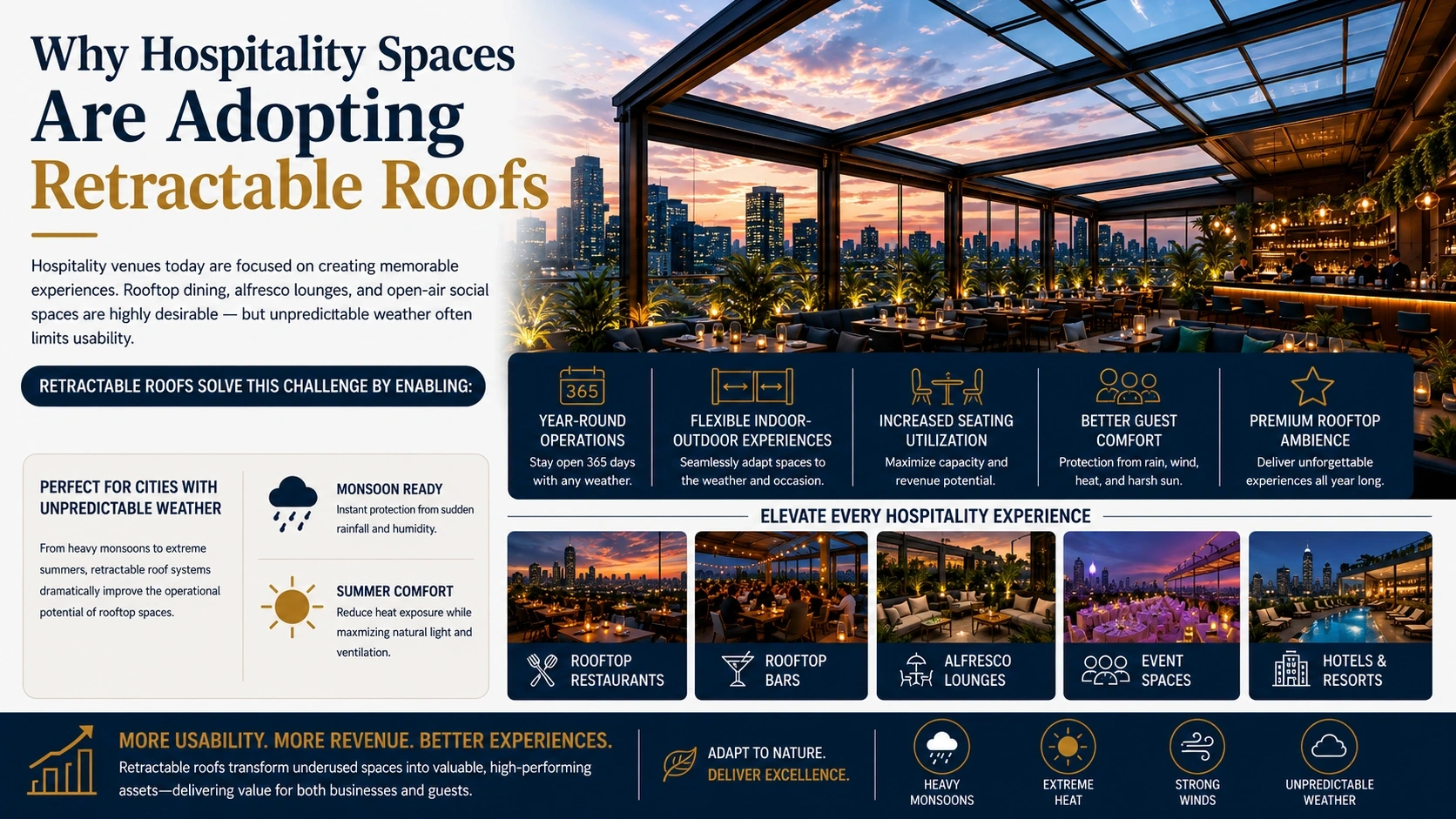
For cities with heavy monsoons or extreme summers, these systems dramatically improve the operational potential of rooftop spaces.
Designed for India’s Climate
India’s diverse weather conditions make climate-responsive architecture increasingly important.
Retractable transparent roofs help venues manage:
Monsoon rainfall
Intense summer heat
UV exposure
Wind and humidity
Seasonal temperature variations
High-performance glass systems with UV protection and thermal coatings also improve energy efficiency by reducing indoor heat gain while maintaining natural light.
The Rise of Rooftop Hospitality Design
Rooftop bars and restaurants have become major architectural and lifestyle attractions in Indian cities. Retractable roofs enhance these spaces by preserving views while ensuring comfort regardless of weather conditions.
Frequently asked
Key Architectural Benefits:
Unobstructed skyline views
Natural daylight penetration
Flexible spatial configurations
Seamless indoor-outdoor transitions
Enhanced visual identity for hospitality brands
Many premium hospitality projects now integrate retractable roof systems directly into the building design rather than treating them as add-on structures.
Energy Efficiency and Sustainability
Modern retractable roofing systems contribute to sustainable hospitality design.
Environmental Advantages:
Reduced HVAC loads
Improved natural ventilation
Lower artificial lighting requirements
Better thermal performance
Enhanced operational efficiency
Some systems also integrate effectively with:
Solar panels
Green walls
Smart building systems
High-performance facades
This aligns well with India’s growing focus on sustainable and climate-responsive commercial architecture.
Material and Technology Innovations
The latest retractable roof systems use advanced materials and automation technologies for durability and performance.
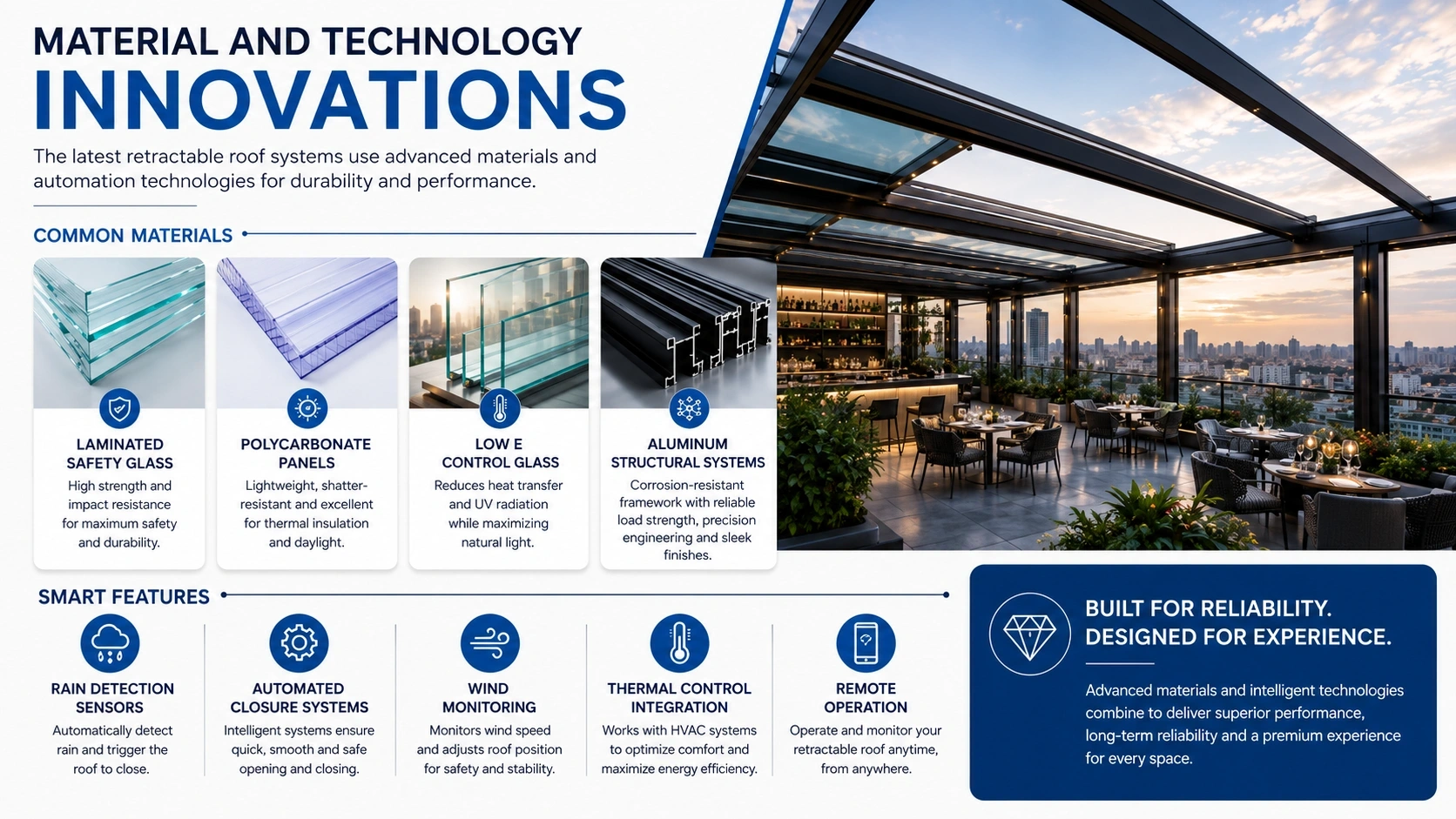
Common Materials:
Laminated safety glass
Polycarbonate panels
Low-E coated glass
Aluminum structural systems
Smart Features:
Rain detection sensors
Automated closure systems
Wind monitoring
Thermal control integration
Remote operation
These technologies improve reliability while creating a premium user experience.
Applications Beyond Rooftop Bars
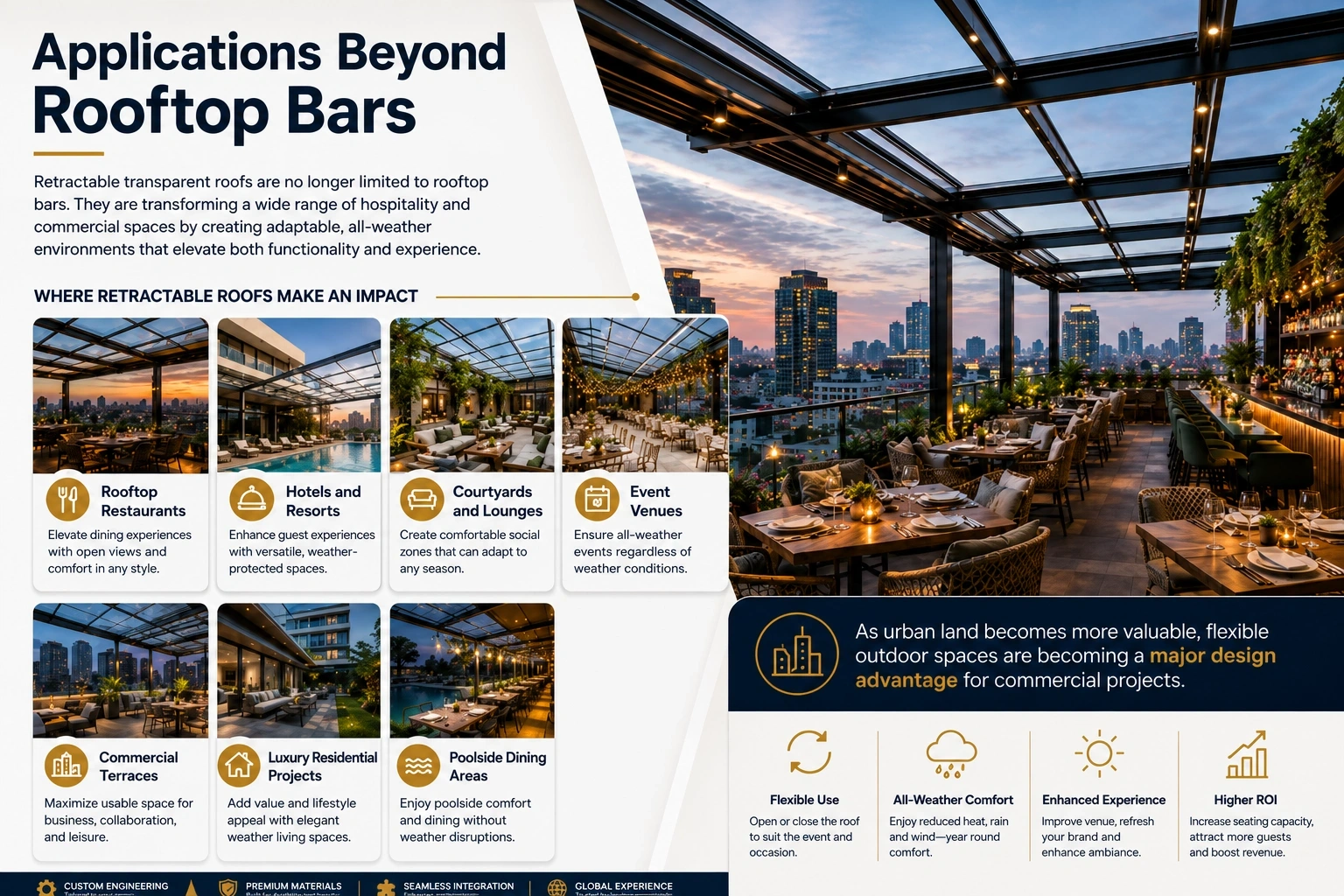
Retractable transparent roofs are now used across:
Rooftop restaurants
Hotels and resorts
Courtyards and lounges
Event venues
Commercial terraces
Luxury residential projects
Poolside dining areas
As urban land becomes more valuable, flexible outdoor spaces are becoming a major design advantage for commercial projects.
Cost vs Long-Term Value
Retractable roof systems involve a higher upfront investment compared to fixed roofing solutions. However, the long-term operational and commercial benefits are significant.
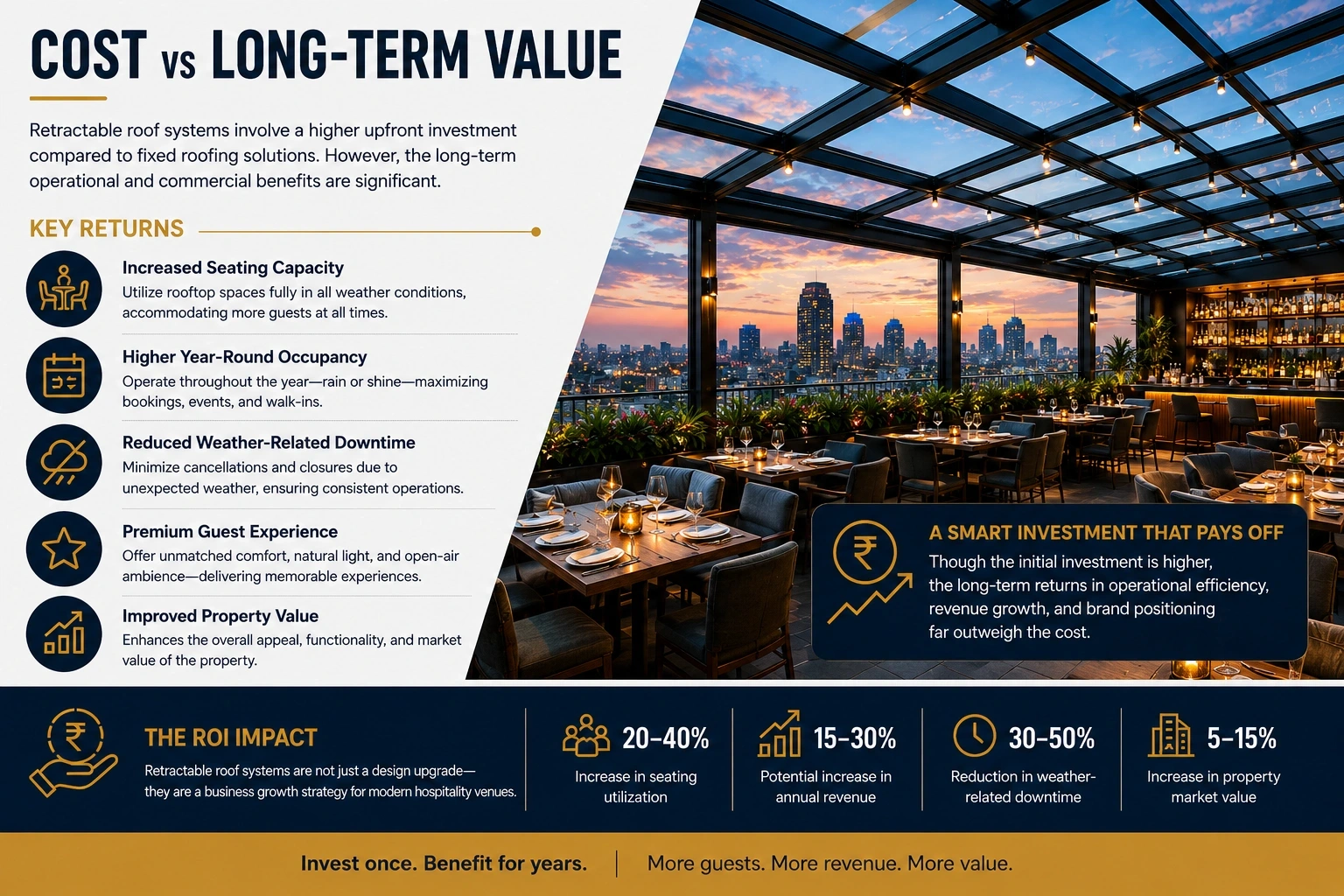
Key Returns:
Increased seating capacity
Higher year-round occupancy
Reduced weather-related downtime
Premium guest experience
Improved property value
For hospitality businesses, these systems often translate directly into increased revenue and stronger brand identity.
The Future of Hospitality Architecture
As cities continue to prioritize experiential design and flexible urban spaces, retractable transparent roofs are becoming an important part of next-generation hospitality architecture.
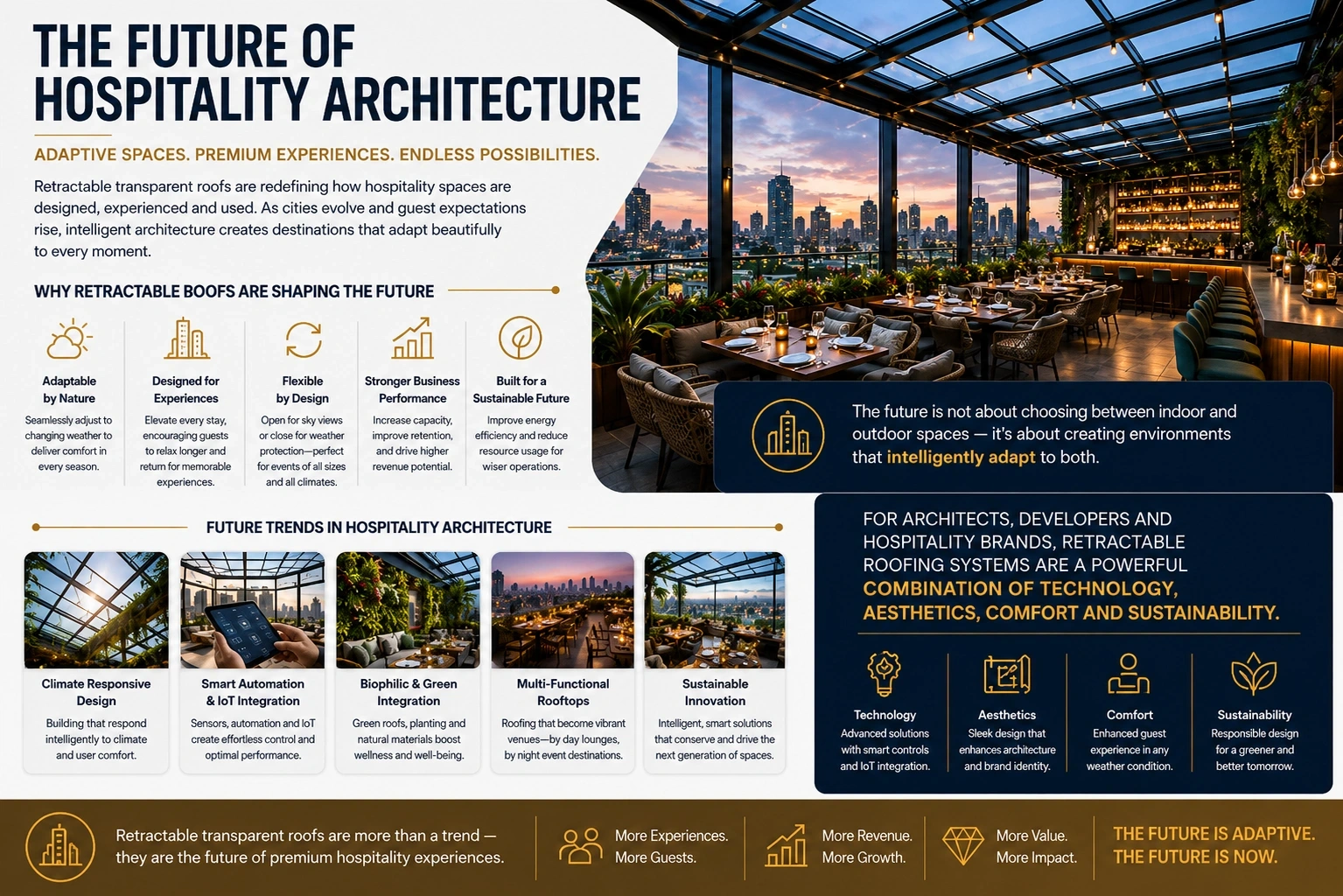
The future of hospitality design is no longer about choosing between indoor and outdoor spaces — it is about creating environments that intelligently adapt to both.
For architects, developers, and hospitality brands, retractable roofing systems represent a powerful combination of technology, aesthetics, comfort, and sustainability. They are quickly becoming a defining feature of premium rooftop experiences in India’s evolving urban landscape.
Frequently Asked Questions
What are retractable transparent roofs and how do they work?
Retractable transparent roofs are engineered systems made from glass or polycarbonate panels that open and close electronically using motorized mechanisms. They include weather sensors, UV protection, and smart automation controls that allow venues to adapt instantly to changing weather while maintaining natural daylight and outdoor ambience.
Why are hospitality venues in India adopting retractable roofs?
Hospitality venues are adopting retractable roofs to enable year-round rooftop operations while managing India's challenging weather conditions like monsoons and extreme heat. These systems increase seating utilization, improve guest comfort, and preserve premium rooftop ambience regardless of season.
How do retractable roofs improve energy efficiency in hospitality buildings?
Retractable roof systems reduce HVAC loads, improve natural ventilation, and lower artificial lighting requirements through better thermal performance and natural light penetration. High-performance glass with UV and thermal coatings also minimizes indoor heat gain, contributing to overall operational efficiency.
What materials are used in modern retractable roof systems?
Modern systems typically use laminated safety glass, polycarbonate panels, low-E coated glass, and aluminum structural systems combined with smart features like rain detection sensors, automated closure systems, and wind monitoring for durability and reliable performance.
Can retractable roofs be integrated with sustainable building systems?
Yes, retractable roofs integrate effectively with solar panels, green walls, and smart building systems to support sustainable hospitality design. They align with India's focus on climate-responsive architecture by reducing energy consumption and improving overall environmental performance.