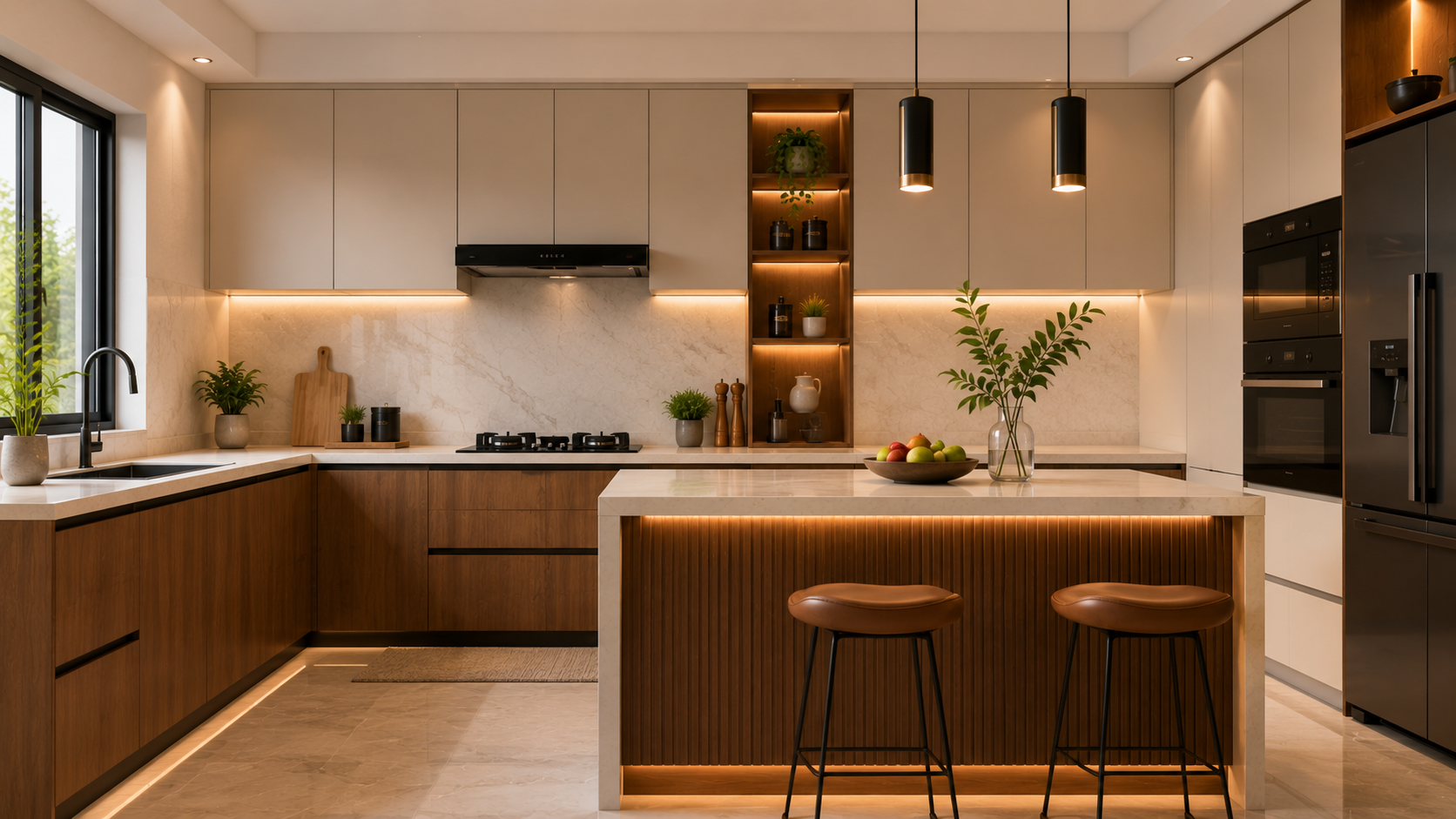


Open kitchen design has become increasingly popular in Indian homes over the past decade, transforming the way families interact and cook together. Whether you're renovating your existing kitchen or building a new home, understanding the advantages and disadvantages of open kitchen design is crucial for making an informed decision. This comprehensive guide explores both sides of open kitchen design in the Indian context, helping you determine if it's the right choice for your home.
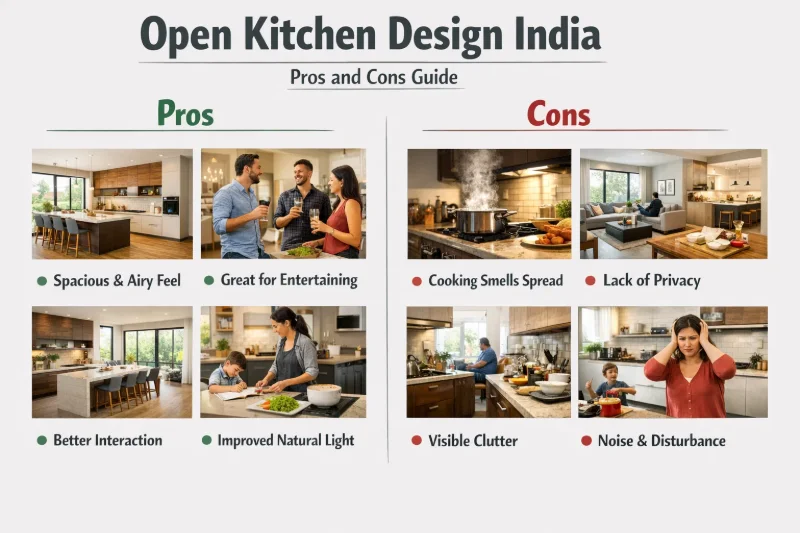
What is Open Kitchen Design?
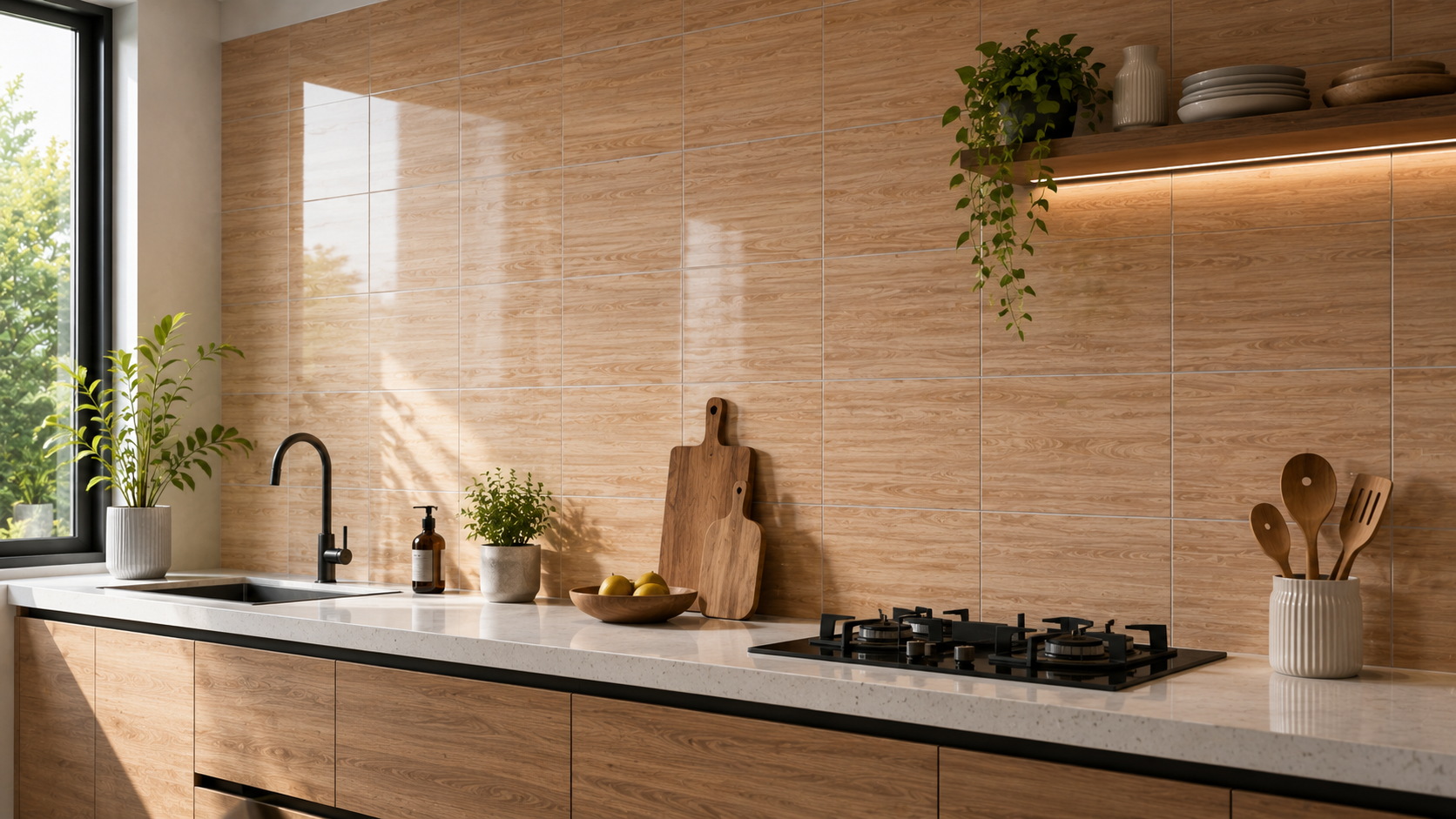
An open kitchen design eliminates walls and barriers between the kitchen and adjacent living spaces, typically creating a seamless flow between the cooking area, dining room, and living room. Rather than being a separate, enclosed space, the kitchen becomes an integrated part of your home's main living area. This design philosophy has gained significant traction in metropolitan areas like Mumbai, Bangalore, Delhi, and Pune, where modern apartment living and space optimization are priorities.
Build cost · Bengaluru, May 2026
The Advantages of Open Kitchen Design in India
1. Enhanced Social Interaction and Family Bonding
One of the most compelling reasons Indian homeowners are adopting open kitchen designs is the ability to stay connected with family members while cooking. In traditional Indian households, cooking is often a solitary activity that isolates the cook from family gatherings. An open kitchen allows you to prepare meals while simultaneously supervising children doing homework, watching television with your spouse, or entertaining guests. This is particularly valuable in Indian culture, where family time and hospitality are deeply cherished values.
2. Improved Space Perception and Efficiency
In Indian cities where real estate is expensive and apartment sizes are limited, open kitchens create an illusion of larger, more spacious homes. A 250 sq ft apartment with an open kitchen layout feels significantly more spacious than one with an enclosed kitchen. This psychological benefit of open space can improve your overall living experience without requiring additional square footage. When you remove the physical barrier of a kitchen wall, you're essentially expanding your usable living area.
Frequently asked
3. Better Natural Light and Ventilation
Open kitchen designs allow natural light to flow throughout your home more effectively. If your kitchen window receives good sunlight, that light now extends into your living areas, reducing your dependence on artificial lighting during daytime hours. Additionally, better air circulation helps manage cooking odors more effectively, which is particularly important in Indian cooking where spices and high-heat cooking methods generate strong aromas. Proper ventilation becomes easier to achieve when your kitchen isn't confined to a closed space.
4. Cost-Effective Space Utilization
For homebuyers in cities like Bangalore, Hyderabad, and Chennai, where property costs range from ₹5,000 to ₹15,000 per sq ft, open kitchen designs offer better value. You're not dedicating a separate enclosed room exclusively to cooking, which means you can allocate more space to bedrooms or other functional areas. This efficient use of space is particularly appealing for first-time homebuyers working within budget constraints.
5. Modern Aesthetic Appeal
Open kitchens align with contemporary design trends that appeal to younger generations and modern Indian homeowners. The clean, minimalist aesthetic of open kitchen designs photographs well and creates an impression of a modern, well-designed home. If you're considering selling your property in the future, a well-executed open kitchen design can be a strong selling point in metropolitan real estate markets.
6. Easier Supervision and Multitasking
Parents can monitor children playing in the living room while cooking, and you can keep an eye on guests without leaving the kitchen. This multitasking capability is invaluable for busy Indian households where managing household responsibilities while maintaining social connections is essential.
7. Flexible Design and Customization
Open kitchens offer greater flexibility in terms of design and layout. You can incorporate kitchen islands, breakfast bars, and seating areas that serve dual purposes. Professional architects and designers on platforms like AECORD can help you create customized open kitchen solutions that perfectly align with your lifestyle and spatial constraints.
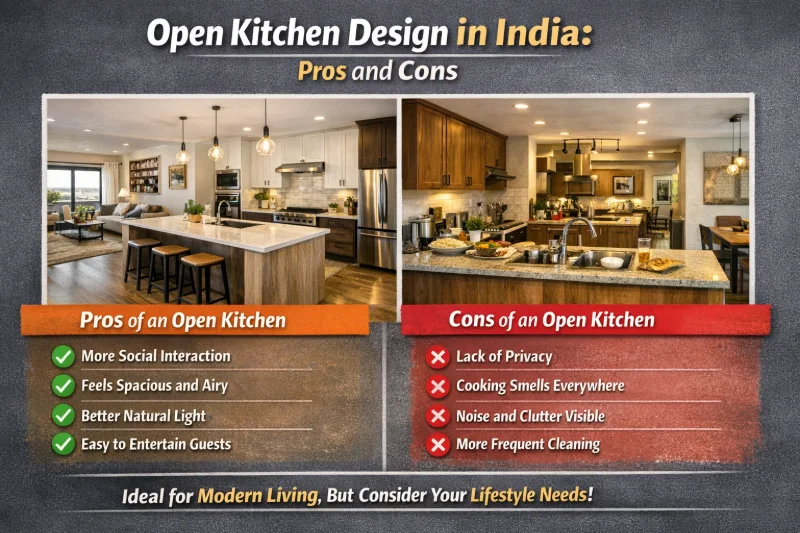
The Disadvantages of Open Kitchen Design in India
1. Cooking Odors and Smoke Management
This is perhaps the most significant challenge with open kitchens in the Indian context. Indian cuisine relies heavily on tempering spices, high-heat cooking, and aromatic ingredients like cumin, mustard seeds, and asafoetida. These cooking methods generate strong odors and smoke that can permeate your entire living space, furniture, and even bedrooms. Unlike Western kitchens with lighter cooking methods, Indian cooking requires robust ventilation solutions.
To manage this effectively, you'll need to invest in high-quality range hoods or exhaust systems costing ₹30,000 to ₹1,50,000 depending on the brand and specifications. Even with excellent ventilation, some odor transfer is inevitable, which can be problematic if you have guests or if family members have olfactory sensitivities.
2. Noise and Sound Pollution
Kitchen appliances like mixers, grinders, and exhaust fans generate significant noise. In an open layout, this noise travels directly into your living and sleeping areas. If you enjoy watching television or having conversations in your living room while someone is cooking, the constant background noise from kitchen activities can be disruptive. This is particularly relevant in Indian households where multiple family members might be using the kitchen simultaneously during peak cooking hours.
3. Visibility of Clutter and Mess
An open kitchen means your cooking mess is always visible to guests and family members in the living area. Dirty dishes, cooking utensils, spice containers, and food preparation remnants are on display. This requires maintaining a higher standard of kitchen cleanliness and organization at all times. For many Indian households where cooking is intensive and kitchen storage can be challenging, keeping the space perpetually clean and organized becomes a significant burden.
4. Limited Privacy and Functionality
If you have domestic help or live in a joint family setup, an open kitchen reduces privacy during food preparation. Some family members may prefer the separation that a closed kitchen provides. Additionally, certain kitchen activities like storing strong-smelling ingredients or managing pest control become more complicated when the kitchen is open to living spaces.
5. Heat Distribution Issues
Kitchen heat from cooking appliances, ovens, and stovetops distributes throughout your living space in an open layout. During Indian summers, particularly in cities like Delhi, Mumbai, and Bangalore, this additional heat can make your living areas uncomfortably warm and increase air conditioning costs. Your AC units will need to work harder to maintain comfortable temperatures throughout the combined space.
6. Higher Ventilation and Infrastructure Costs
To effectively manage the challenges of open kitchens in Indian homes, you'll need to invest in premium ventilation systems. High-capacity range hoods, ducting systems, and air purifiers can collectively cost ₹50,000 to ₹2,00,000. Additionally, you may need to upgrade electrical infrastructure to support more powerful exhaust systems, adding another ₹20,000 to ₹50,000 to your renovation budget.
7. Resale and Rental Considerations
While open kitchens appeal to younger, modern buyers, they may not be preferred by traditional Indian families or older generations. In some rental markets, tenants prefer closed kitchens for privacy and odor containment. This could potentially limit your pool of interested buyers or renters if you decide to sell or lease your property in the future.
8. Structural and Regulatory Challenges
Converting a closed kitchen to an open layout may involve removing load-bearing walls, which requires structural engineering approval and compliance with local building codes. In Indian cities, municipal corporations have specific regulations about kitchen placement and ventilation. You'll need to obtain necessary approvals from your local municipal authority and building society, which can be time-consuming and costly.
Open Kitchen Design Considerations Specific to India
Climate Factors
India's diverse climate zones require different approaches to open kitchen design. In hot, humid cities like Mumbai and Kolkata, managing cooking heat and moisture becomes critical. In cooler cities like Shimla or Srinagar, heat distribution is less problematic. Your location should significantly influence your decision about open kitchen feasibility.
Cooking Styles and Frequency
Consider your family's cooking patterns. If you prepare elaborate meals daily with multiple dishes, an open kitchen might be challenging. However, if your household relies more on simple cooking or frequently orders food, an open kitchen becomes more practical.
Family Structure and Dynamics
Joint families, multi-generational households, and those with domestic help may find open kitchens less suitable. Nuclear families with modern lifestyles are typically better suited to open kitchen designs.
Budget Constraints
A proper open kitchen requires significant investment in ventilation, finishes, and appliances. Budget ₹3,00,000 to ₹8,00,000 for a well-executed open kitchen renovation in metropolitan areas, depending on size and specifications.
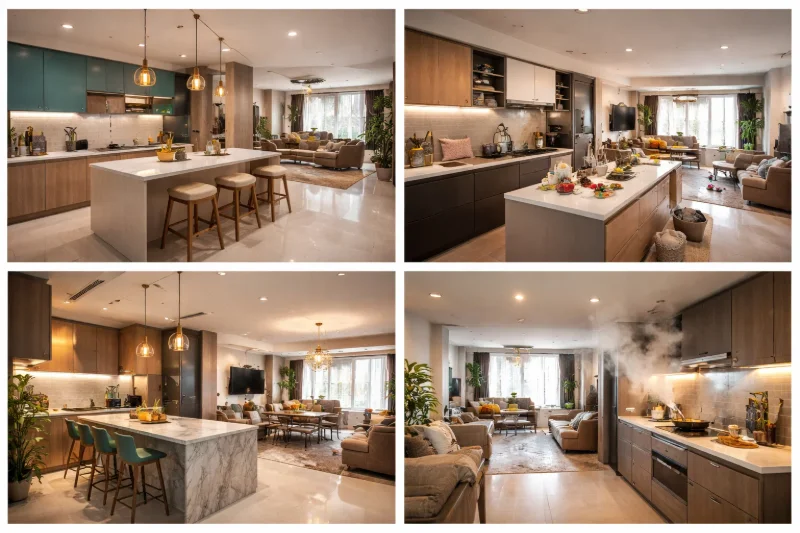
Hybrid Solutions: The Middle Ground
If you're uncertain about fully committing to an open kitchen design, consider hybrid solutions that offer benefits of both layouts:
Semi-open kitchens: Partial walls or glass partitions that maintain visual connection while providing some sound and odor containment
Sliding glass doors: Flexible barriers that can be opened for entertaining and closed during cooking
Kitchen islands with seating: Creates interaction space without fully opening the kitchen
Pass-through windows: Maintains separation while allowing visual and social connection
Professional designers on AECORD can help you explore these hybrid options and create solutions tailored to your specific needs and constraints.
Making Your Decision: A Practical Checklist
Before committing to an open kitchen design, evaluate these factors:
Do you have adequate ventilation infrastructure or budget for upgrades?
Is your cooking style compatible with an open layout?
Do you have space for a quality range hood and proper ducting?
Are you comfortable maintaining high kitchen cleanliness standards?
Does your building society or municipal regulations permit open kitchens?
Is your family structure suited to reduced kitchen privacy?
What is your long-term plan for the property?
Conclusion
Open kitchen design offers compelling advantages for modern Indian homeowners, particularly those seeking better space utilization, enhanced family interaction, and contemporary aesthetics. However, the challenges—particularly managing cooking odors, noise, and heat in the Indian context—are substantial and shouldn't be overlooked.
The decision ultimately depends on your specific circumstances, cooking habits, family structure, and budget. There's no one-size-fits-all answer; what works perfectly for a young couple in Bangalore might not suit a joint family in Delhi.
If you're considering an open kitchen renovation or design, consult with experienced architects and interior designers who understand the nuances of Indian homes and cooking practices. The professionals on AECORD have extensive experience designing kitchens for Indian households and can help you navigate the decision-making process, evaluate your specific space, and create a design that maximizes benefits while minimizing challenges.
Whether you choose a fully open kitchen, a hybrid solution, or stick with a traditional closed kitchen, the most important factor is creating a space that enhances your daily life and meets your family's unique needs. Take time to evaluate your priorities, consult with professionals, and make an informed decision that you'll be satisfied with for years to come.
Frequently Asked Questions
What is an open kitchen design and how is it different from traditional kitchens?
An open kitchen design eliminates walls between the kitchen and adjacent living spaces, creating a seamless flow with the dining and living areas. Unlike traditional enclosed kitchens, open kitchens integrate the cooking area into your main living space, allowing better interaction and connectivity with family members.
Are open kitchens good for Indian homes and cooking styles?
Open kitchens work well in Indian homes for family bonding and space efficiency, but require careful ventilation planning since Indian cooking generates strong spice aromas. They're particularly popular in metropolitan areas like Mumbai, Bangalore, and Delhi where space optimization and modern living are priorities.
How much space do you save with an open kitchen design?
Open kitchens create an illusion of larger, more spacious homes by eliminating physical barriers, making a 250 sq ft apartment feel significantly more spacious. This efficient use of space is valuable in expensive Indian real estate markets where you can allocate the saved space to bedrooms or other functional areas.
What are the main disadvantages of open kitchen design in India?
The primary challenges include managing cooking odors and smoke throughout your home, reduced privacy while cooking, and difficulty containing kitchen mess in view of guests. Open kitchens also require more rigorous cleaning and organization since the kitchen is always visible to visitors.
Do open kitchens increase home value in Indian real estate markets?
Yes, well-executed open kitchen designs can be strong selling points in metropolitan real estate markets, especially among younger buyers and modern homeowners. The contemporary aesthetic and efficient space utilization appeal to buyers in cities like Bangalore, Mumbai, and Pune.