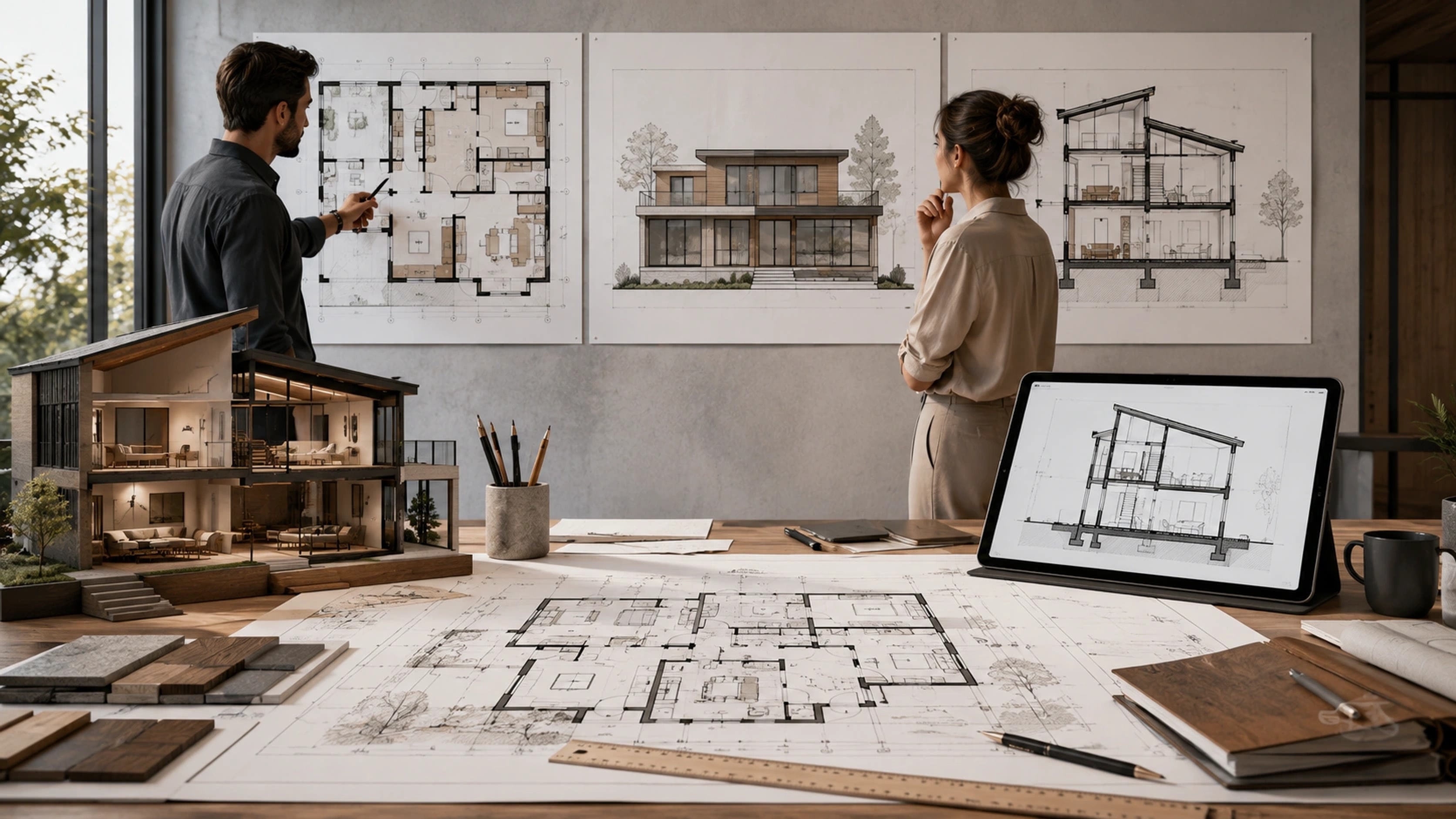


The construction industry is undergoing a structural evolution. Driven by intensifying skilled labor shortages, rising material costs, and an urgent demand for compressed project timelines, traditional on-site building methods are facing unprecedented stress.Enter modular construction—an industrial approach that shifts up to 80% of construction activity out of the elements and into controlled factory environments.
Valued at over $100 billion globally, the modular building sector is no longer just a niche alternative for temporary site offices.It is a mainstream delivery mechanism redefining residential housing, commercial spaces, healthcare facilities, and urban infrastructure.
What is Modular Construction?
Modular construction is a process in which a building is constructed off-site, under controlled plant conditions, using the same materials and designing to the same codes and architectural specifications as conventionally built facilities.
Once manufactured, these volumetric units (or modules) are transported to the project site and assembled onto a prepared foundation.Modules can form standalone structures or integrate seamlessly as part of multi-story developments using steel, concrete, or hybrid framing configurations.
Build cost · Bengaluru, May 2026
Types of Modular Construction
Permanent Modular Construction (PMC): Innovative multi-story or single-story structures built to last for decades, utilizing advanced precast concrete or structural steel. PMC commands the largest share of the market due to its structural permanence and financial scalability.
Relocatable Buildings: Demountable structures designed to be repeatedly uninstalled, moved, and reassembled, frequently utilized for schools, disaster relief housing, and temporary commercial space.
Core Benefits: Why Developers and Owners Are Choosing Modular
In an economic climate where project delays cost millions, modular construction offers tangible competitive advantages supported by modern data.
+-----------------------------------+----------------------------------------+
| Metric / Advantage                | Modular Construction Impact            |
+-----------------------------------+----------------------------------------+
| Schedule Compression              | Up to 30% to 50% faster delivery   |
| On-Site Labor Reduction           | Up to 40% fewer on-site personnel  |
| Weather-Related Stoppages         | Minimized by up to 80%             |
| Material Waste Reduction          | 50% to 90% reduction via lean plants   |
+-----------------------------------+----------------------------------------+
Accelerated Time-to-Revenue: Because site preparation and factory module fabrication occur simultaneously, overall project timelines shrink dramatically. For commercial real estate, earlier occupancy means faster capital recovery.
Mitigating the Labor Crisis: With widespread labor deficits, moving work into automated or semi-automated factory settings optimizes workforce productivity and insulates projects from localized trade shortages.
Strict Quality Control: Factory environments eliminate the variability of weather, moisture damage, and inconsistent manual application. Sequential station-by-station inspections ensure strict adherence to engineering tolerances.
Enhanced Sustainability: Standardized manufacturing processes drastically curb material waste. Offcuts are recycled systematically, and tighter building envelopes naturally improve long-term thermal performance.
Key Challenges and How the Industry is Overcoming Them
Despite its massive upside, modular construction introduces unique complexities that project teams must manage early in the lifecycle:
Logistics and Transport Constraints: Moving oversized volumetric boxes requires complex route planning, specialized carriers, permits, and escorts.Solution: Early logistical coordination and strategic manufacturing plant placement close to target metropolitan centers.
Upfront Design Freeze: Modular requires design decisions to be finalized much earlier than traditional builds. Late changes can cause costly factory rework. Solution: Investing 10% to 15% more time in pre-design coordination ensures alignment before production commences.
Financing and Regulatory Navigation: Some traditional lenders unfamiliar with off-site milestones require specialized education regarding asset ownership while modules reside in the factory.
Frequently asked
Real-World Applications & 2026 Trends
The application scope for modular construction has expanded well beyond low-rise suburban housing:
High-Density Residential & Affordable Housing: Municipalities worldwide are leveraging volumetric modular solutions to combat urban housing deficits, deploying multi-family apartment blocks at a fraction of standard schedules.
Healthcare and Educational Facilities: Hospitals require sterile, rapid expansions. Modular healthcare pods and patient wings allow rapid scaling with minimal disruption to active campus environments.
Data Center Infrastructure: Driven by the rapid acceleration of artificial intelligence and digital processing demands, modular data centers enable rapid, scalable deployment of critical server infrastructure.
Why Modular Construction Is Shaping the Future
The future of real estate development relies heavily on predictability, speed, and environmental stewardship. Modular construction checks all three boxes.
The Urban Housing Crisis: Cities worldwide need rapid, scalable housing solutions. Modular multi-family apartments, dormitories, and affordable housing developments can be deployed at fractions of traditional timeframes.
Technological Integration: Advances in BIM (Building Information Modeling), robotic automation, and digital twins mean that modular components can be designed, simulated, and manufactured with near-zero tolerance errors.
Conclusion
Modular construction has transitioned from an alternative methodology to an essential commercial strategy. By combining the precision of manufacturing with the demands of modern architecture, it offers a predictable, sustainable, and rapid path forward for the global AECO (Architecture, Engineering, Construction, and Operations) sector.
Are you looking to dive deeper into modular project management or cost estimating? Explore our detailed Cost Benchmarksand Content Plannerresources.
Frequently Asked Questions
How much does modular construction cost compared to traditional building?
While raw material expenses remain comparable, total project savings usually range from 10% to 20%. These savings stem from reduced labor overhead, elimination of weather delays, compressed financing costs, and significantly lower waste management expenses.
Can modular buildings withstand severe weather and earthquakes?
Yes. Because modules must withstand the physical stresses of highway transportation and crane lifting, they are structurally engineered to be exceptionally rigid and robust—frequently outperforming traditionally framed buildings during seismic events or high winds.
How long does the modular manufacturing process take?
Once designs and permits are fully approved, factory production of standard commercial or residential modules typically takes between 6 to 12 weeks, running concurrently with on-site foundation work.