

Planning a house layout is one of the most critical decisions you'll make in your construction journey. Whether you're building a 2 BHK apartment in Bangalore, a villa in Pune, or a residential complex in Delhi, the layout determines how functional, comfortable, and valuable your home will be. In this comprehensive guide, we'll walk you through the essential considerations and best practices for planning a house layout that works for Indian living standards and climate.
Understanding Your Space and Requirements
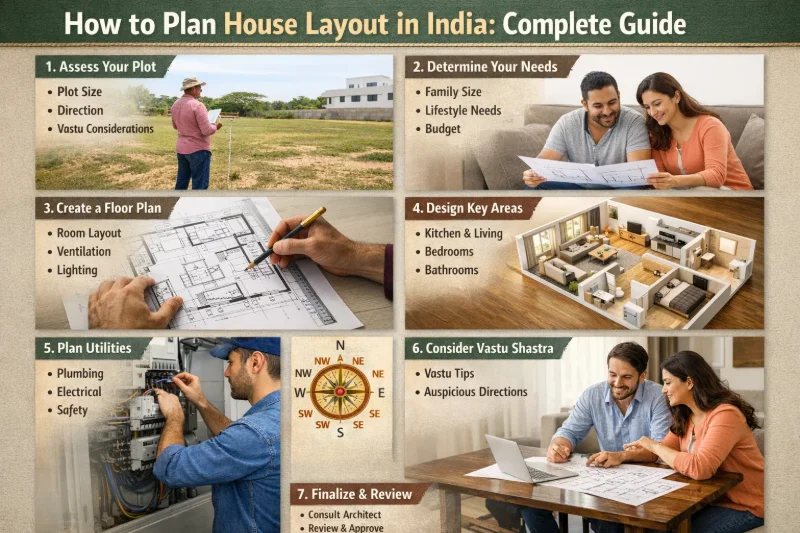
Before you start sketching layouts, you need a clear understanding of your available space and your family's needs. This foundational step prevents costly mistakes later in the construction process.
Build cost · Bengaluru, May 2026
Assess Your Plot Size and Orientation
The first step is to obtain accurate measurements of your plot. In India, plot sizes are typically measured in square feet or square meters. A common residential plot in urban areas might range from 1,200 to 3,000 square feet, while suburban plots can be larger.
Plot orientation is equally important. North-facing plots are generally considered premium in Indian real estate because they provide natural light without excessive heat. East-facing plots get morning sunlight, which is ideal for living areas and kitchens. West-facing plots receive intense afternoon heat, so you'll need strategic planning with proper shading. South-facing plots are the least preferred but can work with careful design.
Understanding your plot's orientation helps you position living rooms, bedrooms, and kitchens optimally. For example, in a west-facing plot in Mumbai or Hyderabad, you might want to place bedrooms on the west side with adequate ventilation and place living areas on the east to catch cooler morning light.
Define Your Family's Needs
Make a detailed list of your requirements:
Number of bedrooms and bathrooms needed
Separate dining area or open kitchen concept
Home office or study space (increasingly important post-pandemic)
Guest room requirements
Storage and utility space needs
Outdoor space for gardens or parking
Entertainment areas or home gym space
In Indian homes, multi-generational living is common, so consider whether you need separate living spaces for elderly parents or grown children. This might influence your layout significantly, potentially requiring an additional bedroom or even a separate entrance.
Regulatory and Legal Considerations
India's construction regulations vary by state and municipality, so understanding local building codes is crucial before finalizing your layout.
Frequently asked
Building Bylaws and Floor Area Ratio
Every Indian city has specific building bylaws that dictate:
Floor Area Ratio (FAR): This determines the maximum built-up area relative to your plot size. In Bangalore, FAR typically ranges from 2 to 3.5, while in Delhi it might be 3 to 4. Check your local municipal corporation's guidelines.
Setbacks: Mandatory distances from plot boundaries. Most cities require 15-20 feet from the front, 10-15 feet from the side, and 20-25 feet from the rear.
Height restrictions: Maximum number of floors allowed, which varies by locality.
Open space requirements: Minimum percentage of plot that must remain open for ventilation and light.
Before planning your layout, obtain a copy of these bylaws from your local municipal corporation or town planning authority. Many architects and engineers on platforms like AECORD can help you navigate these regulations.
Parking and Circulation Space
Indian building codes typically require 1-2 parking spaces per residential unit, depending on the city. This must be factored into your layout from the beginning. In Pune or Hyderabad, you might allocate 150-200 square feet for a single parking space, while in Mumbai, space constraints might make basement parking necessary.
Optimal Room Placement and Sizing
Strategic placement of rooms significantly impacts your home's functionality and livability.
Master Bedroom Positioning
The master bedroom should be:
Away from the main entrance for privacy
Ideally positioned to catch morning sunlight (east or northeast-facing)
Sized appropriately—typically 120-150 square feet for a comfortable master bedroom in urban India
With an attached bathroom (increasingly expected in modern Indian homes)
Away from kitchen and dining areas to minimize noise and cooking odors
In a 1,500 square foot apartment in Delhi or Bangalore, your master bedroom might occupy about 12-15% of the total space. Ensure it has good cross-ventilation with windows on at least two walls.
Living and Dining Areas
These spaces should be:
Located near the main entrance for easy access
Positioned to receive natural light throughout the day
Sized generously—typically 200-250 square feet combined for a 2 BHK
Designed for flexible furniture arrangement
Connected to outdoor space (balcony or terrace) when possible
In Indian homes, the living room serves multiple purposes—entertaining guests, family gatherings, and sometimes even work-from-home space. An open-concept living-dining area has become popular in metropolitan areas like Mumbai, Bangalore, and Hyderabad, as it creates a sense of spaciousness in smaller apartments.
Kitchen Design and Placement
The kitchen should be:
Positioned away from bedrooms to contain cooking odors and noise
Located near the dining area for convenient serving
Ideally north or east-facing to avoid afternoon heat (critical in Indian climate)
Well-ventilated with windows or exhaust systems
Sized appropriately—typically 80-120 square feet for a functional kitchen
Close to the service entrance or back door if available
Modern Indian kitchens are increasingly designed with the cook's workflow in mind. The classic "work triangle" between sink, stove, and refrigerator should be efficient. In apartments in Pune or Bangalore, modular kitchens have become standard, requiring careful planning of cabinet and appliance placement.
Bathroom and Toilet Planning
For a typical 2 BHK home in India, plan for:
One attached bathroom to the master bedroom (40-50 square feet)
One common bathroom/toilet (25-35 square feet)
Proper ventilation for both—either windows or exhaust fans
Adequate plumbing access for maintenance
Separate toilet and bathing areas if space permits (preferred in traditional Indian homes)
Bathrooms should not be visible from living areas. Positioning them along a single plumbing wall reduces construction costs significantly—an important consideration when budgeting your build.
Ventilation and Natural Light Optimization
India's climate demands careful attention to ventilation and light management. Poor planning leads to uncomfortable homes requiring excessive air conditioning.
Cross-Ventilation Strategy
Design your layout to allow cross-ventilation—air flowing from one side of a room to another. This is achieved by positioning windows on opposite or perpendicular walls. In cities like Delhi with extreme temperatures, cross-ventilation can reduce cooling needs by 20-30%.
For a detailed breakdown, see our guide to Property Tax Calculation India 2026.
For apartments in multi-story buildings, ensure main living areas have windows on at least two sides. Bedrooms should similarly have multiple openings for natural air circulation.
Sunlight Management
While natural light is desirable, excessive heat gain is problematic in Indian summers. Consider:
Deep overhangs or chajjas (traditional Indian architectural feature) on south and west-facing windows
Positioning trees or landscaping to provide shade without blocking winter sunlight
Using high-performance glass or external shading devices on west-facing windows
Creating buffer zones with utility spaces on heat-exposed sides
In Bangalore or Hyderabad, where summers are intense, strategic window placement can reduce indoor temperatures by 5-7 degrees, significantly lowering air conditioning costs.
Circulation and Flow
How people move through your home impacts daily comfort and functionality.
Corridor and Passage Design
Minimize wasted corridor space—a common issue in Indian apartment layouts. Corridors should be:
Minimum 3.5-4 feet wide for comfortable single-person passage
Designed to connect related spaces logically
Positioned to avoid dead-end passages that waste space
In a 1,200 square foot apartment in Mumbai, even 50 square feet of poorly planned corridor space represents 4% of your total area—significant in urban real estate where costs are ₹5,000-10,000 per square foot.
Entry and Exit Points
Plan for:
A main entrance with a foyer or entry vestibule (prevents direct view into living areas)
A service entrance if space permits (common in Indian homes for domestic help)
Clear sightlines from entrance to main living area
Adequate space for shoe racks and coat storage
Storage and Utility Space
Indians typically require more storage than Western standards suggest. Plan for:
Wardrobes in bedrooms (built-in or modular)
Kitchen pantry or dry storage (essential for Indian cooking with bulk spices and grains)
Utility room or dedicated space for washing machine and water storage
Under-stair storage if your home has a staircase
Loft or mezzanine space in high-ceiling areas (popular in villas in Pune and Bangalore)
Inadequate storage is a common complaint in Indian homes. Allocate at least 8-10% of your built-up area to storage solutions.
Outdoor Space Planning
Balconies, terraces, and gardens significantly enhance livability in Indian homes.
Balcony Design
Balconies should:
Be accessible from living areas or bedrooms
Have adequate depth (minimum 6 feet) for functional use
Include proper drainage to prevent water seepage
Be oriented to catch evening breezes in hot climates
Include safety railings (mandatory per building codes)
Terrace and Garden Space
If you have ground-floor space or a villa, plan for:
Functional garden space (if desired)
Outdoor seating or entertainment area
Proper drainage and waterproofing
Boundary walls for privacy (standard in Indian residential layouts)
In villas in Bangalore or Pune, outdoor space represents 20-30% of the total property value, so thoughtful planning is essential.
Climate-Responsive Design for Indian Regions
India's diverse climate demands region-specific considerations.
Hot and Humid Regions (Coastal Cities)
In Mumbai, Chennai, or Kochi:
Maximize ventilation and cross-air flow
Use lighter colors to reflect heat
Avoid large glass areas without shading
Plan for moisture management and waterproofing
Consider elevated floor levels to prevent water ingress during monsoons
Hot and Dry Regions
In Delhi, Jaipur, or Ahmedabad:
Use thermal mass (thick walls, concrete) to moderate temperature swings
Create deep setbacks and covered outdoor spaces
Position windows to minimize direct solar gain
Plan for efficient water management
Moderate Climate Regions
In Bangalore, Pune, or Hyderabad:
Balance between natural light and heat control
Maximize cross-ventilation
Create flexible outdoor spaces
Creating Your Layout Plan
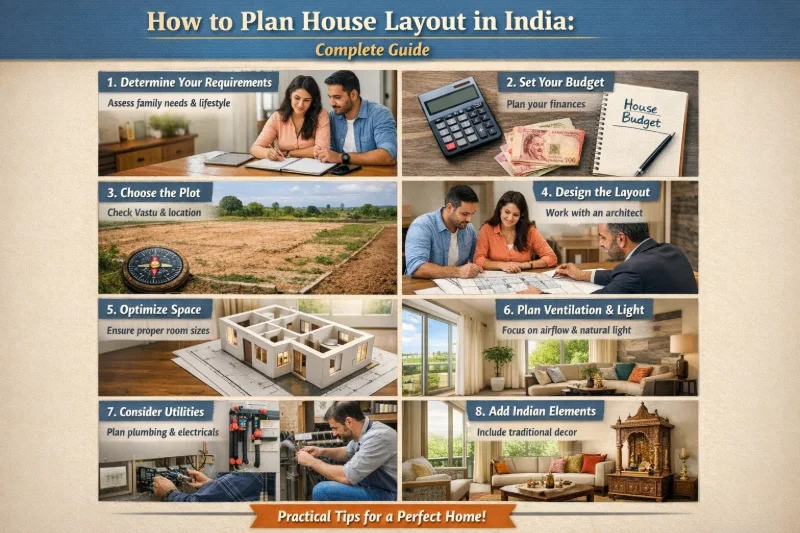
Once you've considered all factors, here's how to create your layout:
Step-by-Step Process
Sketch to scale: Use graph paper or digital tools to draw your plot and building footprint to scale (1:100 is standard)
Block major zones: Allocate areas for living, sleeping, service, and circulation
Position key elements: Place bathrooms, kitchens, and main stairs
Add room details: Doors, windows, and built-in furniture
Check regulations: Verify setbacks, open space, and FAR compliance
Refine based on sunlight: Adjust for optimal orientation
Review circulation: Ensure logical flow between spaces
Tools and Resources
You can use:
AutoCAD or similar professional tools
Free online tools like Floorplanner or RoomSketcher
Paper and pencil for initial sketches
Mobile apps for quick measurements
However, for complex layouts or compliance with local regulations, consulting with professionals is invaluable. Architects and engineers on AECORD can review your preliminary ideas and ensure your layout meets all legal requirements while maximizing functionality.
Common Layout Mistakes to Avoid
Learn from others' errors:
Undersizing rooms: Bedrooms smaller than 100 sq ft feel cramped; living areas under 150 sq ft limit furniture arrangement
Poor kitchen placement: Kitchens far from dining areas or bedrooms create inconvenience
Inadequate bathrooms: Insufficient bathrooms create morning bottlenecks in families
Ignoring ventilation: Windowless kitchens or poorly ventilated bathrooms lead to moisture and odor issues
Wasted corridor space: Excessive hallways reduce usable living area
Poor sunlight planning: Bedrooms facing west in Delhi create uncomfortable sleeping conditions
Insufficient storage: Cramped wardrobes and no pantry create clutter
Budget Considerations for Your Layout
Your layout directly impacts construction costs. Consider:
Plumbing walls: Grouping bathrooms and kitchens on a single wall reduces plumbing costs by 15-20%
Structural elements: Minimizing columns and load-bearing walls reduces costs
Exterior walls: Compact layouts with less perimeter reduce exterior wall construction costs
Finishes: More rooms mean more doors and finishes—simpler layouts are more economical
In Indian construction, where labor and materials costs vary significantly by region (₹800-1,500 per sq ft in Tier 2 cities vs. ₹1,500-3,500 in metros), efficient layout planning can save ₹1-3 lakhs on a typical 1,500 sq ft home.
Getting Professional Help
While basic layout planning is manageable, professional guidance ensures optimal results. Architects can:
Verify compliance with local building bylaws
Optimize for climate and orientation
Create 3D visualizations before construction
Suggest cost-saving design modifications
Ensure structural soundness
Obtain necessary approvals from municipal authorities
If you're planning a house layout in India, connecting with experienced architects and engineers through AECORD can streamline the process. AECORD's platform connects you with vetted professionals who understand Indian building codes, climate considerations, and cost-effective design solutions. Whether you need a complete design or just a review of your preliminary layout, AECORD professionals can provide expert guidance tailored to your specific location and requirements.
Conclusion
Planning a house layout in India requires balancing multiple factors—regulatory compliance, climate responsiveness, functional efficiency, and personal preferences. By understanding your space, assessing your needs, considering local regulations, and optimizing for natural light and ventilation, you can create a home layout that's both comfortable and practical for Indian living.
Take time to explore multiple layout options, sketch them out, and consider how you'll actually live in the space. Don't rush this critical phase—a well-planned layout ensures decades of comfortable living and protects your significant financial investment. When you're ready to move from planning to execution, find experienced architects and engineers on AECORD who can transform your vision into a compliant, beautiful, and functional home.
Frequently Asked Questions
What is the best plot orientation for a house layout in India?
North-facing plots are considered premium as they provide natural light without excessive heat. East-facing plots are ideal for living areas and kitchens due to morning sunlight, while west-facing plots require strategic shading and careful positioning of bedrooms. South-facing plots are least preferred but can work with thoughtful design.
How much open space must I keep in my house layout according to Indian building codes?
Indian building bylaws require a minimum percentage of your plot to remain open for ventilation and light, though the exact percentage varies by municipality. You should check with your local municipal corporation or town planning authority for specific open space requirements in your area.
What is Floor Area Ratio (FAR) and how does it affect house layout planning?
Floor Area Ratio (FAR) determines the maximum built-up area you can construct relative to your plot size. In Bangalore, FAR typically ranges from 2 to 3.5, while in Delhi it's 3 to 4. Understanding your city's FAR limits is essential before finalizing your layout to ensure compliance with local regulations.
How much space should I allocate for parking in my house layout?
Indian building codes typically require 1-2 parking spaces per residential unit depending on the city, with each space requiring approximately 150-200 square feet. Parking requirements must be factored into your layout planning from the beginning to ensure compliance.
What are setback requirements in Indian house layout planning?
Setbacks are mandatory distances from plot boundaries required by building bylaws. Most Indian cities require 15-20 feet from the front, 10-15 feet from the side, and 20-25 feet from the rear, though these vary by municipality. Always verify setback requirements with your local municipal corporation before planning.