

Explore how the integration of IoT and sensor technology is revolutionizing building management, creating more efficient, sustainable, and user-friendly environments. Discover the key components, benefits, and future trends driving the adoption of smart building solutions worldwide.
Understanding Smart Buildings

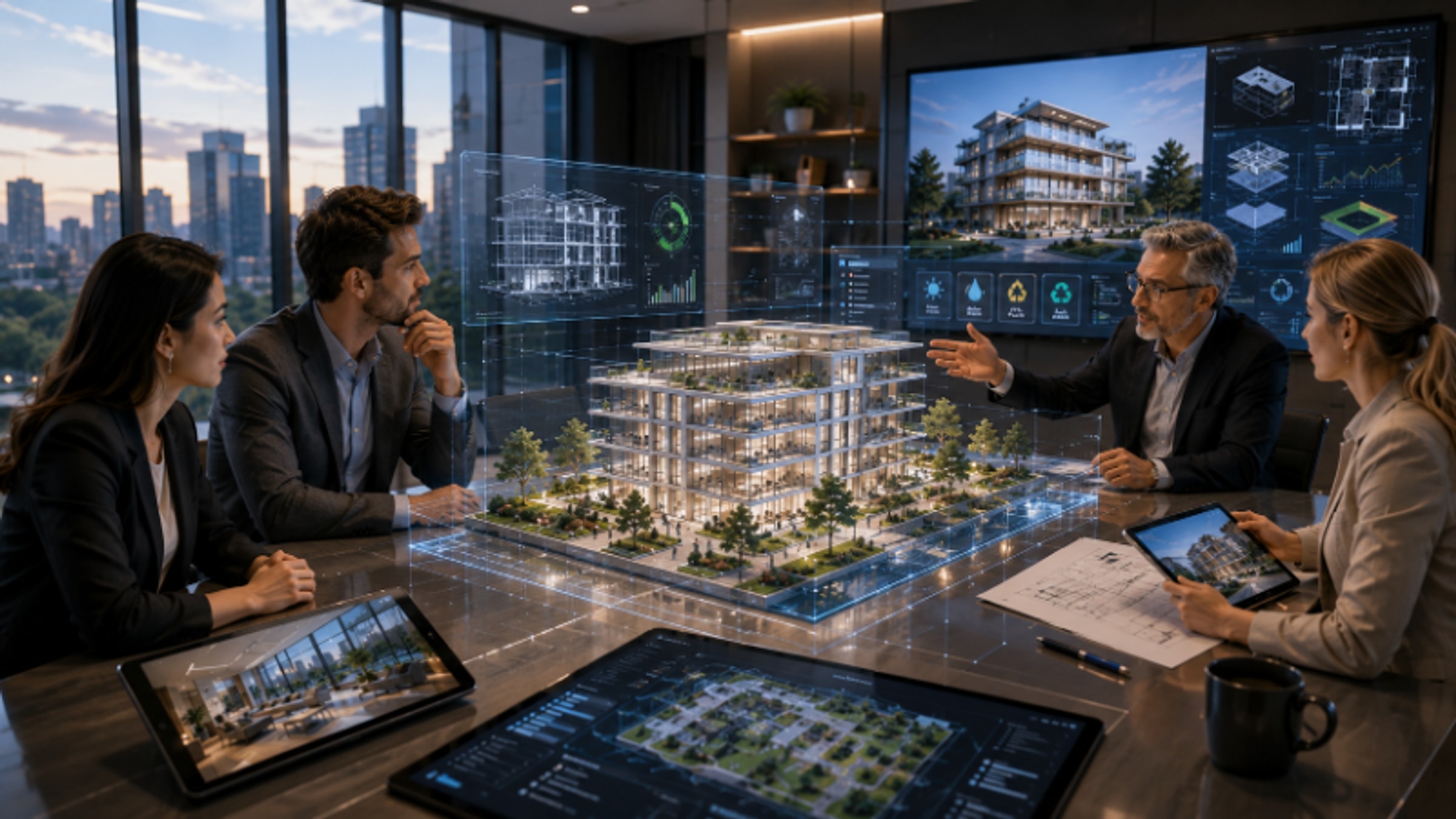
Smart buildings use Internet of Things (IoT) technology to create efficient, secure, and comfortable built environments. By integrating IoT sensors, control systems, and building management systems (BMS), smart buildings collect real-time data on factors like temperature, occupancy, air quality, and energy use to automate HVAC, lighting, and security systems. This intelligent automation improves energy efficiency, enhances occupant comfort, enables predictive maintenance, and strengthens security. As a key component of smart cities, smart building solutions support sustainable practices, reduce operational costs, and promote environmentally responsible development, shaping the future of modern infrastructure.
Build cost · Bengaluru, May 2026
The Role of IoT in Smart Buildings

IoT technologies form the backbone of smart buildings by connecting sensors, devices, and control systems into a unified, data-driven ecosystem. Through real-time data collection and analysis, IoT platforms enable building automation systems to intelligently manage HVAC, lighting, air quality, and occupancy, significantly improving energy efficiency and occupant comfort. IoT integration also supports predictive maintenance and smart metering, helping reduce energy waste and operational costs. Real-world applications in smart offices, hotels, and hospitals highlight how IoT creates responsive, efficient, and sustainable building environments, demonstrating its vital role in the future of intelligent infrastructure.
Energy Management through IoT

Energy optimization in smart buildings is achieved through the strategic use of IoT technologies that enable real-time monitoring, automated control, and predictive maintenance. IoT sensors adjust HVAC systems, lighting, and energy usage based on occupancy and environmental conditions, ensuring maximum operational efficiency. This intelligent energy management significantly reduces carbon emissions, lowers utility costs, and extends equipment lifespan, contributing to long-term sustainability. Real-world case studies from smart offices, hospitals, and hotels demonstrate how IoT-driven building automation delivers measurable energy savings while enhancing comfort and performance across diverse building environments.
Future of Smart Buildings

The future of smart building technology is being shaped by deeper IoT integration, predictive maintenance, personalized occupant solutions, and the growing convergence of AI and IoT. These advancements are enabling smarter energy management, enhanced security, and improved occupant well-being, while supporting seamless integration with smart city infrastructure. Although challenges such as data security, interoperability, and initial investment costs remain, they also create opportunities for innovation, standardization, and more cost-effective solutions. Together, these trends are driving the evolution of smarter, more sustainable, and highly responsive building environments.
Smart Solutions for Connected Living

The integration of IoT in smart homes and buildings is reshaping everyday living by enhancing comfort, convenience, security, and sustainability. Connected smart devices enable real-time monitoring, automation, and personalized control of lighting, temperature, air quality, and security systems, creating responsive environments tailored to occupants’ needs. Looking ahead, advancements in AI, data analytics, and IoT will further optimize resource management and support sustainable development. Through collaboration between industry, government, and academia, smart and connected environments will continue to evolve, delivering more efficient, secure, and livable communities.
Frequently asked
Conclusion
The integration of IoT and sensor technology is reshaping the very foundation of modern architecture. Smart buildings are no longer just structures they’re intelligent ecosystems that respond, adapt, and evolve with their occupants. From energy efficiency and predictive maintenance to comfort and safety, IoT-driven design ensures that every aspect of a building is optimized through real-time insights and automation.
“AECORD: Leading the Future of Smart and Sustainable Architecture”
At AECORD, we embrace this technological evolution by bridging innovation with design excellence. Our approach to smart architecture ensures that every project leverages intelligent systems to enhance performance, sustainability, and comfort creating spaces that are truly future-ready.
Frequently Asked Questions
What is a smart building and how do IoT sensors work in buildings?
Smart buildings use IoT technology and sensors to collect real-time data on temperature, occupancy, air quality, and energy use, then automatically control HVAC, lighting, and security systems. This integration creates efficient, secure, and comfortable environments while reducing operational costs and improving occupant comfort.
How do IoT sensors help reduce energy consumption in buildings?
IoT sensors monitor energy usage in real-time and automatically adjust HVAC, lighting, and other systems based on occupancy and environmental conditions. This intelligent automation significantly reduces carbon emissions, lowers utility costs, and extends equipment lifespan through optimized energy management.
What are the main benefits of implementing smart building technology?
Smart buildings improve energy efficiency, enhance occupant comfort, enable predictive maintenance, strengthen security, and reduce operational costs. They also support sustainable practices and promote environmentally responsible development as key components of smart cities.
How does IoT enable predictive maintenance in smart buildings?
IoT sensors continuously collect data from building systems and equipment, allowing building management systems to predict failures before they occur. This proactive approach reduces unexpected downtime, extends equipment lifespan, and lowers maintenance costs compared to traditional reactive maintenance.
What role do building management systems play in smart buildings?
Building management systems (BMS) integrate data from IoT sensors and control systems to automate and optimize building operations across HVAC, lighting, security, and energy management. They enable real-time monitoring and intelligent decision-making to improve efficiency and occupant experience.
Frequently Asked Questions
What is a smart building and how do IoT sensors work in buildings?
Smart buildings use IoT technology and sensors to collect real-time data on temperature, occupancy, air quality, and energy use, then automatically control HVAC, lighting, and security systems. This integration creates efficient, secure, and comfortable environments while reducing operational costs and improving occupant comfort.
How do IoT sensors help reduce energy consumption in buildings?
IoT sensors monitor energy usage in real-time and automatically adjust HVAC, lighting, and other systems based on occupancy and environmental conditions. This intelligent automation significantly reduces carbon emissions, lowers utility costs, and extends equipment lifespan through optimized energy management.
What are the main benefits of implementing smart building technology?
Smart buildings improve energy efficiency, enhance occupant comfort, enable predictive maintenance, strengthen security, and reduce operational costs. They also support sustainable practices and promote environmentally responsible development as key components of smart cities.
How does IoT enable predictive maintenance in smart buildings?
IoT sensors continuously collect data from building systems and equipment, allowing building management systems to predict failures before they occur. This proactive approach reduces unexpected downtime, extends equipment lifespan, and lowers maintenance costs compared to traditional reactive maintenance.
What role do building management systems play in smart buildings?
Building management systems (BMS) integrate data from IoT sensors and control systems to automate and optimize building operations across HVAC, lighting, security, and energy management. They enable real-time monitoring and intelligent decision-making to improve efficiency and occupant experience.