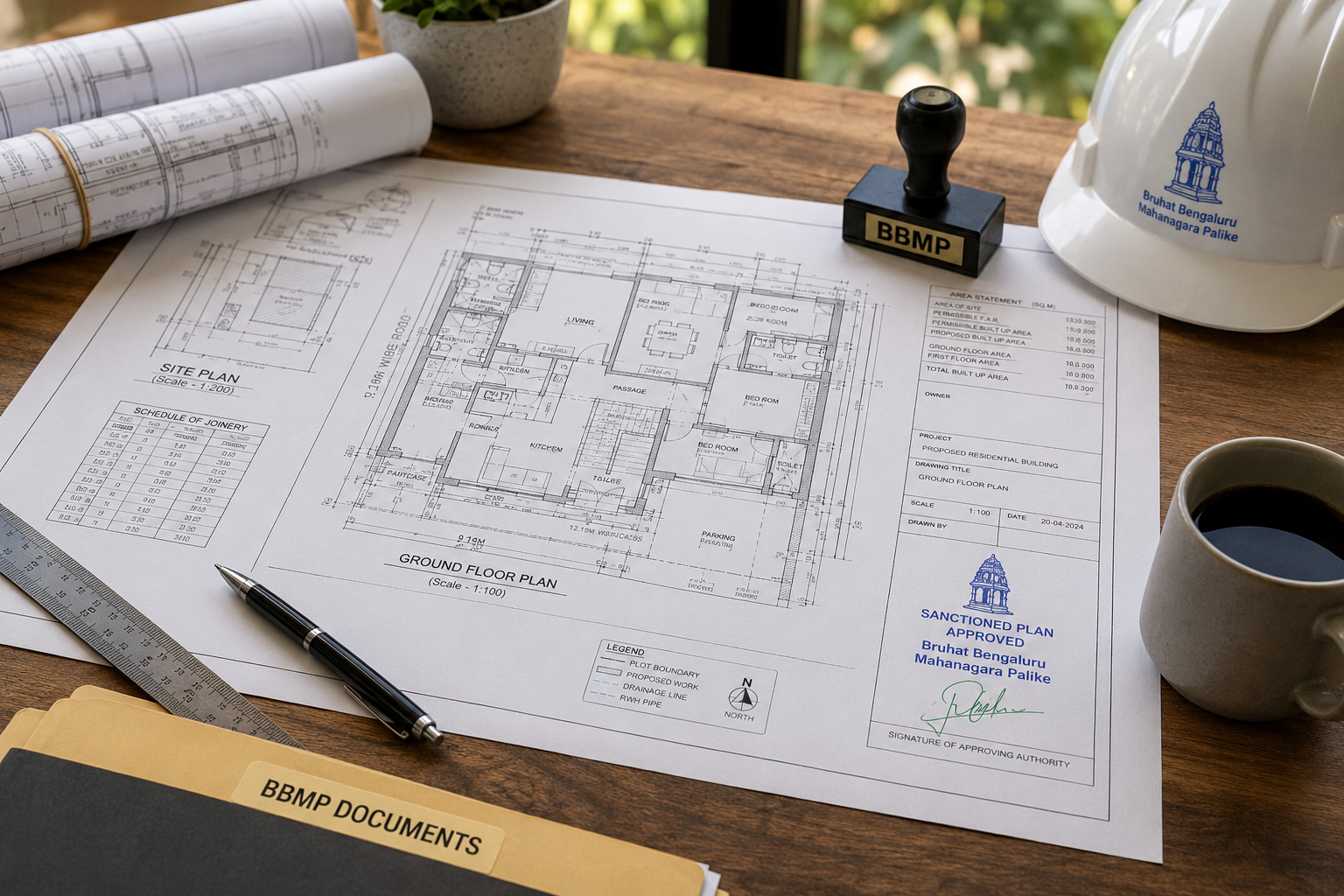



Understanding the Building Plan Approval Process in Bangalore
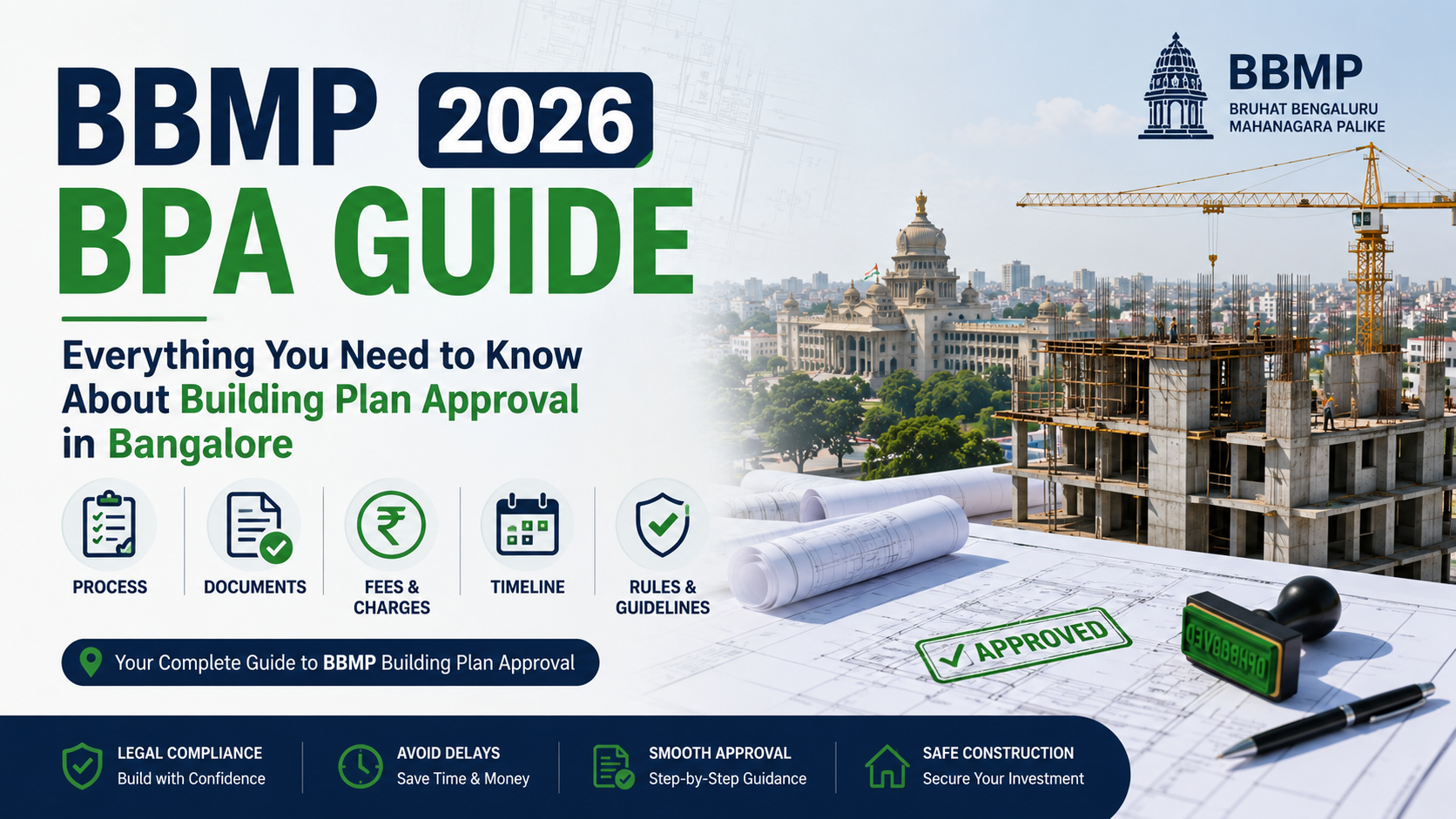
Bangalore, India's IT capital and one of the fastest-growing metropolitan areas, has a well-defined yet complex building plan approval process. Whether you're planning to construct a residential apartment, commercial office space, or industrial facility, understanding the approval process is crucial for timely project execution. This comprehensive guide walks you through every step of getting your building plan approved by the Bangalore Development Authority (BDA) and the Bruhat Bengaluru Mahanagara Palike (BBMP).
Build cost · Bengaluru, May 2026
The Regulatory Framework in Bangalore
Bangalore's building approval process is governed by multiple authorities and regulations. The primary governing bodies include:
BBMP (Bruhat Bengaluru Mahanagara Palike): Handles approvals for properties within municipal limits
BDA (Bangalore Development Authority): Manages approvals for properties in BDA-designated areas
BIAAPA (Bangalore International Airport Area Planning Authority): Oversees areas near the airport
KIADB (Karnataka Industrial Areas Development Board): Manages industrial zones
The approval process is guided by the Karnataka Building Code (KBC) 2020, which incorporates the National Building Code (NBC) 2016. Understanding which authority has jurisdiction over your property is the first critical step in the approval journey.
Pre-Approval Requirements and Documentation
Essential Documents You'll Need
Before submitting your building plan to the concerned authority, gather the following documents:
Land ownership documents: Original title deed, sale deed, or lease agreement
Encumbrance Certificate: Obtained from the sub-registrar's office (typically valid for 3 months)
Property tax receipt: Latest property tax payment proof
Khata certificate: Proof of property record in municipal records
Site plan: Showing property boundaries, north direction, and surrounding details
Approved layout plan: If the property is in a planned layout
NOC from concerned authorities: Such as PWD (for properties near highways), Airport Authority (if near airport), or Railway authorities
Environmental clearance: If applicable (for large projects)
Power of Attorney: If applying through an authorized representative
Frequently asked
Hiring Qualified Professionals
The building plan must be prepared by licensed professionals registered with the Council of Architecture (for architects) and the Institution of Engineers (for civil engineers). This is non-negotiable in Bangalore. You can find qualified architects and engineers through platforms like AECORD, which connects you with verified AECO professionals in Bangalore who understand local regulations and have experience with the approval process.
Engaging experienced professionals early can save you months of back-and-forth with authorities. They understand common rejection points and can ensure your plans comply with all regulations from the start.
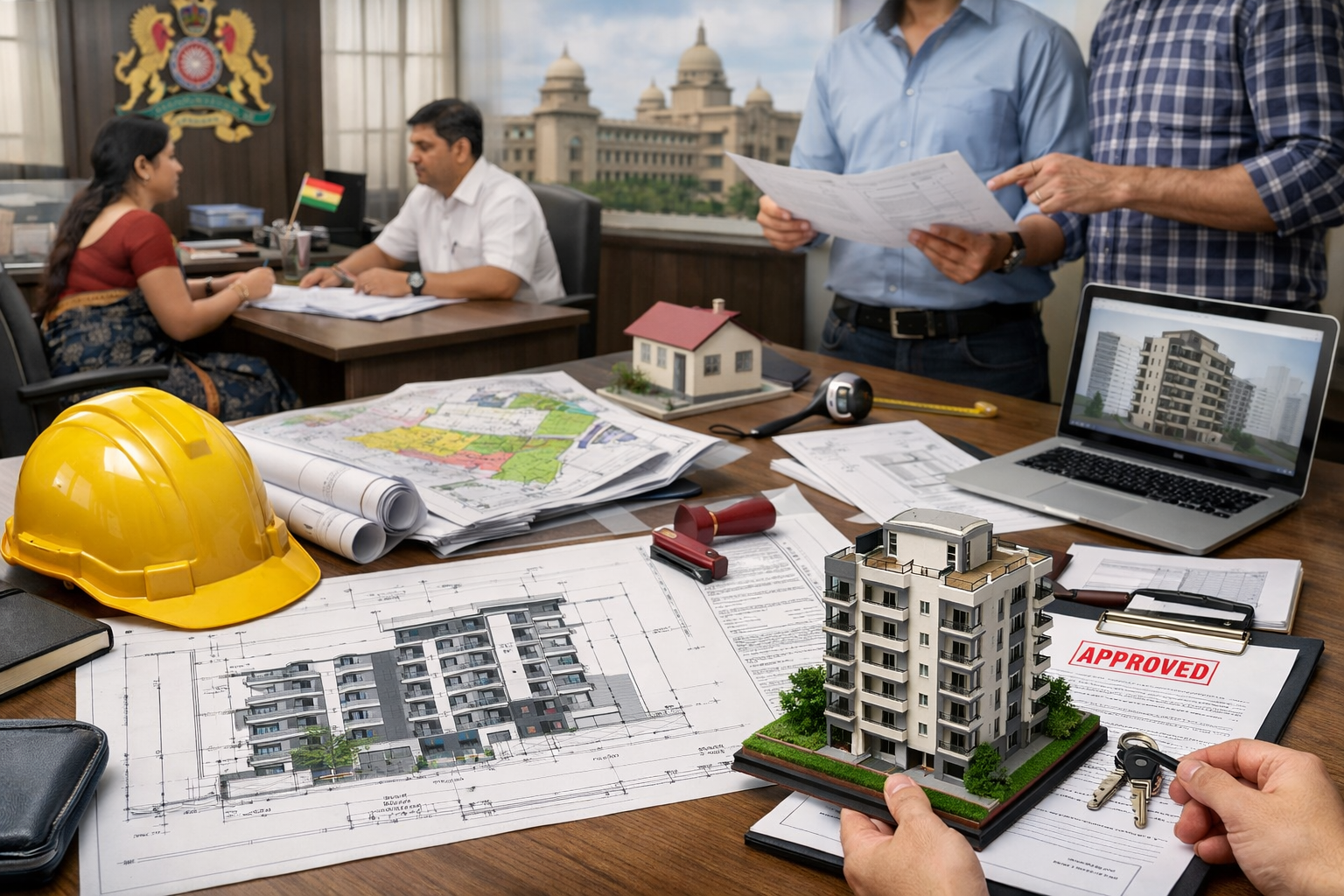
Step-by-Step Building Plan Approval Process
Step 1: Site Verification and Planning Permission
Before preparing detailed plans, your architect should conduct a thorough site survey. This includes:
Measuring actual site dimensions
Identifying utilities (water, electricity, sewage lines)
Checking for any encroachments or disputes
Verifying zoning regulations for your property
Confirming setback requirements (front, rear, and side)
In Bangalore, setback requirements typically include a 5-meter front setback, 3-meter rear setback, and 2-meter side setbacks for residential properties, though these vary based on road width and property classification.
Step 2: Preparation of Building Plans
Your architect will prepare comprehensive building plans including:
Site plan: Showing property boundaries, setbacks, and building footprint
Floor plans: For each floor with room dimensions and layouts
Elevation drawings: Front, rear, and side views showing architectural design
Section drawings: Vertical cross-sections showing floor heights and structural details
Parking layout: Showing parking spaces and circulation
Utility plans: Water supply, sewage, electrical, and drainage layouts
Structural drawings: Prepared by the structural engineer
All drawings must be prepared in compliance with the Karnataka Building Code 2020. The plans must clearly show compliance with floor area ratio (FAR), building height limits, and other zoning parameters.
Step 3: Submission of Building Plans
In Bangalore, you can now submit building plans online through:
BBMP: Through the BBMP portal (bbmp.gov.in) for properties within municipal limits
BDA: Through the BDA office or authorized centers for BDA areas
The submission typically requires:
Completed application form
All required documents listed above
Building plan drawings (usually 3-4 sets)
Structural design calculations
Non-Objection Certificates (NOCs) from relevant authorities
Applicable fees (varies based on built-up area and project type)
For residential properties in Bangalore, approval fees typically range from ₹5,000 to ₹50,000 depending on the total built-up area. Commercial and industrial projects may have higher fees.
Step 4: Technical Scrutiny and Initial Examination
After submission, the authority's technical team conducts an initial examination. This typically takes 7-15 days. During this phase, they verify:
Completeness of submitted documents
Compliance with zoning regulations
Adherence to setback requirements
FAR compliance
Parking provisions
Fire safety provisions
Structural design adequacy
If any documents are missing or non-compliant, the authority issues a "Show Cause Notice" requesting clarifications or modifications.
Step 5: Addressing Objections and Revisions
It's common for the first submission to have objections. The authority typically provides a list of issues that need to be resolved. Your architect must:
Review all objections carefully
Modify plans to address concerns
Provide detailed explanations for any deviations
Resubmit revised plans with supporting documents
This back-and-forth process can take several weeks to months, depending on the complexity of objections. Working with experienced professionals who have handled similar projects in Bangalore significantly speeds up this process. AECORD's network of verified professionals includes architects and engineers who specialize in resolving approval issues efficiently.
Step 6: Final Approval and Commencement Certificate
Once all objections are resolved and the authority is satisfied with your plans, you'll receive:
Approval letter: Official approval of your building plans
Commencement certificate: Permission to start construction
The approval letter specifies conditions you must comply with during construction, such as:
Mandatory site inspections at various construction stages
Compliance with environmental regulations
Worker safety requirements
Waste management provisions
Timeline for project completion
Important Compliance Points for Bangalore
Floor Area Ratio (FAR) and Building Height
Bangalore has specific FAR limits based on property location and zone:
Commercial zones: FAR up to 3.0-4.0
Residential zones: FAR up to 2.0-2.5
Industrial zones: FAR up to 1.5-2.0
Building height is typically limited to 24 meters (approximately 6-7 stories) in most residential areas, though this can vary based on road width and specific locality regulations.
Parking Requirements
Bangalore has strict parking norms:
Residential: 1 parking space per residential unit (minimum)
Commercial: 1 parking space per 100 square meters of built-up area
Mixed-use: Combined requirements based on usage breakdown
Underground parking is encouraged and can help achieve higher FAR in some cases.
Fire Safety and Structural Compliance
All plans must comply with:
Fire safety provisions as per NBC 2016
Seismic design requirements (Bangalore falls in Seismic Zone II)
Accessibility requirements for persons with disabilities
Energy conservation measures
Timeline and Cost Considerations
Expected Timeline
The complete approval process in Bangalore typically takes:
Simple residential projects: 3-4 months
Medium-sized projects: 4-6 months
Complex commercial/mixed-use projects: 6-12 months
Delays can occur due to:
Incomplete documentation
Non-compliance with regulations
Authority workload and processing delays
External approvals from other agencies
Public objections or disputes
Cost Breakdown
Budget for the following costs:
Architect and engineer fees: ₹50,000 to ₹2,00,000+ (depending on project size)
Approval fees: ₹5,000 to ₹50,000
NOC fees: ₹500 to ₹2,000 per authority
Consultant fees (if needed): ₹20,000 to ₹1,00,000
Miscellaneous charges: ₹10,000 to ₹50,000

Common Reasons for Plan Rejection in Bangalore
Understanding common rejection reasons helps you avoid them:
FAR violation: Building exceeds permissible floor area ratio
Setback non-compliance: Building encroaches on required setbacks
Inadequate parking: Insufficient parking spaces as per norms
Height violation: Building exceeds height restrictions
Structural deficiency: Inadequate structural design or calculations
Fire safety issues: Insufficient fire exits, staircases, or safety measures
Incomplete documentation: Missing NOCs or required certificates
Encroachment concerns: Boundary disputes or encroachment on public land
Post-Approval Obligations
After receiving approval, you must:
Display approval notice: Prominently at the construction site
Conduct inspections: Mandatory inspections at foundation, plinth, and completion stages
Maintain compliance: Ensure construction follows approved plans exactly
Pay construction taxes: As per BBMP/BDA rates
Obtain completion certificate: After final inspection and compliance verification
The Completion Certificate is essential for obtaining occupancy rights and registering the property.
Leveraging Professional Support
Navigating Bangalore's building approval process can be challenging without expert guidance. This is where platforms like AECORD become invaluable. AECORD connects property owners with verified architects, engineers, and consultants who specialize in the approval process. These professionals understand:
Local regulations and recent amendments
Authority preferences and common objections
Efficient documentation strategies
Expedited approval techniques within regulatory frameworks
By engaging professionals through AECORD, you gain access to specialists with proven track records in Bangalore's approval ecosystem, potentially saving months of time and significant costs.
Conclusion
The building plan approval process in Bangalore, while detailed and sometimes challenging, is designed to ensure safe, compliant, and sustainable construction. Success depends on thorough preparation, accurate documentation, and professional expertise. By understanding each step, engaging qualified professionals early, and maintaining clear communication with authorities, you can navigate the process smoothly and move your construction project forward efficiently.
Ready to start your building approval process in Bangalore? Connect with experienced architects and engineers through AECORD who specialize in Bangalore approvals. Our verified professionals have successfully guided numerous projects through the approval process and can help ensure your project meets all regulatory requirements while minimizing delays. Visit AECORD today to find the right professional for your project.
Frequently Asked Questions
Which authority approves building plans in Bangalore?
Building plan approval in Bangalore depends on the property location. BBMP (Bruhat Bengaluru Mahanagara Palike) handles approvals within municipal limits, while BDA (Bangalore Development Authority) manages BDA-designated areas. Other authorities like BIAAPA handle airport areas and KIADB manages industrial zones.
What documents are required for building plan approval in Bangalore?
Essential documents include land ownership documents (title deed or sale deed), Encumbrance Certificate, latest property tax receipt, Khata certificate, site plan, approved layout plan, NOCs from relevant authorities, and environmental clearance if applicable. All documents should be current and verified.
Do I need a licensed architect for building plan approval in Bangalore?
Yes, building plans must be prepared by professionals registered with the Council of Architecture (for architects) and the Institution of Engineers (for civil engineers). This is a non-negotiable requirement in Bangalore and ensures compliance with all local regulations.
What are the setback requirements for buildings in Bangalore?
Bangalore typically requires a 5-meter front setback and 3-meter rear setback for residential properties, though specific requirements may vary based on zoning regulations and property classification. Your architect should verify exact setback requirements for your specific property location.
How long does the building plan approval process take in Bangalore?
The approval timeline varies depending on project complexity and authority responsiveness, but typically ranges from 2-6 months. Having all required documents ready, hiring experienced professionals, and addressing rejections promptly can help expedite the process.