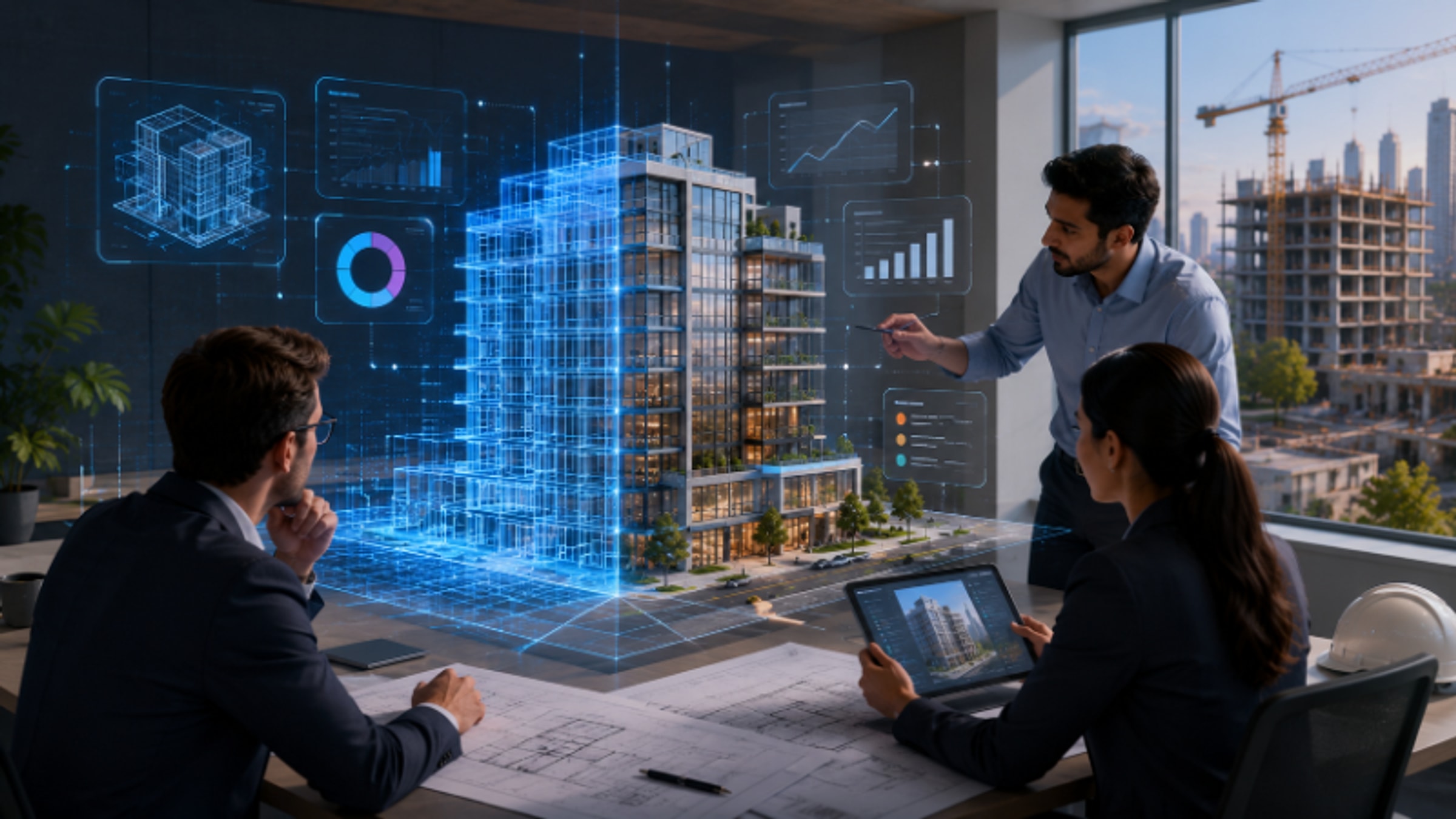
Understanding AI-Powered Drawing Review in Construction
The architecture, engineering, and construction (AEC) industry in India is undergoing a digital transformation. One of the most impactful innovations emerging in 2026 is artificial intelligence (AI) applied to construction drawing review. This technology is revolutionizing how architects and engineers in cities like Mumbai, Bangalore, Delhi, and Pune validate designs, catch errors, and ensure compliance with building codes./blog/gfrc-panels
Construction drawing review has traditionally been a time-consuming, manual process. Senior architects would spend hours examining drawings for dimensional inconsistencies, code violations, and constructability issues. With AI-powered tools, this process is becoming faster, more accurate, and more accessible to firms of all sizes.
Build cost · Bengaluru, May 2026
How AI Drawing Review Works
Machine Learning and Pattern Recognition
AI drawing review systems use machine learning algorithms trained on thousands of construction documents. These systems learn to identify common errors, such as:
Dimensional conflicts between floor plans and elevations
Missing dimensions or annotations
Structural inconsistencies
Accessibility violations (ramp slopes, door widths)
Fire safety code breaches
Coordination issues between architectural and MEP (mechanical, electrical, plumbing) drawings
The technology analyzes CAD files and PDFs, extracting geometric data and comparing it against established design standards and Indian building codes like the National Building Code (NBC) 2016. /blog/gfrc-panels
Computer Vision Technology
Advanced computer vision allows AI systems to "read" hand-sketched annotations, handwritten notes, and complex drawing symbols. This is particularly valuable for Indian architectural firms that often work with a mix of digital and hand-drawn documentation during early design phases.
Frequently asked
Code Compliance Checking
AI systems are increasingly programmed with knowledge of Indian regulations including:
National Building Code (NBC) 2016
State-specific building bylaws (Maharashtra, Karnataka, Delhi, etc.)
Accessibility standards (IS 1643-2016)
Fire safety requirements (IS 1644:2016)
Energy conservation codes (ECBC 2017)
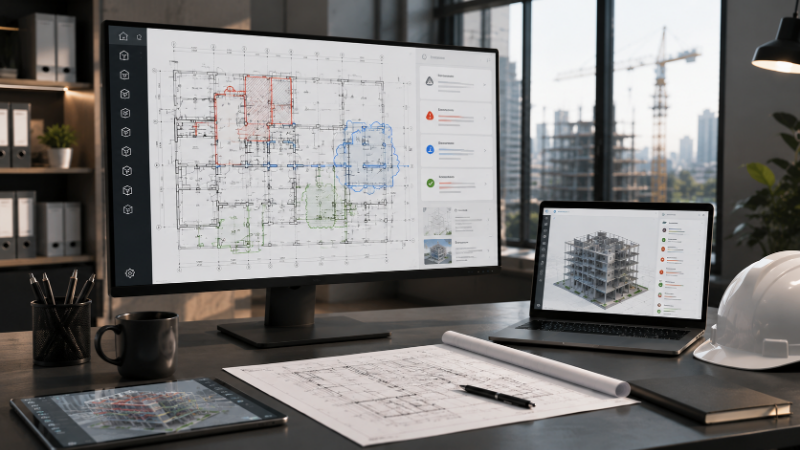
When you upload drawings to an AI review platform, the system automatically cross-references your design against these codes and flags potential violations.
Key Benefits of AI Drawing Review for Indian Architects and Engineers
Significant Time Savings
A comprehensive drawing review that might take 20-40 hours manually can be completed by AI in 15-30 minutes. For a mid-sized architectural firm in India handling 10-15 projects simultaneously, this translates to recovering 200-300 billable hours per month. At typical consulting rates of ₹1,500-3,000 per hour, this represents ₹3-9 lakhs in recovered time monthly.
Improved Accuracy and Consistency
AI doesn't get fatigued. It applies the same rigorous standards to every drawing, every time. This consistency is crucial when coordinating between multiple team members, especially in larger firms with offices across different Indian cities.
Early Error Detection
By catching errors during design development rather than during construction, firms can avoid costly rework. A dimensional error caught in the design phase might cost ₹50,000 to fix in CAD; the same error discovered on-site could cost ₹50 lakhs or more.
Enhanced Collaboration
AI-generated reports provide objective, data-driven feedback that reduces subjective disagreements during design reviews. When a junior architect's drawing is flagged by AI, the feedback is technical and specific—not personal.
Better Client Relationships
Delivering drawings that have been rigorously AI-reviewed demonstrates professionalism and reduces the likelihood of costly revisions post-submission. Clients appreciate the confidence that comes with thoroughly vetted documentation.
Current AI Drawing Review Tools and Platforms (2026)
Specialized AEC Software
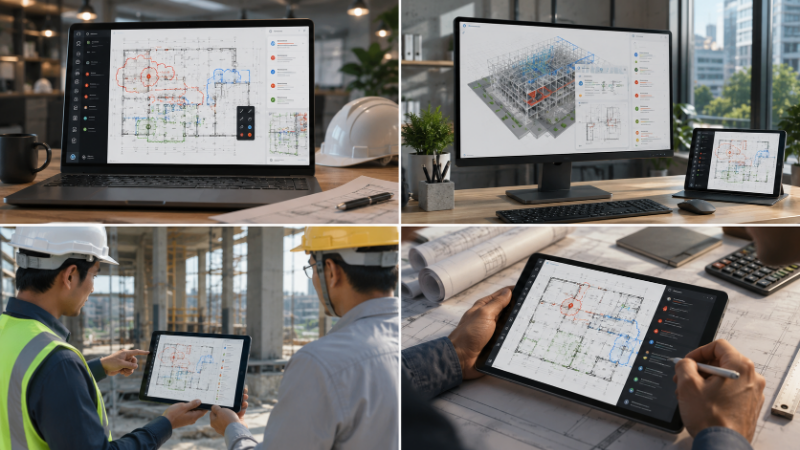
Several platforms have emerged as leaders in AI-powered drawing review:
Revit-integrated solutions: Tools that work directly within Autodesk Revit, India's most popular BIM software, providing real-time feedback as architects design.
Cloud-based review platforms: Web applications that accept CAD and PDF uploads, analyze them, and generate detailed reports without requiring specialized software installation.
Specialized MEP coordination tools: AI systems focused specifically on mechanical, electrical, and plumbing clashes—a critical issue in dense urban Indian construction.
Code compliance checkers: Dedicated tools programmed with Indian building codes that verify compliance automatically.
Integration with BIM Workflows
The most advanced implementations integrate AI review into Building Information Modeling (BIM) workflows. As architects and engineers update models in Revit or other BIM platforms, AI continuously monitors for errors and compliance issues, alerting teams in real-time.
Practical Implementation: Step-by-Step Guide
Step 1: Select the Right Tool
Evaluate AI drawing review platforms based on:
Support for Indian building codes (NBC 2016, state bylaws)
Compatibility with your existing software (Revit, AutoCAD, SketchUp)
Pricing model (per-project, monthly subscription, or per-drawing)
Customer support and training availability in India
Data security and confidentiality measures
Many platforms offer free trials—take advantage of these to test with actual project files.
Step 2: Prepare Your Drawings
For best results, ensure drawings are:
Named consistently and logically
Properly layered and organized
Updated to reflect the current design phase
Complete with all necessary annotations and dimensions
Step 3: Configure Code Requirements
Set up the AI system to check against relevant codes for your specific project:
Project location (which state/city determines applicable bylaws)
Building type (residential, commercial, institutional, industrial)
Project size and complexity
Any special requirements or client-specific standards
Step 4: Run Initial Analysis
Upload your drawings and run the AI review. Most systems generate reports within minutes, categorizing issues by severity: critical, major, and minor.
Step 5: Review and Prioritize Findings
Not every flagged issue requires action. Some may be false positives or design choices you've intentionally made. Prioritize fixes based on:
Code compliance requirements (non-negotiable)
Constructability concerns
Coordination issues with consultants
Minor inconsistencies that could confuse contractors
Step 6: Implement Changes and Re-Review
Make corrections and run the AI review again. Iterate until you achieve a clean report or have documented reasons for any remaining flags.
Challenges and Limitations of AI Drawing Review
False Positives
AI systems sometimes flag design choices that are intentional or context-dependent. For example, an unusually narrow corridor might be flagged, but it could be intentional in a heritage renovation project. Teams must develop judgment about which flags warrant action.
Code Database Gaps
While AI systems are increasingly programmed with Indian codes, they may not capture every nuance of state-specific bylaws or recent amendments. Bangalore's building bylaws, for instance, differ significantly from Mumbai's. Ensure your chosen platform is current for your specific jurisdiction.
Complex Design Scenarios
AI excels at rule-based checking but struggles with complex design logic. A creative architectural solution that violates standard practice but solves a specific site constraint might be flagged incorrectly.
Training and Adoption
Your team needs training to use AI tools effectively and to interpret results appropriately. Rushing this step can lead to either ignoring all AI feedback or over-correcting based on false positives.
Data Privacy Concerns
Uploading confidential project files to cloud-based AI systems raises data security questions. Ensure any platform you use has robust security measures, preferably with data centers within India or with clear data residency policies.
Real-World Applications in Indian Construction
Large Infrastructure Projects
Major developers in Delhi, Mumbai, and Bangalore are using AI drawing review for large commercial and residential complexes. One Mumbai-based developer reported reducing drawing revisions by 35% after implementing AI review on a 500,000 sq ft mixed-use development.
MEP Coordination
In high-rise construction, coordinating architectural, structural, mechanical, electrical, and plumbing drawings is notoriously complex. AI systems excel at identifying clashes between these disciplines before construction begins, potentially saving weeks of on-site problem-solving.
Code Compliance for Smaller Firms
Smaller architectural practices in tier-2 cities like Pune, Ahmedabad, and Hyderabad are using AI tools to ensure code compliance without hiring expensive senior architects specifically for review. This democratization of expertise is particularly valuable for growing firms.
The Future of AI in Drawing Review
Predictive Analytics
Next-generation AI systems will predict constructability issues before they occur, analyzing drawings against historical construction data to identify patterns associated with cost overruns or schedule delays.
Real-Time Collaboration
As AI becomes more sophisticated, it will provide real-time feedback during design creation, guiding architects and engineers toward compliant, constructable designs from the start.
Integration with Project Management
AI drawing review will increasingly integrate with project management and cost estimation tools, automatically updating schedules and budgets based on design complexity identified during review.
Customization for Indian Context
We expect to see AI tools increasingly tailored to Indian construction practices, with better understanding of local materials, construction methods, and regulatory nuances across different states.
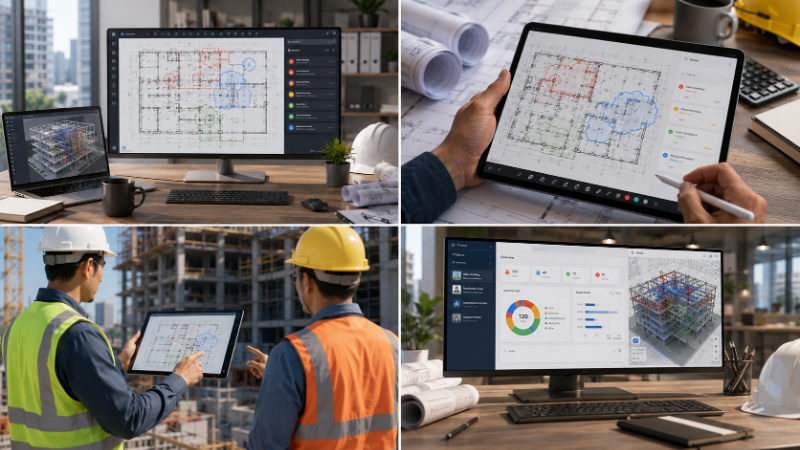
Best Practices for Implementing AI Drawing Review
Start with Pilot Projects
Don't implement AI review across your entire portfolio immediately. Start with 2-3 projects to understand the workflow, build team familiarity, and refine your processes.
Maintain Human Oversight
AI is a tool, not a replacement for experienced architects and engineers. The most effective implementations combine AI's speed and consistency with human judgment and creativity.
Document Your Standards
Create clear documentation of your firm's standards, code interpretations, and design preferences. This helps configure AI systems accurately and ensures consistency across projects.
Invest in Training
Allocate time and resources to train your team on AI tools. The better your team understands the technology, the more value you'll extract from it.
Iterate and Improve
Review the AI system's performance regularly. Are the flagged issues actually problems? Are you missing any common errors? Use this feedback to refine your implementation.
Cost Considerations for Indian Firms
AI drawing review tools vary widely in cost:
Free or freemium tools: Limited features, good for small projects or trying the concept (₹0-5,000/month)
Mid-range solutions: Suitable for small to mid-sized firms, ₹10,000-50,000/month
Enterprise solutions: Comprehensive tools for large firms, ₹1-5 lakhs+/month
Per-project pricing: Some platforms charge ₹5,000-50,000 per project depending on complexity
When calculating ROI, factor in time savings, reduced rework, and improved project delivery quality. Most firms see payback within 3-6 months of implementation.
Finding Expert Support Through AECORD
Implementing AI drawing review effectively requires expertise. If you're looking to adopt these tools or need guidance on best practices, AECORD connects you with experienced architects, engineers, and technology consultants across India who specialize in digital transformation and AI implementation in construction.
Whether you're in Mumbai, Bangalore, Delhi, Pune, or any other Indian city, AECORD's network includes professionals who have successfully implemented AI drawing review and can guide your firm through the process. You can also find specialized BIM coordinators and drawing review consultants on AECORD who understand both the technology and Indian regulatory requirements.
AECORD makes it easy to find the right professionals for your specific needs, compare expertise, and connect with firms that have proven track records in your city and project type.
Conclusion
AI-powered drawing review is no longer a futuristic concept—it's a practical tool that's transforming how Indian architects and engineers work in 2026. By improving accuracy, saving time, and ensuring code compliance, these systems are helping firms deliver better projects faster.
The key to successful implementation is choosing the right tool for your needs, training your team properly, and maintaining the human judgment that makes great architecture. Start small, learn from early projects, and gradually expand your use of AI review across your portfolio.
The firms that embrace this technology thoughtfully will gain significant competitive advantages in the increasingly complex Indian construction market. Whether you're a solo practitioner or a large multi-office firm, AI drawing review can help you work smarter, deliver better quality, and ultimately create more successful projects.
Ready to explore AI drawing review tools or need expert guidance on implementation? Visit AECORD today to connect with architects, engineers, and technology consultants who can help your firm adopt these transformative technologies. Find the right professionals for your project, regardless of whether you're based in Mumbai, Bangalore, Delhi, Pune, or anywhere else in India.
Frequently Asked Questions
How much time can AI drawing review save construction firms?
AI drawing review can complete a comprehensive review in 15-30 minutes compared to 20-40 hours of manual work. For mid-sized Indian architectural firms handling multiple projects, this can recover 200-300 billable hours monthly, representing ₹3-9 lakhs in recovered time at typical consulting rates.
What types of errors can AI detect in construction drawings?
AI drawing review systems can identify dimensional conflicts, missing annotations, structural inconsistencies, accessibility violations, fire safety code breaches, and coordination issues between architectural and MEP drawings using machine learning trained on thousands of construction documents.
Is AI drawing review compliant with Indian building codes?
Yes, AI systems are programmed with knowledge of Indian regulations including the National Building Code (NBC) 2016, state-specific bylaws, accessibility standards (IS 1643-2016), fire safety requirements, and energy conservation codes (ECBC 2017), automatically flagging potential violations.
Can AI review hand-drawn construction drawings?
Yes, advanced computer vision technology allows AI systems to read hand-sketched annotations, handwritten notes, and complex drawing symbols, making it valuable for Indian firms that work with mixed digital and hand-drawn documentation during early design phases.
How much does catching drawing errors early save in construction costs?
Errors caught during design development cost significantly less to fix—a dimensional error might cost ₹50,000 to correct in CAD but could cost ₹50 lakhs or more if discovered on-site, making early AI detection highly cost-effective.