When it comes to building construction in India, one of the most critical decisions builders and homeowners face is choosing between AAC (Autoclaved Aerated Concrete) blocks and traditional red bricks. Both materials have been extensively used across Indian construction projects, from residential buildings in Mumbai and Bangalore to commercial complexes in Delhi and Pune. Understanding the differences between these two materials is essential for making an informed decision that balances cost, durability, environmental impact, and construction efficiency.
The construction industry in India has been evolving rapidly, with modern materials like AAC blocks gaining significant traction over the past decade. However, red bricks remain deeply rooted in Indian construction practices due to their historical use and widespread availability. This comprehensive guide will help you understand the pros and cons of both materials, enabling you to choose the right option for your specific project requirements.
What Are AAC Blocks and Red Bricks?
Build cost · Bengaluru, May 2026
Understanding AAC Blocks
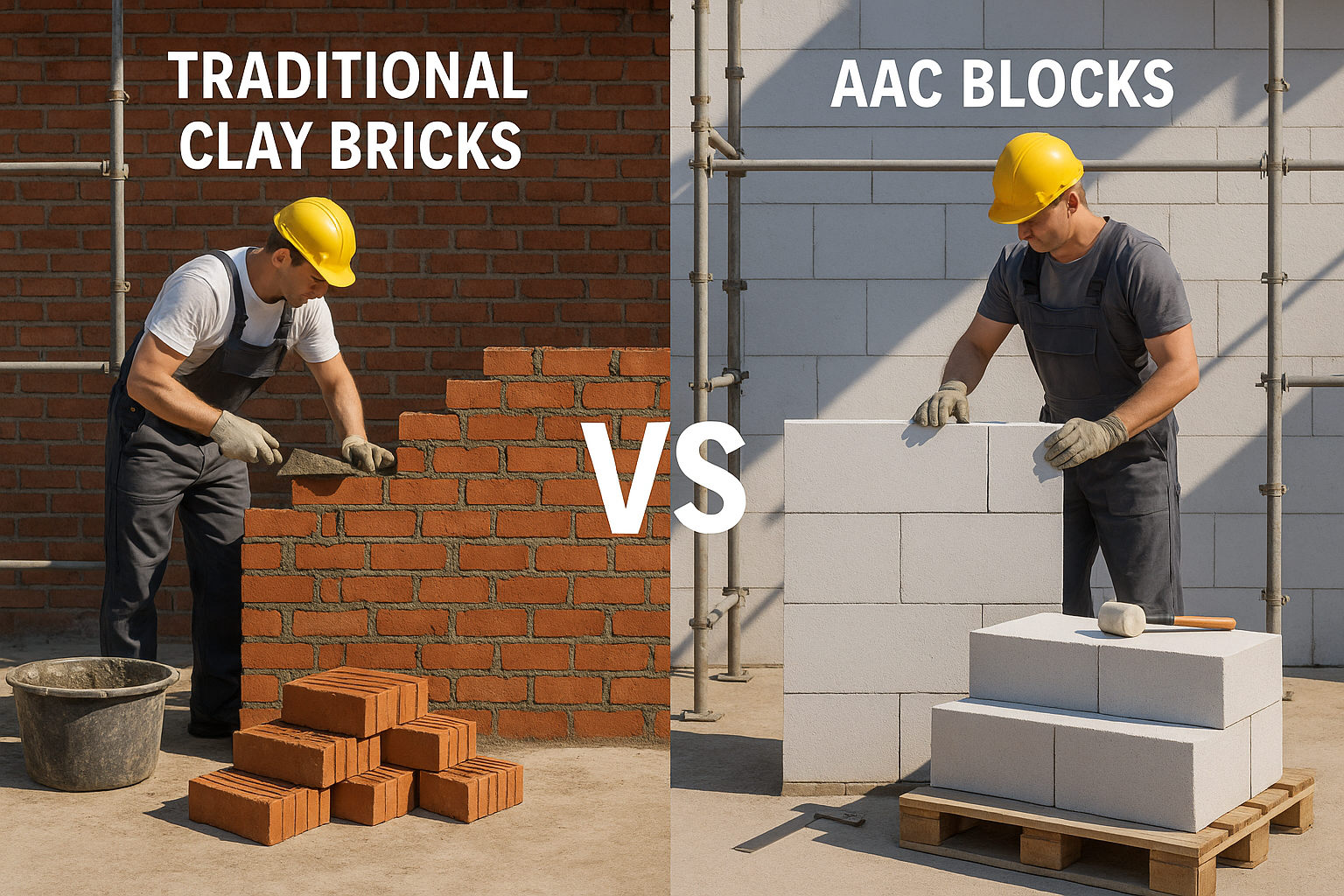
AAC (Autoclaved Aerated Concrete) blocks are engineered building materials manufactured through a specialized process. These blocks are made from cement, lime, silica sand, aluminum powder, and water. The aluminum powder creates a chemical reaction that produces hydrogen gas, which creates tiny air pockets throughout the material. The resulting product is then cut into uniform blocks and autoclaved (steam-cured) under high pressure and temperature to achieve the desired strength and durability.
For more on this, see our guide on Construction Cost Per Sq Ft India 2026.
AAC blocks are lightweight, typically weighing between 500-700 kg per cubic meter, compared to red bricks which weigh around 1600-1900 kg per cubic meter. This lightweight nature makes them easier to handle on construction sites and reduces the overall load on building structures. Major manufacturers like Ultratech, Magnum Gold, and Bilcon produce AAC blocks across India, with production facilities in major cities like Bangalore, Pune, and Hyderabad.
Understanding Red Bricks
Red bricks are traditional clay-based building units that have been used in India for centuries. They are manufactured by mixing clay with water, molding the mixture into rectangular shapes, and then firing them in kilns at temperatures between 1000-1200 degrees Celsius. This firing process gives red bricks their characteristic reddish-brown color and provides them with their structural strength.
Red bricks remain the most widely used building material across India, particularly in tier-2 and tier-3 cities. They are locally produced in almost every region, making them readily available and relatively inexpensive. The standardized size of Indian red bricks is 190mm x 90mm x 90mm (length x width x height), making them compatible with traditional construction methods.
Cost Comparison: AAC Blocks vs Red Bricks
Frequently asked
Initial Material Costs
One of the most significant factors influencing the choice between AAC blocks and red bricks is the initial cost. As of 2024, the pricing in the Indian market shows:
Red Bricks: Approximately ₹4-6 per piece in most Indian cities. For a 1000 sq ft building, you would need roughly 8,000-10,000 bricks, resulting in a material cost of ₹32,000-60,000.
AAC Blocks: Approximately ₹35-50 per block depending on the size and region. For the same 1000 sq ft area, the material cost would be around ₹1,40,000-2,00,000.
At first glance, red bricks appear significantly cheaper. However, this comparison becomes more nuanced when you factor in labor costs, mortar requirements, and overall construction efficiency. AAC blocks require less mortar (approximately 10-15% less) and can be laid faster, potentially offsetting the higher material cost through reduced labor expenses.
Long-term Cost Considerations
While AAC blocks have a higher upfront cost, their long-term value proposition is compelling. Buildings constructed with AAC blocks typically have lower maintenance costs, better thermal insulation reducing electricity bills, and potentially longer structural lifespans. In metro cities like Bangalore and Pune, developers increasingly prefer AAC blocks for premium residential and commercial projects, recognizing the long-term cost benefits despite higher initial investment.
Structural and Technical Properties
Strength and Load-Bearing Capacity
Red bricks have been the backbone of Indian construction for generations, offering reliable compressive strength ranging from 3.5 to 7.5 MPa (Megapascals) for standard quality bricks. This strength is sufficient for most residential and mid-rise commercial buildings across India.
AAC blocks offer compressive strength ranging from 3.5 to 6 MPa, comparable to red bricks. However, AAC blocks provide more consistent quality and strength throughout the material due to their manufacturing process. The uniformity of AAC blocks makes them particularly suitable for high-rise buildings where precision and consistency are critical.
Thermal Insulation Properties
This is where AAC blocks demonstrate a clear advantage. The air pockets within AAC blocks provide excellent thermal insulation with a thermal conductivity of 0.15-0.25 W/mK, compared to red bricks at 0.9-1.0 W/mK. This means buildings constructed with AAC blocks maintain cooler temperatures in summer and warmer temperatures in winter, significantly reducing air conditioning and heating costs.
For Indian cities with extreme temperatures like Delhi (where summer temperatures exceed 45°C) and Mumbai (with high humidity), this thermal advantage translates to measurable savings. Studies indicate that AAC block buildings can reduce cooling costs by 20-30% compared to red brick structures, making them increasingly popular in tier-1 cities.
Sound Insulation
The porous structure of AAC blocks also provides superior sound absorption, making them ideal for buildings in noisy urban areas. The air pockets absorb sound waves effectively, reducing noise transmission between rooms and from external sources. Red bricks offer minimal sound insulation benefits, requiring additional soundproofing measures in noise-sensitive applications.
Fire Resistance and Safety
Fire Rating Comparison
Both AAC blocks and red bricks are non-combustible materials with excellent fire resistance properties. AAC blocks can withstand temperatures up to 1200°C without losing structural integrity, while red bricks maintain their strength at similar temperatures. Both materials have a fire rating of 4 hours or more, depending on wall thickness, making them suitable for buildings requiring high fire safety standards.
For commercial buildings and high-rise residential complexes in major Indian cities where fire safety regulations are stringent, both materials meet the requirements specified in the National Building Code of India (NBC).
Environmental Impact and Sustainability
Manufacturing Process and Carbon Footprint
Red brick manufacturing involves firing clay in kilns, which is energy-intensive and produces significant carbon dioxide emissions. The traditional brick kiln industry in India is a major contributor to air pollution, particularly in regions like Uttar Pradesh and Punjab where brick production is concentrated.
AAC block manufacturing, while also energy-intensive, is more controlled and standardized. Modern AAC plants use cleaner technologies and produce less waste. However, the autoclaving process requires significant steam energy. Studies indicate that AAC blocks have a slightly lower carbon footprint over their lifecycle when considering durability and reduced maintenance needs.
Waste and Recyclability
AAC block manufacturing generates minimal waste, as the material is precisely cut during production. Red brick manufacturing produces considerable waste and broken bricks. On construction sites, AAC blocks can be easily cut and shaped to fit specific requirements, reducing waste. Both materials are technically recyclable, though red brick recycling is more common in India due to the material's long history of use.
Construction Speed and Labor Efficiency
Laying Speed and Ease of Installation
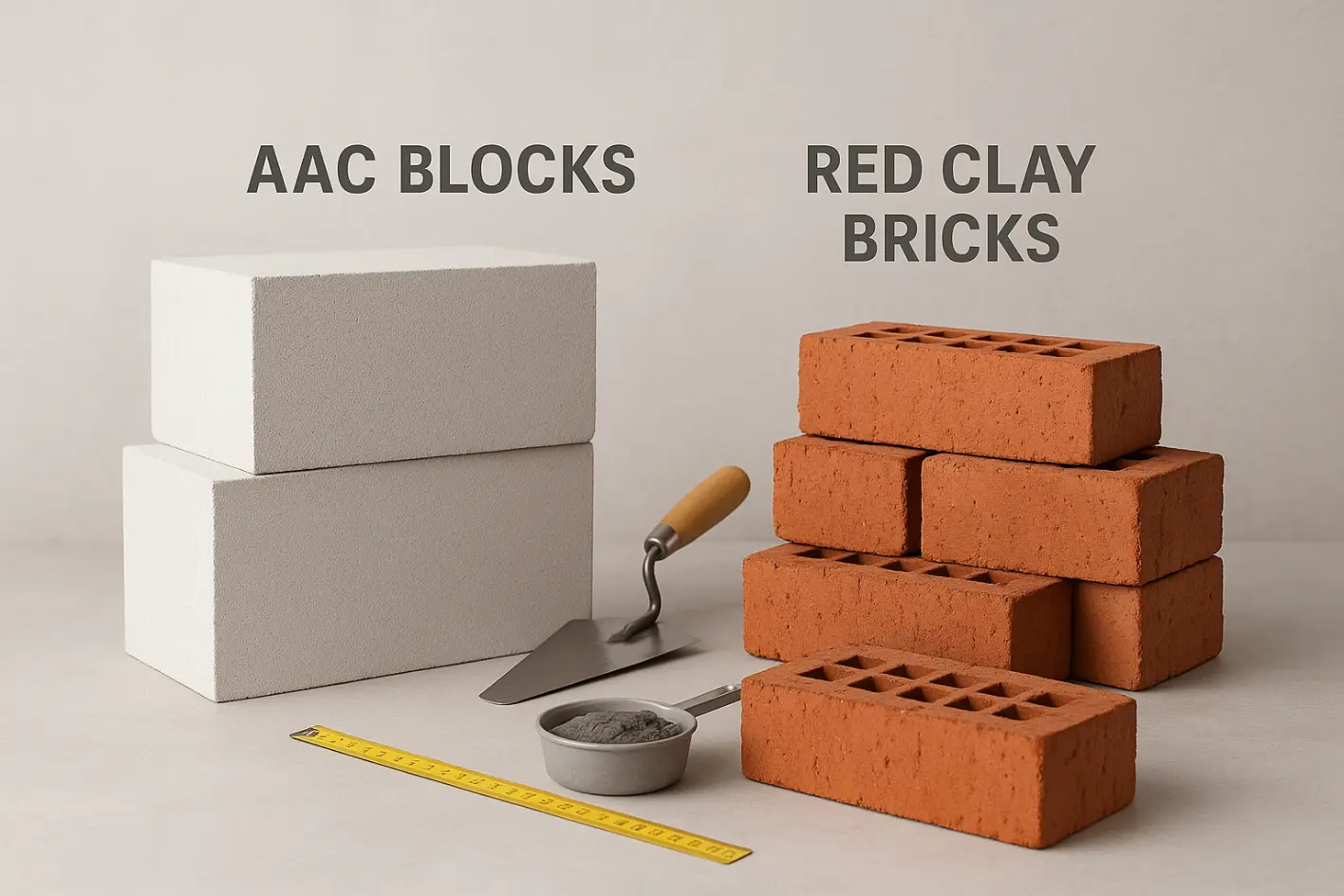
AAC blocks are significantly larger than red bricks (typically 600mm x 200mm x 100mm or 600mm x 200mm x 150mm), meaning fewer units are needed to cover the same wall area. A mason can lay approximately 40-50 AAC blocks per day, compared to 300-400 red bricks per day. However, the total wall area covered is greater with AAC blocks, reducing overall construction time.
For a typical 1000 sq ft residential unit, construction using AAC blocks can be completed 20-30% faster than with red bricks. This speed advantage is particularly valuable in competitive markets like Bangalore and Hyderabad, where faster project completion means quicker revenue realization for developers.
Skilled Labor Requirements
Red brick masonry is a well-established craft in India with abundant skilled labor available in every region. AAC block laying requires slightly more precision and skill, though the learning curve is minimal for experienced masons. In metro cities, AAC block installation is now standard practice with readily available skilled workers.
Durability and Maintenance
Longevity and Structural Integrity
Red bricks, when properly maintained, can last 100+ years. However, they are susceptible to water absorption and salt efflorescence, particularly in coastal areas like Mumbai and Goa. The porous nature of red bricks means they can absorb moisture, leading to deterioration over time, especially in areas with high humidity or poor drainage.
AAC blocks are more resistant to moisture and environmental degradation. Their lower water absorption rate (10-15% compared to 12-20% for red bricks) makes them more suitable for areas prone to flooding or high humidity. The air pockets within AAC blocks also prevent water from penetrating deeply into the material, maintaining structural integrity for longer periods.
Maintenance Requirements
Buildings constructed with red bricks typically require periodic repointing of mortar joints and surface treatments to prevent water infiltration. AAC block buildings require minimal maintenance once properly sealed with appropriate coatings. This lower maintenance requirement translates to reduced long-term costs and extended building lifespan.
Regulatory Compliance and Standards
Indian Standards and Codes
Both materials are covered under Indian Standards. Red bricks must comply with IS 1077:2016 (Indian Standard for Common Burnt Clay Building Bricks), while AAC blocks must meet IS 2185 (Indian Standard for Autoclaved Aerated Concrete Blocks). Both standards ensure that materials meet minimum quality and performance requirements.
The National Building Code of India (NBC) permits the use of both materials for various building types and heights. However, some premium projects and metro developments increasingly specify AAC blocks due to their superior performance characteristics and consistency in meeting standards.
Regional Considerations for Indian Markets
Coastal Regions
In coastal cities like Mumbai, Chennai, and Kochi, AAC blocks offer significant advantages due to their resistance to salt spray and moisture. Red bricks in coastal areas require additional protective measures and more frequent maintenance, making AAC blocks the preferred choice for long-term durability.
Seismic Zones
India has multiple seismic zones, particularly in the Himalayan regions and parts of Gujarat. AAC blocks' lightweight nature and consistent quality make them suitable for seismic-prone areas, reducing the load on structural elements and improving earthquake resistance. Many construction projects in Uttarakhand and Kashmir now prefer AAC blocks for this reason.
Tier-2 and Tier-3 Cities
In cities like Indore, Nagpur, and Jaipur, red bricks remain dominant due to lower costs and established supply chains. However, as these cities develop and construction standards improve, AAC blocks are gaining acceptance among developers building premium properties.
Making the Right Choice for Your Project
Factors to Consider
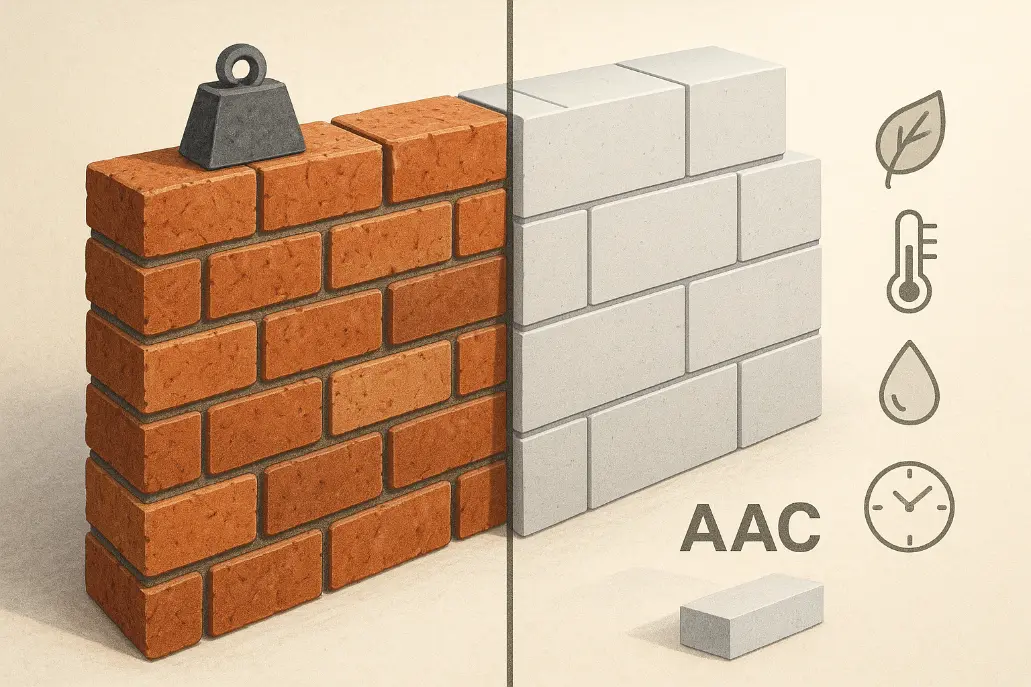
Budget: If initial cost is the primary constraint, red bricks are more economical. For projects where long-term value matters, AAC blocks offer better returns.
Climate: In hot, humid, or coastal climates, AAC blocks are superior. In moderate climates, either option works well.
Project Timeline: If faster construction is critical, AAC blocks reduce overall project duration.
Building Height: For multi-story buildings, AAC blocks' lightweight nature reduces structural loads and foundation requirements.
Maintenance Capability: If long-term maintenance is a concern, AAC blocks require less upkeep.
Local Availability: Consider what materials are readily available in your region. Red bricks are available everywhere; AAC blocks may have limited availability in smaller towns.
Hybrid Approach
Many modern construction projects in India use a hybrid approach, combining both materials. For example, using AAC blocks for partition walls and red bricks for load-bearing walls, or vice versa, optimizing cost and performance.
Conclusion
The choice between AAC blocks and red bricks depends on your specific project requirements, budget constraints, and long-term objectives. Red bricks remain a viable, cost-effective option for many Indian construction projects, particularly in tier-2 and tier-3 cities. AAC blocks offer superior performance, faster construction, and better long-term value, making them increasingly popular in metro cities and premium projects.
For architects, engineers, and builders working on projects across India, understanding these material properties is crucial for making informed decisions. When you're ready to find experienced professionals who can guide you through material selection and construction planning, AECORD connects you with verified architects, engineers, and construction specialists across India. Whether you're building in Mumbai, Bangalore, Delhi, or any other Indian city, AECORD's marketplace makes it easy to find experts who understand both traditional and modern construction materials.
Consider your specific project context, consult with local construction professionals available on AECORD, and make a decision that balances cost, performance, and sustainability. Visit AECORD today to connect with construction professionals who can provide personalized recommendations for your project.
```
Frequently Asked Questions
What is the cost difference between AAC blocks and red bricks in India?
Red bricks cost approximately ₹4-6 per piece, while AAC blocks cost ₹35-50 per block. For a 1000 sq ft building, red bricks cost ₹32,000-60,000 compared to ₹1,40,000-2,00,000 for AAC blocks. However, AAC blocks use less mortar and require faster labor, potentially offsetting the higher initial material cost.
How much lighter are AAC blocks compared to red bricks?
AAC blocks weigh 500-700 kg per cubic meter, while red bricks weigh 1600-1900 kg per cubic meter. This significant weight difference makes AAC blocks easier to handle on construction sites and reduces the overall structural load on buildings.
What are AAC blocks made of?
AAC blocks are manufactured from cement, lime, silica sand, aluminum powder, and water. The aluminum powder creates a chemical reaction that produces hydrogen gas, creating tiny air pockets throughout the material, which is then steam-cured under high pressure and temperature.
Why are red bricks still popular in India despite newer alternatives?
Red bricks remain popular in India due to their lower initial cost, widespread local availability in almost every region, historical use in construction practices, and compatibility with traditional construction methods. They are particularly common in tier-2 and tier-3 cities.
Which material requires less mortar: AAC blocks or red bricks?
AAC blocks require approximately 10-15% less mortar compared to red bricks. This reduced mortar requirement, combined with faster laying speeds, can help offset the higher initial material cost of AAC blocks.