

The construction industry in India is at the cusp of a digital revolution. While traditional methods have served the sector for decades, emerging technologies like digital twins are fundamentally changing how projects are planned, executed, and monitored. From large-scale infrastructure projects in Bangalore to residential complexes in Mumbai, digital twins are proving to be a game-changer for Indian construction professionals.
But what exactly is a digital twin, and why should you care? This comprehensive guide explores how this transformative technology is reshaping construction in India and what it means for your projects.
Understanding Digital Twins in Construction
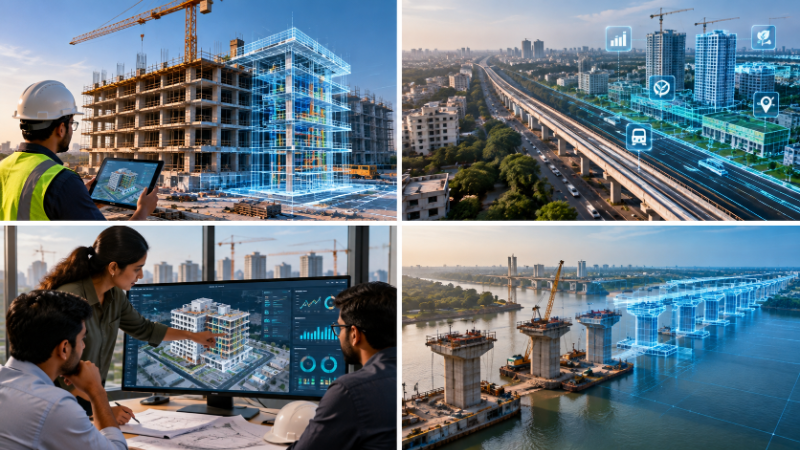
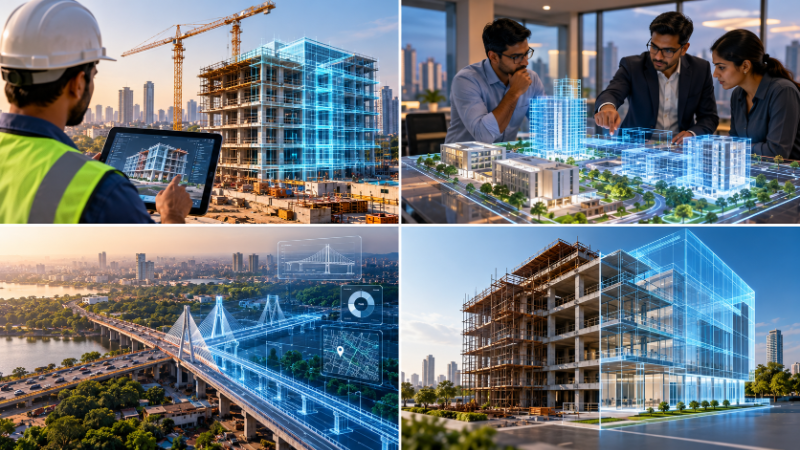
A digital twin is a virtual replica of a physical construction project or asset. It's created using real-time data from sensors, IoT devices, drones, and other monitoring equipment, combined with Building Information Modeling (BIM) technology. This digital counterpart mirrors every aspect of the physical structure—from dimensions and materials to performance metrics and operational data.
Think of it as a living, breathing digital model that evolves as your construction project progresses. Unlike static BIM models created at the design phase, digital twins continuously update with real-world information, providing stakeholders with an accurate, up-to-the-minute view of project status.
Build cost · Bengaluru, May 2026
Key Components of a Digital Twin
3D Modeling: A detailed virtual representation of the building or infrastructure
Real-time Data: Information from sensors and IoT devices monitoring construction progress
Performance Analytics: Insights into safety, quality, productivity, and resource utilization
Simulation Capabilities: Testing scenarios and predicting outcomes before physical implementation
Integration Layer: Connection between physical construction and digital systems
For Indian construction projects, digital twins are particularly valuable given the complexity of managing large teams, diverse weather conditions, and regulatory compliance across different states and municipalities.
How Digital Twins Transform Project Planning
Effective project planning is the foundation of successful construction. Digital twins revolutionize this phase by enabling better visualization and scenario testing.
Enhanced Visualization and Stakeholder Communication
Traditional 2D drawings and even standard 3D BIM models can be difficult for all stakeholders to interpret. A digital twin provides an immersive, interactive representation that architects, engineers, contractors, and clients can explore together. This is particularly valuable in India, where projects often involve multiple stakeholders across different locations—from project managers in Delhi to site supervisors in Pune.
With digital twins, you can show clients exactly how their building will look, how spaces will function, and how materials will be used. This reduces misunderstandings and change orders, which typically account for 5-10% of project costs in India.
Frequently asked
Scenario Simulation and Risk Assessment
Before breaking ground, digital twins allow you to simulate various construction scenarios. You can test different construction sequences, equipment layouts, and temporary infrastructure arrangements without physical prototypes. This is invaluable for Indian projects that must navigate monsoon seasons, traffic restrictions, and complex urban environments.
For example, a major infrastructure project in Bangalore can simulate how to manage concrete pouring during the monsoon season, test alternative equipment configurations, and identify potential bottlenecks—all in the virtual environment before costly mistakes occur on-site.
Optimized Resource Allocation
Digital twins enable detailed analysis of resource requirements across project phases. By simulating the construction sequence, you can determine optimal timing for equipment delivery, workforce scheduling, and material procurement. This reduces wastage and idle time—critical considerations when managing projects across India's varied geography and supply chain complexities.
Real-Time Project Monitoring and Control
Once construction begins, digital twins transition from planning tools to operational control systems. This is where the technology delivers substantial value for Indian construction teams.
Progress Tracking and Schedule Management
Digital twins integrate data from site cameras, drones, GPS trackers, and manual updates to provide real-time progress information. Instead of relying on weekly site reports that may be outdated by the time they reach decision-makers, project managers can access current status information instantly.
This is particularly valuable for large projects in India where coordination across multiple shifts and teams is challenging. A residential complex under construction in Mumbai can track progress across different towers simultaneously, ensuring that work progresses according to schedule and identifying delays immediately.
Quality Assurance and Compliance Monitoring
Digital twins can automatically flag deviations from design specifications. Sensors can monitor concrete strength, structural alignment, electrical systems, and HVAC performance in real-time. When measurements deviate from acceptable ranges, alerts notify supervisors immediately.
For Indian projects, this means better compliance with Indian Standards (IS codes) and building regulations. Whether it's monitoring structural integrity according to IS 456 or ensuring electrical safety per IS 732, digital twins provide continuous verification.
Safety Enhancement
Safety is paramount in Indian construction, where workplace accidents remain a concern. Digital twins contribute to safety through:
Predictive Analysis: Identifying high-risk zones and time periods based on activity patterns
Real-time Monitoring: Tracking worker movements and equipment operation through IoT devices
Incident Documentation: Recording near-misses and incidents for analysis and prevention
Virtual Training: Using digital twins for safety training before workers enter dangerous situations
A construction site in Hyderabad using digital twins can simulate high-rise safety scenarios, train workers on equipment operation, and monitor actual site conditions to prevent accidents before they occur.
Improving Coordination and Communication
Construction projects involve numerous teams—architects, structural engineers, MEP contractors, safety officers, and site managers. Coordinating these diverse groups is challenging, especially in India's distributed project environments.
Centralized Information Hub
Digital twins serve as a single source of truth for all project information. Instead of different teams working from different versions of plans, everyone accesses the same digital twin. This eliminates confusion about design changes, material specifications, or construction sequences.
When an MEP contractor needs to route electrical conduits through a structure, they can see exactly where structural elements are positioned in the digital twin, reducing conflicts and rework.
Clash Detection and Resolution
Before construction begins, digital twins automatically identify clashes between different building systems. A structural column that conflicts with an HVAC duct, or electrical conduit that intersects with plumbing—these issues are detected in the virtual environment, not discovered expensively on-site.
For complex projects like commercial towers in Delhi or industrial facilities in Gujarat, clash detection can prevent costly delays and rework that might otherwise consume weeks of project time.
Stakeholder Engagement and Transparency
Digital twins enable remote stakeholders to participate in project decisions. A client in Singapore can view the digital twin of their Indian project, understand current progress, and provide feedback—all without traveling to the site. This improves decision-making speed and stakeholder satisfaction.
Performance Optimization and Operational Efficiency
Beyond construction phase, digital twins continue adding value during building operations and maintenance.
Energy Management and Sustainability
Digital twins monitor building performance metrics including energy consumption, HVAC efficiency, and lighting utilization. For Indian buildings operating in diverse climates—from Bangalore's moderate temperatures to Delhi's extreme heat—this data enables optimization of mechanical systems to reduce operational costs.
A commercial building in Pune can use digital twin data to identify that certain zones are over-cooled during specific hours, adjust HVAC schedules accordingly, and reduce energy consumption by 10-20%.
Predictive Maintenance
Rather than reactive maintenance (fixing problems after they occur) or time-based maintenance (servicing on a schedule), digital twins enable predictive maintenance. By monitoring equipment performance trends, maintenance teams can schedule repairs before failures occur.
For building systems in India's challenging climate—where heat, dust, and humidity accelerate wear—predictive maintenance extends asset life and reduces downtime.
Facility Management Optimization
Digital twins provide facility managers with comprehensive data for space utilization, occupancy patterns, and resource efficiency. This information guides decisions about workspace allocation, security deployment, and maintenance scheduling.
Digital Twins in Indian Construction: Practical Applications
Infrastructure Projects
Large-scale infrastructure like metro systems, highways, and bridges benefit significantly from digital twins. The Chennai Metro expansion project, for instance, can use digital twins to coordinate complex underground construction while managing surface traffic and minimizing disruption to surrounding areas.
Commercial Real Estate
Major commercial projects in Bangalore's IT corridor or Mumbai's financial district use digital twins to manage multiple towers, coordinate MEP systems across properties, and optimize operational efficiency across large portfolios.
Residential Developments
Large residential complexes with hundreds of units benefit from digital twins for quality consistency, progress tracking across multiple towers, and coordinating handover processes.
Industrial Facilities
Manufacturing plants and industrial facilities use digital twins to ensure precise installation of specialized equipment, coordinate complex MEP systems, and optimize production floor layouts.
Challenges and Considerations for Indian Implementation
Technology Infrastructure
Digital twins require robust connectivity and computing resources. While major cities have adequate infrastructure, remote project sites may face connectivity challenges. Solutions include edge computing (processing data locally) and phased implementation starting with critical systems.
Skills and Training
Implementing digital twins requires trained professionals who understand both construction and digital technologies. India's construction industry is gradually developing this expertise, but training programs remain limited. Partnering with experienced consultants or technology providers can bridge this gap.
Cost Considerations
Initial investment in digital twin technology includes software licenses, hardware (sensors, drones, IoT devices), and training. For a typical commercial project in India, this might represent 1-3% of project cost. However, the ROI through reduced rework, improved safety, and accelerated schedules typically justifies this investment.
Data Security and Privacy
Digital twins contain sensitive project information—designs, schedules, cost data. Robust cybersecurity measures and clear data governance policies are essential, particularly for government projects subject to specific regulations.
Getting Started with Digital Twins
Assess Your Project Requirements
Not every project needs a comprehensive digital twin. Start by evaluating project complexity, stakeholder needs, and potential ROI. Large, complex projects with multiple stakeholders benefit most.
Select Appropriate Technology
Various platforms offer digital twin capabilities, from Autodesk's digital twin solutions to specialized construction technology platforms. Evaluate options based on your specific needs, budget, and technical capabilities.
Develop Implementation Strategy
Begin with pilot implementation on a specific project phase or system. This allows your team to learn and refine processes before full-scale deployment.
Build Team Capabilities
Invest in training for your team members. Many technology providers offer certification programs that develop expertise in digital twin implementation and management.
The Future of Digital Twins in Indian Construction
As technology becomes more accessible and affordable, digital twin adoption will accelerate across India's construction sector. We can expect integration with artificial intelligence for predictive analytics, augmented reality for on-site visualization, and blockchain for secure data sharing among project stakeholders.
Government initiatives promoting construction technology adoption, combined with increasing competition among developers to deliver projects faster and more efficiently, will drive digital twin implementation across the industry.
Conclusion
Digital twins represent a fundamental shift in how construction projects are planned, executed, and operated in India. By providing real-time visibility, enabling scenario testing, improving coordination, and optimizing performance, digital twins deliver substantial value across the project lifecycle.
Whether you're managing a large infrastructure project in Delhi, a commercial development in Bangalore, or an industrial facility in Gujarat, digital twins can enhance project outcomes, improve safety, reduce costs, and accelerate schedules.
To successfully implement digital twins on your projects, you need experienced professionals who understand both construction practices and digital technologies. AECORD, India's leading B2B2C marketplace for AECO professionals, connects you with digital twin specialists, BIM coordinators, construction technology consultants, and other experts who can guide your implementation journey. Whether you're seeking guidance on technology selection, implementation strategy, or training, AECORD helps you find qualified professionals ready to support your digital transformation. Explore AECORD today to connect with the right experts for your next project