Tiles Cost Per Sq Ft in India 2026: Vitrified vs Ceramic Pricing Guide
Selecting the right flooring material is one of the most critical decisions in any construction or renovation project in India. With tiles being a popular choice across residential, commercial, and industrial spaces, understanding the current pricing landscape for vitrified and ceramic tiles is essential for budgeting accurately. This comprehensive guide breaks down tile costs per square foot in India for 2026, helping you make informed purchasing decisions.
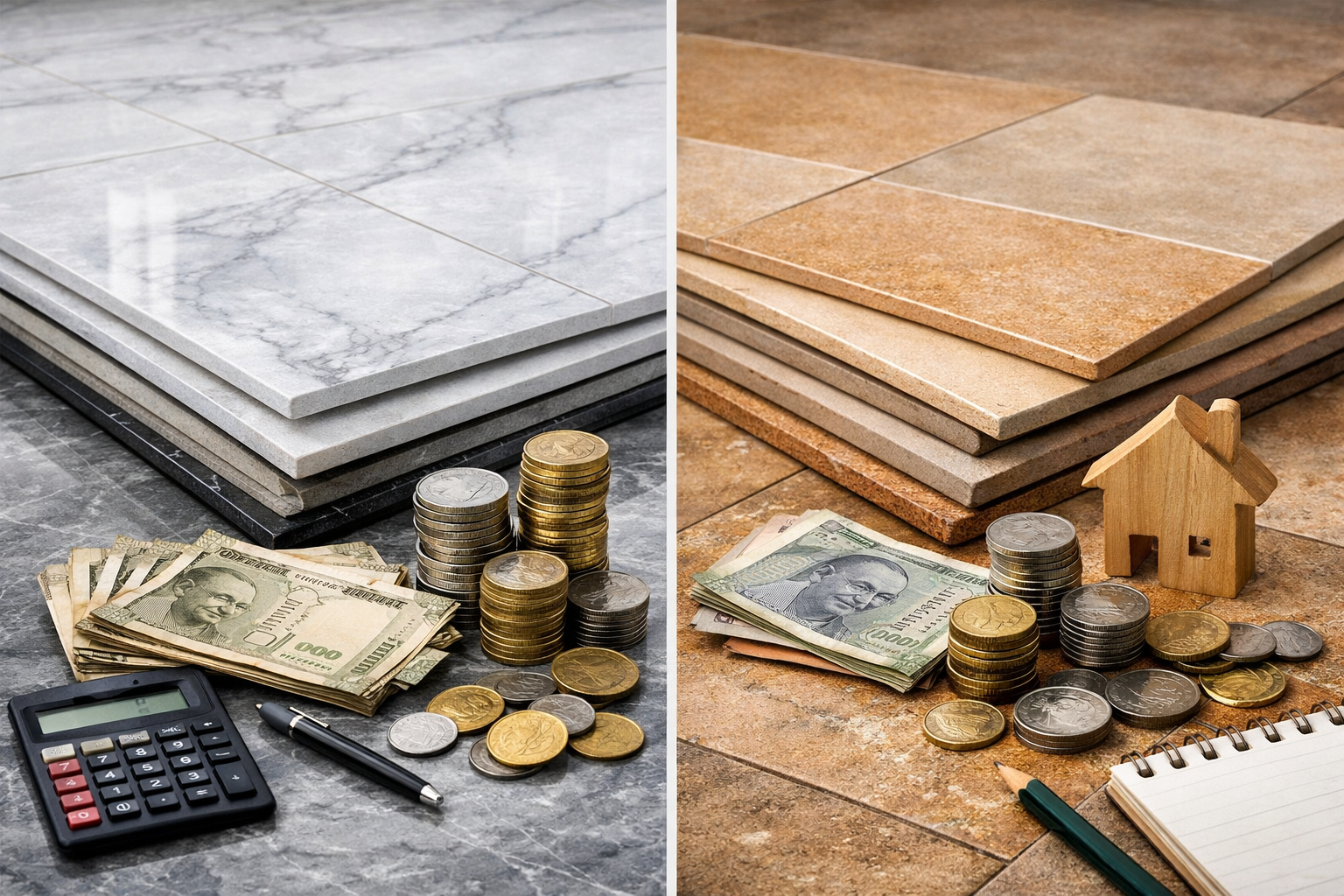
Build cost · Bengaluru, May 2026
Understanding Tile Categories: Vitrified vs Ceramic
Before diving into pricing, it's important to understand the fundamental differences between vitrified and ceramic tiles, as these directly impact their cost and suitability for different applications.
What Are Vitrified Tiles?
Vitrified tiles are manufactured by mixing clay with silica and feldspar, then firing them at extremely high temperatures (around 1200°C). This process creates a non-porous, glass-like surface that's highly resistant to water absorption (less than 0.5%). Vitrified tiles are known for their:
Superior durability and longevity (15-20+ years)
Excellent water resistance, making them ideal for kitchens, bathrooms, and wet areas
High stain resistance and easy maintenance
Better load-bearing capacity for high-traffic areas
Wide variety of designs and finishes
What Are Ceramic Tiles?
Ceramic tiles are made from clay fired at lower temperatures (around 1100°C) compared to vitrified tiles. They have a higher water absorption rate (3-6%) and are more porous. Key characteristics include:
More affordable initial cost
Suitable for indoor walls and moderate-traffic areas
Good aesthetic options and color variety
Shorter lifespan compared to vitrified tiles (8-12 years)
Limited suitability for wet areas without proper sealing
Frequently asked
Vitrified Tiles Cost Per Sq Ft in India 2026
The pricing of vitrified tiles in India varies significantly based on quality, brand, design complexity, and market location. Here's a detailed breakdown for 2026:
Budget-Friendly Vitrified Tiles
Price Range: ₹40-70 per sq ft
These are entry-level vitrified tiles from regional manufacturers and lesser-known brands. While they meet basic quality standards, they may have:
Limited design options (mostly plain finishes)
Standard sizes (typically 60x60 cm or 80x80 cm)
Average durability
Basic color schemes
Popular choices in this category include tiles from manufacturers in Gujarat, Tamil Nadu, and Rajasthan. These are commonly used in budget residential projects across tier-2 and tier-3 cities.
Mid-Range Vitrified Tiles
Price Range: ₹70-150 per sq ft
Mid-range vitrified tiles offer a good balance between quality and cost. This segment includes:
Established regional brands and some national brands
Better finish quality and design options
Improved durability and warranty (typically 3-5 years)
Various finishes: polished, matt, textured, and semi-glazed
Sizes ranging from 60x60 cm to 120x120 cm
Better water and stain resistance
This is the most popular segment for residential projects in metropolitan areas like Mumbai, Delhi, Bangalore, and Hyderabad. Brands like Kajaria, Somany, and Nitco typically fall in this range.
Premium Vitrified Tiles
Price Range: ₹150-300+ per sq ft
Premium vitrified tiles represent the top end of the market, featuring:
International brands or premium Indian manufacturers
Sophisticated designs and finishes (wood-look, marble-look, 3D effects)
Large format tiles (120x120 cm to 300x600 cm)
Superior durability and extended warranties (5-10 years)
Specialized features like anti-bacterial coating or slip-resistance
Imported designs and exclusive patterns
These tiles are commonly used in luxury residential projects, high-end commercial spaces, and premium retail establishments across major Indian cities.
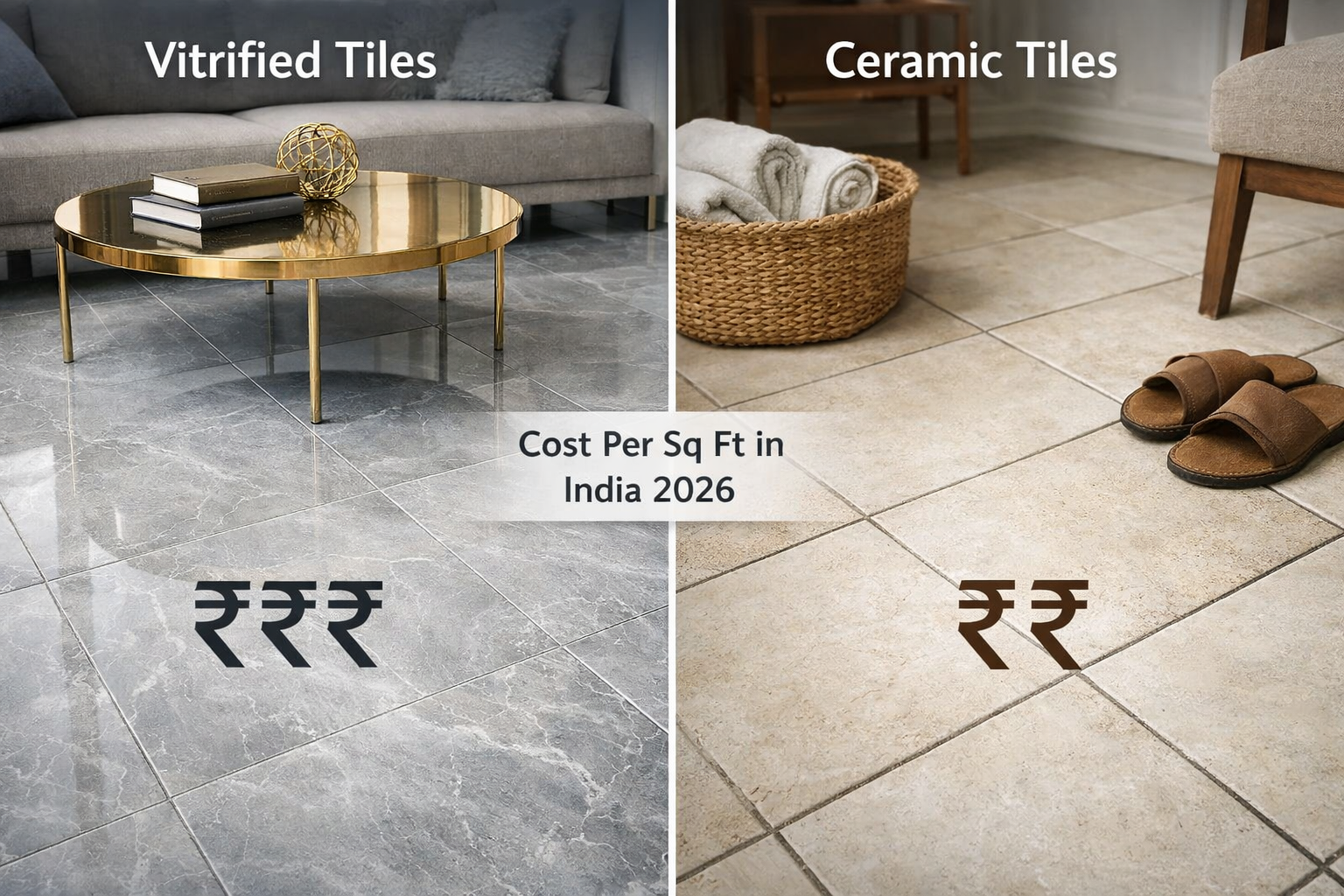
Ceramic Tiles Cost Per Sq Ft in India 2026
Ceramic tiles are generally more affordable than vitrified tiles and offer good value for specific applications. Here's the pricing breakdown:
Budget Ceramic Tiles
Price Range: ₹20-40 per sq ft
These are the most economical options, typically featuring:
Basic manufacturing quality
Limited design and color options
Standard sizes (30x30 cm, 45x45 cm)
Suitable for interior walls and low-traffic areas
Minimal warranty coverage
Mid-Range Ceramic Tiles
Price Range: ₹40-80 per sq ft
This segment offers better quality and design variety:
Good manufacturing standards
Variety of finishes and patterns
Sizes from 30x30 cm to 60x60 cm
Better color consistency
Suitable for kitchen walls and bathroom interiors
Premium Ceramic Tiles
Price Range: ₹80-150 per sq ft
Premium ceramic tiles offer enhanced features:
Superior finish and design quality
International or premium national brands
Larger format options (up to 80x80 cm)
Specialized finishes (glossy, matte, textured)
Better durability for moderate commercial use
Factors Affecting Tile Pricing in 2026
Raw Material Costs
The primary raw materials for tile manufacturing—clay, feldspar, and silica—have seen price fluctuations. As of 2026, these costs have stabilized, but any supply chain disruptions can impact final pricing. Clay costs typically range from ₹500-800 per ton, while imported feldspar costs around ₹3,000-4,500 per ton.
Manufacturing Location
Tile manufacturing is concentrated in specific regions:
Gujarat: Home to over 50% of India's tile production, offering competitive pricing due to economies of scale
Tamil Nadu: Known for quality ceramics and vitrified tiles with moderate pricing
Rajasthan: Produces budget-friendly options with growing quality standards
Andhra Pradesh: Emerging hub for mid-range and premium tiles
Tiles manufactured in Gujarat tend to be 10-15% cheaper than those from other regions due to lower logistics costs and established supply chains.
Brand and Quality Certification
Branded tiles with ISI (Indian Standards Institution) certification command a 20-40% premium over unbranded alternatives. Premium international brands can cost 50-100% more than local manufacturers offering similar specifications.
Design Complexity and Finishes
Tiles with complex designs, 3D effects, or specialized finishes (anti-bacterial, slip-resistant) cost 30-60% more than plain tiles. Wood-look and marble-look vitrified tiles, for example, cost ₹120-200 per sq ft, while basic polished tiles cost ₹60-100 per sq ft.
Tile Size and Format
Larger format tiles (120x120 cm and above) are typically more expensive per square foot due to manufacturing complexity:
60x60 cm tiles: ₹60-120 per sq ft
80x80 cm tiles: ₹70-140 per sq ft
120x120 cm tiles: ₹80-160 per sq ft
300x600 cm tiles: ₹150-250+ per sq ft
Market Location and Distribution
Prices vary across Indian cities based on local demand and distribution networks:
Tier-1 Cities (Mumbai, Delhi, Bangalore, Hyderabad): 10-20% premium due to higher demand and logistics costs
Tier-2 Cities (Pune, Jaipur, Ahmedabad): Average market rates
Tier-3 Cities: 5-10% lower prices due to reduced distribution costs
Complete Project Cost Estimation
To understand the total cost of tiling a space, consider not just the tile cost but also installation and ancillary expenses:
Typical Project Breakdown (Per Sq Ft)
For a mid-range vitrified tile project:
Tiles (mid-range vitrified): ₹100 per sq ft
Adhesive and grout: ₹15-20 per sq ft
Labour cost: ₹30-50 per sq ft
Wastage (10-15%): ₹15-20 per sq ft
Total: ₹160-190 per sq ft
For a budget ceramic tile project:
Tiles (budget ceramic): ₹30 per sq ft
Adhesive and grout: ₹10-12 per sq ft
Labour cost: ₹20-30 per sq ft
Wastage (10-15%): ₹8-10 per sq ft
Total: ₹68-82 per sq ft
For a premium vitrified tile project:
Tiles (premium vitrified): ₹200 per sq ft
Adhesive and grout (premium quality): ₹25-30 per sq ft
Labour cost (specialized): ₹50-70 per sq ft
Wastage (10-15%): ₹30-40 per sq ft
Total: ₹305-340 per sq ft
Choosing Between Vitrified and Ceramic Tiles
When to Choose Vitrified Tiles
Vitrified tiles are the better choice when:
Installing in high-traffic areas (living rooms, corridors, commercial spaces)
Covering wet areas (bathrooms, kitchens, swimming pool decks)
Long-term durability is a priority (planned for 15+ years of use)
Budget allows for higher initial investment
Aesthetic variety and premium finishes are desired
When to Choose Ceramic Tiles
Ceramic tiles are suitable when:
Budget constraints are significant
Installation is limited to interior walls and low-traffic areas
Quick renovation or temporary solutions are needed
Design variety within budget is important
Project involves non-wet areas only
Market Trends and Price Forecast for 2026
Several trends are shaping the tile market in India:
Sustainability and Eco-Friendly Options
There's a growing demand for sustainable tiles made from recycled materials. These eco-friendly options typically cost 15-25% more than conventional tiles but are gaining popularity in metropolitan areas. Expect this segment to grow at 20-25% annually.
Large Format Tiles
The trend toward large format tiles (120x120 cm and above) continues to grow, particularly in premium segments. While more expensive per square foot, they reduce grout lines and create a seamless appearance, justifying the premium for many consumers.
Digital Printing Technology
Advanced digital printing allows for photorealistic designs on tiles. These premium tiles cost 40-80% more than traditional printed tiles but offer unmatched design flexibility.
Price Stability Expected
As of 2026, tile prices are expected to remain relatively stable with modest 2-3% annual increases, aligned with inflation. Raw material availability and manufacturing capacity have improved, preventing sharp price spikes.
Tips for Cost-Effective Tile Purchasing
Buy in Bulk
Purchasing tiles for the entire project at once can yield 5-10% discounts from dealers and manufacturers. Additionally, bulk purchases ensure color and batch consistency.
Compare Online and Offline
AECORD and similar B2B platforms often provide competitive pricing compared to traditional retail channels. Comparing quotes from multiple suppliers can save 10-15% on overall costs.
Plan for Wastage
Always account for 10-15% wastage in your calculations. Purchasing slightly more tiles upfront is cheaper than sourcing replacements later, which may involve different batch colors.
Negotiate Installation Costs
Labour costs often have more flexibility than material costs. Getting competitive quotes from multiple contractors can reduce installation expenses by 10-20%.
Consider Seasonal Variations
Tile prices occasionally dip during off-season months (June-August). Planning projects during these periods can result in modest savings.
Regional Price Variations Across India
Tile prices vary significantly across different regions due to manufacturing proximity, transportation costs, and local demand:
North India (Delhi, NCR, Punjab): Mid-range vitrified tiles cost ₹85-130 per sq ft due to proximity to manufacturing hubs and established distribution networks.
West India (Gujarat, Maharashtra): Most competitive pricing at ₹75-120 per sq ft for mid-range vitrified tiles, benefiting from local manufacturing.
South India (Tamil Nadu, Telangana, Karnataka): Prices range from ₹90-140 per sq ft, with good availability of both local and imported options.
East India (West Bengal, Odisha): Slightly higher prices (₹100-150 per sq ft) due to longer supply chains and lower local manufacturing capacity.
Quality Standards and Certifications
When purchasing tiles, ensure they meet Indian quality standards:
ISI Mark (IS 15622): Mandatory certification for vitrified tiles, ensuring quality and durability
Water Absorption Rates: Vitrified tiles should have less than 0.5% water absorption
Modulus of Rupture: Indicates the tile's strength and load-bearing capacity
Slip Resistance: Important for bathroom and kitchen tiles
Always request certification documents from suppliers to ensure you're purchasing genuine, quality products.
Frequently Asked Questions
What's the average cost difference between vitrified and ceramic tiles in India?
On average, mid-range vitrified tiles cost 2-3 times more than ceramic tiles. For example, mid-range vitrified tiles cost ₹70-150 per sq ft, while comparable ceramic tiles cost ₹40-80 per sq ft. However, the durability difference justifies the premium for most applications, as vitrified tiles last 15-20 years compared to 8-12 years for ceramic tiles.
Are there any hidden costs when installing tiles beyond the per-sq-ft price?
Yes. Beyond the tile cost, you should budget for adhesive (₹15-30 per sq ft), grout (₹10-20 per sq ft), labour (₹20-70 per sq ft depending on complexity), and wastage (10-15%). Additionally, if subfloor preparation is needed, that can add ₹20-40 per sq ft. Always get a comprehensive quote from your contractor covering all these elements.
Which tile size offers the best value for money?
60x60 cm and 80x80 cm tiles typically offer the best balance between cost-effectiveness and aesthetic appeal. Smaller tiles (30x30 cm) are cheaper per square foot but require more grout and labour. Larger format tiles (120x120 cm and above) are more expensive per square foot but reduce grout lines and installation time, potentially offsetting higher material costs in large projects.
How do I ensure I'm getting quality tiles at the right price?
Always purchase from authorized dealers, verify ISI certification for vitrified tiles, compare quotes from multiple suppliers (including platforms like AECORD), and check water absorption rates and other quality parameters. Don't opt for tiles significantly cheaper than market rates, as they may lack proper quality certifications. Request samples and inspect them for color consistency, surface finish, and edge quality before bulk purchasing.
What's the best time to buy tiles for cost savings?
Tile prices are typically lowest during off-season months (June-August) when construction activity is lower. Buying in bulk, comparing online platforms, and negotiating with multiple dealers can save 10-15%. Additionally, purchasing directly from manufacturers or authorized distributors rather than retail showrooms often provides better pricing without compromising on quality or warranty.
```