Structural Audit Cost in India: When You Need It and What to Expect
A structural audit is a comprehensive evaluation of a building's structural integrity, safety, and compliance with building codes. In India, where construction standards have evolved significantly over the past two decades, structural audits have become increasingly important for property owners, facility managers, and real estate developers. Whether you own a residential apartment, commercial building, or industrial facility, understanding structural audit costs and when they're necessary is crucial for maintaining property value and ensuring occupant safety.
The cost of a structural audit in India typically ranges from ₹15,000 to ₹5,00,000+ depending on building size, complexity, and the extent of investigation required. This comprehensive guide will help you understand what influences these costs and when a structural audit becomes essential.
Build cost · Bengaluru, May 2026
What is a Structural Audit and Why is it Important?
Definition and Scope
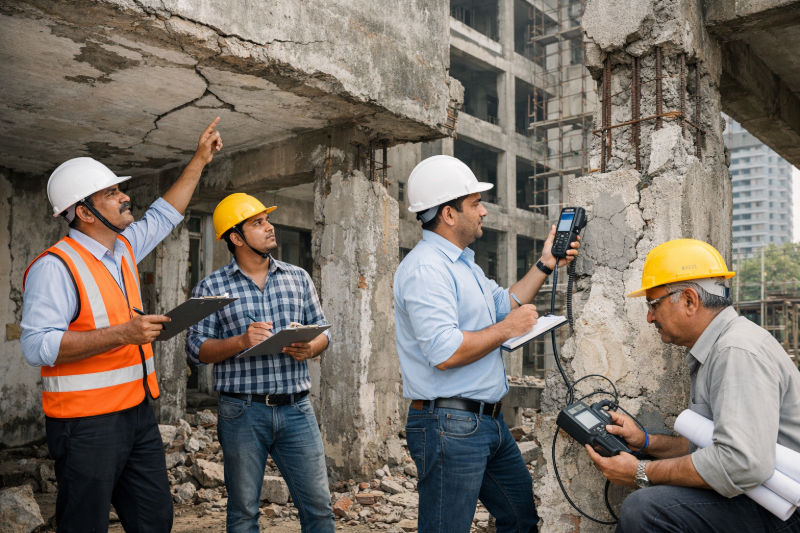
A structural audit is a detailed technical assessment of a building's structural elements, including foundations, columns, beams, slabs, walls, and connections. The audit examines whether the structure can safely support its intended loads and whether it complies with relevant Indian building codes like the Indian Standard Code (IS 456:2000) for concrete and IS 1893 for earthquake resistance.
The scope of a structural audit includes:
Visual inspection of structural elements
Material testing (concrete strength, steel quality)
Assessment of cracks, deterioration, and damage
Structural analysis and load calculations
Compliance verification with building codes
Recommendations for repairs or strengthening
Importance in the Indian Context
India's building stock is diverse, with structures ranging from pre-1970 buildings that predate modern codes to contemporary high-rise developments. Several factors make structural audits particularly important:
Aging Infrastructure: Many buildings in Indian cities like Mumbai, Delhi, Kolkata, and Bangalore are 30-50 years old and require periodic assessment
Seismic Activity: India falls in seismic zones II-V, making earthquake resistance critical
Monsoon Impact: Heavy rainfall and water ingress cause significant deterioration in concrete structures
Regulatory Compliance: Municipal corporations increasingly mandate structural audits for buildings above certain age thresholds
Insurance and Financing: Banks and insurance companies often require structural audits for loan approval or premium assessment
Frequently asked
When is a Structural Audit Needed?
Age-Based Requirements
The Municipal Corporation of Greater Mumbai (MCGM), one of India's largest civic bodies, mandates structural audits for buildings over 40 years old. Similar guidelines exist in other major cities:
Mumbai: Buildings over 40 years old (MCGM regulations)
Delhi: Buildings over 50 years old (EDMC and MCD guidelines)
Bangalore: Buildings over 30 years old (BBMP regulations)
Pune: Buildings over 35 years old (PMC regulations)
Damage-Based Indicators
Even newer buildings may require structural audits if they show signs of distress:
Wide or recurring cracks (>3mm) in concrete or masonry
Spalling or concrete cover loss
Water seepage and dampness
Settlement or tilting of the structure
Rust stains indicating rebar corrosion
Visible deflection in beams or slabs
Deterioration after natural disasters (earthquakes, floods)
Regulatory and Transactional Requirements
Structural audits become mandatory or highly recommended in several scenarios:
Property Sale/Purchase: Buyers often request structural audits before finalising transactions, particularly for older properties
Bank Financing: Some banks require structural certificates for loan approval on older properties
Renovation or Modification: Adding floors, changing occupancy type, or major renovations require structural assessment
Insurance Claims: Insurance companies may mandate audits for damage assessment
Regulatory Notices: Municipal corporations may issue notices requiring structural certification
Structural Audit Cost Breakdown in India
Cost Ranges by Building Type and Size
Structural audit costs vary significantly based on multiple factors. Here's a typical breakdown:
Building Type | Size/Scope | Estimated Cost |
|---|---|---|
Small Residential (Single Unit) | 1-2 BHK Apartment | ₹15,000 - ₹40,000 |
Residential Building | G+4 to G+10 (20-50 units) | ₹50,000 - ₹1,50,000 |
Large Residential Complex | G+15 and above (100+ units) | ₹2,00,000 - ₹5,00,000 |
Commercial Building | Small office (up to 5000 sqft) | ₹40,000 - ₹80,000 |
Commercial Building | Large office/mall (10,000+ sqft) | ₹1,50,000 - ₹3,00,000 |
Industrial Facility | Warehouse/Factory | ₹2,00,000 - ₹4,00,000 |
Heritage/Complex Structures | Special assessment required | ₹3,00,000 - ₹8,00,000+ |
Factors Influencing Structural Audit Costs
1. Building Age and Condition
Older buildings typically cost more to audit because they require more extensive investigation. A 50-year-old building in Mumbai might cost ₹1,50,000 for a comprehensive audit, while a 10-year-old building of similar size might cost ₹60,000. Deteriorated structures require material testing, core sampling, and detailed analysis, increasing costs by 30-50%.
2. Building Size and Complexity
Cost per square foot typically decreases with building size, but absolute costs increase. A 5,000 sqft residential building might cost ₹0.20-0.40 per sqft, while a 50,000 sqft commercial complex might cost ₹0.08-0.15 per sqft. Complex structures with irregular geometry, multiple material types, or special systems cost more.
3. Extent of Testing Required
Different audit levels require different testing:
Level 1 (Visual Audit): ₹15,000-40,000 - Basic visual inspection and photographic documentation
Level 2 (Standard Audit): ₹50,000-2,00,000 - Visual inspection + limited material testing (rebound hammer, cover meter)
Level 3 (Detailed Audit): ₹1,50,000-5,00,000 - Comprehensive testing including core sampling, load testing, and structural analysis
4. Geographic Location
Costs vary by city and region. Major metropolitan areas have higher rates:
Mumbai/Delhi: 20-30% higher than national average
Bangalore/Pune: 10-20% higher than national average
Tier-2 Cities: 5-10% lower than national average
Tier-3 Cities: 15-25% lower than national average
5. Accessibility and Site Conditions
Buildings in congested areas, with restricted access, or requiring special equipment cost more. A building in South Mumbai's dense areas might cost 20-30% more than a similar building in suburban areas due to logistical challenges.
6. Professional Expertise Required
Audits by senior structural engineers with 15+ years of experience typically cost 15-25% more than those by junior professionals but provide higher-quality assessment and stronger legal validity.
Detailed Cost Components
Professional Fees
This is typically 50-60% of the total audit cost. Professional fees depend on:
Engineer's experience and qualifications
Time required for site visits and analysis
Report preparation and documentation
Typical range: ₹20,000-3,00,000 depending on project scope
Material Testing and Laboratory Costs
Testing costs form 20-30% of total audit cost:
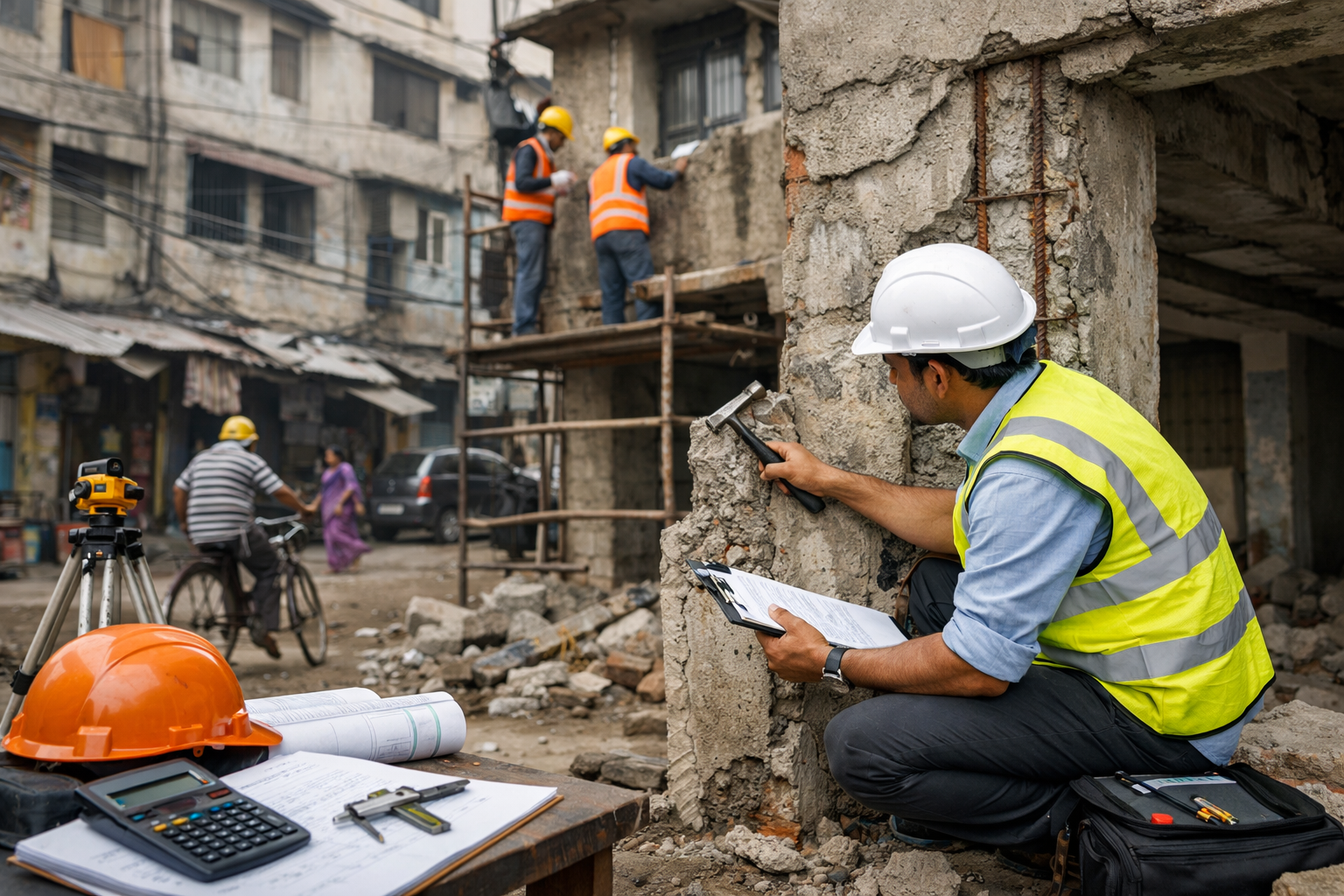
Rebound Hammer Test: ₹500-1,000 per location (15-20 locations typical)
Concrete Core Sampling: ₹2,000-3,000 per core (5-10 cores typical)
Cover Meter Test: ₹300-500 per location
Load Testing: ₹10,000-30,000 per element
Laboratory Analysis: ₹5,000-15,000 for core strength testing
Equipment and Access Costs
These represent 10-15% of costs:
Scaffolding/elevated platform rental: ₹5,000-20,000
Specialized testing equipment: ₹3,000-10,000
Safety equipment and permits: ₹2,000-5,000
Report and Documentation
Comprehensive reporting costs 5-10%:
Detailed technical report: ₹5,000-15,000
Drawings and plans: ₹3,000-8,000
Photographs and video documentation: ₹2,000-5,000
Cost Comparison: DIY vs. Professional Audit
While some property owners consider conducting informal assessments, professional structural audits are essential for several reasons:
Legal Validity: Professional audits are accepted by courts, municipal corporations, and banks
Technical Accuracy: Professional engineers have specialized knowledge and equipment
Liability Coverage: Professional audits come with professional indemnity insurance
Certification: Formal certificates carry weight in transactions and regulatory matters
Actionable Recommendations: Professional audits provide detailed remedial measures with cost estimates
Attempting a DIY assessment might save ₹10,000-15,000 initially but can cost significantly more if structural issues are missed, leading to costly repairs or legal complications.
How to Reduce Structural Audit Costs
Combine Audits for Multiple Units
If you own multiple properties or an apartment complex, conducting audits simultaneously can reduce per-unit costs by 20-30%. A building with 20 units might cost ₹3,00,000 total (₹15,000 per unit) instead of ₹40,000 per unit if done separately.
Choose Appropriate Audit Level
Not all buildings require Level 3 audits. A 15-year-old building in good condition might need only a Level 2 audit (₹60,000-80,000) instead of a comprehensive Level 3 audit (₹1,50,000+).
Negotiate with Multiple Professionals
Get quotes from 3-4 qualified structural engineers. Costs can vary by 20-40% between professionals. However, don't choose solely based on price—consider experience and credentials.
Combine with Other Services
If you're planning renovations, electrical audit, or fire safety audit, bundle them with structural audit for package discounts (typically 10-15% savings).
Use AECORD for Professional Connections
AECORD's B2B2C marketplace connects property owners with verified structural engineers across India. Using the platform, you can:
Compare quotes from multiple qualified professionals
Review engineer credentials and past project portfolios
Access standardized audit packages with transparent pricing
Benefit from platform's quality assurance mechanisms
Timeline and Process
Typical Audit Duration
Small Residential Unit (1-2 BHK): 1-2 days
Residential Building (G+4 to G+10): 5-10 days
Large Commercial Complex: 10-20 days
Report Preparation: 5-15 days after site work completion
Typical Process
Initial Consultation: Engineer reviews building documents and site conditions
Site Inspection: Detailed visual assessment of all structural elements
Material Testing: Non-destructive and destructive testing as required
Analysis: Engineer analyzes test results and structural performance
Report Preparation: Comprehensive technical report with recommendations
Presentation: Engineer presents findings and discusses remedial measures
Understanding the Structural Audit Report
Key Sections
A professional structural audit report typically includes:
Executive Summary: Overview of building condition and key findings
Building Description: Details about construction, age, and design
Visual Assessment Findings: Documented defects and damage
Material Test Results: Concrete strength, steel quality, other parameters
Structural Analysis: Assessment against applicable codes
Defect Classification: Issues categorized by severity
Recommendations: Specific remedial measures with cost estimates
Conclusions: Overall structural safety assessment
Severity Ratings
Defects are typically classified as:
Critical: Immediate risk to safety; requires urgent intervention (₹5,00,000+)
Major: Significant deterioration; requires intervention within 6-12 months (₹1,00,000-5,00,000)
Minor: Cosmetic or minor functional issues; can be addressed during maintenance (₹10,000-1,00,000)
Post-Audit Remediation Costs
It's important to note that audit costs are separate from remediation costs. Depending on findings, repairs might be required:
Concrete Repair/Waterproofing: ₹500-2,000 per sqft
Structural Strengthening: ₹1,000-5,000 per sqft
Foundation Underpinning: ₹10,000-50,000 per location
Seismic Retrofitting: ₹2,000-8,000 per sqft
A building audit costing ₹1,00,000 might reveal remediation requirements of ₹10,00,000-50,00,000, so budget accordingly.
Regulatory and Legal Considerations
Municipal Requirements
Different Indian cities have specific structural audit requirements:
MCGM (Mumbai): Mandatory for buildings over 40 years; audit must be done every 5 years
EDMC (Delhi): Mandatory audit for buildings over 50 years old
BBMP (Bangalore): Mandatory for buildings over 30 years
PMC (Pune): Mandatory for buildings over 35 years
Professional Qualifications
Ensure the engineer conducting the audit has:
B.Tech/BE in Civil/Structural Engineering
Minimum 5-10 years of structural audit experience
Professional membership (ISTRUCTE, IEI, or similar)
Valid professional indemnity insurance
No conflict of interest in the property
Common Misconceptions About Structural Audit Costs
Misconception 1: "Cheaper Audits are Equally Valid"
Reality: Significantly cheaper audits (50%+ below market rate) often lack thoroughness. A ₹15,000 audit for a G+5 building is likely inadequate; proper audits for such buildings cost ₹60,000-1,20,000.
Misconception 2: "Audits are Only for Old Buildings"
Reality: Buildings damaged by earthquakes, floods, or poor construction need audits regardless of age. A 10-year-old building with visible cracks requires immediate audit.
Misconception 3: "One Audit is Permanent"
Reality: Structural conditions change over time. Municipal regulations often require re-audits every 3-5 years for older buildings.
FAQ: Structural Audit Costs in India
Q1: How much does a structural audit cost for a typical Mumbai apartment building?
For a typical G+5 residential building in Mumbai with 15-20 units, a comprehensive structural audit costs ₹80,000-1,50,000. This includes visual inspection, material testing (rebound hammer, cover meter), core sampling, and detailed report preparation. Costs may be higher if the building shows significant signs of deterioration or is over 40 years old, as MCGM regulations mandate audits for such properties.
Q2: Is a structural audit mandatory before buying an old property in India?
While not legally mandatory for property purchase across all of India, it's highly recommended for properties over 30-40 years old. Many banks require structural certification for loan approval on older properties. In Mumbai, if a building is over 40 years and hasn't been audited, the buyer should insist on one before completing the purchase. The cost (₹50,000-1,50,000) is minimal compared to potential hidden structural defects that could cost lakhs to repair.
Q3: What's the difference between a Level 1, Level 2, and Level 3 structural audit?
Level 1 (Visual Audit): Basic visual inspection with photographs, costs ₹15,000-40,000. Level 2 (Standard Audit): Visual inspection + non-destructive testing (rebound hammer, cover meter), costs ₹50,000-2,00,000, suitable for most buildings. Level 3 (Detailed Audit): Comprehensive testing including core sampling, load testing, and structural analysis, costs ₹1,50,000-5,00,000+, required for severely damaged buildings or those needing major repairs. Choose based on building age, visible condition, and regulatory requirements.
Q4: Can I get a structural audit discount if I have multiple properties?
Yes, auditing multiple properties simultaneously typically reduces per-unit costs by 20-30%. If you own an apartment complex or multiple buildings in the same area, negotiate a package rate with the structural engineer. AECORD's marketplace allows you to post multiple properties and receive competitive quotes from verified professionals, often resulting in better pricing for bulk audits.
Q5: How long does a structural audit take and when will I get the report?
Site inspection duration depends on building size: small residential units take 1-2 days, G+5 buildings take 5-10 days, and large commercial complexes take 10-20 days. Report preparation typically takes 5-15 days after site work completion. Total timeline from engagement to final report is usually 2-4 weeks. Urgent audits can be completed faster (7-10 days total) but may incur additional charges of 15-25%.