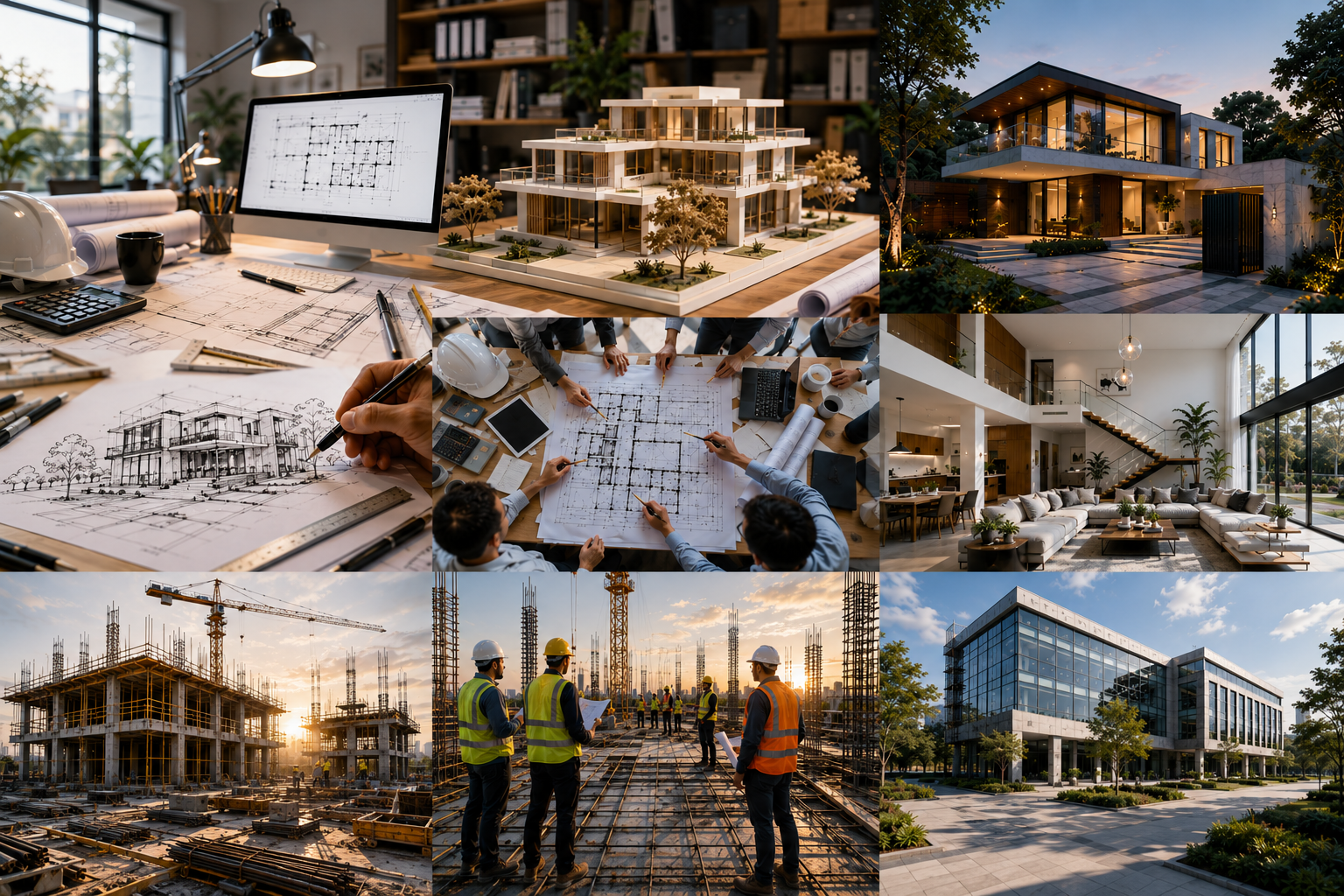


India's architectural landscape has undergone a remarkable transformation over the past two decades. From the gleaming towers of Mumbai's Bandra Worli Sea Link to the sustainable urban developments emerging across Bangalore, Hyderabad, and Delhi, the country's built environment increasingly reflects global standards and innovative design thinking. Yet as the sector stands at this inflection point, a critical question emerges: now that the architectural vision is in place, how do we translate these designs into reality at scale?
This challenge mirrors conversations happening across Europe, where mature architectural markets face the complexities of implementation, sustainability compliance, and stakeholder coordination. India, however, faces these challenges with unique constraints: rapidly growing urbanization, diverse regulatory frameworks across states, skilled labor shortages, and the need to balance cost-efficiency with quality.

The Current State of Indian Architecture: Vision Meets Reality
India's architectural sector has made impressive strides. The country now boasts world-class firms like Nata Architects, Morphogenesis, and international collaborations with European designers creating landmark projects. Cities like Bangalore, Pune, and Hyderabad have become hubs for architectural innovation, attracting global talent and investment.
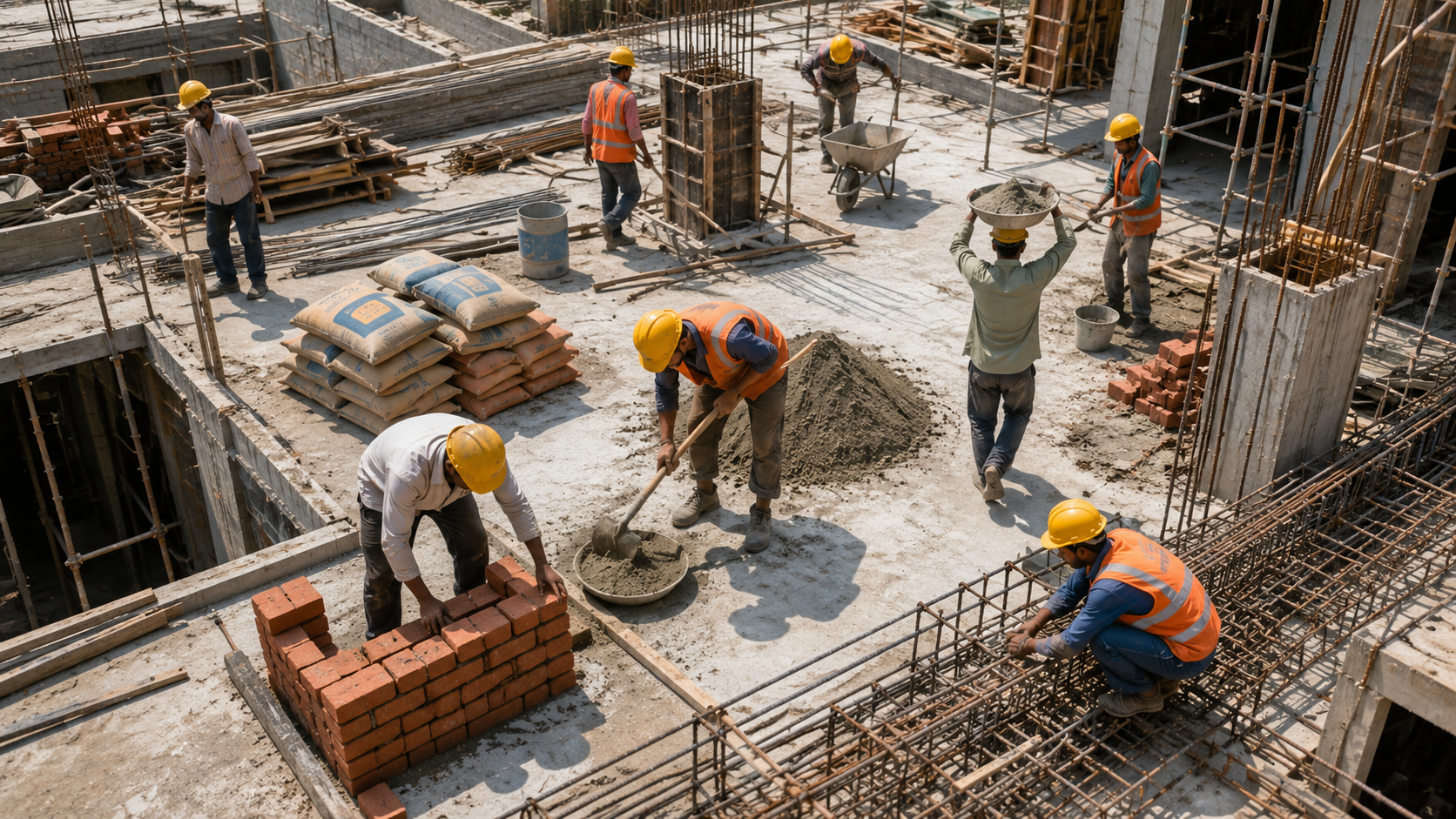
However, there's a significant gap between architectural vision and on-ground execution. According to industry reports, approximately 60-70% of architectural projects in India face delays or cost overruns during the construction phase. The reasons are multifaceted:
Regulatory Fragmentation: Building codes vary significantly between states and municipalities. What's approved in Mumbai's Municipal Corporation may differ from Bangalore's regulations.
Supply Chain Inefficiencies: Material sourcing, logistics, and vendor coordination remain largely undigitized in many regions.
Skill Gap: While architectural talent is growing, there's a shortage of skilled construction workers and site supervisors who understand modern design specifications.
Stakeholder Coordination: Managing communication between architects, contractors, clients, engineers, and municipal authorities remains cumbersome.
This is where the European experience becomes instructive. European markets have developed sophisticated systems for managing these complexities—from Building Information Modeling (BIM) standards to integrated project management platforms.
Build cost · Bengaluru, May 2026
Learning from European Best Practices
Building Information Modeling (BIM) and Digital Integration
In countries like Germany, Denmark, and the UK, BIM adoption is mandated for public projects and increasingly for private developments. BIM creates a digital twin of the building before construction begins, allowing architects, engineers, and contractors to identify clashes, optimize workflows, and reduce waste.
India is beginning to embrace BIM, but adoption remains concentrated in premium projects and major metropolitan areas. The Ministry of Housing and Urban Affairs has recommended BIM adoption for government projects, yet many firms still rely on 2D drawings and manual coordination processes.
The Implementation Challenge: Introducing BIM requires investment in software, training, and cultural shift. For a mid-sized architectural firm in India, BIM software licenses can cost ₹5-15 lakhs annually, with additional training costs of ₹2-5 lakhs per team. This investment is challenging for firms managing tight project margins.
Integrated Project Delivery (IPD) Models
European firms increasingly use Integrated Project Delivery models where architects, contractors, and engineers collaborate from the project's inception, sharing risks and rewards. This contrasts with the traditional Indian model where architects design, contractors bid competitively, and problems emerge during execution.
IPD's benefits include:
Early identification of constructability issues
Collaborative problem-solving rather than adversarial relationships
Shared responsibility for cost and schedule management
Better quality outcomes and reduced disputes
However, IPD requires trust, transparency, and sophisticated contract frameworks—elements that are still developing in India's construction culture.
Frequently asked
Regulatory Harmonization and Standardization
European Union countries have worked toward harmonizing building standards while respecting local variations. India could benefit from a similar approach at the national level.
Currently, major Indian cities operate under different regulations:
Mumbai: Mumbai Municipal Corporation (MMC) regulations, with additional Maharashtra Building Code provisions
Bangalore: Bangalore Development Authority (BDA) rules and Karnataka State Building Code
Delhi: Delhi Building Bylaws under Municipal Corporation of Delhi (MCD)
Hyderabad: Greater Hyderabad Municipal Corporation (GHMC) regulations
While the National Building Code of India (NBC) provides a framework, interpretation and enforcement vary significantly. A design compliant in Bangalore might require modifications for Delhi approval, adding time and cost.
The Skilled Workforce Challenge
Europe's construction sector benefits from rigorous apprenticeship programs and continuous professional development requirements. Germany's dual education system, for example, produces highly skilled tradespeople who understand modern construction techniques.
India faces a different reality. The construction sector employs over 50 million workers, yet formal training reaches only a fraction. Many workers learn through informal apprenticeships, leading to inconsistent quality and safety standards.
Addressing the Skills Gap
Several initiatives are underway:
NASSCOM and AECORD initiatives: Industry bodies are promoting digital literacy and modern construction practices among workers and small contractors.
State-level programs: Schemes like Pradhan Mantri Kaushal Vikas Yojana (PMKVY) offer training in construction trades, though impact remains limited.
Private sector training: Major contractors like L&T and Tata Projects run internal training programs, but these don't address the broader market.
The path forward requires sustained investment in vocational training, standardized certifications, and incentives for workers to pursue formal qualifications.
Cost Management and Value Engineering
European architectural practices often incorporate rigorous value engineering—optimizing design for both cost and performance. This discipline helps manage budgets while maintaining quality.
In India, value engineering often translates to cost-cutting that compromises design intent. A steel frame designed for optimal efficiency might be replaced with a cheaper alternative that requires more material or maintenance.
Sustainable Design and Compliance Costs
Green building standards like LEED and IGBC (Indian Green Building Council) certification add 5-15% to project costs. While European markets have normalized these costs, many Indian clients still view sustainability as optional.
However, this is changing. Major Indian cities now mandate energy efficiency standards:
Delhi's Energy Conservation Building Code (ECBC) requirements
Mumbai's amendments requiring rainwater harvesting and waste management
Bangalore's groundwater recharge mandates
Architects must design compliance into projects from the start, not retrofit it later—a lesson European firms learned decades ago.
Technology and Digital Transformation
Project Management Platforms
European firms increasingly use integrated platforms like Autodesk Construction Cloud, Touchplan, or Bridgit to manage projects in real-time. These platforms enable:
Real-time collaboration between teams across locations
Digital documentation and compliance tracking
Automated progress reporting and budget monitoring
Mobile access for site teams
Indian firms are adopting these tools, but widespread implementation remains limited due to cost, training requirements, and internet reliability in some regions.

Prefabrication and Modular Construction
European countries have invested heavily in prefabrication to address labor shortages and improve quality. Scandinavian firms, for example, use factory-built modules that dramatically reduce on-site construction time.
India is exploring prefabrication, particularly for affordable housing projects. However, logistics costs, lack of standardization, and client unfamiliarity limit adoption. A prefabricated wall panel that costs ₹500 per square meter in a Scandinavian factory might cost ₹800-1000 when manufactured and transported in India.
Regulatory and Contractual Frameworks
Contract Management and Dispute Resolution
European construction contracts typically include clear dispute resolution mechanisms, insurance requirements, and performance standards. Indian contracts often lack this sophistication, leading to disputes that can delay projects by 12-24 months.
The introduction of the Model Conciliation and Mediation Rules by the Indian Institute of Arbitration & Mediation represents progress, but adoption remains inconsistent.
Insurance and Liability
European construction projects typically carry comprehensive insurance covering professional liability, performance bonds, and worker safety. Indian practice is evolving, with major projects now requiring similar protections, but smaller projects often operate with minimal coverage.
The Role of Digital Marketplaces in Implementation
One significant gap in India's architectural implementation ecosystem is the fragmentation of service providers. Architects design, contractors bid separately, material suppliers operate independently, and site coordinators struggle to integrate efforts.
This is where platforms like AECORD play an increasingly important role. By connecting architects, engineers, contractors, material suppliers, and specialized service providers in a single ecosystem, such platforms can:
Reduce Information Asymmetry: Clients and architects can access verified profiles of contractors and suppliers, reducing the time spent on vetting.
Standardize Processes: Digital platforms can embed best practices, compliance checklists, and quality standards into workflows.
Enable Collaboration: Real-time communication and document sharing reduce coordination delays.
Facilitate Transparency: Digital records create accountability and reduce disputes.
For a mid-sized architectural project in Bangalore or Mumbai, using AECORD to source contractors and suppliers can reduce procurement time by 30-40% and improve quality consistency.
Case Studies: Where India Is Getting It Right
Sustainable Urban Development Projects
Projects like Lavasa near Pune and certain sections of the Delhi-NCR region demonstrate that sophisticated architectural implementation is possible in India. These projects employed:
Centralized project management with clear authority structures
Pre-qualification of contractors and suppliers
Regular quality audits and compliance reviews
Integration of modern construction techniques
However, these remain exceptions rather than the norm, often because they involved significant capital investment and long-term commitment from developers.
Affordable Housing Initiatives
Government-backed affordable housing projects like Pradhan Mantri Awas Yojana have driven innovation in standardization and cost management. By using standardized designs and pre-approved contractors, these projects have achieved faster execution timelines and better cost control than traditional approaches.
The Path Forward: Recommendations for India's Architectural Sector
For Architects and Design Firms
Invest in Digital Tools: BIM, project management software, and collaboration platforms are no longer optional.
Develop Construction Expertise: Understanding buildability, material sourcing, and labor availability should inform design decisions.
Collaborate Early: Engage contractors and engineers during design phases, not after completion.
Leverage Digital Platforms: Use marketplaces like AECORD to access verified contractors and suppliers, ensuring quality and reliability.
For Contractors and Builders
Invest in Training: Develop skilled workforce through formal apprenticeships and continuous learning programs.
Adopt Modern Construction Methods: Prefabrication, modular construction, and lean principles reduce costs and timelines.
Embrace Transparency: Digital documentation and real-time reporting build client trust and reduce disputes.
For Policymakers
Harmonize Building Codes: Work toward greater consistency across states while respecting local variations.
Mandate Digital Processes: Require BIM and digital documentation for public projects, driving market adoption.
Support Skill Development: Fund vocational training and certifications in modern construction trades.
Streamline Approvals: Digitize permit processes and reduce approval timelines.
Conclusion: The Architecture Is There—Now Build It
India's architectural vision is clear and increasingly sophisticated. The country's architects are designing world-class buildings and sustainable communities. The challenge now is execution—translating these designs into reality consistently, on time, within budget, and to high quality standards.
This requires learning from European best practices while adapting them to India's unique context. It demands investment in digital tools, workforce development, and regulatory harmonization. Most importantly, it requires collaboration across the entire value chain—from architects and engineers to contractors, suppliers, and digital platforms that facilitate coordination.
For professionals in India's AECO sector, the opportunity is significant. By adopting best practices, leveraging digital tools, and collaborating effectively, architects, engineers, and contractors can transform India's built environment. Platforms like AECORD make this easier by connecting qualified professionals and enabling seamless project execution.
The architecture is there. Now comes the hard part—and the exciting part—of building it right.
Ready to find the right partners for your next project? Explore AECORD to connect with verified architects, engineers, contractors, and suppliers across India. Whether you're in Mumbai, Bangalore, Delhi, or Hyderabad, discover professionals committed to turning architectural vision into reality.
Frequently Asked Questions
What percentage of architectural projects in India face delays or cost overruns?
Approximately 60-70% of architectural projects in India experience delays or cost overruns during the construction phase. These issues stem from regulatory fragmentation, supply chain inefficiencies, skill gaps, and poor stakeholder coordination.
How is Building Information Modeling (BIM) being adopted in India?
BIM adoption in India is concentrated in premium projects and major metropolitan areas, with the Ministry of Housing and Urban Affairs recommending it for government projects. However, many firms still rely on traditional 2D drawings due to high software costs (₹5-15 lakhs annually) and training expenses.
What are the main challenges in translating architectural designs into reality in India?
India faces regulatory fragmentation across states, undigitized supply chains, shortage of skilled construction workers, and inefficient stakeholder coordination. These challenges are compounded by rapid urbanization and the need to balance cost-efficiency with quality standards.
Why do building codes vary across Indian states and municipalities?
Building codes in India are regulated at the state and municipal level, meaning regulations approved in one city like Mumbai may differ significantly from those in Bangalore or Hyderabad, creating implementation challenges for projects spanning multiple jurisdictions.
What European practices can India's architecture sector adopt for better project implementation?
India can learn from European best practices including mandatory BIM adoption for public projects, Integrated Project Delivery models that unite stakeholders from inception, and sophisticated project management platforms that streamline coordination between architects, contractors, engineers, and municipal authorities.