

Understanding Stamp Duty Rates by State in India 2026
Stamp duty is one of the most significant costs associated with property transactions in India, yet it remains one of the most misunderstood aspects of real estate dealings. Whether you're purchasing a residential property, commercial space, or land, understanding the stamp duty rates applicable in your state is crucial for accurate financial planning. In 2026, these rates continue to vary considerably across Indian states, making it essential for AECO professionals, property buyers, and investors to stay informed.
The variation in stamp duty rates across states can significantly impact the total cost of property acquisition. For instance, while some states charge as low as 4% of the property value, others may charge up to 10% or more. This article provides a comprehensive breakdown of stamp duty rates by state in India for 2026, helping you navigate this complex landscape.

Build cost · Bengaluru, May 2026
What is Stamp Duty and Why Does It Matter?
Stamp duty is a tax levied by state governments on the transfer of property and other legal documents. It's a compulsory charge that must be paid when you purchase property, execute a lease agreement, or transfer ownership. The revenue generated from stamp duty is a significant source of income for state governments across India.
For a detailed breakdown, see our guide on Property Tax Calculation India 2026.
For property buyers and real estate professionals using platforms like AECORD, understanding stamp duty is critical because:
It directly affects the total cost of property acquisition
It impacts your investment returns and profitability calculations
Non-payment or underpayment can lead to legal complications and penalties
It influences property valuation and market dynamics
Different states have different rates, affecting relocation decisions
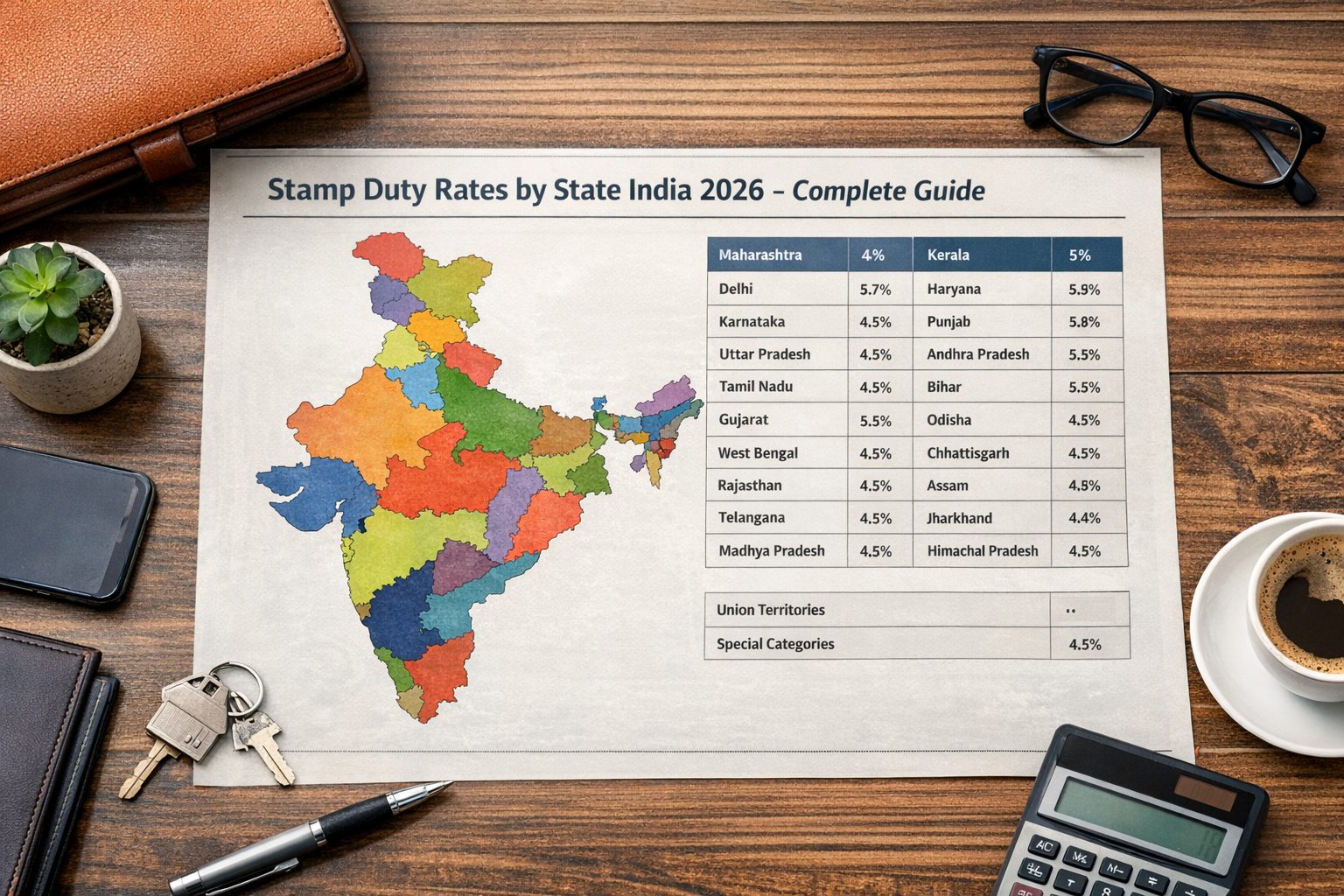
Stamp Duty Rates by State in 2026
Northern India
Delhi: Delhi has maintained relatively competitive stamp duty rates. For residential properties, the stamp duty rate is 5% of the property value for both male and female buyers. For commercial properties, it ranges from 5-10% depending on the nature of the transaction. Delhi's rates are among the most reasonable in metro areas, making it attractive for property investments.
Punjab: Punjab charges 5% stamp duty on residential properties and 8% on commercial properties. However, Punjab offers incentives for women buyers, with reduced rates of 4% for residential properties purchased by females. This makes Punjab an interesting market for female investors.
Haryana: Haryana's stamp duty rates stand at 5% for residential properties and 8% for commercial properties. The state has been competitive in attracting real estate investments, particularly in cities like Gurgaon and Faridabad, which are experiencing significant growth.
Himachal Pradesh: This state charges 5% stamp duty on residential properties and 8% on commercial properties. The rates are consistent with neighboring states in the region.
Uttarakhand: Uttarakhand levies 5% stamp duty on residential properties, making it competitive for property purchases in hill stations and developing areas like Dehradun.
Frequently asked
Western India
Maharashtra: Maharashtra, home to financial hubs like Mumbai and Pune, charges 5% stamp duty on residential properties valued up to ₹25 lakhs, and 5% on properties above this value. For commercial properties, the rate is 5%. Maharashtra also offers benefits for women buyers with reduced rates in some cases. The state's robust real estate market makes understanding these rates crucial for investors.
Gujarat: Gujarat charges 5% stamp duty on residential properties and 5% on commercial properties. The state has been proactive in attracting real estate investments, particularly in Ahmedabad and Surat, which are experiencing rapid development.
Goa: Goa charges 6% stamp duty on residential properties and 6% on commercial properties. The tourist-friendly state has unique property dynamics that professionals should understand.
Rajasthan: Rajasthan levies 5% stamp duty on residential properties and 8% on commercial properties. Cities like Jaipur are seeing increased real estate activity, making this an important market to monitor.
Southern India
Tamil Nadu: Tamil Nadu charges 7% stamp duty on residential properties and 8% on commercial properties. This makes Tamil Nadu one of the states with higher stamp duty rates, which should be factored into investment calculations for properties in Chennai and other major cities.
Karnataka: Karnataka levies 5% stamp duty on residential properties and 5% on commercial properties. Bangalore's booming real estate market has made understanding these rates essential for investors and developers.
Telangana: Telangana charges 4% stamp duty on residential properties, among the lowest in India, and 5% on commercial properties. This competitive rate has made Hyderabad an attractive destination for property investments.
Andhra Pradesh: Andhra Pradesh levies 5% stamp duty on residential properties and 5% on commercial properties. The state's developing real estate sector offers opportunities for investors.
Kerala: Kerala charges 7% stamp duty on residential properties and 8% on commercial properties. The state's high rates reflect its developed infrastructure and property market maturity.
Eastern and Central India
West Bengal: West Bengal charges 6% stamp duty on residential properties and 8% on commercial properties. Kolkata's real estate market remains active despite competitive rates in other metros.
Madhya Pradesh: Madhya Pradesh levies 5% stamp duty on residential properties and 8% on commercial properties. Cities like Indore and Bhopal are emerging as real estate hotspots.
Chhattisgarh: Chhattisgarh charges 5% stamp duty on residential properties and 8% on commercial properties. The state offers opportunities for investors looking at emerging markets.
Odisha: Odisha levies 5% stamp duty on residential properties and 8% on commercial properties. Bhubaneswar is experiencing steady real estate growth.
Additional Charges Beyond Stamp Duty
While stamp duty is a major cost, property buyers and professionals using AECORD should be aware of additional charges:
Registration Fee
Registration fees are charged separately from stamp duty and typically range from 0.5% to 2% of the property value, depending on the state. In some states like Maharashtra, the registration fee is 0.5-1%, while in others it may be higher.
Legal and Documentation Charges
Professional charges for legal documentation, property surveys, and title verification can range from ₹5,000 to ₹50,000 depending on the property value and complexity of the transaction.
GST on Services
If you're purchasing from a developer, GST may apply to the construction services component, which is typically 5% for affordable housing and 12% for other residential properties.
How Stamp Duty is Calculated
Understanding the calculation method is crucial for accurate financial planning:
Basic Formula: Stamp Duty = Property Value × Stamp Duty Rate
For example, if you're purchasing a residential property in Bangalore valued at ₹50 lakhs with a 5% stamp duty rate, the stamp duty would be ₹2.5 lakhs.
However, the "property value" used for calculation is typically the higher of:
The actual transaction price (what you're paying)
The government-assessed value or circle rate
This is why circle rates matter significantly in property transactions. If the circle rate in your area is higher than your negotiated price, you'll pay stamp duty on the circle rate, not your actual purchase price.
State-Specific Incentives and Reductions
Many states offer incentives to encourage specific types of property purchases:
Female Buyer Incentives
States like Maharashtra, Punjab, and several others offer reduced stamp duty rates for women buyers. For instance, Maharashtra offers a 1% reduction in some cases, while Punjab offers 1% reduction on residential properties.
First-Time Buyer Benefits
Some states provide reduced rates for first-time property buyers. It's essential to check with your state's revenue department to understand current incentives.
Affordable Housing Exemptions
Properties classified as affordable housing (typically properties valued up to ₹45 lakhs in metros) may attract reduced stamp duty in some states.
Impact on Real Estate Market Dynamics
Stamp duty rates significantly influence property market dynamics across India:
Investment Decisions: Higher stamp duty rates in states like Tamil Nadu and Kerala make investors more cautious, potentially affecting property appreciation rates. Conversely, states with lower rates like Telangana attract more investment activity.
Property Pricing: In states with high stamp duty, property prices may be lower as buyers factor in these additional costs. This creates interesting opportunities for investors comparing markets across states.
Developer Strategies: Real estate developers often adjust their pricing strategies based on stamp duty rates. In high-duty states, they may offer reduced base prices but higher GST components.
For AECORD members and professionals in the real estate sector, understanding these dynamics is crucial for providing accurate advice to clients and making informed investment decisions.
Recent Changes and Future Outlook
The stamp duty landscape in India continues to evolve. Recent years have seen several states revising their rates to remain competitive. For 2026, the key trends include:
States focusing on attracting real estate investments through competitive rates
Increased emphasis on transparency through e-stamping initiatives
Growing digital documentation to reduce fraud and ensure proper revenue collection
Potential revisions based on property market conditions and government revenue needs
Tips for Managing Stamp Duty Costs
1. Understand Circle Rates: Before purchasing property, research the circle rate in your area. This will help you anticipate the stamp duty amount accurately.
2. Check for Eligibility: Determine if you qualify for any state-specific reductions or exemptions, such as female buyer benefits or first-time buyer incentives.
3. Budget Accurately: Include stamp duty, registration fees, and other charges in your total budget. A ₹50 lakh property may actually cost ₹53-55 lakhs after all charges.
4. Use Professional Services: Engage with experienced property consultants and legal professionals who understand your state's regulations. Platforms like AECORD can help you connect with qualified professionals in your area.
5. Compare States: If you're considering properties in multiple states, compare the total cost of ownership including stamp duty, registration, and other charges.
6. Stay Updated: Stamp duty rates and regulations change periodically. Stay informed about updates from your state's revenue department.
Common Mistakes to Avoid
Undervaluing Property: Some buyers attempt to register properties at lower values to reduce stamp duty. This is illegal and can result in penalties, legal action, and property disputes.
Ignoring Circle Rates: Failing to account for circle rates can result in unexpected costs during registration.
Missing Deadlines: Stamp duty must be paid before or during registration. Missing payment deadlines can delay property registration and create legal complications.
Not Consulting Professionals: Property transactions are complex. Consulting with experienced professionals can save you money and prevent costly mistakes.
Conclusion
Stamp duty rates across Indian states in 2026 vary significantly, ranging from 4% in states like Telangana to 7% or higher in states like Tamil Nadu and Kerala. Understanding these rates is essential for accurate financial planning, whether you're a property buyer, investor, or real estate professional.
The key to navigating stamp duty successfully is thorough research, understanding your state's specific regulations, and consulting with qualified professionals. By factoring in all costs upfront and exploring available incentives, you can make informed decisions that align with your financial goals.
For real estate professionals, architects, engineers, and construction specialists looking to connect with property experts and stay updated on market dynamics, AECORD provides a comprehensive platform to access qualified professionals and resources across India's AECO sector. Whether you need legal consultants, property valuers, or transaction specialists, AECORD can help you find the right expertise for your specific needs.
Take the time to understand your state's stamp duty regulations, consult with professionals, and make informed decisions about your property transactions. Your financial planning will be more accurate, and your property dealings will be smoother and more secure.