

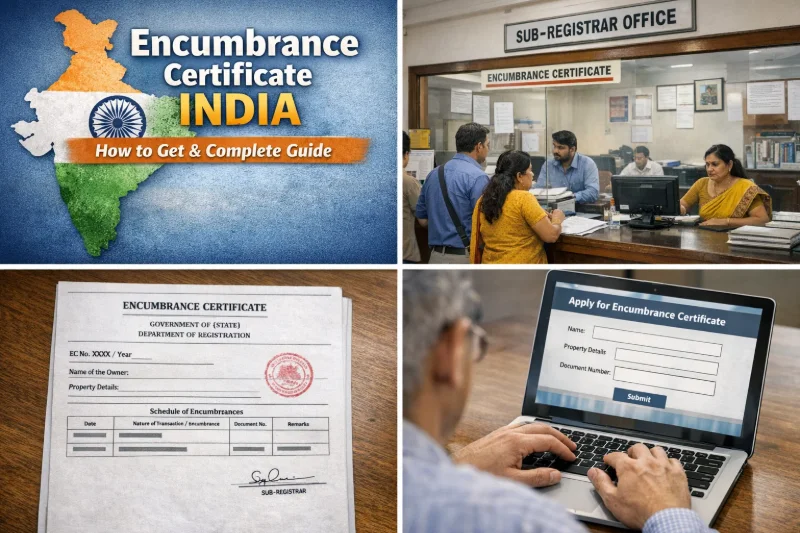
Understanding Encumbrance Certificates in India: A Complete Guide
An encumbrance certificate is one of the most critical documents in Indian real estate transactions. Whether you're buying property, securing a loan, or conducting due diligence on a construction project, understanding what an encumbrance certificate is and how to obtain one is essential. This comprehensive guide will walk you through everything you need to know about encumbrance certificates in India, including the process, costs, and timeline.
Build cost · Bengaluru, May 2026
What is an Encumbrance Certificate?
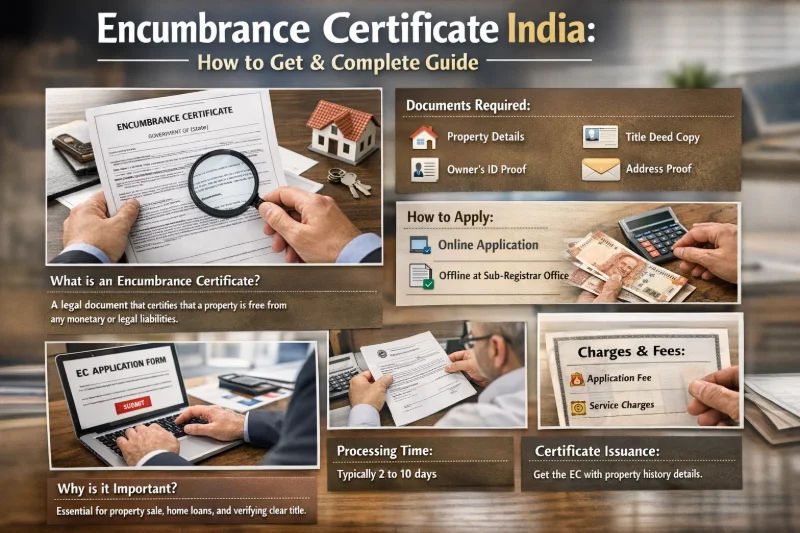
An encumbrance certificate is an official document issued by the sub-registrar's office that confirms whether a property is free from any legal liabilities or financial obligations. In simpler terms, it certifies that the property is not mortgaged, charged, or encumbered in any way.
The certificate serves as proof that:
The property is not pledged as security for any loan
No legal cases are pending against the property
The property owner has clear ownership rights
There are no outstanding dues or charges on the property
This document is particularly important for construction professionals, architects, engineers, and project managers working on AECORD, India's premier B2B2C marketplace for AECO professionals, who need to verify property status before commencing projects or recommending properties to clients.
Why is an Encumbrance Certificate Important?
The importance of an encumbrance certificate cannot be overstated in Indian real estate and construction sectors:
For Property Buyers
When purchasing a property, an encumbrance certificate provides peace of mind by confirming that you're not inheriting any hidden liabilities. Banks and financial institutions typically require this certificate before approving home loans.
Frequently asked
For Lenders and Banks
Financial institutions use encumbrance certificates to assess the risk before lending money against a property. A clear certificate means the property can serve as unencumbered collateral.
For Construction and Development
Architects and engineers using platforms like AECORD need to verify property status before designing or planning construction projects. An encumbrance certificate ensures there are no legal impediments to development.
For Government and Regulatory Bodies
Municipal corporations and government agencies require encumbrance certificates for various approvals and registrations.
How to Get an Encumbrance Certificate: Step-by-Step Process
Step 1: Identify the Correct Sub-Registrar's Office
The first step is to locate the sub-registrar's office that has jurisdiction over the property. In India, every property is registered under a specific sub-registrar based on its location. For example:
In Mumbai, properties are registered under various sub-registrar offices in different zones
In Bangalore, the Karnataka Registration Department handles all property registrations
In Delhi, the District Sub-Registrar's office manages registrations
You can find the correct office by checking the property's sale deed or visiting the state's land records website.
Step 2: Gather Required Documents
Before visiting the sub-registrar's office, ensure you have the following documents:
Property identification details: Survey number, plot number, or property address
Ownership proof: Original sale deed or any document showing ownership
Identity proof: Aadhar, PAN, passport, or voter ID
Address proof: Utility bills or lease agreement
Authorization letter: If applying on behalf of someone else (with power of attorney)
Step 3: Submit the Application
You can apply for an encumbrance certificate either in person or online, depending on your state's system:
Online Application (Recommended)
Most Indian states now offer online application systems. Here's how:
Visit your state's property registration website
Create an account or log in
Select "Encumbrance Certificate" from the services menu
Fill in property details and personal information
Upload required documents
Pay the applicable fee online
Receive a reference number for tracking
In Maharashtra, for instance, you can apply through the igrstp.maharashtra.gov.in portal. In Karnataka, the kaveri.egramsevakendra.in system handles applications.
Offline Application
If online systems aren't available in your area:
Visit the sub-registrar's office in person
Obtain the application form
Fill it with all required information
Submit documents and pay the fee
Receive a receipt with an application number
Step 4: Pay the Applicable Fee
The cost of an encumbrance certificate varies by state and property value. Here's a general breakdown:
Maharashtra: ₹50 to ₹100 for properties up to ₹5 lakhs; higher fees for more valuable properties
Karnataka: ₹50 to ₹200 depending on property value
Delhi: ₹100 to ₹500
Tamil Nadu: ₹50 to ₹150
Uttar Pradesh: ₹50 to ₹200
Payment can typically be made through:
Online payment gateways (credit/debit card, net banking)
Demand drafts
Cash at the registrar's office
Step 5: Track Your Application
After submission, you'll receive a reference or application number. Use this to track the status of your application on the registrar's website. Most states provide real-time status updates.
Step 6: Collect the Certificate
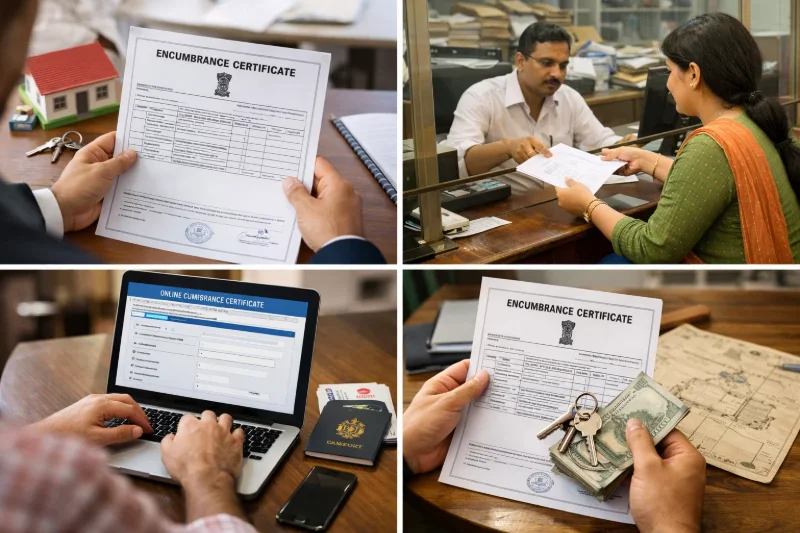
Once processed, you can collect the encumbrance certificate either:
In person: From the sub-registrar's office
By post: Many offices offer postal delivery for an additional fee
Online download: Some states allow direct download from the portal
Timeline for Obtaining an Encumbrance Certificate
The processing time depends on several factors:
Online applications: 3-7 working days (faster in most states)
Offline applications: 7-15 working days
Properties with legal disputes: May take 30+ days for investigation
In metropolitan areas like Mumbai, Bangalore, and Delhi, the process is typically faster due to digitalization. However, during peak seasons or in smaller towns, delays can occur.
State-Specific Guidelines for Obtaining Encumbrance Certificates
Maharashtra
Maharashtra has a well-developed online system through IGRS (Integrated Grievance Redressal System). Properties in Mumbai, Pune, and other major cities can be processed within 3-5 days. The state charges between ₹50 and ₹500 depending on property value.
Karnataka
Karnataka's property registration system is highly digitalized. The Kaveri system allows online applications with quick processing. Most certificates are issued within 5-7 working days.
Delhi
The Delhi Land and Building Department offers online applications through their portal. Processing typically takes 7-10 working days for properties in Delhi.
Tamil Nadu
Tamil Nadu's registration department has an online portal where applicants can apply for encumbrance certificates. The state typically processes applications within 7-14 days.
Uttar Pradesh
In Uttar Pradesh, applications can be submitted online through the state's property registration website. Processing times vary between 5-15 days depending on the district.
Common Issues and How to Resolve Them
Application Rejection
If your application is rejected, it's usually due to:
Incomplete or incorrect property details
Missing documents
Discrepancies in ownership records
Solution: Correct the information and resubmit with all required documents.
Delayed Processing
Processing delays can occur due to:
High application volume
Pending legal cases on the property
System downtime
Solution: Follow up with the registrar's office or check the online status regularly.
Encumbrances Found
If the certificate shows existing encumbrances:
Review the details carefully
Obtain documentation from the property owner regarding the encumbrance
Ensure it will be cleared before property transfer
This is where professionals on AECORD can provide valuable guidance, as architects and engineers often work with legal consultants to resolve such issues.
Important Considerations When Obtaining an Encumbrance Certificate
Certificate Validity Period
An encumbrance certificate is typically valid for 3-6 months from the date of issue. For property transactions, banks usually require a certificate issued within the last 3 months.
Multiple Properties
If you own multiple properties, you'll need separate encumbrance certificates for each one.
Ancestral Properties
For ancestral or inherited properties, obtaining an encumbrance certificate might require additional documentation proving clear inheritance rights.
Litigated Properties
If a property is involved in any legal dispute, the encumbrance certificate will reflect this, and the certificate cannot be issued until the case is resolved.
Digital Evolution: E-Certificates and Online Systems
India's property registration system is rapidly digitizing. Many states now offer:
E-certificates: Digital versions that are legally valid
Online tracking: Real-time status updates
Digital signatures: Secure authentication
Instant delivery: Direct download from portals
This digital transformation has significantly reduced processing times and improved transparency, making it easier for professionals in the AECO sector to verify property status quickly.
Role of Professionals in the Encumbrance Certificate Process
Architects, engineers, and construction professionals often need to verify property status before starting projects. On platforms like AECORD, you can connect with legal consultants and property advisors who can:
Guide you through the application process
Interpret the certificate findings
Advise on next steps if encumbrances are found
Ensure compliance with local regulations
Key Takeaways
Obtaining an encumbrance certificate in India is a straightforward process when you follow the correct steps:
Identify the correct sub-registrar's office based on property location
Gather all required documents
Apply online (recommended) or offline
Pay the applicable fee
Track your application status
Collect the certificate within the specified timeframe
The certificate is essential for property transactions, bank loans, and construction projects. Understanding the process saves time and prevents complications in real estate dealings.
Getting Professional Help
If you're unsure about the encumbrance certificate process or need guidance on property verification, consider connecting with experienced professionals. On AECORD, you can find qualified architects, engineers, legal consultants, and property advisors who understand the nuances of Indian real estate regulations and can guide you through the entire process.
Whether you're a property buyer, developer, or construction professional, having a clear encumbrance certificate is the foundation of a smooth and legally compliant project. Start your search for trusted professionals on AECORD today to ensure your property transactions and construction projects are handled with expertise and care.
Frequently Asked Questions
What is an encumbrance certificate and why do I need it?
An encumbrance certificate is an official document from the sub-registrar's office that confirms a property is free from legal liabilities, mortgages, or financial obligations. It's essential for property buyers, lenders, and construction professionals to verify clear ownership and ensure there are no hidden legal impediments before proceeding with transactions or projects.
Which sub-registrar's office issues encumbrance certificates?
The sub-registrar's office that has jurisdiction over the property's location issues the encumbrance certificate. You can find the correct office by checking your property's sale deed or visiting your state's land records website, as each property is registered under a specific sub-registrar based on its geographical location.
What documents do I need to apply for an encumbrance certificate?
You'll need property identification details (survey/plot number), ownership proof (sale deed), identity proof (Aadhar/PAN/passport), address proof (utility bills), and an authorization letter if applying on behalf of someone else. Having these documents ready will streamline the application process at the sub-registrar's office.
Do banks require encumbrance certificates before approving home loans?
Yes, banks and financial institutions typically require an encumbrance certificate before approving home loans. They use it to assess lending risk and confirm that the property can serve as unencumbered collateral for the loan.
Why do architects and construction professionals need encumbrance certificates?
Architects, engineers, and construction professionals need encumbrance certificates to verify property status before designing or planning construction projects. The certificate ensures there are no legal impediments to development and helps professionals recommend properties to clients with confidence.