Roofing is one of the most critical components of any building structure, and the choice between tiles and shingles can significantly impact the durability, aesthetics, and long-term maintenance costs of your property. Whether you're constructing a new residential building in Bangalore, renovating a commercial property in Mumbai, or planning infrastructure projects across India, understanding the differences between roofing tiles and shingles is essential for making an informed decision.
Understanding Roofing Tiles vs. Shingles
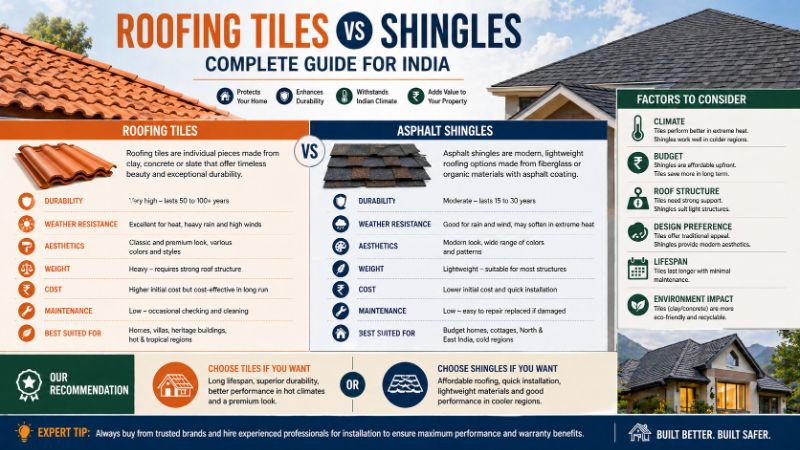
Roofing tiles and shingles are both popular roofing materials used across India, but they differ substantially in composition, installation methods, longevity, and aesthetic appeal. The choice between them depends on your budget, climate conditions, architectural style, and maintenance preferences.
Build cost · Bengaluru, May 2026
What Are Roofing Tiles?
Roofing tiles are individual pieces of durable material, typically made from clay, concrete, or ceramic. They have been used for centuries, particularly in Mediterranean and Asian architecture. In India, clay tiles have been a traditional choice for centuries, especially in regions like Tamil Nadu, Rajasthan, and Kerala.
Tiles are generally larger than shingles, measuring approximately 40 cm × 25 cm, and overlap in a specific pattern to create a weatherproof barrier. Each tile is individually secured to the roof structure, providing exceptional durability and protection against harsh weather conditions.
What Are Roofing Shingles?
Shingles are smaller, flat pieces of roofing material that are layered in an overlapping fashion, similar to fish scales. The most common types include asphalt shingles, fiberglass shingles, and composite shingles. Shingles are lighter in weight compared to tiles and are easier to install, making them a popular choice for residential construction across urban Indian cities. /blog/why-roofs-matter-function-design-and-innovation-in-architecture
Types of Roofing Tiles
Frequently asked
Clay Tiles
Clay tiles are manufactured by molding clay and firing it in kilns at high temperatures. They are renowned for their distinctive appearance, rich colors, and exceptional longevity. In India, clay tiles cost between ₹80 to ₹200 per square foot, depending on the quality and region. They can last 50-100 years or more with proper maintenance.
Advantages:
Extremely durable and weather-resistant
Excellent thermal insulation properties
Environmentally friendly and recyclable
Beautiful aesthetic appeal with natural variations
Low maintenance requirements
Disadvantages:
Heavy weight requires strong structural support
Higher initial installation costs
Brittle and can crack under impact
Requires skilled installation
Concrete Tiles
Concrete tiles are manufactured by pressing concrete mixtures into molds and curing them. They offer a more affordable alternative to clay tiles while providing similar durability. Concrete tiles in India typically cost between ₹60 to ₹150 per square foot.
Advantages:
More affordable than clay tiles
Good durability (40-50 years lifespan)
Available in various colors and styles
Good weather resistance
Can mimic the appearance of clay or slate tiles
Disadvantages:
Still relatively heavy
Susceptible to moss and algae growth in humid climates
May require periodic sealing
Can fade over time
Ceramic Tiles
Ceramic tiles are similar to clay tiles but undergo additional glazing processes. They are less common for roofing in India but are gaining popularity for their aesthetic qualities and durability.
Types of Roofing Shingles
Asphalt Shingles
Asphalt shingles are the most popular roofing material in India for residential properties. They consist of a fiberglass mat coated with asphalt and mineral granules. In India, asphalt shingles cost between ₹30 to ₹80 per square foot, making them the most budget-friendly option.
Advantages:
Most affordable roofing material
Easy and quick installation
Lightweight and don't require additional structural support
Available in numerous colors and styles
Suitable for most Indian climates
Disadvantages:
Shorter lifespan (15-25 years)
Vulnerable to extreme heat and UV damage
Can curl or deteriorate in humid climates
Less environmentally friendly
Requires more frequent maintenance
Fiberglass Shingles
Fiberglass shingles are an improved version of asphalt shingles with a stronger fiberglass base. They offer better durability and performance in varying weather conditions. These cost between ₹50 to ₹120 per square foot in India.
Advantages:
Better durability than standard asphalt shingles
Fire-resistant properties
Good UV resistance
Lighter weight
Suitable for both hot and humid climates
Disadvantages:
Higher cost than basic asphalt shingles
Still requires replacement every 20-30 years
Can become brittle in extreme cold
Composite Shingles
Composite shingles are engineered materials that combine various components for enhanced performance. They can mimic the appearance of wood shakes, slate, or clay tiles while offering better durability. Composite shingles in India cost between ₹80 to ₹200 per square foot.
Advantages:
Aesthetic appeal with durability
Long lifespan (30-50 years)
Excellent weather resistance
Lightweight compared to tiles
Low maintenance
Disadvantages:
Higher initial cost
May require specialized installation
Limited color options compared to asphalt shingles
Climate Considerations for Indian Regions
Tropical and Humid Regions (Kerala, Goa, Coastal Areas)
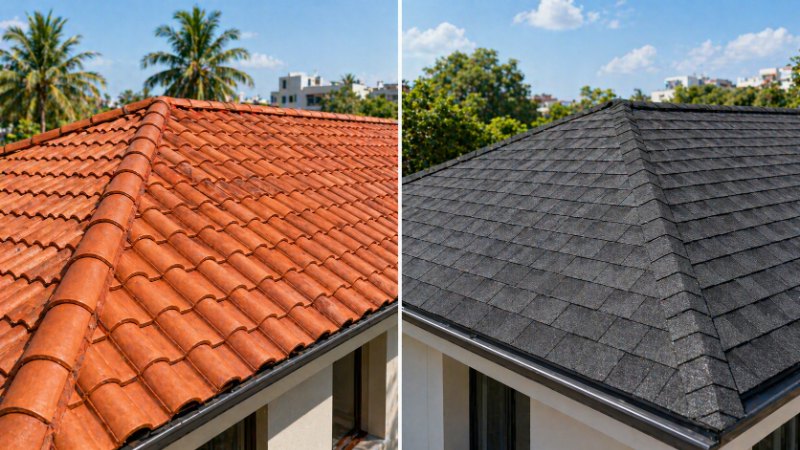
In tropical regions with high humidity and frequent rainfall, clay tiles and concrete tiles are excellent choices due to their moisture resistance and durability. Shingles may deteriorate faster due to moisture absorption and are more prone to moss and algae growth. The monsoon season in these regions requires materials that can withstand prolonged exposure to water.
Hot and Dry Regions (Rajasthan, Gujarat, Delhi)
In hot and dry climates, both tiles and high-quality shingles perform well. However, tiles provide superior heat reflection and thermal insulation, which can significantly reduce cooling costs. Asphalt shingles may become brittle and crack under extreme heat, making ceramic or clay tiles a better choice.
Temperate Regions (Himachal Pradesh, Uttarakhand)
In cooler regions with occasional snowfall, both materials work well. However, tiles are preferred because they can handle temperature fluctuations better than shingles. The weight of tiles also helps them remain secure during high winds and storms.
Installation and Labor Costs in India
Installation costs vary significantly based on the material and regional labor rates. In metropolitan areas like Mumbai, Delhi, and Bangalore, skilled roofing professionals charge between ₹50 to ₹150 per square foot for installation labor, depending on complexity.
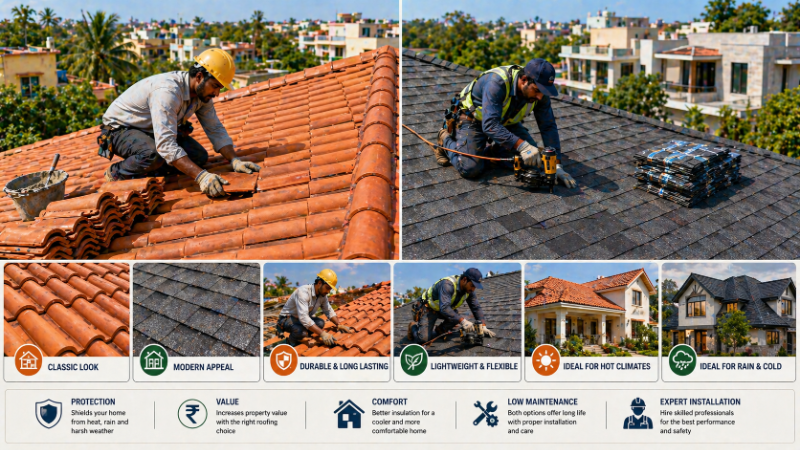
Tile installation requires more skilled labor and typically costs more than shingle installation. Finding experienced tile installers through platforms like AECORD can ensure quality workmanship and proper roof longevity. AECORD connects you with verified roofing contractors and suppliers across major Indian cities, making it easier to compare quotes and services.
Maintenance Requirements
Tile Maintenance
Tiles require minimal maintenance but occasional inspection for:
Cracked or broken tiles (replacement costs ₹200-500 per tile)
Moss or algae growth in humid areas (can be cleaned professionally)
Mortar joint inspection and repair
Gutter cleaning to prevent water damage
Shingle Maintenance
Shingles require more frequent maintenance, including:
Regular inspections for curling, cracking, or missing granules
Cleaning moss and algae growth
Replacing damaged shingles (costs ₹100-300 per shingle)
Checking for leaks and water damage
Regular gutter maintenance
Cost Comparison: Total Cost of Ownership
While shingles have a lower initial cost, tiles often provide better value over the building's lifetime. For a 1,000 square foot roof:
Asphalt Shingles:
Material cost: ₹30,000-80,000
Installation: ₹50,000-150,000
Maintenance over 25 years: ₹50,000-100,000
Replacement: ₹80,000-150,000 (every 20-25 years)
Total 50-year cost: ₹3,00,000-5,00,000
Clay Tiles:
Material cost: ₹80,000-200,000
Installation: ₹100,000-250,000
Maintenance over 50 years: ₹30,000-50,000
Minimal replacement needed
Total 50-year cost: ₹2,50,000-5,00,000
The comparison shows that while tiles have higher upfront costs, their longevity often makes them economically competitive over the building's lifetime.
Aesthetic and Architectural Considerations
Roofing material significantly impacts your building's visual appeal. Traditional Indian architecture, particularly in regions like Rajasthan and Tamil Nadu, features clay tiles that complement the cultural aesthetic. Modern homes in cities like Bangalore and Pune often use composite shingles or concrete tiles for contemporary looks.
Tiles offer superior aesthetic appeal with natural color variations and traditional charm, while shingles provide versatility in colors and can suit both traditional and modern designs. Your choice should align with your building's architectural style and neighborhood aesthetics.
Environmental Impact
Clay and concrete tiles are environmentally superior choices, as they are made from natural materials and are fully recyclable. They also last significantly longer, reducing the need for frequent replacements and minimizing waste. Asphalt shingles, while recyclable, have a shorter lifespan and generate more waste over time.
Choosing the Right Professional
Selecting qualified roofing professionals is crucial for ensuring proper installation and maximum roof longevity. When searching for contractors, look for:
Proper licensing and certifications
Experience with your chosen material
References from completed projects
Insurance and warranty coverage
Local knowledge of regional climate challenges
AECORD provides a curated network of verified roofing contractors, suppliers, and consultants across India. Using AECORD, you can access detailed profiles, customer reviews, and competitive quotes from multiple professionals, ensuring you find the right fit for your project. Whether you need tile installation in Chennai, shingle replacement in Pune, or roofing consultation in Kolkata, AECORD connects you with local experts.
Making Your Final Decision
When choosing between tiles and shingles, consider:
Choose Tiles if:
You're building a long-term structure and plan to stay for 30+ years
Your region experiences extreme weather conditions
You prioritize aesthetic appeal and traditional design
You want minimal maintenance and maximum durability
Your building structure can support the weight
Choose Shingles if:
You have budget constraints for initial installation
You plan to sell or relocate within 20 years
Your building structure has weight limitations
You prefer easier and faster installation
You want flexibility in design and color options
Conclusion
The choice between roofing tiles and shingles is not one-size-fits-all. Both materials have distinct advantages and are suitable for different situations, budgets, and preferences. Tiles offer superior longevity, durability, and aesthetic appeal, making them ideal for long-term investments in Indian properties. Shingles provide affordability and ease of installation, making them suitable for budget-conscious projects or temporary structures.
Evaluate your specific needs, regional climate conditions, budget constraints, and long-term plans before making a decision. Consulting with experienced roofing professionals who understand local conditions and regulations is essential. AECORD makes this process easier by connecting you with trusted roofing experts across India who can provide personalized recommendations based on your unique requirements.
Whether you're constructing a new home, commercial building, or undertaking a renovation project, proper roofing selection and installation will protect your investment and ensure structural integrity for decades to come. Connect with qualified roofing professionals on AECORD today to get started on your roofing project with confidence.
Frequently Asked Questions
What is the difference between roofing tiles and shingles?
Roofing tiles are larger, individual pieces made from clay, concrete, or ceramic that last 50-100+ years, while shingles are smaller, lighter flat pieces (asphalt, fiberglass, or composite) that are easier to install but have shorter lifespans. Tiles require stronger structural support due to their weight, whereas shingles are more commonly used in residential construction across Indian cities.
How long do roofing tiles last in India?
Clay tiles can last 50-100 years or more with proper maintenance, while concrete tiles typically last 40-50 years. Their longevity in India depends on climate conditions, maintenance practices, and the quality of installation, making them a long-term investment for property owners.
What is the cost of roofing tiles vs shingles in India?
Clay tiles cost ₹80-₹200 per square foot, while concrete tiles range from ₹60-₹150 per square foot. Shingles are generally more affordable upfront, but tiles offer better long-term value due to their extended lifespan and lower maintenance requirements.
Are clay tiles better than concrete tiles for Indian roofs?
Clay tiles are more durable (50-100+ years), offer superior thermal insulation, and have better aesthetic appeal, but they're heavier and more expensive. Concrete tiles are a more affordable alternative with good durability (40-50 years), though they're susceptible to moss growth in humid climates and may require periodic sealing.
Which roofing material is best for monsoon regions in India?
Clay tiles are excellent for monsoon regions due to their exceptional weather resistance, low water absorption, and thermal insulation properties. Concrete tiles also perform well but may require additional sealing and maintenance to prevent moss and algae growth in high-humidity areas.