

Complete Guide to Occupancy Certificate Process in India: Everything You Need to Know
An Occupancy Certificate (OC) is one of the most critical documents for any property owner in India. Whether you've constructed a residential apartment, commercial building, or industrial facility, obtaining an Occupancy Certificate is a mandatory legal requirement before you can legally occupy or use the property. This comprehensive guide walks you through the entire process, timelines, costs, and everything else you need to know about obtaining an OC in India.

Build cost · Bengaluru, May 2026
What is an Occupancy Certificate?
An Occupancy Certificate is an official document issued by the local municipal authority or the building's competent authority that certifies that a completed building or structure complies with all relevant building codes, regulations, and safety standards. It essentially confirms that the building is safe for occupation and that all construction work has been completed according to the approved building plans.
The OC serves multiple purposes:
Confirms legal authorization to occupy the building
Enables property registration and transfer of ownership
Facilitates bank loans and mortgage approvals
Ensures compliance with local building regulations
Provides legal protection to property owners
Required for obtaining utility connections (electricity, water, gas)
Why is the Occupancy Certificate Important?
The significance of an OC cannot be overstated in the Indian real estate landscape. Without an Occupancy Certificate, you cannot legally occupy your property, and the property cannot be registered in your name. Banks and financial institutions will not approve loans for properties without valid OCs. Additionally, if you attempt to sell or rent out the property, buyers or tenants will demand proof of the OC.
From a regulatory standpoint, occupying a building without an OC can result in penalties, legal action, and forced demolition in extreme cases. Municipal authorities have the power to issue notices and seize properties that operate without proper occupancy certification.
Occupancy Certificate Process: Step-by-Step Guide
Frequently asked
Step 1: Completion of Construction
The first prerequisite for obtaining an OC is the complete and satisfactory completion of the construction work as per the approved building plans. The contractor and project owner must ensure that all structural work, finishing, safety installations, and utilities are completed to the specifications mentioned in the sanctioned building plan.
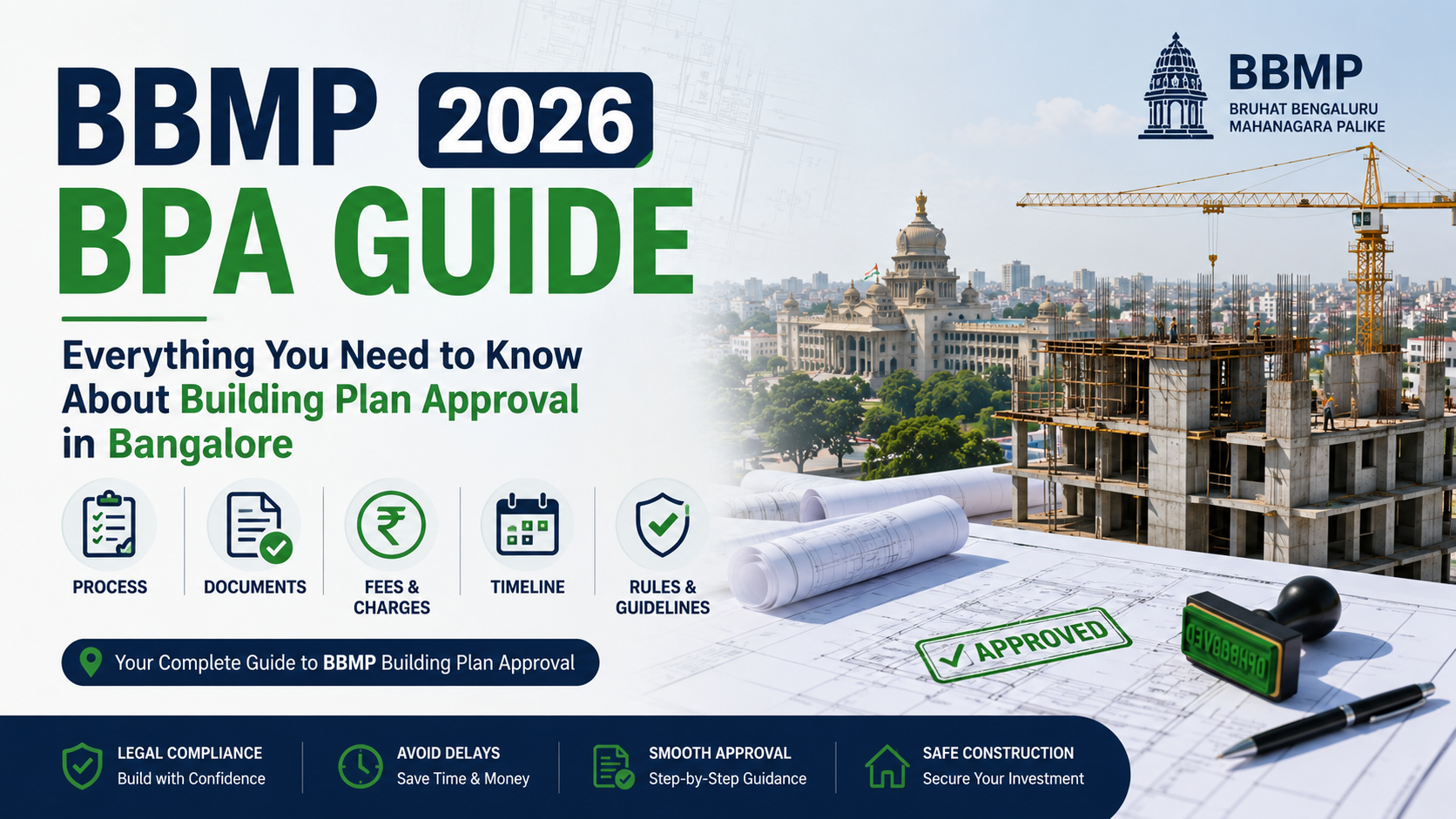
For a detailed breakdown, see our guide on BBMP Building Plan Approval Process Bangalore 2026.
Before applying for the OC, conduct a thorough inspection to verify that all construction is complete and matches the approved plans.
Step 2: Obtain Completion Certificate from Contractor
Once construction is complete, the contractor or builder must provide a Completion Certificate stating that the building has been constructed in accordance with the approved plans and specifications. This certificate is a prerequisite document for the OC application.
Step 3: Prepare Required Documentation
Gather all necessary documents before submitting your OC application. The typical documents required include:
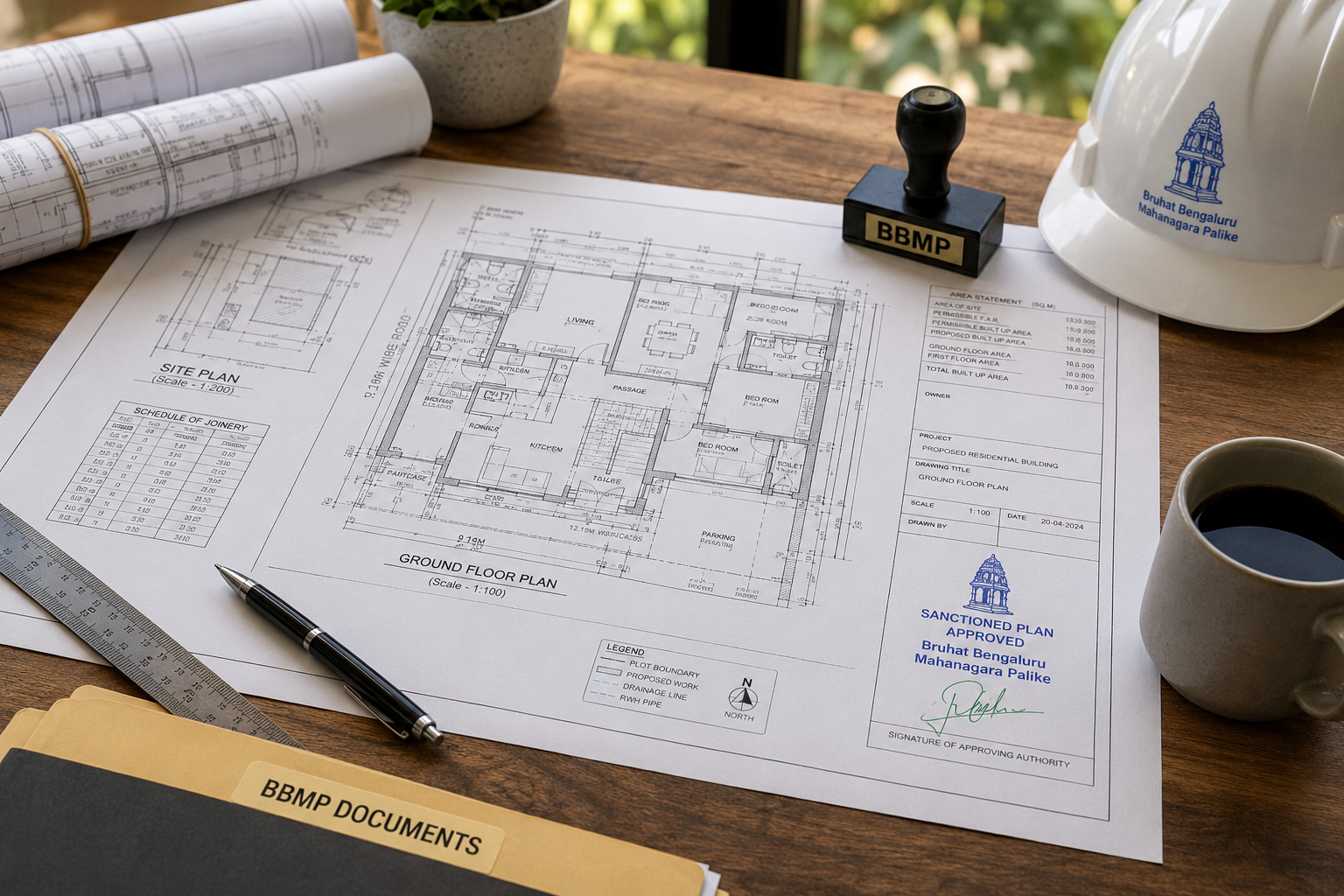
Original building plan approval/sanction letter
Completion certificate from the contractor
Structural stability certificate from a qualified engineer
Fire safety compliance certificate
Environmental clearance (if applicable)
NOC from pollution control board (for certain building types)
Electrical safety certificate
Water and drainage system completion certificate
Proof of payment of all development charges and building fees
Property ownership documents or allotment letter
Identity proof and address proof of the applicant
Document requirements may vary slightly depending on your state and municipal corporation. For instance, in Mumbai, the BMC has specific requirements, while in Bangalore, the BBMP follows different protocols.
Step 4: Submit Application to Municipal Authority
Submit your OC application along with all required documents to the relevant municipal authority. In India, this could be:
Municipal Corporation (for city areas)
Municipal Council (for smaller towns)
Gram Panchayat (for rural areas)
Development Authority (for planned cities)
You can typically submit applications online through the municipal portal or physically at the municipal office. Many cities now have online portals where you can upload documents and track application status. For example, the Delhi Municipal Corporation has an online portal, and Pune's PMC allows online applications through their website.
Step 5: Municipal Inspection
After submitting your application, the municipal authority will conduct a detailed inspection of the completed building. The inspector will verify that:
All construction work matches the approved building plan
The building meets all safety and structural requirements
Fire safety measures are in place
Drainage and water systems are properly installed
Electrical installations meet safety standards
Common areas and amenities are as per the plan
The inspection is typically conducted by a team that includes structural engineers, fire safety inspectors, and municipal officials. In larger projects, multiple inspections may be required.

Step 6: Address Deficiencies (if any)
If the inspector identifies any deficiencies or non-compliance issues, the property owner will be issued a notice specifying the corrections needed. Common issues include:
Incomplete fire safety installations
Inadequate parking spaces
Non-compliance with accessibility standards
Electrical or plumbing defects
Incomplete common areas
The owner must rectify these issues within the specified timeframe and request a re-inspection.
Step 7: Final Approval and OC Issuance
Once all inspections are cleared and all deficiencies are addressed, the municipal authority will issue the Occupancy Certificate. The OC is typically issued in the form of an official document bearing the municipal seal and signature of authorized officials.
Occupancy Certificate Timeline in India
The time required to obtain an OC varies significantly across different cities and states. Here's a general timeline for major Indian cities:
Delhi: 30-45 days from application submission
Mumbai: 45-60 days (BMC typically takes longer due to high volume)
Bangalore: 30-45 days
Pune: 30-45 days
Hyderabad: 20-30 days
Kolkata: 45-60 days
However, these timelines can extend if:
Documents are incomplete or incorrect
Deficiencies are found during inspection
There are pending dues or taxes
The municipal office is overburdened with applications
In some cases, the entire process can take 3-6 months or even longer.
Occupancy Certificate Costs in India
The cost of obtaining an Occupancy Certificate varies based on the building's built-up area and the municipal jurisdiction. Here's a breakdown of typical costs:
Application and Processing Fees
Delhi: ₹500-₹2,000 depending on building size
Mumbai: ₹1,000-₹5,000
Bangalore: ₹500-₹2,000
Pune: ₹1,000-₹3,000
Additional Costs
Structural stability certificate: ₹5,000-₹20,000 (depending on building size and complexity)
Fire safety certificate: ₹3,000-₹15,000
Electrical safety certificate: ₹2,000-₹8,000
Environmental clearance (if required): ₹5,000-₹25,000
Professional consultant fees (optional but recommended): ₹10,000-₹50,000
The total cost for obtaining an OC typically ranges from ₹20,000 to ₹1,00,000 depending on the building's complexity, location, and whether you hire professional consultants.
Common Challenges in the OC Process
Incomplete Documentation
One of the most common reasons for OC rejection or delays is incomplete or missing documentation. Ensure all required certificates and approvals are obtained before submission.
Structural and Safety Non-Compliance
Buildings that don't meet structural safety standards or fire safety requirements will face rejection. This often requires costly remedial work.
Pending Municipal Dues
Outstanding property taxes, development charges, or other municipal dues can delay or prevent OC issuance. Clear all dues before applying.
Unauthorized Construction
If the building has been constructed in violation of the approved plan (extra floors, unauthorized alterations, etc.), the OC will be refused until corrections are made.
Bureaucratic Delays
Municipal offices in larger cities often face backlogs. The inspection may be delayed, or the approval process may take longer than expected.
Occupancy Certificate Requirements by Building Type
Residential Buildings
For residential apartments and buildings, the OC must verify compliance with residential building codes, parking requirements, and common amenity standards. Most states require a minimum of one parking space per residential unit.
Commercial Buildings
Commercial properties must meet additional requirements including adequate fire exits, emergency lighting, disabled accessibility, and parking ratios (typically 1 space per 100 sq. meters of built-up area).
Industrial Buildings
Industrial structures require environmental clearance, pollution control board NOC, and compliance with industrial safety standards.
Mixed-Use Buildings
Buildings with both residential and commercial components must comply with regulations for both categories.
How AECORD Can Help Streamline the OC Process
Navigating the Occupancy Certificate process can be complex, especially with varying regulations across different states and municipalities. AECORD, India's leading B2B2C AECO marketplace, connects property owners with verified architects, structural engineers, and compliance consultants who specialize in OC documentation and municipal approvals.
Through AECORD's platform, you can:
Find experienced professionals who understand local OC requirements for your specific city
Access standardized documentation templates and checklists
Get expert guidance on compliance requirements before submitting applications
Connect with consultants who have established relationships with municipal authorities
Track project progress and document status in one centralized platform
By leveraging AECORD's network of qualified professionals, property owners can significantly reduce delays and ensure smooth OC approvals.
State-Specific OC Regulations
Maharashtra
In Maharashtra, the OC is issued by the municipal corporation after inspection. The BMC (Brihanmumbai Municipal Corporation) requires a fire safety certificate from the Fire Department and structural stability certificate from a registered engineer.
Karnataka
The BBMP (Bruhat Bengaluru Mahanagara Palike) has streamlined the OC process with online submission. Buildings must comply with the Karnataka Building Code and the National Building Code of India.
Delhi
The Delhi Municipal Corporation issues OCs after verifying compliance with the Delhi Building Bye-Laws. The process has been partially digitized, allowing online tracking of applications.
Tamil Nadu
In Tamil Nadu, the local municipal corporation or town panchayat issues the OC. The process requires completion certificates from various departments and clearances from the fire department.
Frequently Asked Questions About Occupancy Certificates
Can I occupy a property without an Occupancy Certificate?
No, occupying a property without an OC is illegal in India. You cannot legally move into the property, register it in your name, or obtain utility connections without a valid OC. Doing so can result in penalties and legal action from the municipal authority.
How long is an Occupancy Certificate valid?
An Occupancy Certificate is a permanent document and does not expire. However, if major structural changes or renovations are made to the building, you may need to obtain a revised OC or seek approval from the municipal authority.
What happens if I don't get an Occupancy Certificate?
Without an OC, you cannot legally occupy the property, register it, or obtain loans against it. The municipal authority can issue notices, levy penalties, and in extreme cases, order demolition of unauthorized structures. Additionally, you cannot sell or rent the property without an OC.
Can I get an OC for a property that was built without proper approval?
If a building was constructed without proper plan approval, you must first obtain retrospective approval from the municipal authority. This involves submitting the as-built plan, paying penalties, and getting the structure inspected and approved. Only after this can you apply for the OC.
What is the difference between a Completion Certificate and an Occupancy Certificate?
A Completion Certificate is issued by the contractor confirming that construction is complete as per specifications. An Occupancy Certificate is issued by the municipal authority confirming that the building is safe and compliant with all regulations and can be legally occupied.
Conclusion
The Occupancy Certificate process is a crucial step in the property ownership journey in India. While the process can seem complex and time-consuming, understanding the requirements and preparing documentation in advance can significantly streamline the approval process. Each state and municipality has slightly different requirements, so it's essential to familiarize yourself with local regulations applicable to your area.
Whether you're a property owner, developer, or investor, obtaining an OC should be a priority to ensure legal compliance and protect your property rights. By following the steps outlined in this guide and leveraging professional expertise when needed, you can successfully navigate the OC process and legally occupy your property.