

JSW PSC Grade Cement in Laminated Bags: A Comprehensive Guide for Indian Construction Professionals
When it comes to selecting the right cement for your construction projects in India, understanding the specifications and benefits of different cement grades is crucial. JSW PSC (Portland Slag Cement) Grade cement in laminated bags has become increasingly popular among architects, engineers, and contractors across the country. This guide will help you understand everything you need to know about this cement product, its applications, benefits, and how to source it effectively for your projects.
Build cost · Bengaluru, May 2026
What is JSW PSC Grade Cement?
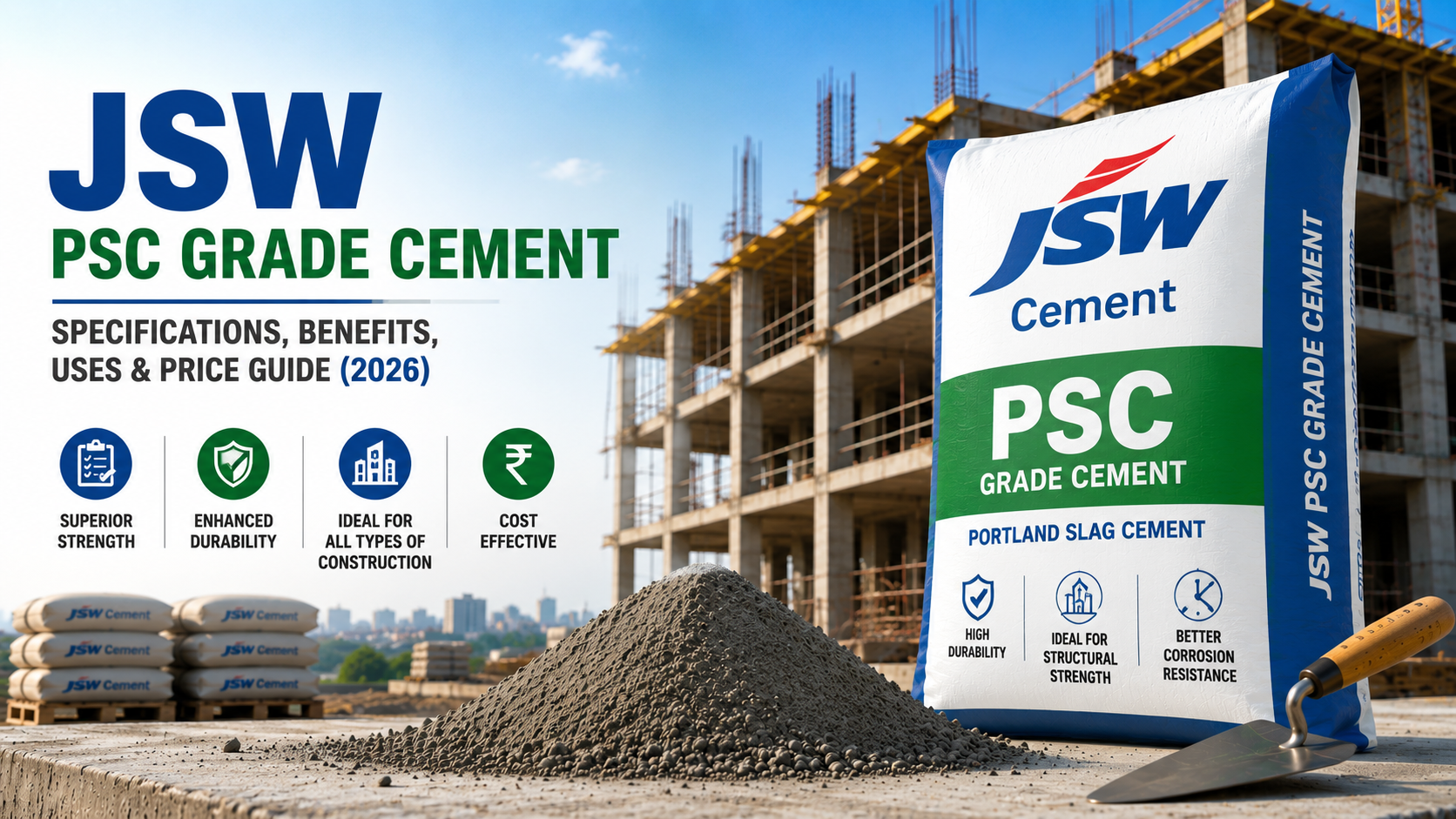
JSW PSC Grade cement is a Portland Slag Cement manufactured by JSW Cement, one of India's leading cement producers. PSC cement is a blend of Portland cement clinker, gypsum, and granulated blast furnace slag (GBFS). The typical composition includes approximately 50-70% Portland cement clinker, 20-40% slag, and small quantities of gypsum.
The laminated bag packaging refers to the multi-layer bags used for storage and transportation, which provide superior protection against moisture and environmental factors compared to traditional single-layer bags. These bags are typically available in standard weights of 50 kg, which is the most common size used across Indian construction sites.
Key Properties and Specifications
JSW PSC Grade cement offers several important technical properties that make it suitable for various construction applications:
Compressive Strength: PSC cement develops strength more gradually than OPC (Ordinary Portland Cement), but ultimately achieves comparable or superior long-term strength. At 28 days, it typically achieves 33-37 MPa.
Heat of Hydration: One of the primary advantages is its lower heat of hydration, making it ideal for mass concrete structures and large foundation works.
Durability: The slag content enhances resistance to sulfate attack and chloride penetration, making it excellent for structures exposed to aggressive environments.
Water Resistance: PSC cement provides better water resistance, making it suitable for underwater structures, dams, and water-retaining structures.
Workability: The cement offers improved workability and reduced segregation in concrete mixes.
Advantages of Laminated Bag Packaging
The laminated bag packaging used for JSW PSC Grade cement provides several practical advantages for construction professionals:
Moisture Protection: The multi-layer laminated design protects cement from moisture absorption, which can significantly reduce its strength and effectiveness. This is particularly important during monsoon seasons in cities like Mumbai, Bangalore, and Kolkata.
Extended Shelf Life: Proper packaging ensures that cement maintains its properties for longer periods, reducing waste and spoilage on construction sites.
Easy Handling: The standardized 50 kg bags are designed for easy manual handling and stacking, reducing labor costs and project timelines.
Clear Labeling: Laminated bags feature clear printing of specifications, manufacturing date, and expiry information, ensuring quality control and traceability.
Environmental Protection: The packaging protects the cement from environmental contaminants and dust, maintaining purity throughout storage and transportation.
Frequently asked
Applications of PSC Grade Cement in Indian Construction
PSC Grade cement is particularly well-suited for several types of construction projects across India:
Mass Concrete Structures
Due to its lower heat of hydration, PSC cement is ideal for large-scale concrete structures such as dams, thick foundations, and massive retaining walls. Projects like the construction of large commercial complexes in Delhi, Bangalore, and Hyderabad often utilize PSC cement to minimize thermal cracking and ensure structural integrity.
Water-Retaining Structures
The superior water resistance of PSC cement makes it excellent for swimming pools, reservoirs, water treatment plants, and underground structures. Many municipal water supply projects across Indian cities prefer PSC cement for its durability and long-term performance.
Aggressive Environment Applications
In coastal areas like Mumbai, Chennai, and Goa, where chloride and sulfate exposure is common, PSC cement provides superior protection. It's also recommended for industrial structures exposed to chemical attacks.
Sustainable Construction Projects
With increasing focus on sustainable building practices, PSC cement's lower carbon footprint (compared to OPC) makes it attractive for green building certifications like IGBC and LEED projects across major Indian cities.
Cost Considerations and Pricing
Understanding the cost implications of choosing PSC Grade cement is important for project budgeting. As of 2024, JSW PSC Grade cement in laminated bags typically costs between ₹320-380 per 50 kg bag, depending on your location and market conditions. This is generally ₹20-40 per bag higher than OPC cement, but the long-term durability benefits often justify this premium.
When calculating project costs, consider that PSC cement's slower early strength development might require adjustments to formwork removal schedules and project timelines. However, the superior long-term performance and reduced maintenance costs often result in better overall project economics.
Quality Standards and Certifications
JSW PSC Grade cement complies with IS 455:2015, the Indian Standard specification for Portland Slag Cement. This certification ensures that the cement meets rigorous quality parameters including:
Fineness: Not more than 10% on 90 micron sieve
Standard Consistency: 25-35%
Setting Time: Initial setting time not less than 30 minutes, final setting time not more than 600 minutes
Soundness: Le Chatelier expansion not more than 10 mm
Compressive Strength: Minimum 33 MPa at 28 days
Storage and Handling Best Practices
To maximize the benefits of JSW PSC Grade cement in laminated bags, proper storage and handling are essential:
Storage Conditions
Keep Dry: Store bags in a dry location, protected from rain and moisture. Even with laminated packaging, avoid direct contact with wet surfaces.
Temperature Control: Maintain storage temperatures between 10-35°C. Avoid exposure to extreme heat, which can accelerate hydration.
Ventilation: Ensure adequate air circulation in storage areas to prevent moisture accumulation.
Organization: Implement FIFO (First In, First Out) system to use older stocks first and prevent cement aging.
Site Handling
Use cement within 3 months of manufacturing date for optimal performance
Inspect bags for any damage or tears before use
Avoid dropping or rough handling that could compromise bag integrity
Keep cement away from acidic or contaminated materials
Comparison with Other Cement Types
Understanding how PSC cement compares to other common cement types helps in making informed decisions:
PSC vs. OPC (Ordinary Portland Cement): While OPC develops strength faster, PSC offers better durability and lower heat of hydration. For long-term structural performance, especially in challenging environments, PSC is often the superior choice.
PSC vs. PPC (Portland Pozzolana Cement): Both are slag-based alternatives to OPC, but PSC uses granulated blast furnace slag while PPC uses pozzolanic materials. PSC generally offers better strength development and is preferred for structural applications.
PSC vs. White Cement: White cement is primarily used for aesthetic purposes in architectural applications, while PSC is chosen for structural performance and durability.
Environmental and Sustainability Benefits
Choosing JSW PSC Grade cement aligns with India's sustainability goals. The production process utilizes industrial waste (blast furnace slag), reducing the need for raw limestone and lowering carbon emissions by approximately 25-30% compared to OPC production. For projects targeting green building certifications in cities like Bangalore, Pune, and Ahmedabad, PSC cement is an excellent choice.
Sourcing PSC Grade Cement Through AECORD
For construction professionals looking to source JSW PSC Grade cement and other building materials efficiently, AECORD provides a comprehensive B2B2C marketplace platform. Through AECORD, you can:
Connect with verified cement suppliers and distributors across India
Compare pricing and availability from multiple vendors
Access detailed product specifications and certifications
Arrange bulk orders with competitive pricing
Track deliveries and manage logistics efficiently
Whether you're managing a small residential project in Pune or a large commercial development in Mumbai, AECORD helps you find reliable suppliers of JSW PSC Grade cement and other AECO materials. The platform's network of verified professionals ensures quality assurance and timely delivery.
Technical Recommendations for Concrete Mix Design
When using PSC Grade cement, slight adjustments to concrete mix design may be necessary:
Water-Cement Ratio: PSC cement typically requires slightly higher water content for workability compared to OPC. Adjust W/C ratio based on specific project requirements.
Curing Duration: Extended curing periods (14-28 days) are recommended to achieve optimal strength development with PSC cement.
Admixtures: Consider using accelerating admixtures if early strength is required, though this should be done cautiously to avoid negating the thermal benefits.
Testing: Conduct strength tests at 7, 14, and 28 days to monitor development and ensure compliance with specifications.
Common Challenges and Solutions
Slower Early Strength: If your project requires rapid formwork removal, discuss with your structural engineer about using higher cement content or accelerating admixtures.
Pricing Premium: While PSC cement costs more initially, calculate the lifecycle cost including durability benefits and reduced maintenance to justify the investment.
Availability in Remote Areas: In smaller cities or rural areas, PSC cement might be less readily available than OPC. Plan your procurement well in advance and consider using AECORD to locate suppliers.
Conclusion
JSW PSC Grade cement in laminated bags represents an excellent choice for construction professionals seeking durability, sustainability, and long-term performance. Whether you're working on infrastructure projects, water-retaining structures, or commercial developments across Indian cities, understanding the properties and applications of PSC cement will help you make informed decisions.
The laminated bag packaging ensures that the cement reaches your site in optimal condition, maintaining its quality and strength-developing properties. By following proper storage and handling practices, and incorporating PSC cement into your projects through reliable suppliers, you can ensure superior structural performance and longevity.
To streamline your cement procurement and connect with verified suppliers of JSW PSC Grade cement and other construction materials, explore AECORD's marketplace platform. Find the right suppliers for your project needs, compare options, and ensure timely, quality deliveries across India.
Ready to source quality JSW PSC Grade cement for your next project? Visit AECORD today and connect with verified cement suppliers in your region. Get competitive quotes, ensure material quality, and streamline your procurement process with India's trusted AECO marketplace.
Frequently Asked Questions
What is the difference between JSW PSC Grade cement and ordinary Portland cement (OPC)?
JSW PSC (Portland Slag Cement) contains 50-70% Portland cement clinker blended with 20-40% granulated blast furnace slag, whereas OPC is pure Portland cement. PSC cement develops strength more gradually but offers superior long-term durability, lower heat of hydration, and better resistance to sulfate attack and chloride penetration, making it ideal for mass concrete and aggressive environments.
Why are laminated bags better for cement storage and transportation?
Laminated bags provide multi-layer protection against moisture absorption, which can significantly reduce cement strength and effectiveness. They extend shelf life, maintain cement purity during storage and transportation, and feature clear labeling for quality control and traceability—particularly important during monsoon seasons in Indian cities.
What is the 28-day compressive strength of JSW PSC Grade cement?
JSW PSC Grade cement typically achieves 33-37 MPa compressive strength at 28 days. While it develops strength more gradually than OPC, it ultimately achieves comparable or superior long-term strength, making it suitable for most construction applications.
Which construction projects are best suited for PSC Grade cement in India?
PSC Grade cement is particularly well-suited for mass concrete structures, large foundation works, dams, water-retaining structures, underwater constructions, and projects exposed to aggressive environments. Its lower heat of hydration and superior durability make it ideal for these demanding applications.
What are the advantages of PSC cement for water-exposed structures?
PSC cement provides excellent water resistance and enhanced durability due to its slag content, which increases resistance to sulfate attack and chloride penetration. This makes it the preferred choice for dams, water-retaining structures, underwater constructions, and coastal projects exposed to saline environments.